Balarāma Jayanti 2026 Celebrated at ISKCON Newtown Kolkata
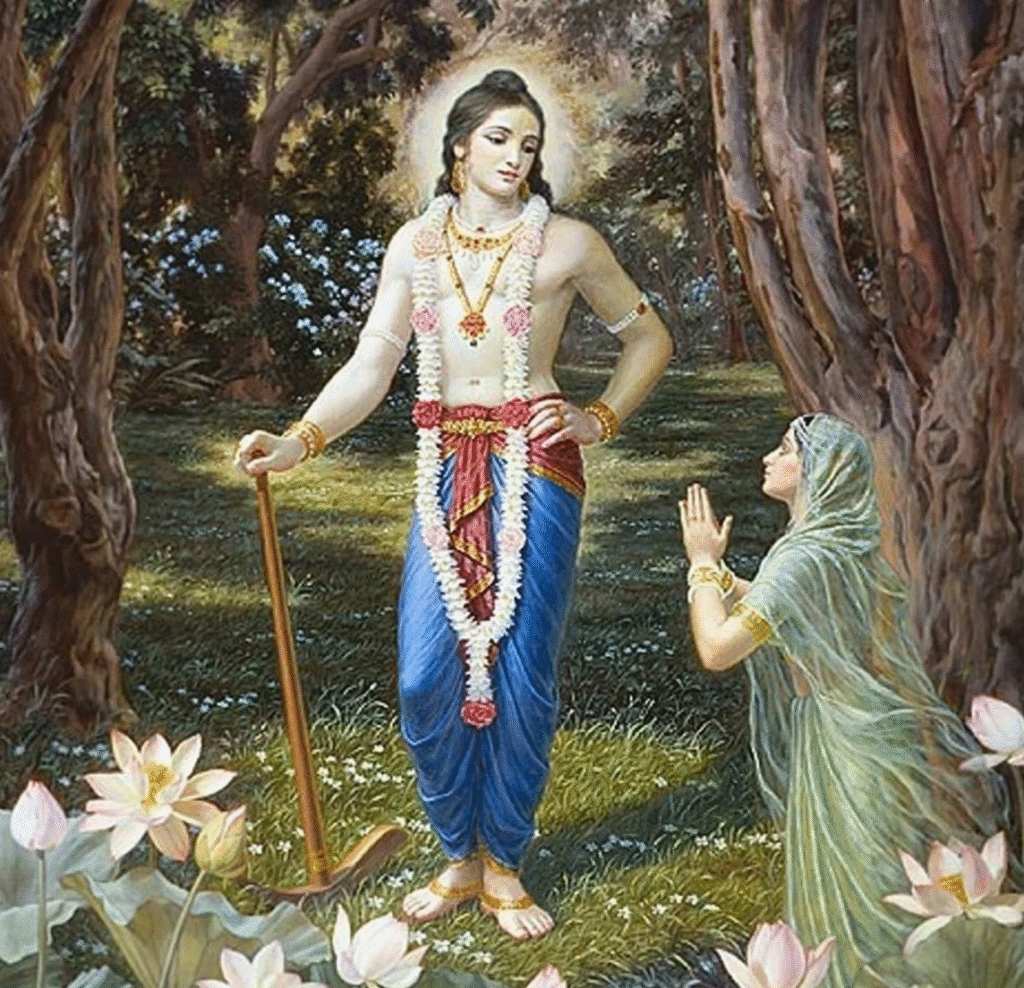
Balarama Jayanti was celebrated at ISKCON Newtown Kolkata on Friday, 28th August 2026.
On the day of Balarāma Jayanti, Śrīmad-Bhāgavatam class was given by HG Acharya Ratna Prabhu, followed by HG Rajgopinath Prabhu. The class began at 8 am and continued till 11:30 am.
Below is what HG Acharya Ratna Prabhu said during the Balarama Jayanti 2026 class at Iskcon Newtown Kolkata.
Wonderful Qualities of Lord Balarama
He began the class by singing the song “Hari Hari Biphale Janama.”
Balarāma has appeared in this age of Kali as Lord Nityānanda.
People of the world did not know who Krishna and Balarāma were, but because of Śrīla Prabhupāda’s mercy, today people all over the world know who Krishna and Balarāma are.
Krishna Is the Supreme Lord
Someone suggested that Prabhupāda use “God Consciousness” instead of “Krishna Consciousness,” but Prabhupāda disagreed. He said that God is a vague term; people should know who God is, and all scriptures say that Krishna is God.
Śrīmad-Bhāgavatam 1.3.28 says:
Krishnas tu bhagavān svayam
which means that Krishna is the Supreme Personality of Godhead.
Not only that, Krishna is the source of all incarnations, He is the Supreme Lord, and the cause of all causes. So Prabhupāda used the term “Krishna Consciousness” instead of “God Consciousness” because Krishna is the Supreme Lord.
Krishna did not appear only 5,000 years ago; He exists eternally.
He is the source of everything:
ahaṁ sarvasya prabhavo
“From Me everything emanates.”
Lord Balarāma is His first expansion, His second body.
Svāṁśa and Vibhinnāṁśa
The Lord has two types of expansions—svāṁśas and vibhinnāṁśas.
All svāṁśas are omnipotent and omniscient.
Vibhinnāṁśas are the living entities.
Balarāma is a svāṁśa expansion. One visible difference between Krishna and Balarāma is their complexion: Krishna is blackish and Balarāma is whitish.
Krishna is the Supreme Personality of Godhead, and Balarāma is the Supreme Personality of Servitor Godhead.
Balarāma Serves Krishna in Different Forms
Lord Balarāma serves Krishna through various expansions and forms, including Mahā-Saṅkarṣaṇa, Mahā-Viṣṇu, Garbhodakaśāyī Viṣṇu, Kṣīrodakaśāyī Viṣṇu, and Śeṣa.
Mahā-Saṅkarṣaṇa
Mahā-Saṅkarṣaṇa is associated with the spiritual world and its expansions.
Mahā-Viṣṇu
Mahā-Viṣṇu creates the material universes. One breath of Mahā-Viṣṇu corresponds to the lifetime of Brahmā—approximately 311.04 trillion human years.
Kṣīrodakaśāyī Viṣṇu
The local manifestation of the Lord within each universe is Kṣīrodakaśāyī Viṣṇu, who resides in Kṣīrasāgara, the Ocean of Milk, on Śvetadvīpa.
He expands as Paramātmā and enters the heart of all living entities.
Śeṣa
Lord Balarāma also expands as Lord Śeṣa. He performs personal service to the Lord in innumerable ways.
Although Balarāma is the first expansion of Krishna, His only desire is to serve Krishna.
Balarāma as Ādi-Guru and Ādi-Servant
Balarāma is Ādi-guru, the original spiritual master.
The four Kumāras hear Śrīmad-Bhāgavatam from His lips, and they in turn repeat it in the transcendental bliss of love of Godhead. This is mentioned in Caitanya-caritāmṛta, Ādi-līlā 5.122.
Balarāma Gives Strength to the Guru
Balarāma is Ādi-guru. All gurus receive spiritual strength from Balarāma.
The word Bala means strength. Balarāma gives us the spiritual strength necessary to advance in Krishna consciousness.
The Plough of Balarāma
Balarāma carries a plough.
A farmer uses a plough to till the soil and make it fertile so that seeds can be planted and crops can grow.
Similarly, Balarāma softens and prepares our heart by removing impurities and anarthas, making it fertile for the seed of Krishna-prema.
Balarāma is therefore both Ādi-guru and Ādi-servant.
He serves the Lord in all five rasas.
Balarāma Serves Krishna in Five Rasas
Balarāma serves Krishna in different relationships, demonstrating His mood of loving service.
Śānta-rasa
In śānta-rasa, the Lord is served through various paraphernalia. Balarāma expands as clothes, umbrella, shoes, seat, and other articles used in the service of Krishna.
He also expands as musical instruments such as the mṛdaṅga and karatālas.
Dāsya-rasa
In dāsya-rasa, Balarāma serves Krishna as a servant. He massages Krishna’s feet and performs various services for Him.
Sakhya-rasa
In sakhya-rasa, Balarāma is Krishna’s elder brother and intimate friend.
He plays with Krishna and the cowherd boys in Vṛndāvana.
Vātsalya-rasa
Balarāma also displays parental affection toward Krishna and protects Him.
Nanda Mahārāja and Mother Yaśodā have great confidence in Balarāma.
During the pastime of Krishna and Kāliya, Balarāma was not present, and Krishna entered the Yamunā to subdue Kāliya.
Mādhurya-rasa
Balarāma also serves Krishna in mādhurya-rasa.
In this connection, He is manifested as Anaṅga Mañjarī, who is described in Gauḍīya Vaiṣṇava tradition as the younger sister of Śrīmatī Rādhārāṇī and who assists Rādhārāṇī in Her service to Krishna.
Thus, Balarāma’s mood is always one of service to Krishna.
Balarāma and the Demons He Killed
Balarāma killed several powerful demons, including Pralambhāsura and Dhenukāsura.
Pralambhāsura Represents Desire for Prestige
Pralambhāsura can be understood as representing the desire for prestige—pūjā, lābha and pratiṣṭhā.
A devotee should therefore be careful about the desire for recognition and honour.
Instead of seeking honour for ourselves, we should transfer all honour to our spiritual master and to Krishna.
By the mercy of Balarāma, we can overcome these unwanted desires.
Dhenukāsura Represents Foolishness
Dhenukāsura appeared as a donkey and was killed by Balarāma in Tālavana.
The donkey represents foolishness and the mentality of considering ourselves to be the proprietor of things that actually belong to Krishna.
The body, home, land, spouse, children and material possessions are not ultimately ours. We are simply caretakers of what has been given to us by Krishna.
The cowherd boys wanted to go to Tālavana to enjoy the fruits there. Their desire can also be understood in the mood of wanting to enjoy Krishna’s association and serve Him.
By the mercy of Balarāma, we can overcome the foolish mentality of material proprietorship.
Dvivida, the Powerful Ape
He was devotee of Lord Rama; he is glorified in Ramayana. But he did not respect Lakshman. When one disrespects guru, one falls down from good association. He later became friends with asuras like Narakasura.
In Treta yuga, he was devotee but in Dwapar yuga he became a demon. Balarama eventually killed him. If you accept Krishna but not Balarama, then it is ardha-kukkuṭī-nyāya, the half – hen logic.
Balarāma Teaches Us Not to Imitate Krishna
Once Balarama was crying because he wanted Krishna’s dress and peacock feather. So, Balarama wore Krishna’s dress and peacock feather. On that day Kesi demon came. As Balarama was looking like Krishna the demon kicked Balarama and Balarama became fearful. The demon was finally killed by Krishna.
It was not that Balarama could have not killed the demon but he wanted to teach that one should not imitate Krishna. Great devotees do not become great by imitating Krishna but by serving Krishna.
This is an important lesson for devotees: do not imitate the Lord; follow the instructions of the Lord and the spiritual master.
Balarāma and the Brahmā-Vimohana Līlā
Another important pastime connected with Krishna and Balarāma is the Brahmā-vimohana-līlā.
The demon Aghāsura was killed by Krishna. After this, Brahmā stole the cowherd boys and calves and hid them.
On that day Balarama had not gone with Krishna to the forest. After Aghasura was killed, Brahmaji became bewildered and to test if Krishna is Supreme Lord or not, he stole cowherd friends of Krishna and the calves.
Krishna expanded himself into the cowherd boys and the calves. For one year Balarama did not know that Brahma had stolen the cowherd boys and calves. This shows that Krishna can even bewilder Balarama.
This pastime demonstrates the inconceivable potency of Krishna. Even Balarāma can wonder at Krishna’s arrangements and transcendental activities.
Balarāma Is Sometimes Angry and Sometimes Compassionate
Balarāma can display great anger toward those who oppose Krishna, but He is also extremely compassionate toward devotees.
His anger destroys the obstacles that prevent us from advancing in Krishna consciousness, while His mercy gives us the strength to approach Krishna.
Prayers on Balarāma Jayanti
On Balarāma Jayanti, we can pray to Lord Balarāma for the strength to properly honour our spiritual masters, take their instructions seriously, and serve them nicely.
We can pray to Balarāma to destroy the anarthas represented by Pralambhāsura and Dhenukāsura within our hearts.
We can also pray for His mercy so that we may develop genuine strength in Krishna consciousness.
May Balarāma give us the strength to overcome our weaknesses and allow us to serve Krishna with sincerity.
We can also pray that Abhay Tīrtha manifests in Kolkata for the service of Śrīla Prabhupāda and the devotees.
Below is what HG Rajgopinath Prabhu said during the Balarama Jayanti 2026 class at Iskcon Newtown Kolkata.
Balarama teaches how to serve Krishna
Lord Balarāma was the seventh child conceived by Mother Devakī, but the seventh pregnancy of Devakī brought both happiness and sadness.
Balarāma came to the womb of Devakī and was subsequently transferred to the womb of Rohiṇī by the internal potency of the Lord. This was part of the divine arrangement preceding the appearance of Krishna. – Śrīmad-Bhāgavatam 10.2.4–8
The Fear of Māyā
The fear which Devakī had for Kaṁsa can be compared to the fear devotees should have of Māyā.
Just as Devakī was constantly fearful because of Kaṁsa, devotees should remain cautious about the influence of Māyā.
We should always be careful not to become distracted from Krishna consciousness.
The Six Children of Devakī
The six children of Devakī can be understood as representing the six anarthas.
After these anarthas are destroyed, bhakti can mature.
When Krishna-prema develops in the heart, Krishna manifests Himself there.
Balarāma’s Love for Krishna
Lord Balarāma has great love for Krishna.
When Bakāsura swallowed Krishna, Krishna escaped from his mouth and killed him. Śrīmad-Bhāgavatam 10.11.48–55
But when Balarama saw that Bakasura has swallowed Krishna, he fainted. This demonstrates the loving relationship between Krishna and Balarāma.
Everything Can Be Used in Krishna’s Service
Whatever we use in the service of Krishna can be understood in relation to Balarāma, who expands as Śeṣa and serves Krishna in innumerable ways.
Therefore, everything should be used in the service of Krishna.
Instead of using things for our own enjoyment, we should learn how to engage everything in Krishna’s service.
Balarāma’s Beautiful Choti
Balarāma had a long, beautiful and thick choti.
There is a beautiful traditional devotional song in which Krishna asks Mother Yaśodā when His own choti will become as long and thick as Balarāma’s.
The song says:
Maiyā, kabahin baṛhegī choṭī?
Kitik bāra mohiṁ dūdha piyata bhaī, yaha ajahūṁ hai choṭī.
Tū jo kahati Bala kī benī jyoṁ, hvai hai lāṁbī moṭī.
Kāṛhata-guhata nhāvata jaihai, nāgin-sī bhūī loṭī.
Kāṁcho dūdha piyāvati pachi-pachi, deti na mākhana-roṭī.
Sūrasyaṁma cirajīvau dou bhaiyā, Hari-Haladhara kī joṭī.The song beautifully glorifies the two brothers, Krishna and Balarāma.
Garga Muni Gives the Name Balarāma
Garga Muni was requested by Vasudeva to perform the name-giving ceremony for Krishna and Balarāma – Śrīmad-Bhāgavatam 10.8.1–5
The name Balarāma consists of Bala, meaning strength, and Rāma, referring to pleasure.
Balarāma gives us spiritual strength.
He gives us the strength to advance in spiritual life and to develop our relationship with Krishna.
Balarāma Gives Spiritual Strength
Material strength alone cannot help us achieve Krishna.
We need spiritual strength.
Balarāma, as Ādi-guru, gives us the strength to follow the instructions of the spiritual master and remain steady in devotional service.
Just as the plough prepares the land for cultivation, Balarāma prepares our hearts for the cultivation of bhakti.
By the mercy of Balarāma, we can attain Krishna.
Conclusion
Balarama Jayanti 2026 was celebrated with reverence at Iskcon Newtown Kolkata. Devotees remained absorbed in Balarāma-kathā until around 11:30 a.m. After the class, devotees sang Vaiṣṇava songs. At 12 noon, puṣpāñjali was offered to Lord Balarāma, followed by āratī and kīrtana. Devotees had also fasted from both food and water on this auspicious day. They broke their fast after 12 noon by honouring delicious Kṛṣṇa-prasādam.
Without the mercy of Lord Balarama, we cannot attain Krishna. He is first expansion of Krishna and is powerful almost like Krishna but still he only wants to serve Krishna.
His life and pastimes teach us the importance of service, humility, spiritual strength, and proper association. On the auspicious occasion of Balarāma Jayanti, let us pray for His mercy so that we may become sincere servants of Krishna and our spiritual master.




Search
Recent Posts
-
Srimad Bhagavatam at ISKCON Newtown...
October 2, 2026
-
Haridas Thakura: The Foremost Devotee...
September 28, 2026
-
Overcoming Obstacles in Our Spiritual...
September 24, 2026
-
Krishna Katha and Memories of...
September 22, 2026
-
Choose Krishna in All Circumstances...
September 20, 2026