How to cultivate mode of goodness and live happily?
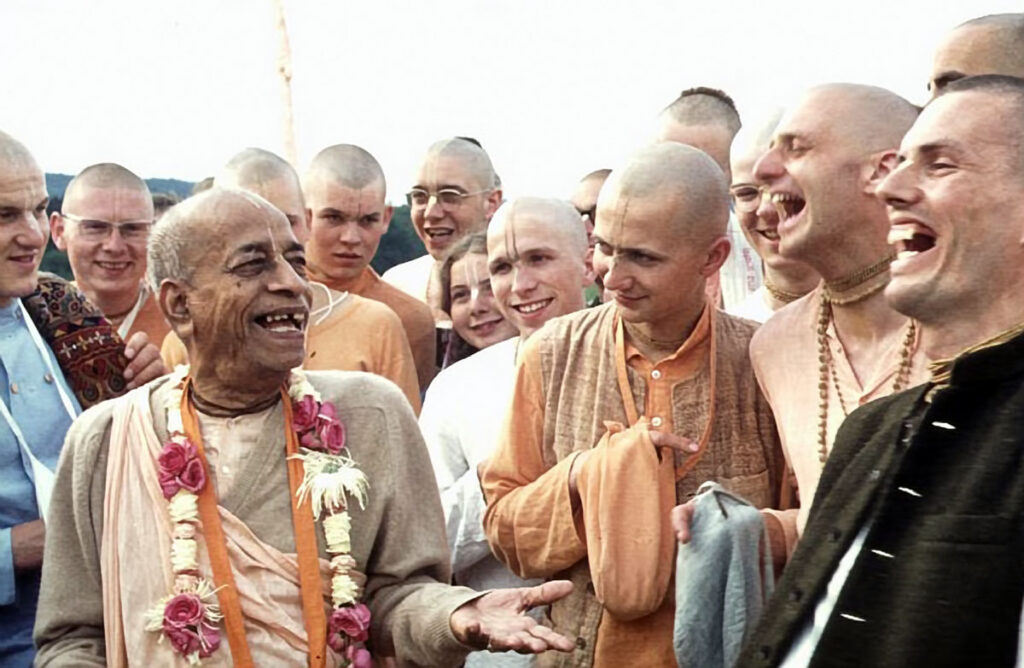
If you want to live happily then cultivate mode of goodness. This is what Krishna is saying to Arjuna in Bhagavad Gita.
Krishna to Arjuna, “O sinless one, the mode of goodness, being purer than the others, is illuminating, and it frees one from all sinful reactions. Those situated in that mode become conditioned by a sense of happiness and knowledge.” Bhagavad Gita 14.6
If we are not in mode of goodness, then we will be either in mode of passion or mode of ignorance. What happens to those in passion and ignorance? Most of the time or rather all the time such people are full of anxiety and live in fear. And if the mind is filled with fear and anxiety then where is the question of peace and bliss?
Now the question arises that how to cultivate mode of goodness? Below are few of the steps we can take to come to the mode of goodness. These are based on the teachings of scriptures like Bhagavad Gita and Srimad Bhagavatam and also based on the lectures of Srila Prabhupada and senior devotees of ISKCON. I have experienced that if we try to adopt the lifestyle discussed below then it helps us a lot in our personal life. It does make us peaceful and happy.
Lead a regulated life to cultivate mode of goodness
If we want to come to the mode of goodness, then it is extremely important that we lead a regulated life. Unregulated life makes our life chaotic. Regulated life gives direction to our life. So, regulation is important. And for regulated life planning is must.
It is said that “if you fail to plan you plan to fail.” I personally love this statement!
So, plan your day properly. Plan your day a day before. Before going to bed you can make a list of activities you are going to do the next day. If not possible in the night, then first thing to do in the morning is to plan the day. Write it down in your diary or in your mobile. In mobile you can also set a reminder for each activity, it helps. Do not just plan in your mind and hope that you will remember everything. It does not work.
It takes little time to plan the day. But it is a good investment. In the initial few days planning will take more time but gradually once you learn the art of properly planning your day then you will be able to do it quickly. It will then take 10 – 15 minutes.
If you exactly know what you have to do, you will be productive throughout the day. And in the night, on the bed, before sleeping, when you will reflect on your daily activities you will feel satisfied. May be even delighted! Remember we also experience happiness when we are able to do our prescribed work properly in a timely manner.
Doings things at the last moment
Many times, we put ourselves in a difficult situation because we have the habit of doing things at the last moment. This is a problem we all suffer from.
Once I was attending agile training in IBM. The trainer who was quite learned and senior shared a finding on the working habits of men and women. He said that a study was done to find out how men and women will act if a task is given to them.
A piece of work was assigned to a group of men and group of women on Monday. They were told to complete it by Friday of the same week. Study was done to find out how much percentage of work both the genders do on Monday, Tuesday, Wednesday, Thursday and finally on Friday. How many are going to complete their work before the deadline i.e. Friday?
I am giving just a summary of the findings.
- Although the work could have been completed before Friday but most of the men and women completed the task only on Friday.
- It was found that most of the men started working on the task on Friday morning.
- Women were little better. They started to work from Thursday onwards.
So, women did not do anything for 3 days and men for 4 days. And then there was last minute hurry and anxiety.
You and I can easily relate with this. We might have been in such situations many a times.
Now, if we want to save ourselves from last minute hurry and worry, then we have to plan our life properly – both personal life and professional life.
Plan each hour of the day
While planning it is better to plan each hour of the day. So, we know what to focus on each hour. If there is no clarity, there will be confusion. We will end up wasting time. In confusion mind will ask (or force) us to do things which is least resistive. And we will end up watching uncountable YouTube videos, movies on Netflix, or spend hours on social media. Or many times we may just lie on the bed gazing at the ceiling like a stupid person.
When we plan our day, we are able to complete our assigned work for sure. But along with that we will also have time to do certain other things which will improve our life.
- For example, if you are working professionals then you can go for trainings or certification courses which will help you in your career.
- Or else those extra time can also be used for spending time with family members, calling a friend with whom you have not spoken for months, going for a walk in the park, exercise, learning new skills and so on.
We discussed the importance of regulated life. We also discussed that to lead a regulated life, we have to plan our day properly. But it is also important that in our daily plan we have time for those activities which will uplift our life.
So, let us see how we should plan our life so that we can cultivate mode of goodness and improve the quality of our life.
Plan your work in the following ways to cultivate mode of goodness
When you are planning your day then it is important that you give sufficient time for your spiritual growth. Unless and until you connect to God, Krishna you will not be able to lead a happy life. Secret of happy life is be connected with Krishna, the Supreme Lord always. So, our daily plan should include spiritual activities.
If you are a working professional then it is important that you work effectively and efficiently. And for that intelligent planning is required. Along with that you should have time to take care of your physical health.
Families are important. We need them, they need us. So you should spend quality time with them. You also need to socialize, have friends, have good relationship with neighbors. Not just that we also need to have some fun in our life else we will get bored and frustrated. All these activities need time and for that our life should be properly planned. Let us see how to do it.
First, let us discuss the spiritual activities which we all should have in our daily plan.
3 most important daily spiritual activities which should not be given up
Below are the three most important spiritual activities which will help us in our spiritual growth. Unless and until we grow spiritually it will not be possible to cultivate mode of goodness. So, at any cost do not give up these spiritual practices. Let us discuss them.
1. Chanting the holy names of God
Chanting or mantra meditation is very important. Daily we should chant the holy names of God like the Hare Krishna Mahamantra. Better to plan your day in such a way that you can chant early in the morning. Assign specific time for chanting. If you are busy in the morning, then you can assign specific time to chant in the daytime. For example, ladies may have to take care of their children or may be occupied with household chores in the morning then they can chant in the daytime.
One round of chanting consisting of 108 beads takes around 6-7 minutes. Srila Prabhupada recommended to chant 16 rounds. 16 round chanting takes around 100 minutes – 120 minutes. Many devotees including devotees who are working professions plan their day in such a way that they chant 16 rounds daily.
If you have just started chanting, then you may not be able to chant 16 rounds immediately. So, start with one or two rounds daily and gradually increase it. In few months you will be able to chant 16 rounds daily.
There are so many benefits of chanting the Hare Krishna Mahamantra. To know the benefits please watch the below video.
2. Worshipping the deity of Lord Krishna
Devotee of Krishna do mangal arati daily in the morning. It will make your life auspicious. Arati purifies the entire atmosphere. And it takes at the most around 30 minutes.
3. Reading spiritual literatures like Bhagavad Gita and Srimad Bhagavatam
These books are not ordinary books. Bhagavad Gita was spoken by Lord Krishna and Srimad Bhagavatam is about Krishna. These are transcendental literatures. If we read these books, then it will nourish our intelligence and give direction to our life. We can read for 30 minutes daily. It can be done in the morning if we have time or else in the evening or before going to bed.
Along with reading it is also important that we contemplate on the message given these holy books and apply its teachings in our life.
If we begin our day with the above three spiritual activities, then entire day will be auspicious. Throughout the day we will have blessings and protection of Krishna. Above three spiritual activities should be done everyday of the week.
After making sure that you have completed your spiritual duty, focus on following activities.
Plan your office work intelligently
Krishna has mercifully given us the job. So, we should do our work honestly and diligently. So, plan your office work intelligently. Whatever work has to be completed should be listed down in a diary or mobile or even on your laptop.
As per the deadline, priority should be given to each piece of work. Once the work items to be completed are listed down then your mind will know what has to be done.
Start proactively doing your work. Do not procrastinate and start work at the last moment. If you start late the work will appear burdensome. You may eventually complete your work, but you will feel exhausted and sometimes even frustrated.
Better to start early and finish early. You will be happy; your manager will be happy. Any project needs reliable resources who are proactive in their work. If you are the one, then you will be a sought after resource in the organization. There will be less fear of being on bench or being fired from the company.
Also, if you do your duties dutifully then Krishna will be pleased. Krishna likes responsible people. Remember whatever work we may be doing we have to always keep Krishna in the center.
Along with your project work, it is also important to learn new technologies or skills which will be helpful for future growth.
Since I work in IT industry, so I am mostly talking from IT perspective, but it is applicable for other sectors as well.
Whatever may be your field of activity, if you plan and prioritize your work then you will be productive and will earn appreciation from others.
It is applicable even for students. If a student plans his study properly then he will get good marks and will have good career.
Take care of your physical health
Physical health is also important. Please do not neglect it. So, we should exercise regularly at least 5 days in a week for around 30 minutes. If not possible in the morning, then we can do it in the evening.
I was hearing an interview of Sundar Pichai, Google CEO. He said that he does not get time to exercise in the morning, so he does it in the evening. One another interesting thing he said was that he walks with his colleagues during official discussions and meetings. A good way to get the work done and also be healthy.
Spend time with your family
It is important to spend time with your family members. We owe a lot to our mother and father. They sacrificed their life to help us grow in our life. So, we should give time to them.
We should give proper time to our spouse and children. Brother and sister also need our time. Give quality time to them.
If our brother or sister is married and is staying elsewhere with their families then we may not be able to speak to them daily. But at least once or twice a week we should speak to them.
Take care of your social needs
Spend time with your friends. Develop friendship with the devotees of the Lord. Their association will enrich your life. Also spend time with your neighbors, they are also part of your life. We may not be able to spend time with them daily but at least we can do it once or twice in a week.
Recreation is also important
If we only work, we get bored. So, it is also important to have fun in our life. For that you can hear nice devotional songs or go for a walk in the park with your spouse. If you know swimming, then go for it. It will refresh you.
Also once in six months you can go for outing with your family members. Relax and rejuvenate. It will bring joy to your life. It will also make your family members happy.
Practice Cleanliness
It is said that cleanliness is next to godliness. So live clean. Take bath daily. Go for a haircut. Trim your nails both of hands and finger. Wear fresh clothes daily. It looks like I am speaking to a child.
I remember these things were told to us when we were in kindergarten. I am saying this because I have seen people not taking bath daily especially during winters. They use perfume or deodorant to supress the bad smell of their body. Their nails are big and untidy. Hair grows like bushes. They repeat same clothes without washing for days. These unclean habits have to be given up if we want to cultivate mode of goodness.
Keeping ourselves clean does not take great amount of time. It is just a matter of habit. So, we should develop a habit of living a clean life.
Along with that it is important that we keep our surroundings clean. Lord’s altar should be clean. Our study table or worktable should be clean and not clumsy. Books, laptops, mobiles should be properly kept and not thrown away here and there. Make you bed early in the morning. For these things do not depend on others like your maid or wife or children. Do it yourself.
If we live clean and stay in a clean environment, then it affects our consciousness. It helps us to rise to the mode of goodness.
What Krishna says regarding mode of goodness
We discussed that you should lead a regulated life to cultivate mode of goodness. And for that you need to plan your life wisely. And while planning the important activities on which you should focus, we also discussed those.
If you adopt this lifestyle then slowly you will come to the mode of goodness. You will grow spiritually and have stable material life.
Krishna glorifies mode of goodness. He says to Arjuna in Bhagavad Gita 14.9, “O son of Bharata, the mode of goodness conditions one to happiness.”
So, if you and I cultivate mode of goodness following the steps discussed above then we will be able to lead a happy life which we always aspire for.
Search
Recent Posts
-
Srimad Bhagavatam at ISKCON Newtown...
September 3, 2026
-
Srimad Bhagavatam at ISKCON Newtown...
September 1, 2026
-
Janmashtami: Celebrating Krishna’s Appearance Through...
August 17, 2026
-

Gopinatha Pattanayaka: 6 Lessons for...
August 16, 2026
-
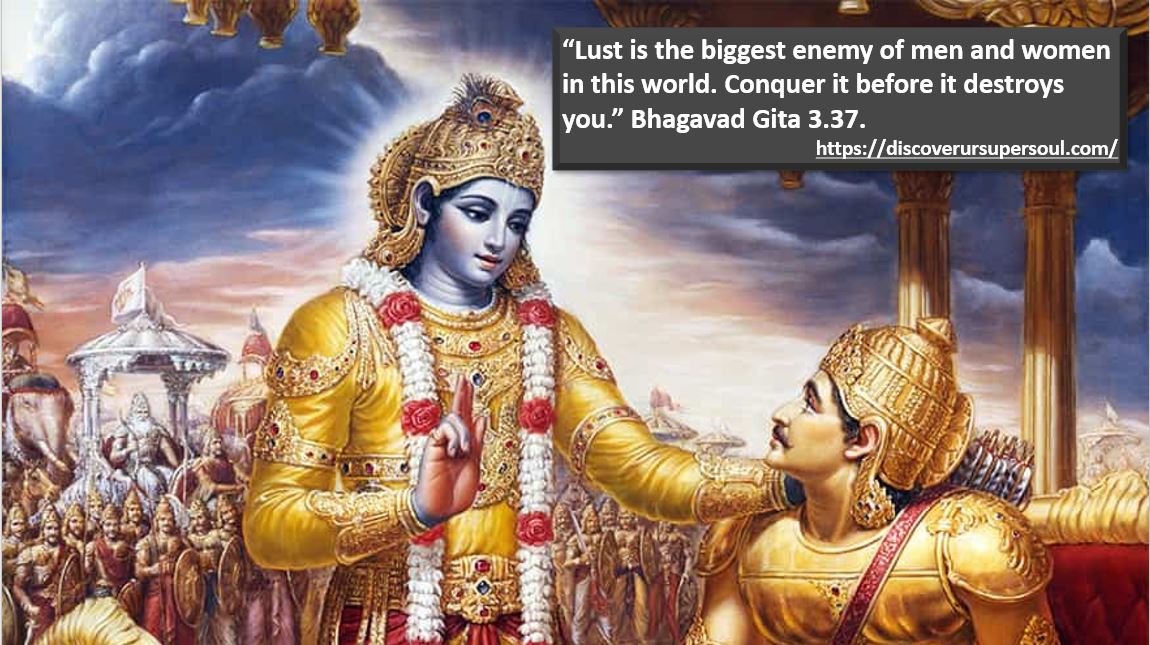
What Does Krishna Say About...
August 11, 2026
What were Arjuna’s five reasons to not fight the Mahabharat war?
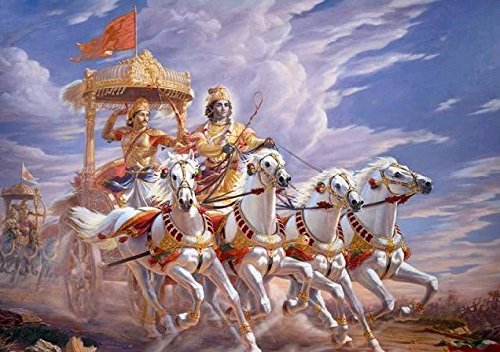
What were Arjuna’s five reasons to not fight the Mahabharat war at Kurukshetra? The Pandavas and the Kauravas had assembled at Kurukshetra for the epic war. Arjuna was one of the most formidable warriors. But just before the war, he felt that he should not fight. He was overwhelmed with the situation.
In fact, once he thought that it would be better if he flees the battlefield. At this moment of crisis he turned towards Krishna, the Supreme Lord, who was his charioteer, to share his feelings. He explained to Krishna why he did not want to fight.
Let us what were Arjuna’s five reasons to not fight the Mahabharat war:
1. Compassion
Arjuna was full of compassion. Although a fearsome warrior yet kind-hearted. A dear friend of Krishna and a well-wisher of all. He did not want war.
Krishna had tried his best to convince Duryodhana to not compel Pandavas for the war. But the evil son of the blind king, Dhritarashtra, was adamant. So Pandavas and Kauravas had assembled at Kurukshetra. Both the armies were facing each other.
But Arjuna shuddered at the thought that he will be fighting to kill his own family members. He will be shooting arrows towards Bhisma, his great grandfather, and Dronacharya, his guru.
He remembered his childhood days when he would sit on the lap of Bhisma and the great grandfather would caress him. Bhisma loved him so much. But today he was standing opposite to him to kill him. How can he do so?
Arjuna was one of the the greatest archer. Everyone accepted it. No one could face him in the battle. Even he pleased Lord Shiva with his archery skill. And all this was possible only because of Dronacharya, the great martial teacher. Dronacharya loved Arjuna like his own son. He put in his best efforts to make Arjuna the best archer of the world.
How can Arjuna fight against his guru, who was like his father?
The hundred Kauravas were his cousins. All were not bad. For example, Vikarna was a righteous person. Many were his younger brothers.
And then there were thousands of soldiers on both the sides. What were their crimes? Why to put their lives on risk? Why should they die?
Arjuna shares his feelings with Krishna
These thoughts filled Arjuna’s heart with compassion. He lost his composure. He was torn apart internally. At this hour of crisis, he turned towards Krishna, his friend, his ever well wisher and said,
- “My whole body is trembling, my hair is standing on end, my bow Gāṇḍīva is slipping from my hand, and my skin is burning.” Bhagavad Gita 1.29
- “I am now unable to stand here any longer. I am forgetting myself, and my mind is reeling. I see only causes of misfortune, O Kṛṣṇa, killer of the Keśī demon.” Bhagavad Gita 1.30
- “I do not see how any good can come from killing my own kinsmen in this battle, nor can I, my dear Kṛṣṇa, desire any subsequent victory, kingdom or happiness.” Bhagavad Gita 1.31
2. Enjoyment
Arjuna further said that even if I am victorious still, I won’t be able to enjoy the kingdom. To win the war I will have to kill my own family members. The kingdom will be soaked with the blood of my family members. My adorable grandfather, Bhisma, guru Drona who is like my father, my uncles, brothers, all will be killed. In their absence even if I win still I will be a loser. Fame and fortune cannot be enjoyed alone. To enjoy it we need to share it. But if they are killed then with whom I will share my joy.
Arjuna said, “O maintainer of all living entities, I am not prepared to fight with them even in exchange for the three worlds, let alone this earth. What pleasure will we derive from killing the sons of Dhṛtarāṣṭra?” Bhagavad Gita 1.32-35
3. Fear of sinful reactions
Killing is a sinful activity. If we kill others, we will incur sins. Sins will lead to suffering. I understand that Duryodhana and his ilks are aggressors, they are ruffians. So what? If they are acting impiously then should we also act irreligiously. What will be the difference between them and us? If like them we engage in this ghastly war and kill the enemies then we will be committing sins. So, it will be better Krishna if I do not fight.
“O Janārdana, although these men, their hearts overtaken by greed, see no fault in killing one’s family or quarreling with friends, why should we, who can see the crime in destroying a family, engage in these acts of sin?” Bhagavad Gita 37 – 38
4. Destruction of Dynasty
When all the assembled warriors will be killed then what will happen to their family? Who will give protection to the elders of the family? Children will become orphans. Women will be unprotected. If the elders of the family are not there, then who will guide the younger generation. In absence of proper guidance dynasty will be destroyed. And destruction of the dynasty will create chaos in the society and bring great disaster.
Consequences of destruction of the dynasty (Bhagavad Gita 1.39 – Bhagavad Gia 1.43)
- With the destruction of dynasty, family tradition is destroyed.
- When family tradition is destroyed then family members start practicing irreligion.
- And when irreligion increases then women of the family become polluted.
- When women become polluted then there is unwanted progeny.
- Unwanted progeny causes hellish life for the family and for those who are responsible for destroying family tradition. These unwanted population will not follow religious tradition because of which:
- Ancestors fall down because no one is there to offer them food and water i.e. pinda daan is stopped.
- Community projects and family welfare activities also stop.
Arjuna contemplated that destruction of the dynasty will bring calamity upon all. He said, “Kṛṣṇa, maintainer of the people, I have heard by disciplic succession that those whose family traditions are destroyed dwell always in hell.” Bhagavad Gita 1.43
Arjuna did not want hellish life for anyone. And he did not want to be the cause of hellish for others. Expressing his anguish, Arjuna said, “Better for me if the sons of Dhṛtarāṣṭra, weapons in hand, were to kill me unarmed and unresisting on the battlefield.” Bhagavad Gita 1.45
5. Indecision
Arjuna gave reasons as why he did not want to fight the Mahabharat war. But still he did not know if this was the right decision. He was confused. He was not convinced by his own argument. Bewildered and undecided he turned towards Krishna and expressed the feelings of his heart, “O Krishna, I do not know what is better for me. I see that the sons of Dhritarashtra are standing before me. But whether I should conquer them or be conquered by them, I do not know.” Bhagavad Gita 2.6
Arjuna was thinking why to be part of unnecessary violence. If Duryodhana was so adamant to be the king, let he be the king. I can live by begging. But he also knew that Duryodhana was cruel. He has committed so many sins.
Commenting on this verse Srila Prabhupada writes, “All these considerations by Arjuna definitely proved that not only was he a great devotee of the Lord but he was also highly enlightened and had complete control over his mind and senses.” Bhagavad Gita 2.6 purport
Finally Arjuna takes shelter of Krishna
Standing between both the armies the fearsome warrior was feeling helpless. Arjuna had given five reasons to Krishna as why he did not want war. But still he was not sure if not fighting was the right decision. He was not able to take the right decision. Arjuna the mightiest of the warrior on the battlefield of Kurukshetra decided to take shelter of Krishna. He beseeched Krishna to become his guru and guide him, who was now his surrendered disciple.
“Now I am confused about my duty and have lost all composure because of miserly weakness. In this condition I am asking You to tell me for certain what is best for me. Now I am Your disciple, and a soul surrendered unto You. Please instruct me.” Bhagavad Gita 2.7
Arjuna’s five reasons to not fight the Mahabharat war did not convince Krishna. Krishna ultimately persuaded Arjuna to not run away from Kurukshetra. The Supreme Lord made sure that his friend and devotee fight for the right cause and establish dharma.
To know the details, please read – Why Krishna wanted Arjuna to fight the Mahabharat war?
Search
Recent Posts
-
Srimad Bhagavatam at ISKCON Newtown...
September 3, 2026
-
Srimad Bhagavatam at ISKCON Newtown...
September 1, 2026
-
Janmashtami: Celebrating Krishna’s Appearance Through...
August 17, 2026
-
Gopinatha Pattanayaka: 6 Lessons for...
August 16, 2026
-
What Does Krishna Say About...
August 11, 2026
Why did Lord Chaitanya appear? To teach us devotion to Lord Krishna.
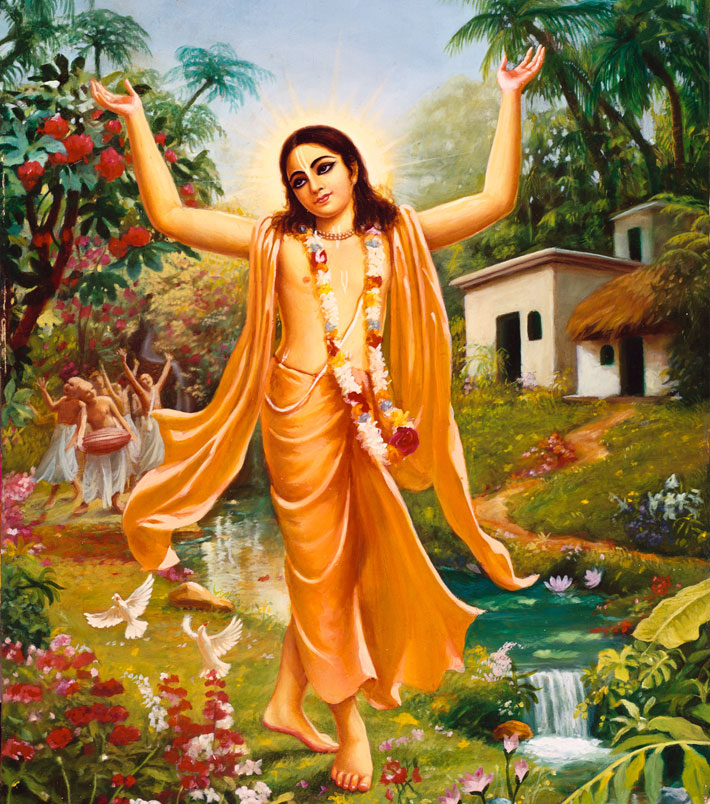
Lord Chaitanya who is also known as Chaitanya Mahaprabhu appeared on earth to teach you and me how to become a pure devotee of Krishna. He is an incarnation of Krishna. But he appears as a devotee of Krishna. Why? So that, he can teach us by his personal example how to practice devotion to Krishna. Lord Chaitanya is magnanimous, extremely merciful. He came to deliver the most fallen of the souls.
Lord Chaitanya is like the monsoon cloud, full of hope and happiness. And like the monsoon rain, He distributes ‘happiness’ freely to all without bothering about friends and foes. He is everyone’s friend.
He appears in this world for an important rescue operation. The mission was to cure the diseased souls of material impurities and take them back to their original home. Our original home is the spiritual world, the kingdom of God.
Lord Chaitanya’s birth
Lord Chaitanya, an epitome of love, best remembered as most benevolent incarnation of God, appeared in Mayapur, India, around 500 years ago.
He appeared on 18th Feb, 1486 CE in Mayapur, West Bengal, India. Srila
Bhaktivinod Thakura writes, “Caitanya Mahāprabhu [Lord Chaitanya] was born in Māyāpur, in the town of Nadia, just after sunset on the evening of the 23rd Phālguna, 1407 Śakābda, answering to the 18th of February, 1486, of the Christian Era.”
Most of the people are not aware that Lord Chaitanya is the Supreme God. It is because he hid his identity. Today also if you speak to people, they will agree that he was a great devotee of Krishna, but they will be not ready to accept that he is the Supreme Lord.
Lord Chaitanya too did not want people to call him as Supreme Lord. Lord Chaitanya’s associates were self-realized souls. They were aware that he is the Supreme Lord. So, sometimes the devotees would address him as Supreme Lord. But Lord Chaitanya strongly opposed this. He would put fingers in his ears and say that you are committing offence by calling me God.
What Vedas say about Lord Chaitanya?
But Vedic literatures clearly say that Lord Chaitanya is the Supreme Personality of Godhead. Vedas have many evidence which proves beyond doubt that Lord Chaitanya (or Chaitanya Mahaprabhu) is God
Let us see few of those evidence from the Vedas.
- In the Adi-Purana and in the Narada Purana, the Supreme Lord says: “I shall advent in the form of a Brahmana devotee and I shall hide my factual identity. I shall deliver all the worlds.”
- In the Padma-Purana it is mentioned: “The Supreme Personality, Janardana, who is the object of the yogis’ meditation, who saves the devotees from various sufferings, and who is the master of all yogic practices, who is always full of divine transcendental ecstasy and bliss, will advent in His own divine form of Sri Chaitanya.”
- In the Garuda Purana, the Supreme Personality of Godhead Himself states: “I will take birth as the son of Sachi, in Navadvip – Mayapur. I will come in my complete spiritual form in the first part of Kali- Yuga.”
Lord Chaitanya appeared to teach us pure devotion to Krishna
Many religious traditions of the world in order to attract people advertise that by following their path people’s material desires will materialize. And this will help them to live a happy and fulfilling material life.
But Lord Chaitanya did not misguide the people. He never gave any false hope to the seekers. He candidly explained that no one can achieve any peace and bliss in this world because this is a place of suffering. Bhagavad Gita 8.15 explains the nature of this world – dukhalayam asaswatam (full of miseries). No amount of material aggrandizement can reduce our miseries.
This is why Lord Chaitanya said that we should practice pure devotion to Krishna.
The only way to get rid of all troubles and attain unlimited happiness is when we develop relationship with Krishna. That should be our ultimate goal. And once we attain love of Krishna, we will be able to return back to the spiritual world, the kingdom of Krishna.
Lord Chaitanya has given us the process by which we can practice pure devotion to Krishna. It is by chanting the Hare Krishna Mahamantra – Hare Krishna Hare Krishna Krishna Krishna Hare Hare/ Hare Rama Hare Rama Rama Rama Hare Hare.
Lord Chaitanya’s explains the glories of chanting Hare Krishna Mahamantra
Lord Chaitanya has taught us how to chant the names of Krishna. And also what should be our mood when we are practicing devotion to Krishna.
In Siksastakam he explains the glories of chanting and the benefit we get by chanting Krishna’s names.
“Glory to the sri-krsna-sankirtana, which cleanses the heart of all the dust accumulated for years and extinguishes the fire of conditional life, of repeated birth and death. This sankirtana movement is the prime benediction for humanity at large because it spreads the rays of the benediction moon. It is the life of all transcendental knowledge. It increases the ocean of transcendental bliss, and it enables us to fully taste the nectar for which we are always anxious.” Sri Siksastakam Text 1
Chanting purifies our heart of all the impurities and helps us to develop love of Krishna.
What should be the mood of devotee of Krishna according to Lord Chaitanya?
In Siksastakam, Lord Chaitanya describes what should be the mood of a devotee of Krishna. He says that a devotee should not have any material desires. Instead, he should have desire to practice pure devotion to Krishna.
“O almighty Lord, I have no desire to accumulate wealth, nor do I desire beautiful women nor do I want any number of followers. I only want Your causeless devotional service, birth after birth.” Sri Siksastakam Text 2
So, as a practicing devotee it is important that we give up desire to enjoy this world. Instead, we should develop desire to purify our senses and consciousness, so that we can sincerely practice devotion to Krishna.
If we are able to do so, then we will eventually become pure. And once we become pure our life will become perfect.
Taking shelter of Lord Chaitanya
To practice pure devotion to Krishna and get freedom from all sufferings it is important that we take shelter of Lord Chaitanya.
We should follow his instructions seriously. And chant the holy names of Krishna sincerely. This will purify our hearts and we will become pure. We will attain love of Krishna.
Lord Chaitanya has appeared for this purpose only – to help you and me attain love of Krishna. Once we attain love of Krishna, we will attain complete perfection. We will not be troubled by any material miseries. We will enjoy unlimited happiness.
Lord Chaitanya appeared in this age of Kaliyuga, the age of downfall, to deliver people like you and me. So, we should pray to Lord Chaitanya, take his shelter and practice devotion to Krishna for our own benefit.
In Navadvipa Dham Mahatmaya, Bhaktivinod Thakura, a great Vaisnava saint, extols Lord Chaitanya,
“Because people in Kali-yuga commit unlimited offenses, which are difficult to check, there can be no means of deliverance other than Gauranga’s name. Therefore, in Kali-yuga, I see no alternative to Sri Gauranga.”
Lord Chaitanya is called by different names – Chaitanya Mahaprabhu, Lord Gauranga, Nimai.
So, why did Lord Chaitanya appear? He appeared for you and me because he was very concerned for us. Let us give up all our material desires and use our body, mind and words in serving, remembering, glorifying and worshipping him.
Read: Who is most merciful – Lord Rama or Lord Krishna or Lord Chaitanya?
Search
Recent Posts
-
Srimad Bhagavatam at ISKCON Newtown...
September 3, 2026
-
Srimad Bhagavatam at ISKCON Newtown...
September 1, 2026
-
Janmashtami: Celebrating Krishna’s Appearance Through...
August 17, 2026
-
Gopinatha Pattanayaka: 6 Lessons for...
August 16, 2026
-
What Does Krishna Say About...
August 11, 2026
Why Krishna wanted Arjuna to fight the Mahabharat war? To establish dharma.
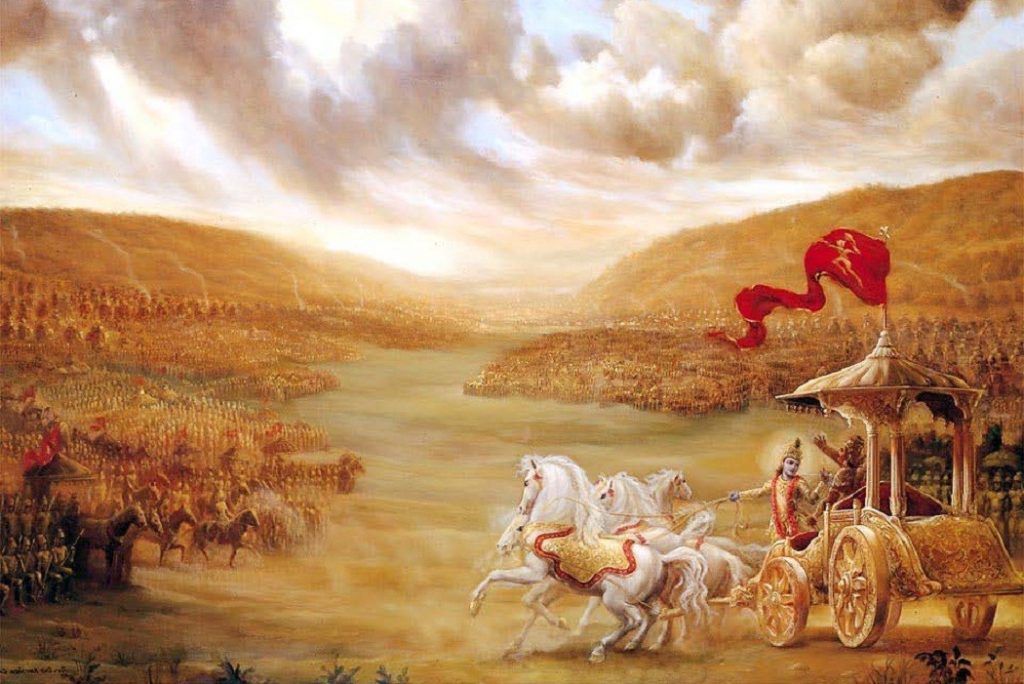
At the onset of Mahabharat war, Arjuna wanted to flee away from Kurukshetra, the battlefield. But Krishna wanted Arjuna to fight the Mahabharat war. You may wonder why Krishna wanted the war? War brings mayhem. So, no sane man wants war. But still Krishna, the Supreme Personality of Godhead, was unhappy when Arjuna was thinking not to fight.
You and I can list down many benefits if there was no Mahabharat war.
Tens and thousands of soldiers who died in the war would have been saved. Abhimanyu, Arjuna’s son, would have not lost his life. Bhisma and Drona would have not died. If Pandavas and Kauravas would have not fought there would have been no deaths, no widows, no orphaned children.
It appears to be a noble thought. Now picture a scenario. Group of terrorists have entered a city. Military comes to know about their hideout. They are about to ambush the terrorist camp. But the leader of the army develops cold feet. He does not want to attack the terrorists. Why should we kill them? They are our brothers; humans like us. Let us be non – violent. Let us let them live. The army aborts the mission. After few hours the terrorists create mayhem in the city. They kill hundreds of people – old, young, men, women, children none are spared.
What will you think about the leader of the army? A kind-hearted soldier? A generous leader or a coward? Will he be glorified or rebuked? Will he be punished or rewarded? The answer is obvious.
Duryodhana was not fit to become the king
Duryodhana was an atrocious person. Corrupt, cunning and cruel. To become the king of Hastinapur, he was ready to go to any extent. He had broken many religious principles to satisfy his wanton desires. Krishna knew Duryodhana’s demoniac mindset. He knew that if evil Duryodhana becomes the king, he will act against the religious principles. He will be an unjust ruler.
Duryodhana committed five major crimes. For these misdeeds, he should be punished and not rewarded.
Below we discuss the five major evil deeds of Duryodhana.
Five major crimes committed by Duryodhana which justifies the Mahabharat war:
1. Duryodhana tried to kill Pandavas deceitfully
Duryodhana was envious of his Pandava brothers since childhood. He envied them. Duryodhana especially disliked Bhima when they were kids. He tried to kill Bhima by mixing poison in his food. Later he threw unconscious Bhima into the water. But fortunately, Bhima did not die.
Later he tried to burn the Pandavas alive along with their mother, Kunti, in Lakshagriha. He did not have any hesitation in burning his aunt, Kunti, an old lady who was like his mother.
2. Duryodhana tries to disrobe Draupadi
In Kuru assembly, after the Pandavas lost the dice game, Duryodhana decided to insult Draupadi. Draupadi was his sister-in-law. It was his responsibility to protect her. But he was such a wicked person that he ordered his brother, Dushasana to bring Draupadi in the assembly hall. Karna supported him.
When Dushasana went to bring Draupadi, she was in her personal room. Dushasana dragged Draupadi, his sister-in-law, by her hair and brought her in the assembly. Draupadi was in shock. She was in tears. She feared for her honour and life. Duryodhana, Dushasana, Karna, Sakuni were laughing seeing the plight of Draupadi.
Laughing loudly, madly and arrogantly, Duryodhana gestured Draupadi to come and sit on his left thigh. While saying so, he was slapping his thigh.
None of the elders in the assembly could do anything or say anything. Dhritarashtra, the king, blindly attached to his son, Duryodhana, remained quiet. Elders like Bhisma, Vidura, Drona, Kripa all were helpless.
Duryodhana then asked Dushasana to strip Draupadi naked. Dushasana, Duryodhana’s younger puppet, started pulling Draupadi’s sari. Helpless Draupadi was tightly holding her sari begging everyone to save her. Duryodhana, Dushasana, Karna, Sakuni were laughing like mad men seeing the plight of Draupadi.
Duryodhana who wanted to be the king of Hastinapur was publicly shaming a woman. He wanted to preside the assembly where he was now shaming a woman.
Did Hastinapur deserve a king like Duryodhana who was abusing a woman publicly?
In the great Kuru assembly, surrounded by hundreds of great personalities, Draupadi found herself all alone. No one was there for her. She begged, pleaded, cried tears but no one came to help her.
Krishna saves Draupadi from Dushasana
Draupadi understood that other than the Lord there is no one who can help a mortal being. She left her sari which she was holding tightly, raised her both harms and helplessly cried Krishna’s names. Krishna was not there in the assembly hall. But Krishna is there in everyone’s heart. He heard Draupadi’s cry for help and immediately came for her help.
Dushasana was trying to pull the sari and Krishna provided unlimited sari to Draupadi. Dushasana tried hard to undress Draupadi but failed. He was exhausted and almost fainted. Krishna saved Draupadi. Evil four – Duryodhana, Dushasana, Karna, Sakuni – stopped laughing. Duryodhana failed to disrobe Draupadi.
Draupadi, seething with anger, took a vow in that assembly, “I will not tie my hair until it is bathed with the blood of Dushasana.”
Bhima who was somehow controlling his anger, stood up and took two vows:
Bhima’s vow in the Kuru assembly
Fuming with anger Bhima looked towards Duryodhana and Dushasana. He then looked towards everyone present in the assembly and took a vow:
I will kill Dushasana, rip apart his chest and will drink his blood. With that blood I will bathe Draupadi’s lose hair.
“O kings of the world,” he thundered, “listen to my words! I shall now make a vow unlike any that has been made before. Nor shall such a vow be made in future. If I do not forcefully tear open the breast of this sinful wretch on the battlefield and drink his blood, then may I not obtain the path of my ancestors.” – Draupadī Dragged to the Assembly
Although Duryodhana failed to disrobe Draupadi, but it shows his evil mindset.
3. Duryodhana abducts a Gandharva lady
Pandavas were exiled to the forest after they lost the dice game. Without any riches, they were living frugally in the forest. Duryodhana, Karna and Sakuni thought to go to the forest to humiliate the Pandavas. They decided to stay near the place where the five Pandavas were residing. Duryodhana wanted to display his opulence. This he felt will embarrass the five brothers.
In the forest Duryodhana committed another crime. He abducted a lady who was a Gandharva. Later the Gandharvas led by Chitrasena rescued the lady by defeating Duryodhana and Karna. Gandharvas even captured Duryodhana. Duryodhana and Karna thought they were great warriors, but they were defeated by the Gandharvas.
In fact, later Arjuna and Bhima went and rescued Duryodhana. Duryodhana had gone to humiliate the Pandavas but himself got shamed.
This again shows Duryodhana’s character. He had no respect for women.
4. Duryodhana disobeyed everyone including Bhisma, his great grandfather, and Dronacharya, his guru
Duryodhana never listened to anyone’s advice. He disrespected Bhisma, who was his great grandfather. Duryodhana disobeyed his guru, Dronacharya. He always rebuked Vidura, his uncle and one of the most noble souls in Hastinapur. And Dhritrashtra, his father, who was the king was Duryodhana’s puppet. Dhritarashtra was so attached to his son that he did not have the courage to say no to him.
A king should always be open to advice from the elders and the ministers. But Duryodhana was full of arrogance. He did not listen to anyone. Duryodhana always wanted to have his way. He only wanted to satisfy his ignoble desires.
5. Duryodhana tried to imprison Krishna, the Supreme Lord
Pandavas led by Krishna were very pious. Although Duryodhana had committed so many sins but still they were ready to forgive him and start afresh.
Krishna personally went to Hastinapur as a peace messenger. He wanted to convince Dhritarashtra and Duryodhana to give up all enmity. Yudhishthira, the eldest Pandava, was the heir of the throne of Hastinapur. But Krishna told Dhritarashtra and Duryodhana that the Pandavas are ready to give the throne of Hastinapur to Duryodhana. However in return Duryodhana should give 5 villages to Pandavas to rule.
But Duryodhana said that he will not give them a land even of the size of the tip of a needle.
Duryodhana did not stop there. He decided to imprison Krishna who had come as peace messenger. He asked the soldiers to attack Krishna and capture Krishna. Krishna is not an ordinary person. He is the Supreme Lord. So, how can he be imprisoned? But Duryodhana who was full of pride thought he can capture Krishna and put him in prison.
Krishna expanded himself. He showed his gigantic form. Everyone present there was stunned. Duryodhana’s soldiers were fearful to even go near Krishna.
Krishna left the palace. All attempt to make peace came to an end. The war was inevitable.
Conclusion: Krishna wanted Arjuna to fight Mahabharat war to establish dharma
Duryodhana as a king would have been a disaster. So, Krishna did not want him to become the king of Hastinapur. It is said – yathā rājā tathā prajā. It means “as is the king, so are the subjects.”
The general public follows the footsteps of the ruler. So, if the ruler is corrupt, immoral then people follow his path and become corrupt and sinful.
Krishna had appeared to eliminate wicked people like Duryodhana and his supporters like Karna. He wanted to establish dharma.
Yudhishthira was pious. He was Dharmaraj – upholder of religious values and principles. This is why, Yudhishthira was fit to rule Hastinapur. So, Krishna wanted Arjuna to fight the Mahabharata war and establish Dharma.
Search
Recent Posts
-
Srimad Bhagavatam at ISKCON Newtown...
September 3, 2026
-
Srimad Bhagavatam at ISKCON Newtown...
September 1, 2026
-
Janmashtami: Celebrating Krishna’s Appearance Through...
August 17, 2026
-
Gopinatha Pattanayaka: 6 Lessons for...
August 16, 2026
-
What Does Krishna Say About...
August 11, 2026
What is the mood and mission of Srila Prabhupada? To help you attain love of Krishna.
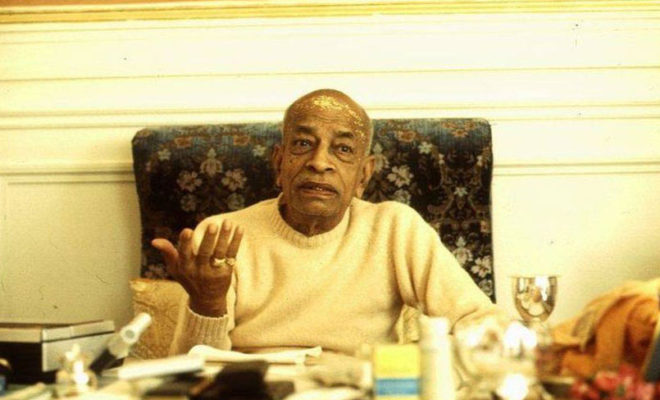
The mood and mission of Srila Prabhupada is to spread unadulterated teachings of Lord Krishna all over the world. So that you and I can lead a Krishna conscious life and ultimately attain love of Krishna. According to Srila Prabhupada the purpose of human form of life is to establish relationship with Krishna and return back to the kingdom of Krishna. This is the panacea for all material sufferings. And this is the ultimate perfection of life.
But for most of the spiritual leaders, spirituality is a means to improve material life. But Prabhupada did not focus much on improving one’s material well – being. Why so? Because he contends that if we lead a pure spiritual life then our material life will be automatically taken care.
In this world, we suffer because of the sins we committed in the past and because of the sins we are committing now because of ignorance. But when we bring Krishna in our life then he burns our past sins and removes our ignorance so that we do not commit any more sins. So, by practicing devotion to Krishna we become happy in this world also.
The mood and mission of Srila Prabhupada is best reflected in the preface of Bhagavad Gita as it is. There are three aspects to it. Let us try to understand:
Three aspects of the mood and mood of Srila Prabhupada
1. To present the message of Krishna to the world without any adulteration.
Srila Prabhupada wrote several books. One of the most widely read books of Srila Prabhupada is his commentary on Bhagavad Gita. He called his Bhagavad Gita commentary as “Bhagavad Gita as it is.” The word “as it is” means that his book presents the message of Krishna without any adulteration.
Srila Prabhupada explains, “Our business is to present the will of Kṛṣṇa, not that of any mundane speculator like the politician, philosopher or scientist, for they have very little knowledge of Kṛṣṇa, despite all their other knowledge.”
There are many scholars who have commented on this sacred book but have misinterpreted Krishna’s message. They use ‘Bhagavad Gita’ to propagate their own agenda. Someone even wrote a book and called it as “My Gita.” It has nothing to do with Krishna’s Gita. Many writers/commentators freely use the word ‘Gita’ because Bhagavad Gita is famous all over the world. Prabhupada strongly condemns these so-called scholars who in guise of writing commentary on Bhagavad Gita present their own mission and not Krishna’s mission.
In his commentary Prabhupada directly talks about Krishna’s mission. Krishna’s words are presented as it is. There is no personal interpretation. Whatever Krishna spoke to Arjuna, the same conversation is presented. Most importantly Prabhupada’s commentary is as per the knowledge which is coming down through the chain of disciplic succession (paramparā). So, it authentic.
2. To establish Krishna as the Supreme Personality of Godhead
In Bhagavad Gita Krishna says that he is the Supreme God. Few examples are:
- “I am the source of all spiritual and material worlds. Everything emanates from Me. The wise who perfectly know this engage in My devotional service and worship Me with all their hearts.” Bhagavad Gita 10.8
- “O conqueror of wealth, there is no truth superior to Me. Everything rests upon Me, as pearls are strung on a thread.” Bhagavad Gita 7.7
Krishna even shows his virat – rupa (universal form) in which entire universe is situated.
Later Arjuna too confirms that Krishna is indeed the Supreme Lord, and this truth has been accepted by great sages like Narada and others.
Arjuna says “You are the Supreme Personality of Godhead, the ultimate abode, the purest, the Absolute Truth. You are the eternal, transcendental, original person, the unborn, the greatest. All the great sages such as Nārada, Asita, Devala and Vyāsa confirm this truth about You, and now You Yourself are declaring it to me.” Bhagavad Gita 10.12-13.
In spite of these evidence there are mayavadi scholars and mundane scholars who write commentary on Bhagavad Gita but do not accept Krishna as the Supreme Lord. They reject Krishna. These so-called scholars say that Krishna and his inner spirit are different. They deny Krishna’s personality. But this is mental speculation. There is no verse in Gita where it is said that Krishna and his inner self are different. Prabhupada strongly refutes this illogical understanding.
He writes, “Kṛṣṇa is absolute, and there is no difference between Kṛṣṇa’s name, Kṛṣṇa’s form, Kṛṣṇa’s qualities, Kṛṣṇa’s pastimes, etc.” In his Bhagavad Gita commentary, Prabhupada again and again underlines that Krishna is the Supreme Personality of Godhead. He gives reference from Bhagavad Gita and also from other Vedic literatures to confirm Krishna’s Supreme position.
3. To educate people that real happiness is in serving Krishna and not in serving one’s senses
Prabhupada has made one thing very clear that no matter how hard you and I try but we cannot attain complete bliss as long as we have material consciousness. The more we try to fulfil our material desires, more miserable we become.
We are souls and Krishna is the Supersoul. As souls, we are part and parcel of Krishna. We are eternally related to Krishna. Krishna, the Supreme Lord, is the Supreme Controller, the cause of all causes. He is the source of all happiness.
So, to attain eternal happiness, we should connect ourselves to Krishna. We should endeavour to develop relationship with Krishna. And how to develop relationship with Krishna has been explained in detail in Bhagavad Gita and other books of Srila Prabhupada.
Whatever activities we do in this world, we should keep Krishna in the centre. Whatever results we achieve we should offer it to Krishna.
Krishna in Bhagavad Gita 9.27 says, “Whatever you do, whatever you eat, whatever you offer or give away, and whatever austerities you perform – do that, O son of Kuntī, as an offering to Me.”
And instead of satisfying our material senses, we should always try to satisfy Krishna’s senses. This will bring peace and happiness.
And we should regularly chant the names of Krishna like the Hare Krishna Mahamantra – Hare Krishna Hare Krishna Krishna Krishna Hare Hare/Hare Rama Hare Rama Rama Rama Hare Hare.
By doing so our hearts will get free from all material impurities and we will gradually develop love for Krishna. Once we attain love of Krishna all our sufferings will end. We will attain complete perfection.
Conclusion
The mood and mission of Srila Prabhupada was to fulfil the mission of Krishna. Krishna does not want anyone to suffer. Srila Prabhupada, a pure devotee of Krishna, felt pain when he saw people are suffering. Prabhupada wanted everyone to live as per the teachings of Krishna given in sacred books like Bhagavad Gita. He wanted people to become devotees of Krishna and attain love of Krishna. This is the best way to attain freedom from all sufferings.
To help people lead a Krishna conscious life, Srila Prabhupada established ISKCON. Today ISKCON is playing a very important role in spreading unadulterated message of Krishna in every nook and corner of the world. Millions of people are becoming devotees of Krishna because of ISKCON.
Search
Recent Posts
-
Srimad Bhagavatam at ISKCON Newtown...
September 3, 2026
-
Srimad Bhagavatam at ISKCON Newtown...
September 1, 2026
-
Janmashtami: Celebrating Krishna’s Appearance Through...
August 17, 2026
-
Gopinatha Pattanayaka: 6 Lessons for...
August 16, 2026
-
What Does Krishna Say About...
August 11, 2026
What happens to an unsuccessful yogi?
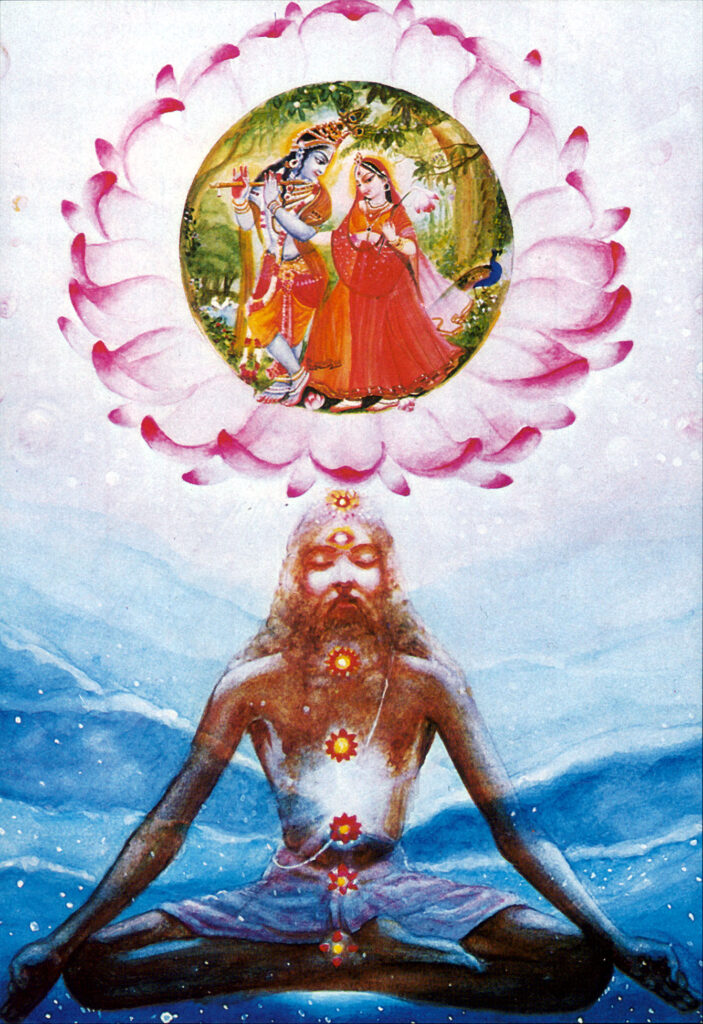
I used to always wonder what is the destination of an unsuccessful yogi? If someone starts practicing yoga or spirituality but gives up the practice after few years then what will happen to him? Or if someone is practicing yoga for a long period of time and then falls down then what will be his destination?
Will he be considered sinful because he has given up yoga? Will he suffer like a materialistic person who is only busy in sense gratification? Or will he suffer more than a materialistic person because he is a failed yogi?
Krishna answers this question in Bhagavad Gita 6.41 – 42. He says that the unsuccessful yogi is not doomed, he is not destined to suffer. Instead, a yogi who fails to attain complete perfection gets an opportunity to enjoy heavenly pleasure. And also gets an opportunity to again start practicing yoga in next life so that he can attain complete perfection.
There are two types of unsuccessful yogis. They have been described in Bhagavad Gita.
One who falls after practicing yoga for a short period of time and has made little progress.
- One who falls after practicing yoga for a long period of time.
- Based on their progress in yoga their destinations are also different. Let us see in detail what future awaits them.
Destination of an unsuccessful yogi who falls after little progress
Many people may take to yoga but they may give it up after short sincere practice. They may fall down because of material attachment. Or they may fall down because they are so materially conditioned that for them to follow the rules and regulations of yoga is difficult. Krishna bestows his mercy upon such unsuccessful yogi also. He says,
“The unsuccessful yogī, after many, many years of enjoyment on the planets of the pious living entities, is born into a family of righteous people, or into a family of rich aristocracy.” Bhagavad Gita 6.41
There are two destination of unsuccessful yogi who falls after little progress.
They go to heavenly planets
The unsuccessful yogi who falls after short practice of yoga goes to the heavenly planets where pious people go. They get heavenly body and enjoy heavenly pleasures for a long period of time. Whatever material desires they had gets fulfilled in heavenly abode.
They take birth in the family of a righteous person or aristocratic family
After enjoying heavenly pleasures, they again take birth in this material world. In this world they are born either into the family of a righteous person or into a rich aristocratic family.
- If they take birth in the family of a righteous person then from beginning, they will get favorable environment to practice yoga or spirituality.
- If they take birth in a wealthy family then they will not have to worry much about their material needs like food, clothing and shelter. Instead, they will have ample time to practice yoga and perfect their life.
For example, we see in ISKCON there are many devotees who have strong financial background. Alfred Ford is the great grandson of Henry Ford, founder of the Ford Motor Company. And he is practicing devotion to Krishna so sincerely. Similarly there are other devotees who are very rich. Such devotees are able to devote lots of time in practicing devotional life.
Destination of an unsuccessful yogi who falls after long practice of yoga
In BG 6.42, Lord Krishna explains the destination of unsuccessful yogi who falls after long practice of yoga.
“Or [if unsuccessful after long practice of yoga] he takes his birth in a family of transcendentalists who are surely great in wisdom. Certainly, such a birth is rare in this world.” Bhagavad Gita 6.42
If a yogi falls after long practice of yoga, then he gets an opportunity to take birth in the family of transcendentalists. These transcendentalists are pure devotee of God, Krishna. They have lots of wisdom. So, if an unsuccessful yogi gets birth in such a family then from childhood only he will get the chance to practice yoga.
He will always be surrounded by devotees of Lord. He will hear devotional stories in the house, hear kirtan, eat prasad (spiritual food. His family members will take him to holy places, to the temples. He will always be exposed to spiritual culture. From his spiritual family, he will learn how to practice spiritual life. And under their guidance he will practice yoga or devotion to Krishna with utmost sincerity. In this way he will become a pure devotee of Krishna and attain complete spiritual perfection.
Example
In the purport of this verse Srila Prabhupada tells that his guru, Srila Bhaktisiddhanta Sarasvati Thakura, and he himself was fortunate to take birth in the family of pure devotees.
Srila Bhaktisiddhanta Sarasvati Thakura was son of Bhakti Vinoda Thakura, an exalted devotee of Krishna. Bhakti Vinod Thakura was an exalted devotee of Krishna. He was a great spiritual scholar and a profound spiritual writer. Under his guidance, Srila Bhaktisiddhanta Sarasvati Thakura practiced devotion to Krishna since childhood. Later he became one of the most prominent spiritual leaders of India and preached to millions of people.
Similarly, Srila Prabhupada’s father Gaur Mohan De was a pure devotee. Since childhood his father encouraged him to practice devotion to Krishna and Radha. Whenever anyone visited his house, his father would ask him to bless his son so that he becomes a devotee of Srimati Radharani. As child, he saw his father always engaged in devotional activities which inspired him a lot.
He was so motivated that when he was just a small child, he organized a grand Rath Yatra festival. In the festival his family members, his little friends and people from neighborhood participated. They would pull the rath (cart) of Lord Jagannath, sing, chant, dance and distribute prasad. Prabhupada was always grateful to his father for encouraging him to become a devotee of Krishna since childhood.
Conclusion
Anyone who practices yoga or spirituality sincerely as given in the Vedic scriptures gets the mercy of Krishna. Even if a yogi falls during the practice of yoga still he has a great future. He is never lost and he is able to free himself from material miseries. Eventually an unsuccessful yogi becomes successful. Krishna makes their life glorious.
In these two verses BG 6.41 – 42, Krishna is giving us lots of hope. He is encouraging us to take to the path of spirituality. So, we should try our best to be situated in yoga. Success is guaranteed. Krishna himself confirms.
Search
Recent Posts
-
Srimad Bhagavatam at ISKCON Newtown...
September 3, 2026
-
Srimad Bhagavatam at ISKCON Newtown...
September 1, 2026
-
Janmashtami: Celebrating Krishna’s Appearance Through...
August 17, 2026
-
Gopinatha Pattanayaka: 6 Lessons for...
August 16, 2026
-
What Does Krishna Say About...
August 11, 2026
An example: How to control anger when someone provokes you?

Anger itself is difficult to control. But to control anger when someone provokes you is the most difficult thing to do. In Bhagavad Gita 16.21, Lord Krishna says that anger is gateway to hell. We all have experienced this in our life. As soon as we succumb to anger our peace of mind goes away, we feel terrible from within. So, Bhagavad Gita says that in all situations, we should try to control anger.
Even when someone provokes us, still we should try to control anger. Difficult to practice but not impossible. If we read the life of great devotees of Lord like Ambarish Maharaj or Haridas Thakura we see that they were able to control anger even in very difficult situations. This is why they attained perfection in their life.
If we study the lives of great spiritual personalities then we can learn a lot from them. And if we implement those learnings in our life then we will also attain perfection. Today also there are sincere spiritual leaders who are applying the teachings of scriptures and following the footsteps of acharyas (great spiritual teachers) in their lives.
I heard an incident related to HH Bhakti Rasamrita Swami Maharaj from HG Radheshyam Prabhu. Maharaj faced an awkward situation at an airport. He was provoked by a person but Maharaj without becoming provoked handled the situation effectively.
From this example we can learn how to control anger when provoked.
HH Bhakti Rasamrita Swami is accused by a fellow traveler
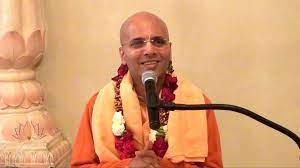
HH Bhakti Rasamrita Swami Maharaj is a senior sannyasi in Iskcon. He is a disciple of HH Radhanath Swami Maharaj. Once at an airport he faced a very difficult situation, rather embarrassing one. He was standing near the belt, waiting to collect his luggage. He saw one bag which he thought was his and he picked it up.
Immediately a man rushed towards him and grabbed the bag. “This is mine,” the man said rudely. Maharaj said sorry and gave him the bag. Maharaj had picked the bag because it looked exactly like his own bag.
We all have experienced this at airport. Many bags come and sometimes it looks exactly like ours. We pick it up and soon realize that it is not ours and so we put it back on the belt or if the bag’s owner comes, we hand it to them. It is quite normal.
But this man had a different mindset. He did not just snatch the bag from Maharaj but started yelling at him. “How dare you take my bag? Did you want to steal it?”
Maharaj was taken aback. People standing there started looking towards Maharaj and the man. It was so embarrassing for Maharaj. Maharaj maintained his composure. “Your bag looks similar to mine, so I thought it was mine and took it,” he said politely.
The man was not ready to accept Maharaj’s apology. “I do not believe you”, he shouted. The man’s wife rushed to the scene and tried to calm her husband. “It seems it was a genuine mistake. Do not use unkind words. Let’s go now. We have our luggage,” his wife reasoned. The man who seemed to suffer from bad temper did not listen to his wife. He continued with his accusation.
Without becoming angry Bhakti Rasamrita Swami won the battle
Maharaj was being falsely accused of stealing a bag in front of so many people. But Maharaj did not lose his temper. He did not raise his voice. He did not use any harsh words.
But Maharaj tried his best to make the man understand that he did not have any wrong motive. It was done by mistake and these things normally happens while collecting luggage at airport. Although Maharaj spoke politely but he did not allow the man to accuse him and take him for granted.
In few minutes Maharaj’s bag also came. He immediately picked his bag and showed to the man. Maharaj put his bag near the man’s bag. They were exactly similar. Only the bag’s owner after close examination could differentiate between the two.
The man looked extremely upset. His wife felt embarrassed. The people present there could easily understand who was right.
In normal situations many of us would have become wild when someone would have accused us of stealing. We would have responded harshly. It is difficult to tolerate insults and that to publicly.
But Maharaj handled the situation calmly and intelligently. He did not allow the man to dominate. The man spoke harshly. Maharaj spoke politely. The man accused Maharaj. But Maharaj logically countered the accusation. The man continued using unkind words even when his wife was asking him not to do so. Maharaj did not utter any unkind words but did not silently tolerate the accusation. Later Maharaj proved that he is right by showing that his bag and the man’s bag looks similar.
It was a provoking situation, but Maharaj did not become angry. He controlled his anger. He managed the embarrassing situation intelligently. Without losing his temper Maharaj won the battle. He controlled his anger during the provoking situation.
Strong spiritual foundation can help us to control anger
We all have seen people fighting and quarreling over trivial things at public places. Sometimes people even get into fisticuffs. They even use cuss words for which they may later feel embarrassed.
When we are insulted or when we are falsely accused of things which we have not done then we should not suffer silently. We should not allow others to insult or dominate us. But it is also not a good idea to lose our cool and behave in an irrational way. But such situations although difficult to handle can be managed intelligently.
We can control anger when someone provokes us only when we have a strong spiritual foundation. When we try to connect ourselves with God through spiritual practices like mantra meditation then we develop ability to control our inner self. We do not easily get carried away by our emotions. In fact, we develop inner strength to take charge of our emotions.
We are able to control our anger. We do not get easily provoked by trivial issues. Even if the issue is serious as in the case of Maharaj we are able to handle it properly.
Three effective ways to control anger when someone provokes you
From Maharaj’s incident we learn how to control anger when provoked and how to handle such situations.
We learn three lessons:
- Do not suffer silently when someone is misbehaving or insulting. As we saw Maharaj responded to all the allegations, he did not suffer silently.
- Even in provoking situations do not lose your temper or become angry. Maharaj remained calm and at no point he spoke harshly with the man.
- Be polite but be firm and present your facts logically. Maharaj countered all the allegations with logics and facts. Finally it was proven that he was right.
Search
Recent Posts
-
Srimad Bhagavatam at ISKCON Newtown...
September 3, 2026
-
Srimad Bhagavatam at ISKCON Newtown...
September 1, 2026
-
Janmashtami: Celebrating Krishna’s Appearance Through...
August 17, 2026
-
Gopinatha Pattanayaka: 6 Lessons for...
August 16, 2026
-
What Does Krishna Say About...
August 11, 2026
What does it mean to live in Vrindavan?
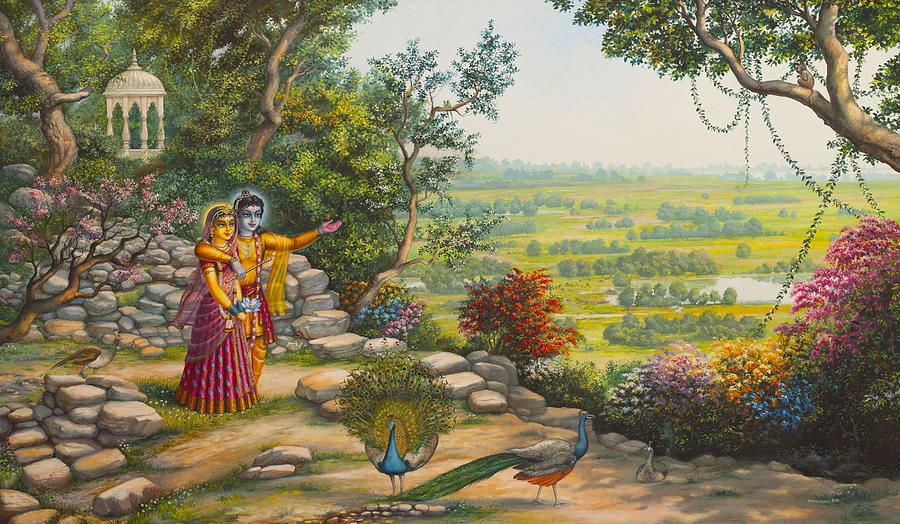
Devotees of Krishna always want to live in Vrindavan. But what does it mean to live in Vrindavan? Also can anyone live in Vrindavan?
Living in Vrindavan does not mean just being physically present there. If someone is physically staying in Vrindavan but is not practicing devotional life and is engaged in sinful activities, then he is not actually living in Vrindavan. But if someone is physically not in Vrindavan but is always chanting the names of Krishna and is always engaged in various Krishna Conscious activities then he is actually living in Vrindavan.
Srila Prabhupada says that “a pure devotee can live anywhere and create the atmosphere of Vrindavan by his devotional service.” Here Prabhupada want to emphasize the importance of devotional service. If we are constantly engaged in devotional activities, then we are actually living in Vrindavan dham.
Living in Vrindavan means remembering Krishna, serving Krishna, loving Krishna. By these activities we can easily attain Krishna. Krishna confirms this in Bhagavad Gita 8.14 “For one who always remembers Me without deviation, I am easy to obtain, O son of Pṛthā, because of his constant engagement in devotional service.”
Pure devotee creates Vrindavan atmosphere everywhere
A pure devotee of Krishna does not want anything for himself. He has no self-interest. He does everything to please the Lord and he is always absorbed in “thinking about Krishna without deviation and without considering the time or place.” Bhagavad Gita 8.14 purport.
Srila Prabhupada explains how a pure devotee is able to create Vrindavan atmosphere in any part of the world, “He should be able to carry out his service anywhere and at any time. Some say that the devotee should remain in holy places like Vṛndāvana or some holy town where the Lord lived, but a pure devotee can live anywhere and create the atmosphere of Vṛndāvana by his devotional service.” Bhagavad Gita 8.14 purport.
Lord Chaitanya is Lord Krishna but has a mood of a devotee of Krishna. He came to teach us how to practice devotion to Krishna. By his personal examples he showed that how a devotee should be engaged 24 hours in a day in chanting and hearing about Krishna. Śrī Advaita who was a contemporary of Lord Chaitanya would say, “Wherever You are, O Lord – there is Vṛndāvana.”
If we practice pure devotion then we are already in spiritual world
The purpose of human life is to return back to the spiritual world. In the spiritual world there is no misery, there is no death. There is only happiness. So, devotees are eager to go back to the spiritual world after leaving this world.
Once a devotee who seemed to be very desperate to go back to the spiritual world asked HH Jayadvaita Swami swami Maharaj, a senior disciple of Srila Prabhupada, “What are the symptoms by which we can understand that we will be returning back to Godhead in this lifetime only?”
HH Jayadvaita Swami is a very senior disciple of Srila Prabhupada and is respected as a great Vedic scholar.
Maharaj replied, “If we are sincerely chanting the holy names of Krishna, hearing about Krishna, reading about Krishna, following four regulative principles, not indulging in sense gratification, not doing any sinful activities then we are actually living in the spiritual world right now.”
It means if you and I are not experiencing the spiritual happiness now, it means we are not sincere devotees. Pure devotees like Prabhupada is always blissful and fearless even in this world because every moment they experience spiritual bliss.
Srila Prabhupada carried Vrindavan in his heart
By his personal example, Srila Prabhupada taught “what does it mean to live in Vrindavan?”
Before establishing worldwide Krishna Consciousness movement, Srila Prabhupada was physically living in Vrindavan in Radha Damodara temple. But his guru, Srila Bhaktisiddhanta Saraswat Thakura, had asked him to spread Krishna Consciousness movement. So he was eager to go out of Vrindavan to spread the teachings of Lord Krishna. So, he left Vrindavan to fulfill the mission of his guru.
Although Prabhupada left Vrindavan physically, but his purpose was to spread Krishna Consciousness all over the world. And wherever he went he always remained absorbed in Krishna. So, it is said that wherever Prabhupada went, he carried Vrindavan in his heart. He taught us how to create Vrindavan atmosphere in any part of the world.
Devotional life is not much about changing our externals, but it is about purifying our internal consciousness.
Prabhupada wanted that everyone in this world become a devotee of Krishna. But he also knew that it is not possible for everyone to leave their homes and come to Vrindavan.
Srila Prabhupada established temples which are non-different than Vrindavan
This is why he established temples in different parts of the world. In temples he installed the deities of Lord Krishna and Srimati Radharani. And made sure that They are worshipped as per Pāñcarātrika-vidhi.
He gave spiritual programs to follow in the temple – everyone should chant at least 16 rounds of Hare Krishna Mahamantra, do Mangala arati, Narasimha arati, Tulasi arati, Guru puja, attend Srimad Bhagavatam class, do Gaur arati in the evening, celebrate different festivals and be always engaged in spreading the teachings of Krishna. If these spiritual activities happen in temples daily, then those temples are non-different from Vrindavan.
Srila Prabhupada also asked grihasta (householders) to make their home a temple by keeping Krishna in the center. Also, the grihasta devotees should follow the same program which is followed in the temple. If it happens then our home is also like a temple and non-different than Vrindavan.
Wherever Krishna is worshipped that place is Vrindavan
HH Bhakti Tirtha Swami Maharaj was a senior disciple of Srila Prabhupada. He was a very prominent leader and played important role in spreading Krishna Consciousness movement. Unfortunately, he got cancer. The doctors said that he will leave his body soon. Maharaj had every opportunity to go to Vrindavan and leave body. But he decided to leave his body in Gita Nagari which is in Pennsylvania, USA.
Maharaj established Krishna community in Gita Nagari as per the desire of Srila Prabhupada. He wanted to show to the world that Gita Nagari is non – different than Vrindavan. It is because in Gita Nagari everyone is always engaged in loving devotional service to Krishna. Maharaj wanted to declare it boldly that wherever Krishna’s name is chanted and wherever Krishna is worshipped that place is Vrindavan.
We can always live in Vrindavan
Srila Prabhupada was a visionary, a great spiritual leader. He taught us how to always remain absorbed in Krishna. He also taught us to convert our home into Vrindavan and how to carry Vrindavan in our hearts.
If we live as per the guidelines of Prabhupada we will transform our living place into Vrindavan. And we will then always live in Vrindavan.
Search
Recent Posts
-
Srimad Bhagavatam at ISKCON Newtown...
September 3, 2026
-
Srimad Bhagavatam at ISKCON Newtown...
September 1, 2026
-
Janmashtami: Celebrating Krishna’s Appearance Through...
August 17, 2026
-
Gopinatha Pattanayaka: 6 Lessons for...
August 16, 2026
-
What Does Krishna Say About...
August 11, 2026
How to apply teachings of Catuh – Sloki – Bhagavad Gita in personal life?

The four verses of Bhagavad Gita – BG 10.8, BG 10.9, BG 10.10, BG 10.11 – are called catuh – sloki – Bhagavad Gita. Catuh – Sloki – Bhagavad Gita is called the essence of Bhagavad Gita. Because in these four verses Krishna shares the topmost knowledge and also reveals his heart.
Krishna through these verses establishes that:
- He is the Supreme Lord
- His pure devotees are always absorbed in his meditation.
- He shows special mercy to his pure devotees.
- His pure devotees attain him by his mercy.
Taking shelter of Krishna always
In the first verse ofCatuh – Sloki – Bhagavad Gita Krishna says,
“I am the source of all spiritual and material worlds. Everything emanates from Me. The wise who perfectly know this engage in My devotional service and worship Me with all their hearts.” Bhagavad Gita 10.8.
Here Krishna is clearly saying “ahaṁ sarvasya prabhavo,” i.e. “I am the source of all material and spiritual worlds.” This verse makes it clear that Krishna is the Supreme Lord, no one is superior to him. It implies that all the demigods including Lord Shiva and Lord Brahma derive their power from Krishna.
So, in all situations and circumstances we should take shelter of Krishna and not the shelter of demigods. We should have firm faith that if Krishna is pleased then automatically all the demigods will be pleased. So, there is no need for me to separately worship any demigods.
Focusing on śravaṇaṁ, kīrtanaṁ and smaraṇam
In the second verse ofCatuh – Sloki – Bhagavad Gita Krishna says,
“The thoughts of My pure devotees dwell in Me, their lives are fully devoted to My service, and they derive great satisfaction and bliss from always enlightening one another and conversing about Me.” Bhagavad Gita 10.9
Here Krishna is glorifying his devotees. The Lord says that his devotees mind (mat–cittāḥ) are always engaged in him. And their lives (mat–gata–prāṇāḥ) are devoted to him. His devotees derive great pleasure and satisfaction in talking (kathayantaḥ) about him and preaching (bodhayantaḥ) about him.
Everyone wants to be happy in this world. But unfortunately, we look for pleasure in the outside material world. The so-called pleasure which we experience in this world is never going to satiate our hearts. In fact, it always results in frustration. In this verse Krishna is telling us how we can experience unlimited happiness and satisfaction in our life.
So, we should not waste time and energy in searching for happiness in this mortal material world. But we should utilize each and every moment of our life in practicing devotion to Krishna. This is the elixir for all our miseries.
For bliss in our life,
- We should completely absorb ourselves in hearing (śravaṇaṁ) about Krishna
- Chanting (kīrtanaṁ) his holy names and glories
- And should always try to remember (smaraṇam) his wonderful pastimes.
Applying teachings of Bhagavad Gita 10.9
To apply the teachings of Bhagavad Gita 10.9, we should take following practical steps:
- Hearing at least one hour of Krishna conscious lecture daily. We can hear lectures of either Srila Prabhupada, HH Radhanath Swami Maharaj or other senior sannyasis and devotees of Iskcon
- Reading one hour of Srila Prabhupada’s books daily like Bhagavad Gita and Srimad Bhagavatam.
- Memorizing slokas and vaisnava songs so that we can keep on reciting it whenever possible.
- Hearing kirtan or Vaisnav songs while doing office work or household work if the work is not too mentally engaging.
- Preaching the message of Krishna proactively. We should try our best to spread Krishna Conscious movement.
- If possible, writing Krishna Conscious articles regularly. We can try to publish the articles in Iskcon’s official magazine – Back to Godhead. Or we can try to publish it on Iskcon authorized websites like Iskcon News and Dandavats. We can also have our personal blogs where we can post the articles. We can allocate sometime to write the articles. It can be 15 minutes or 30 minutes daily.
Whatever we hear or read or speak, we mostly contemplate upon those subject matters. So if we are properly engaged in śravaṇaṁ and kīrtanaṁ then smaraṇam i.e. remembrance of Krishna will also be taken care.
Our focus should be to deepen our relationship with Krishna by constantly engaging in devotional service.
Endeavoring to attain Krishna’s special mercy
Krishna is our supreme father and more than us, he is eager that we return back to him.
So, in BG 10.10, Krishna says that if someone is constantly devoted (satata–yuktānām) in serving Him then he gives them understanding (buddhi–yogam) to come to him.
“To those who are constantly devoted to serving Me with love, I give the understanding by which they can come to Me.” Bhagavad Gita 10.10.
And in the next verse, BG 10.11, Krishna says that he shows special mercy (anukampā–artham) to his devotees by completely destroying (dispel) devotees’ ignorance with the shining lamp of knowledge (jnana) which is the cause of suffering.
“To show them special mercy, I, dwelling in their hearts, destroy with the shining lamp of knowledge the darkness born of ignorance.” Bhagavad Gita 10.11
We suffer in this world because of ignorance. And in ignorance we take decisions which becomes the cause of more suffering. Lust, greed and anger contaminates our intelligence and knowledge. And under the influence of these anarthas(vices) we take decisions. Such decisions instead of bringing bliss in our life makes us more miserable.
Suffice to say in our conditioned state we do not know what is right and what is wrong for us.
But if we are devoted to Krishna then the Supreme Lord who is our supreme father guides us towards the right path. That path is the path of peace and joy. This helps us to live happily in this world. And Krishna even gives us intelligence by which we can ultimately attain him. This is Krishna’s special mercy.
Applying teachings of Bhagavad Gita 10.10 & 10.11
If we want to attain Krishna’s mercy, then we should apply the teachings of BG 10.10 and BG 10.11 in our personal lives in following ways:
- We should be more sincere in our devotional life and get actively engaged in Krishna conscious activities.
- We should understand that our knowledge & intelligence is currently impure. So before taking any decision we should pray to Krishna for right guidance.
- Along with that we should also see that the decisions which we are taking is in line with guru, sadhu and sastra.
- Also before taking any decision, we should discuss with senior devotees. This will always help us to make right decisions which will be pleasing to Krishna.
These are the practical ways to apply the teachings of Catuh – Sloki – Bhagavad Gita. If we succeed in doing so, we will attain the mercy of Krishna.
Search
Recent Posts
-
Srimad Bhagavatam at ISKCON Newtown...
September 3, 2026
-
Srimad Bhagavatam at ISKCON Newtown...
September 1, 2026
-
Janmashtami: Celebrating Krishna’s Appearance Through...
August 17, 2026
-
Gopinatha Pattanayaka: 6 Lessons for...
August 16, 2026
-
What Does Krishna Say About...
August 11, 2026
Why Chandan Yatra is celebrated?
Chandan Yatra starts from the day of Akshaya Tritiya. During Chandan Yatra, Chandan(sandalwood) paste is applied to the deity of Lord Krishna and Lord Jagannath. In Vrindavan, Jagannath Puri and Mayapur, this festival is celebrated in a grand way
Chandan Yatra Duration
Chandan Yatra is celebrated for 21 days in Vrindavan and Mayapur. But in Jagannath Puri, it is celebrated for 42 days. For 21 days as Bahara(ouster) Chandan Yatra. And for another 21 days as Bhitara (inner) Chandan Yatra.
Chandan provides comfort to Krishna in hot summer
Month of May/June (Vaisakha/Jyestha) is very hot in India. In this month temperature reaches its peak and the heat becomes unbearable. Devotees become very concerned about the Lord’s comfort. So, they decide to apply chandan (sandalwood paste) to Lord. Sandalwood paste has a cooling effect, and it also smells nice.
Chandan is applied artistically and not clumsily. It enhances the beauty of the beautiful Lord. Chandan is applied on the entire body including face, hands, legs and torso of Lord Krishna, Lord Jagannath and Lord Baladeva. The creamy paste is also put on Srimati RadhaRani and Subhdra Devi’s face especially on forehead.
Chandan Yatra history
Purushottama Kshetra Mahatmya tells that Lord Jagannath personally told king Indradumnya to celebrate the Chandan Yatra festival.
For the followers of Brahma-Madhva-Gaudiya Sampradaya (Brahmā-Madhva-Gauḍīya-sampradāya) there is a beautiful story associated with Chandan Yatra festival. Chaitanya Charitamrita (Madhya Lila Chapter 4) describes it in detail.
Gopala(Krishna) comes in Madhavendra Puri’s dream
Madhavendra Puri. was a great devotee of Lord Krishna. He was residing in Vrindavan near Govardhan Hill. He would do Govardhan parikrama and spend his day and night chanting the names of Krishna and meditating on beautiful pastimes of Krishna.
Once he was absorbed in his bhajan (devotion) near Govind kunda. A cowherd boy came to him with a pot of milk. The boy said, “In Vrindavan no one goes hungry. Some ladies who had come here to fetch water saw that you only do bhajan and do not eat anything. They asked me to give you this pot of milk. So, please take it.”
The boy’s sweet words gave joy to Madhvendra Puri. He looked so beautiful. Madhavendra Puri felt deep attraction for him. He drank the milk and experienced great satisfaction.
In the same night he saw a dream. In the dream the same boy appeared. Holding Madhavendra Puri’s hands, the boy took him to nearby bush in the forest. He said, “I reside here and because of this I suffer from severe cold, rain, hot weather and storms. My name is Gopala, and I am the lifter of Goverdhan hill. Take me out from here and place me nicely on top of the hill. After this wash me with huge quantities of cold water.”
Madhavendra Puri builds a temple of Gopala(Krishna) on top of Govardhan hill
Madhavendra Puri got up. He felt great pleasure. But he also lamented that he was not able to recognize Krishna when he came with a pot of milk. In the morning Madhavendra Puri gathered the villagers and went inside the forest to search the deity. They found the deity of Gopal covered with dust. The deity was heavy.
All the villagers carried the deity and nicely placed him on top of the hill. The deity was then bathed with huge quantity of water as per the desire of Gopala. Water was brought from Govinda Kunda. There was a big celebration. Everyone in the village participated in the festival. Even devotees from nearby villages came for the celebration.
Huge quantities of prasadam were prepared and offered to the Gopala deity. After that everyone took prasad. Madhevendra Puri felt great joy. Now daily the deity of Gopala was worshipped gorgeously under the direction of Madhevendra Puri.
Krishna asks Madhavendra Puri to go to Jagannath Puri to bring sandalwood
After two years Gopal again appeared in Madhevendra Puri’s dream and said, “My bodily temperature still has not decreased. Please bring sandalwood from the Malaya province and smear the pulp over My body to cool Me. Bring sandalwood pulp from Jagannātha Purī. Kindly go quickly. Since no one else can do it, you must.” Chaitanya Charitamrita (Text 106 – 107).
Madhavendra Puri immediately decided to go to Jagannath Puri to bring sandalwood for Gopal. Before leaving he made all arrangements so that service to Gopal continues nicely even in his absence.
Madhavendra Puri comes to Remuna where Gopinath steals ksira(sweet rice) for him
On the way to Jagannath Puri, Madhavendra Puri came to Remuna. There he took darshan of Gopinath. In Remuna a beautiful pastime of Lord Gopinath took place. The Supreme Lord showed his mercy upon Madhavendra Puri by stealing ksira (sweet rice) for him. Because of this the deity is now called Kṣīra-corā (the thief who stole the sweet rice) Gopinath.
Madhavendra Puri collects sandalwood & camphor from Jagannath Puri
From Remuna Madhavendra Puri went to Jagannath Puri. He took darshan (divine vision) of Lord Jagannath and felt great joy. The story that Gopinath had stolen ksira(sweet rice) for Madhavendra Puri in Remuna had also reached Jagannath Puri. Devotees of the temple town felt blessed to see Madhavendra Puri. Scores of people would come to see him and to offer respects to him. Madhavendra Puri thought that this would hinder his devotional service.
He told the devotees of Puri the purpose for which he was there. Everyone was eager and happy to help him. They arranged sandalwood and camphor for him. Two devotees also accompanied him to help him carry sandalwood and camphor.
In Remuna Gopala Deity asks him to apply Sandalwood paste to Gopinath Deity
While on his way to Vrindavan from Jagannath Puri, Madhavendra Puri again came to Remuna. The priest of Gopinath was so happy to receive him. He welcomed him and offered the ksira(sweet rice) which was offered to Gopinath. Madhavendra Puri was happy to honour the prasad of Gopinath.
He decided to take rest that night in the temple only. He again saw a dream. In the dream Gopala came. Gopala said to Madhavendra Puri that he has already got the sandalwood and camphor. Now grind all the sandalwood and camphor and apply the pulp to Gopinath deity because he and Gopinath are same.
“There is no difference between My body and Gopīnātha’s body. They are one and the same. Therefore if you smear the sandalwood pulp on the body of Gopīnātha, you will naturally also smear it on My body. Thus the temperature of My body will be reduced.” Chaitanya Charitamrita (Madhya Lila, Chapter 4, Text 160)
Madahavedra Puri woke up. He narrated the dream to the servants of Gopinath. The servants were so happy to hear the instructions of Gopala. They grinded sandalwood and camphor and applied the pulp to the deity of Gopinath.
Devotees throughout the world following the footsteps of Madhavendra Puri apply sandalwood paste to the deity of Krishna and Jagannath and celebrate it as Chandan Yatra.
To serve Krishna devotees do not care for their comfort
When we like and love a person then we are ready to do anything to please him/her. No difficulties ever deter us or decrease our desire to serve him. For e.g. a mother is ready to do everything to please her child. She tirelessly takes care of her baby without any complaint. She enjoys every moment she spends with her child and shudder at the thought of separation.
A devotee is similarly eager to serve God. A devotee is a mortal being who gives his life and heart completely to God. He thinks nothing but only about Lord, he does nothing which does not please Lord and he does everything to make sure that God is always happy, has all the comforts. Great devotees of Krishna like Madhavendra Puri teaches us by his personal example that how we should be eager to serve the Lord without caring for our personal comforts.
Iskcon devotees all over the world celebrate Chandan Yatra
Devotees of Krishna all over the world celebrate this festival. Iskcon devotees too celebrate Chandan Yatra. Everyone participates. Monks (resident brahmacharis) and congregation devotees come together to celebrate the festival.
Batan (Sil – Batta) is used to prepare sandalwood paste. The sandalwood is rubbed against the batan with some water. The batan is kept in the temple hall and anyone irrespective of caste, creed, race, sex, colour, nationality can participate in this service of preparing sandalwood paste.
The beauty of devotional life is that every individual tries to serve the Lord and simultaneously also want to engage others in serving the Lord. The only requirement is that one should have love for Krishna.
With Chandan on his face, Lord Krishna & Lord Jagannath looks stunning. During Chandan Yatra every lover of Krishna compulsorily comes to see the Lord. They also enthusiastically participate in preparing sandalwood paste with their own hands; the paste is later applied to the Lord.
Search
Recent Posts
-
Srimad Bhagavatam at ISKCON Newtown...
September 3, 2026
-
Srimad Bhagavatam at ISKCON Newtown...
September 1, 2026
-
Janmashtami: Celebrating Krishna’s Appearance Through...
August 17, 2026
-
Gopinatha Pattanayaka: 6 Lessons for...
August 16, 2026
-
What Does Krishna Say About...
August 11, 2026