Krishna is the original source of all happiness
Search
Recent Posts
-
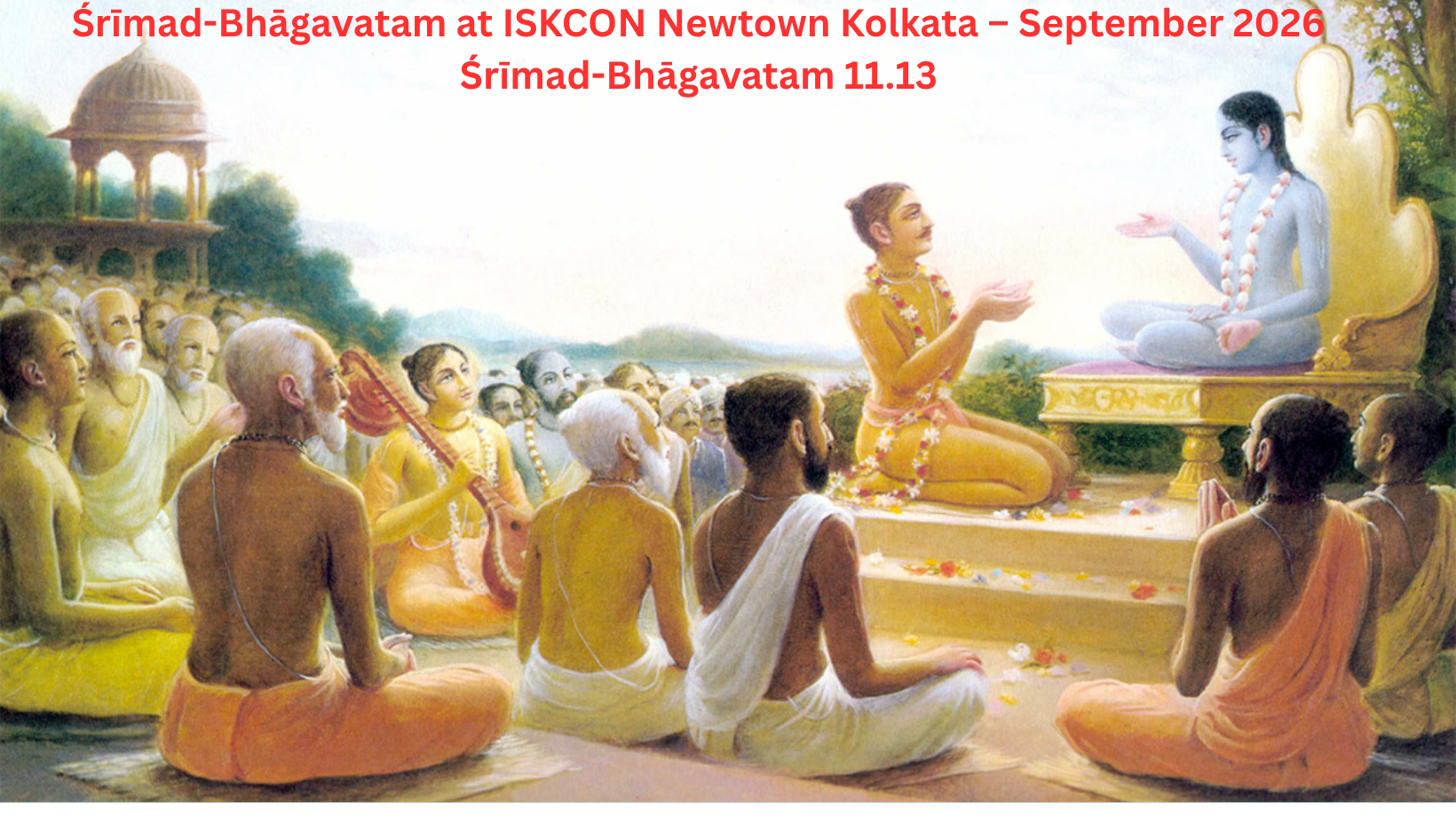
Srimad Bhagavatam at ISKCON Newtown...
September 1, 2026
-
Janmashtami: Celebrating Krishna’s Appearance Through...
August 17, 2026
-

Gopinatha Pattanayaka: 6 Lessons for...
August 16, 2026
-
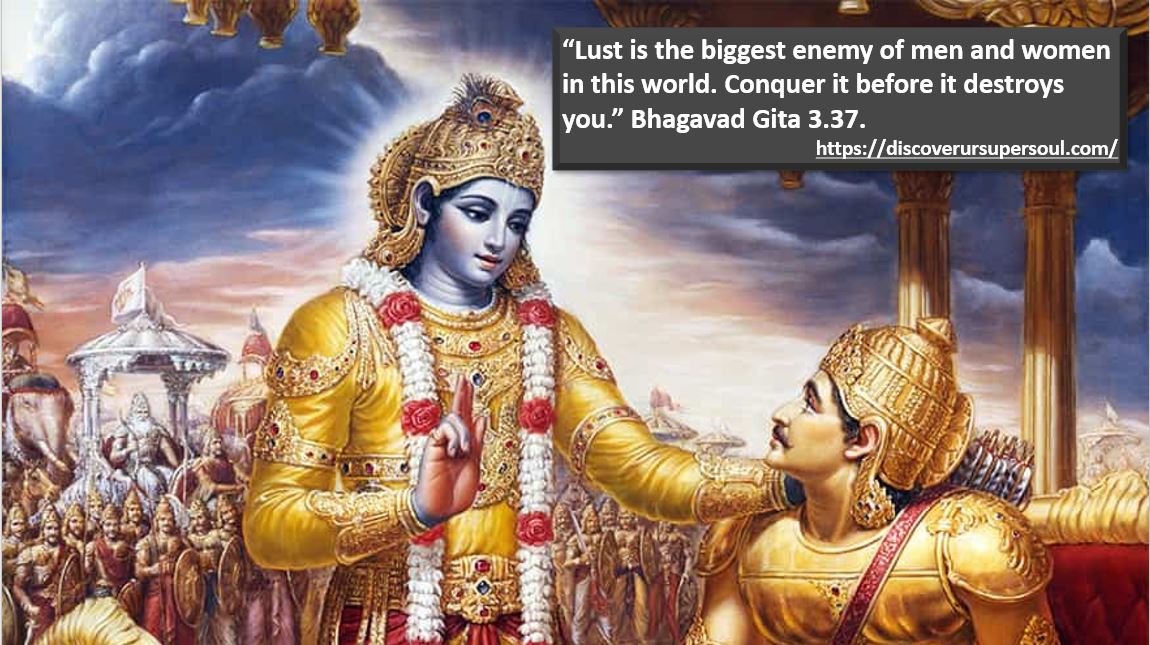
What Does Krishna Say About...
August 11, 2026
-
Are you ready to choose...
August 2, 2026
With teary eyes parents allow their child to become food of the crocodile


Search
Recent Posts
-
Srimad Bhagavatam at ISKCON Newtown...
September 1, 2026
-
Janmashtami: Celebrating Krishna’s Appearance Through...
August 17, 2026
-
Gopinatha Pattanayaka: 6 Lessons for...
August 16, 2026
-
What Does Krishna Say About...
August 11, 2026
-
Are you ready to choose...
August 2, 2026
Let us guard our mind like a gardener guarding his gorgeous garden

(Pic source: wikipedia)
Search
Recent Posts
-
Srimad Bhagavatam at ISKCON Newtown...
September 1, 2026
-
Janmashtami: Celebrating Krishna’s Appearance Through...
August 17, 2026
-
Gopinatha Pattanayaka: 6 Lessons for...
August 16, 2026
-
What Does Krishna Say About...
August 11, 2026
-
Are you ready to choose...
August 2, 2026
World’s largest medical study confirms Vedic viewpoint- Life Exists after Death
 |
| Image source: Krishna.com |
The Vedic literatures explain that “conscious being” is atma (soul) which has an independent existence. As long as the soul remains in control of the physical body the body functions and the moment the soul’s connection with the body ceases the body becomes lifeless. As per the karmic quota a soul is bound to a physical body, when the quota is exhausted the soul leaves for a different destination.
In the case of this man, the soul was temporarily displaced from the physical body but since the karmic quota wasn’t exhausted so soul remained emotionally connected and finally returned back into the body bringing back life into the clinically dead body. This was not one of the cases; the team of researchers found that of the 2060 cardiac patients who were examined, 330 survived and 140 of them spoke about some sort of awareness when they were medically dead and being resuscitated.
For the students of Vedic literatures and spiritualists in general, this scientific revelation isn’t surprising. Vedic books contain many logical explanations, with examples, about the relationship between the soul and the physical body.
For e.g. Srimad Bhagavatam narrates the story of King Citraketu whose little son came back to life after being dead. The king was inconsolable upon seeing his dead son, so sage Narada, just to educate the king about the ephemeral nature of physical body, temporarily brought the child’s soul into the lifeless body. The moment the soul entered, the dead body began exhibiting all the symptoms of life. And the soul through the body of the boy spoke to the king. To king’s disbelief the boy said that he is not his only father, he had had many fathers and mothers in the past because since time immemorial he has been occupying different bodies including that of humans, animals, aquatics, plants.
Search
Recent Posts
-
Srimad Bhagavatam at ISKCON Newtown...
September 1, 2026
-
Janmashtami: Celebrating Krishna’s Appearance Through...
August 17, 2026
-
Gopinatha Pattanayaka: 6 Lessons for...
August 16, 2026
-
What Does Krishna Say About...
August 11, 2026
-
Are you ready to choose...
August 2, 2026
Entice or cajole or force mind to accompany whenever in devotees’ company
Search
Recent Posts
-
Srimad Bhagavatam at ISKCON Newtown...
September 1, 2026
-
Janmashtami: Celebrating Krishna’s Appearance Through...
August 17, 2026
-
Gopinatha Pattanayaka: 6 Lessons for...
August 16, 2026
-
What Does Krishna Say About...
August 11, 2026
-
Are you ready to choose...
August 2, 2026
Devotion with determination opens the gate for perfection
Search
Recent Posts
-
Srimad Bhagavatam at ISKCON Newtown...
September 1, 2026
-
Janmashtami: Celebrating Krishna’s Appearance Through...
August 17, 2026
-
Gopinatha Pattanayaka: 6 Lessons for...
August 16, 2026
-
What Does Krishna Say About...
August 11, 2026
-
Are you ready to choose...
August 2, 2026
Right intention attracts Krishna’s attention
Search
Recent Posts
-
Srimad Bhagavatam at ISKCON Newtown...
September 1, 2026
-
Janmashtami: Celebrating Krishna’s Appearance Through...
August 17, 2026
-
Gopinatha Pattanayaka: 6 Lessons for...
August 16, 2026
-
What Does Krishna Say About...
August 11, 2026
-
Are you ready to choose...
August 2, 2026
Thousands joyfully march towards Krishna on his birthday
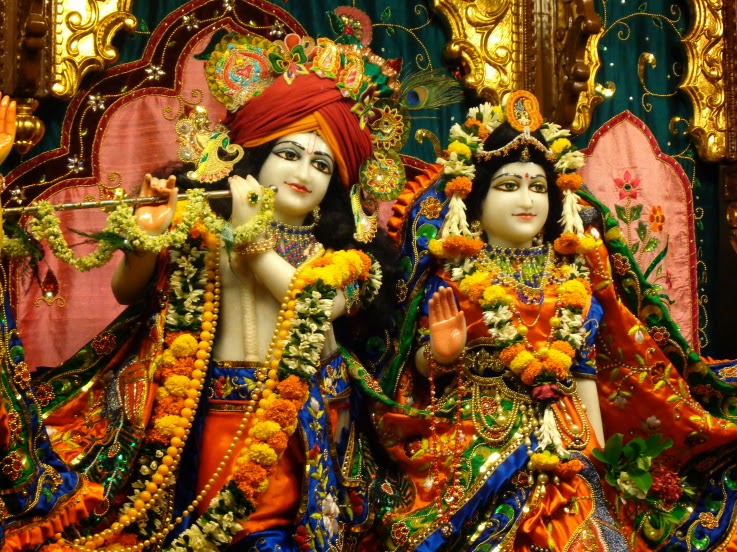
Hundreds of happy faces greeted me as I entered into the sanctum sanctorum of the Sri Sri Radha Govinda temple early in the morning. It was Janmashtami day, birthday of Lord Krishna, and the temple hall was buzzing with enthusiastic devotees – celibate monks in saffron coloured dhoti and kurta, other men in white dhoti and kurta and women in sarees, all were present.
Everyone had Vaisnava tilak on their forehead. Young, old and children all had come. Door of the altar was still closed but the celebration had already begun.
Both the hands raised high in the air, swaying their body while moving rhythmically three steps forward and three steps backward all were joyfully singing – Hare Krishna Hare Krishna KrishnaKrishna Hare Hare/Hare Rama Hare RamaRamaRama Hare Hare.
Mridangas were being beaten energetically, cymbals were being struck against each other briskly, and the lead singer was passionately singing loudly yet melodiously to the delight of all.
The entire crowd was following the tune of the lead kirtan singer. Initially the beat was slow and slowly it picked the momentum. The devotional spirit of the devotees was rising with each beat. And soon everyone got into the mood of dancing.
Holding each other’s hand devotees formed a big concentric circle. Within the big circle there were many small circles. Everyone was moving clockwise in the circle and was continuously crying the holy name. Few came in the centre of the circle and raising their hands they spun in trance; some came in the centre holding the hands of their friends and danced with grace.
There were 3 types of dancers: natural, shy and reluctant. Natural dancers spontaneously came in the centre and danced. The shy dancers wanted to participate but were not ready to take the initiative, they wished that someone pulls (or push) them in the centre to dance.
Understanding this devotees invited them to dance and they happily responded. The reluctant dancers were mostly either first time visitors or not so frequent visitors to the temple. They either felt embarrassed to dance in front of a huge crowd or they just wanted to enjoy seeing the great dance for the pleasure of the Lord.
Curious kids weren’t behind. They were too trying their best to assist their parents in the celebration. Men and women danced separately. At Iskcon, as per the Vedic tradition, a healthy distance is always maintained between the two sexes.
As the conch shell blew everyone turned towards the altar whose door was still closed. Slowly the door of the altar opened, now only the large curtain remained between the devotees and the Lord. Again the conch shell was blown loudly as if informing all that Lord is now ready to receive and see all his guests. The kirtan was at its peak now and the enthusiasm was at an all-time high.
And then slowly the curtain was removed and everyone immediately fell flat on the ground to pay obeisances to the Lord. This is the Vedic etiquette of offering respect to the Lord when we see him for the first time. Some were reciting the Vedic mantras and some were saying their personal prayers to the Lord.
Everyone has their own personal and unique relationship with Krishna and he being omniscient knows the heart of all his devotees. After paying their respects all got up to see the beautiful Lord – Sri Sri Radha Govinda – to their hearts content. Standing in a tri-bend form in a huge golden colour altar with his eternal consort Srimati Radharani he looked beautiful.
He was donning a new colourful dress which was specifically prepared for him on his birthday. Holding the flute with both the hands, wearing multi coloured garlands, jewels and ornaments he was just smiling. Krishna was happy because all the assembled devotees were happy and the devotees were happy because they saw Krishna was cheerful.
When a sincere soul enquired from Srila Prabhupada that how does Krishna look like? Then this great Vaisnava saint said that go and see Krishna at Sri Sri Radha Govinda temple at 3C Albert Road, Iskcon Kolkata. Krishna looks like that. Now who would know Krishna better than his pure devotee like Srila Prabhupada? This beautiful deity of Radha and Govinda at Iskcon Kolkata has been personally installed by this great sage.
Here the ever smiling Radha and Govinda attract every individual’s heart. At times while seeing the beauty of the Lord tears flow effortlessly from the eyes of the devotees but they try their best to hide it from others.
Krishna has so many attributes that it is almost impossible to know all of them but the more we know about them the more we get attracted towards him. To enhance our understanding and our love for him three hour long Krishna katha (spiritual discourse on Lord Krishna) was organized. His various qualities and pristine pastimes were elaborately discussed. How one can come closer to Krishna and get a chance to enter his transcendental abode was also explained. These details are there in the Vedic literatures and venerable sages have spoken a lot about it.
Since morning scores of people were thronging the temple to take a glimpse of the Lord. Delicious sweet sabudana prasad was given to all who came. The entire day was packed with cultural programs, dramas, katha, kirtan and grand abhishek (bathing ceremony). A huge waterproof pandal was erected to make sure that rain does not dampen the festive atmosphere.
Replica of forest groves of Vrindavan and Govardhan hill was recreated on the stage where abhishek had to be performed. The abhishek of Radha and Krishna was performed elaborately using milk, Ganges water, coconut water, fruit juices and colourful flowers. Each of the ingredients was poured over the Lord one after the other and finally both of them were bathed with colourful flower petals. The expert singers kept the atmosphere surcharged by their sweet devotional songs.
A meaningful drama “God of gods” was performed by Iskcon Youth Forum members. Through drama it was established that Krishna is in fact the Supreme Personality of Godhead and all other demigods like Lord Shiva and Lord Brahma are subservient to Him.
Here at Iskcon one can find large number of youngsters from reputed educational institutions and many working professionals practicing spirituality. They did not take up devotional life because they were forced by their grandparents or parents or by society or because of some sentiments.
Everyone has taken to this path because all are logically and intellectually convinced that Krishna Consciousness can only help them to lead a meaningful life. So some have completely dedicated their life for the service of Krishna and have become celibates. Whereas many others are householders who work outside and also simultaneously practice devotion, they try to balance their life in a way so that they can sincerely execute their worldly responsibilities and can also seriously practice devotional life.
On days like Janmashtamiall devotees (celibates & householders) come together to celebrate the festival in a grand way. Their cooperation and love for Krishna is on full display on these special days.
At midnight 12, the time when Krishna had appeared in this world, a magnificent mahaarati of the Lord ensued which was accompanied by dancing kirtan. Devotees who had completely fasted broke their fast after 12 by drinking caranamrita (sacred liquid which was collected during the bathing ceremony). Special sumptuous Krishna prasad was arranged for all.
On the Janmashtami day, in Kolkata there was taxi strike and in the night there was also heavy rain but the devotees of Krishna braved all the hardships and came together in thousands to observe the appearance day/ birthday of Krishna.
Search
Recent Posts
-
Srimad Bhagavatam at ISKCON Newtown...
September 1, 2026
-
Janmashtami: Celebrating Krishna’s Appearance Through...
August 17, 2026
-
Gopinatha Pattanayaka: 6 Lessons for...
August 16, 2026
-
What Does Krishna Say About...
August 11, 2026
-
Are you ready to choose...
August 2, 2026
Madness for Material Positions, Possessions and Prestige Make All Mad
-
Do not take part in the sources of misery which are due to contact with the material senses. Such pleasures have a beginning and an end. Gita 5.22.
-
To attain peace and tranquillity control the mind. A controlled mind will never be disturbed by happiness and distress, heat and cold, honor and dishonor. Gita.6.7
-
Appearance & disappearance of happiness and distress is like appearance and disappearance of summer and winter. So, as a sane man do not get too touchy about it and simply tolerate it. Gita.2.14
-
Krishna says in Gita 5.29, “A person in full consciousness of Me, knowing Me to be the ultimate beneficiary of all sacrifices and austerities, the Supreme Lord of all planets and demigods, and the benefactor and well-wisher of all living entities, attains peace from the pangs of material miseries”.
-
In Gita 5.12 it is explained that a person who offers the result of all his activities to Krishna attains peace. But if someone is not in union with the Divine and is greedy for fruits of labour then he gets entangled in this world and does not achieve peace.
-
Krishna explains in Gita 2.70 that just like an ocean which remains undisturbed by the flow of multiple rivers into it similarly we should not be disturbed by the incessant flow of desires. If we always remain steady in all circumstances then we can achieve peace but if we start striving to satisfy all our desires then we will be always at war with ourselves.
Search
Recent Posts
-
Srimad Bhagavatam at ISKCON Newtown...
September 1, 2026
-
Janmashtami: Celebrating Krishna’s Appearance Through...
August 17, 2026
-
Gopinatha Pattanayaka: 6 Lessons for...
August 16, 2026
-
What Does Krishna Say About...
August 11, 2026
-
Are you ready to choose...
August 2, 2026
Srila Prabhupada – My supreme well – wisher

Please accept my humble obeisances at your lotus feet. All glories to your divine self.
Indians were enamored by the western way of living and had almost forgotten their culture. Not just this they were actively participating in demeaning their tradition and most importantly portraying Vedic literatures as the work of some lesser mortals. During these difficult times you Srila Prabhupada, just like fearless Prahlad, fearlessly challenged the might of the western educated (and influenced) intelligentsia with your supreme intellectual prowess. Your cogent and deep explanation of Vedic literatures and history removed the veil of ignorance and many started accepting and appreciating the meaningful messages of the wisdom literatures.
It is because of you that today we know how to celebrate festivals. I have seen that for most people celebrating festivals like Janmashtami or Ramnavmi means performing some rituals in the morning and in the evening and throughout the day they just watch television or movies or spend time in idle gossips. You taught us how to be engaged 24 hours in a day in remembering Krishna and being engaged in serving him. You made things so crystal clear that even a neophyte (like me) can engage himself in devotional life completely. You made devotional life a joyful experience. Now Krishna and all his devotees have become a part and parcel of our life.
Purushottam Kumar
Search
Recent Posts
-
Srimad Bhagavatam at ISKCON Newtown...
September 1, 2026
-
Janmashtami: Celebrating Krishna’s Appearance Through...
August 17, 2026
-
Gopinatha Pattanayaka: 6 Lessons for...
August 16, 2026
-
What Does Krishna Say About...
August 11, 2026
-
Are you ready to choose...
August 2, 2026