A small gaffe and a deer’s life

Purushottam Nitai Das February 15, 2013
Our consciousness is imbued by the activities in which we indulge throughout our life. The people with whom we associate, the book which we read, the type of food which we savor, the places which we frequent –all these plays a role in shaping our consciousness. If we believe in living a carefree life, hardly ever bothering about the consequences then future would be bleak for us. However if we are serious about our salvation then we ought to dovetail our activities in accordance with scriptural injunctions. While practicing devotional life we need to be extremely careful because if we allow our senses to deviate even minutely then the result may be too dangerous for us. Bhagavad – Gita (2.67) warns us “As a strong wind sweeps away a boat on the water, even one of the roaming senses on which mind focuses can carry away a man’s intelligence”.

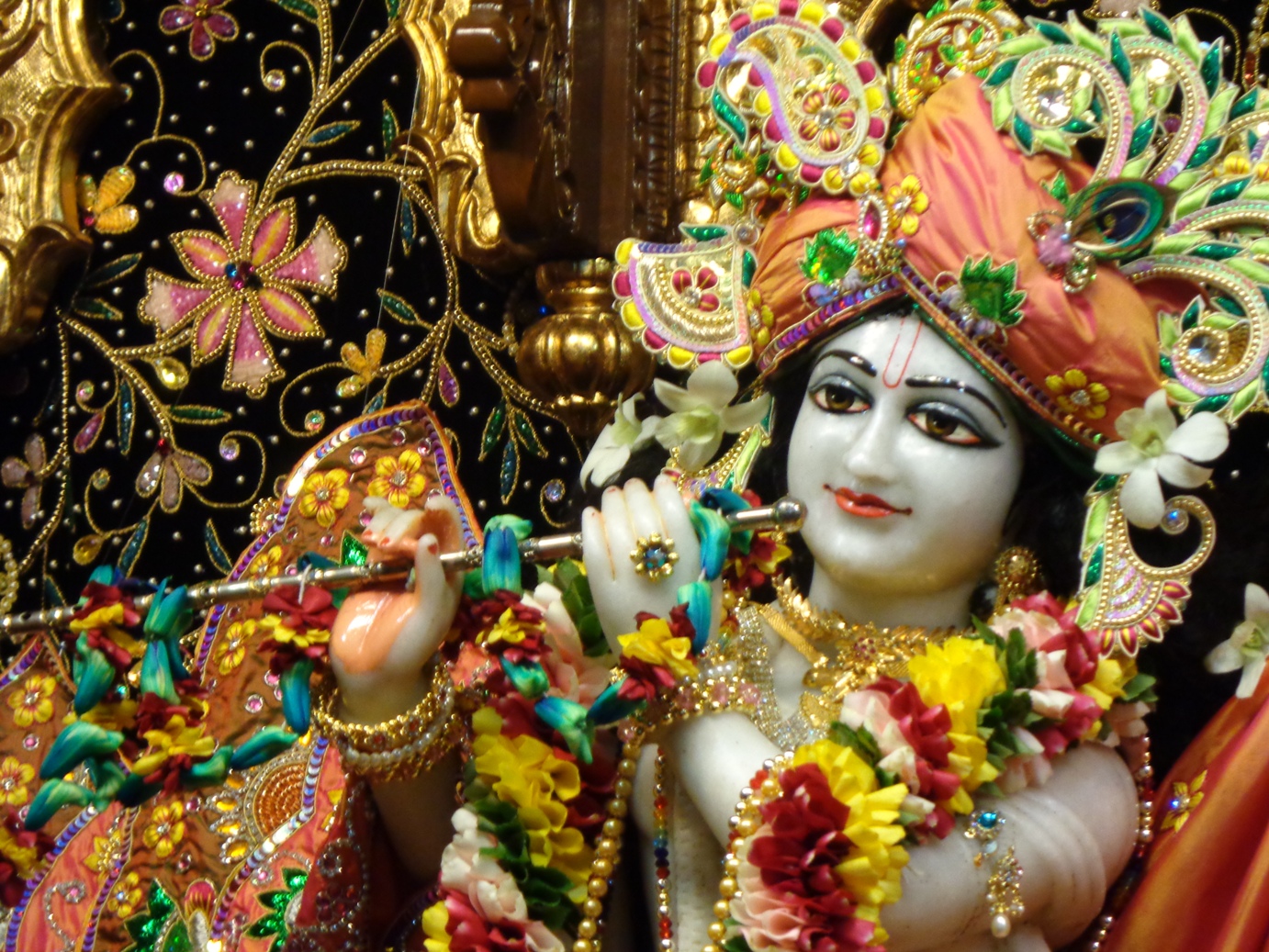
Srimad – Bhagavatam narrates the story of a great king, Bharata, who was marching very confidently and diligently on the path of self realization. Seers, sages and citizens extolled the devotion of King Bharata. He retired timely from his family life to spend more time in practicing Krishna Consciousness. But he committed a mistake, initially it seemed to be a trivial one, but this one gaffe usurped his devotional life. He got attached to a baby deer and instead of meditating on the Lord he started being too much conscious of the animal. As a result when he was about to leave his body he remembered the deer and not the Lord. Now Krishna declares in Bhagavad – Gita (8.6), “Whatever state of being one remembers when he quits his body, O son of Kunti, that state he will attain without fail.” So, in his next life King Bharata became a deer. So while treading the path of bhakti we need to be extra careful lest we get caught up in the sights and sounds of this material world. Our entire senses should be utilized only for remembering Krishna and for nothing else.
>

He is such a dear friend, let us not neglect him

Purushottam Nitai Das February 14, 2013
Sometimes a child becomes too adamant and wants to run away from house to be all alone. But his concerned mother does not leave him alone. She hides and keeps a vigil to ensure that nothing wrong happens to his little kid. Similarly when we rebel against the Lord in the spiritual world and decide to leave him to lead an independent life then Lord reluctantly allows us to have our way. However he is too concerned about our well – being, so he accompanies us in this material world.

As a Paramatma, he always resides within our heart. Srila Prabhupada explains that there are two kinds of soul – the minute particle soul (anu – atma) and the Supersoul (vibhu – atma): (Bhagavad – Gita purport 2.20). Katha Upanisad (1.2.20) explains: “Both the Supersoul [Paramatma] and the atomic soul [jivatma] are situated on the same tree of the body within the same heart of the living being, and only one who has become free from all material desires as well as lamentations can, by the grace of the Supreme, understand the glories of the soul.

In this world the Supersoul (Paramatma) does not interfere with our free will and allows us to have our own way but through various means he reminds us that this world is not our real home and we should immediately return back to our original home which is the spiritual world. He sometimes descends personally as Lord Krishna & Lord Rama to call us back and at other times through scriptures and his devotees he remind us of our original home which we have abandoned. He is our closest, oldest and true friend who always thinks of our happiness.  When we leave this body and enter into a new body based on our own karma then he again accompanies us. He is always with us whether we are in a human body, a fish body, a dog body, a bird’s body etc. He never abandons us. 

In this world we face so many difficulties but due to our insatiable material desires and ego we refuse to turn towards God.  Lord as Paramatma is residing within our heart and is eagerly waiting for our loving reciprocation. Once we turn towards him then all our miseries will vanish just as darkness disappears the moment the sun appears.

 
>

What we eat and drink influences our conscience

Purushottam Nitai Das February 13, 2013
He did not even think twice while unleashing atrocities on his five month old daughter. The man who hails from Bikaner bit his daughter’s lip, cheek and nose in fit of rage. The multiple injuries were too much for the innocent child to bear. After hard struggle she succumbed to her injuries. Her murderous father was under the influence of alcohol when he committed this horrendous act. This isn’t just one of the incidents. Innumerable acts of violence occur throughout the world because of the influence of alcohol and other seductive.

Our thoughts are not just the mirror image of our surroundings but it also gets influenced by what we eat and drink. This is why the Vedic literatures vividly speak on what should be consumed and what should be avoided. The contemporary world’s clarion call for “Just eat, drink and be merry” is not celebrated by the revealed Vedic literatures. These scriptures graphically classify the different varieties of food in goodness, passion and ignorance.

·         Foods which increases the duration of life, purifies one’s existence and give strength, health, happiness and satisfaction is in the mode of goodness. Such foods are juicy, fatty, wholesome and pleasing to the heart. (Bhagavad – Gita 17.8)

·         Foods that are too bitter, too sour, salty, hot, pungent, dry and burning are dear to those in the mode of passion. Such foods cause distress, misery and disease. (Bhagavad – Gita 17.9.)

·         Food prepared more than three hours before being eaten, food that is tasteless, decomposed and putrid, and food consisting of remnants and untouchable things is dear to those in the mode of darkness. (Bhagavad – Gita 17.10).

So, if we want to purify our conscience then we ought to focus on our diet. It’s true that we cannot live without food and if we start consuming the right food then our mind will get cleansed of all wrong thoughts and desires. If we take food which is in the mode of goodness then slowly we too will cultivate qualities of goodness.

However scriptures further assert that the best food is that which has been offered to Krishna. And Krishna specifies what to be offered to him – patram puspam phalam toyam. He likes grains, vegetables, fruits, milk and their derivatives. So, whatever we eat if we offer it to Krishna before consuming then it will wash off our impurities.

Food is a great benediction. If we just regulate our diet by eating what Vedic literatures recommends then our lives will witness remarkable transformation. 
>

Rising above the mode of goodness

Purushottam Nitai Das February 12, 2013
Our actions are determined by the modes of nature which we acquire. Those who are in the modes of goodness are positive in their life and believe doing things righteously. Those in passion often try to achieve things by any means. Those in ignorance are too lethargic to even think about themselves.
Persons in the mode of passion and ignorance do not have concept of who is God and who should be the object of their worship. Srila Prabhupada explains that during World War 2, a man in Kolkata worshipped Hitler because he was able to amass huge wealth because of the war. These people propagate that one can worship anyone, eat anything and do anything because all path leads to same destination. However scriptures abhor this mindset. Srimad Bhagavatam (4.3.23) states that those in pure goodness worship only Krishna, sattvam visuddham vasudeva – sabditam: “When a man is situated in pure goodness, he worships Vasudeva.”
We should try to rise from the mode of ignorance -> to mode of passion -> to mode of goodness. We cultivate a particular mode depending on with whom we associate. For e.g. if we associate with a sadist then we too will become hard – hearted gradually whereas if we associate with devotees who enthusiastically practice Krishna consciousness then soon we will imbibe those qualities.
When Srila Prabhupada went to west then he infused spirituality in the lives of the western youths. The young western devotees got so much enthused by Srila Prabhupada’s godly qualities that they immediately started practicing devotional life with great eagerness. So we should always try to associate with those who are leading meaningful lives and are sincere seekers of divine love. This will help us to rise even beyond the mode of goodness and thus we would develop love for God. Spiritual association is the best way to achieve salvation.
>

Are we ready to drive in a car which contains a bomb?

Purushottam Nitai Das February 8, 2013
How many of us would not be tempted when someone offers us a Mercedes Benz car as a gift? We will be floored by the honour. However there is a small catch. The car contains a bomb which can explode any time. How many of us will be delighted to be the proud owner of such a car now? We would think that no sane men will ever think to own such a car. But is it so? We daily ride in a vehicle which has the same destination as that of the car with a bomb. And the vehicle is our ‘body’. Death can come at any moment and at any time. But we hardly bother about it.

The manufacturer of this body has already warned us that the physical bodies which we are occupying constantly changes. Material body passes through six stages – they are born, they grow, they remain for some duration, they produce some by –products, they dwindle, and they vanish (Bhagavad – Gita 8.4 purport). So why to be enamoured by this decaying body? Why to waste our time decorating and delighting in it. The temporary body which we possess should only be used as a tool to reach the final destination.

While travelling on a train our focus is to reach our destination, we do not get so overwhelmed by the pains and pleasure because we realize that the travelling period is temporary. Similarly we should not be obsessed with our bodily demands; instead we should constantly contemplate on the fact that this body is perishable and this life is temporary. So, our focus should be on our final destination which is the spiritual world. Krishna assures us (Bhagavad – Gita 8.15) that those who attain the supreme abode never again return back to this miserable material world. So why not utilize every moment of our life to attain eligibility to migrate to the spiritual abode.
>

Why Indra started enjoying the life of a hog?

Purushottam Nitai Das February 7, 2013
This material world in which we live is too strong to deal with. As a soul we have a unique ability to adapt ourselves to any situation, however unpleasant it might be. Once Indra, the king of heaven, committed some grievous mistake and as a result he was cursed by sage Narada to take birth on earthly planet as a hog. So, Indra became a hog and started living on earth. In due course of time he grew, got married and became the proud father of dozens of piglets. He even became the leader of the hog clan. Seeing his friends and family gave him deep pleasure.

As time passed by the duration of the curse on Indra came to an end, but to the utter amazement of the denizens of heavenly planet Indra was not returning back. Since the throne of the heavenly kingdom could not be empty for a long time so the situation became too serious. Finally Narada personally decided to come and take Indra back. Indra was enjoying his hoggish life – playing with his wife and piglets, joking with his friends and enjoying the stool. Narada felt too bad for the king of the heaven, he immediately approached Indra and reminded him of his heavenly designation. Indra wasn’t impressed.  He argued with Narada, “I am happy here with my friends and family members. My wife, my cute piglets all are dependent on me. If I leave then who will care for them.”

Narada was shocked to hear that Indra was ready to forego the heavenly comfort and was contended to live as a hog. Out of compassion he severed his head and dragged him out of the wretched life which Indra thought was blissful.

This illusory material energy is too powerful; it forces us to believe that the life which we are leading is permanent and more enjoyable than anything else. This is why we do not take the words of the scriptures seriously when it asks us to abandon our materialistic life and focus on spiritual salvation. Let us not follow the footsteps of Indra and try relishing hoggish pleasure instead we should heed the advice of sages and scriptures and make a determined endeavour towards our spiritual destination.
>

Tolerating the intolerant impulses

Purushottam Nitai Das February 7, 2013
It is too easy to be nice with someone who is good to us. But how difficult it is to deal with those who are nasty to us? Tolerance is celebrated as a divine quality and intolerance is touted as the weapon of the demoniac. We long to develop the quality of ‘tolerance’ but we easily succumb to intolerance when confronted with unpleasant situations and circumstances. After venting out our inner angst we realize our mistake but sadly it is too late by that time. But why do we lack ‘tolerance’? Theoretically we do understand the gravity and necessity of ‘tolerance’ but practically it is too difficult to adopt it in our life. If we throw a stone in a small pool of water then the entire water body gets disturbed whereas if a stone is thrown in a huge ocean then it hardly makes any impact there. The ocean has depth whereas the small pudding of water is shallow, and so the difference in the impact.

Our reaction to any provoking situation is determined by the spiritual depth which we have cultivated through our sadhana. We immediately get provoked because our heart is shallow and so it does not have the ability to withstand any unpleasant situation. But if we have nurtured our spiritual life prudently then we can easily endure any provoking situation without being disturbed. If we want to progress in our life then tolerance is of immense importance. Lord Chaitanya Mahaprabhu in his siksastakamprayers has stated that one should be more tolerant than a tree and more humble than a blade of grass. In that state, Lord Chaitanya says one can chant the holy name of Krishna constantly and with deep love.
>

Does success bring misery?

Purushottam Nitai Das February 3, 2013
Yes, if our success thrives on others miseries. Our success is mostly comparative in nature.  A student gauges his success by seeing if he has scored more than his peers or not, we get dissatisfied with our jobs when we find that our colleagues are earning more than us. Thus caught up in the quagmire of comparison we hardly feel inner satisfaction and serenity.

We see that Duryodhana had everything in his life. Being the son of the king of Hastinapur his all demands were immediately met with. He soaked in the sights and sounds of material world. But still he never felt contented because he had developed immense hatred for the Pandavas. During the childhood, he tried to poison and kill Bhima. He conspired along with his cunning uncle Sakuni and greedy father Duryodhana to drive Pandavas out of Hastinapur and gave them Khandavaprastha. Khandavaprastha was nothing but jungle and forest; however the Pandavas under the direction of Krishna worked very hard to convert that barren land into Indraprastha. Seeing Pandavas ruling the flourishing kingdom of Indraprastha, Duryodhana’s hatred multiplied manifold. He again conspired with Sakuni and cheated Pandavas in the game of dice and forced them into 13 years of exile. During Pandavas exile Duryodhana usurped the kingdom of Indraprasta also. But in spite of all these he was always in misery. He remained in constant anxiety and always feared for his future.

The Pandavas never had any grudge towards Duryodhana. In fact Pandavas never ever tried to harm Duryodhana in spite of Duryodhana’s malicious campaign against them.  Duryodhana’s greed, envy, hatred and jealously not only ruined his life but it sowed the seed of Mahabharata war in which millions of worthy kings and soldiers perished. How envy is dangerous can be easily understood by contemplating on Duryodhana’s plight.

Real success is achieved when our heart is cleansed of hatred and envy. The panacea for making the world a better place is by cultivating selfless love. In Bhagavad – Gita 16.3, Krishna vividly talks about the godly qualities which a person should strive for and one of them He mentions is adrohah: freedom from envy.  So let us nurture our heart and allow the flowers of love to blossom within our heart whose fragrance will spread joy and happiness far and wide. Then we will not have envy for others but instead we will feel happy when we see others happy and we will feel pain when we see others in pain. That would be the true perfection of our live.

 
>

Dhruva’s determiantion

Purushottam Nitai Das February 2, 2013
Determination is what separates a man from an animal. Animals act as per their instincts without bothering much about the consequences whilst the humans have the ability to contemplate on the outcome before any action. As humans we constantly endeavour to better our life. However due to lack of determination our attempts does not bring the desired result. Success is guaranteed if we sincerely try to achieve a goal following the directives of the revealed Vedic literatures

The Vedic literatures narrate the story of a 5 year old prince, Dhruva, who sought shelter of Krishna when adversities gazed him. Rebuked, neglected and insulted by his stepmother, Dhruva was heart – broken. The harsh words of his stepmother pierced his heart and he cried bitterly. His own mother’s pacifying words could not reduce his sufferings, the glitz and glamour of the palace did not attract him. During this precarious situation he decided to take refuge of the Supreme Personality of Godhead, Krishna. Narada, the great sage, was very much pleased with the little child’s intelligence and so he immediately decided to show him the right path. Dhruva under the guidance of sage Narada performed devotional service with full enthusiasm, determination and concentration for six complete months. Lord Vishnu, seeing the sincerity of the little boy immediately came to shower His affection and mercy upon him. Lord Vishnu awarded him the polestar which came to be known as Dhruvaloka, ensured that he will be the emperor of the whole world for 36 thousand years and at the end will return back to the spiritual abode. Dhruva achieved complete perfection by his sheer determination.

So, if we too want to achieve God’s mercy then like Dhruva we need to have determination and also complete faith in the mercy of the Lord. Lord never betrays His devotees; he just tests our sincerity and seriousness.
>

Mid – air crisis

Purushottam Nitai Das January 23, 2013
The below story of an anonymous writer about a little child helps us to understand as how being sheltered helps us to overcome any crisis:
An airplane lost its balance in the mid – air. Passengers were terrified, they were screaming. It appeared that the plane may crash at any time. The pilots eventually regained the control but only after hard struggle. However throughout the ordeal one little girl was very calm and composed. She was peacefully glancing over the pictures from an album. Amazed by her behavior, one of the co-passengers inquired, “Weren’t you afraid”? The girl answered – “No”. “But why”, he shockingly asked. She answered confidently, “My father is the pilot of this plane and I know that he will save me from all the dangers”.
Our life too loses balance quite often and we struggle hard to streamline it. But if there is a trustworthy person steering our life then, we too, like the little girl will be fearless. Vedic literatures explain that we are all individual souls and Krishna, the Supreme Personality of Godhead, is our Supreme father. So, if we take shelter of Krishna then we can remain peaceful amidst great calamities.
>