जब बच्चे कृष्णभावनामृत में आनंद पाते हैं, तो वे आसानी से बुरी आदतों को छोड़ देते हैं
जब बच्चे कृष्णभावनामृत कृष्ण भावनामृत में आनंद का अनुभव करने लगते हैं, तो वे आसानी से उन गतिविधियों को छोड़ देते हैं जो उनके स्वस्थ और सुखी जीवन के लिए अच्छा नहीं है। बच्चों की अच्छी देखभाल करना महत्वपूर्ण है क्योंकि बच्चे माता-पिता के लिए और दुनिया के लिए भी भगवान का उपहार हैं।
लेकिन अगर माता-पिता बच्चों को सही मार्गदर्शन नहीं देते हैं तो इस बात की पूरी संभावना है कि वे बुरी आदतों में शामिल होंगे।
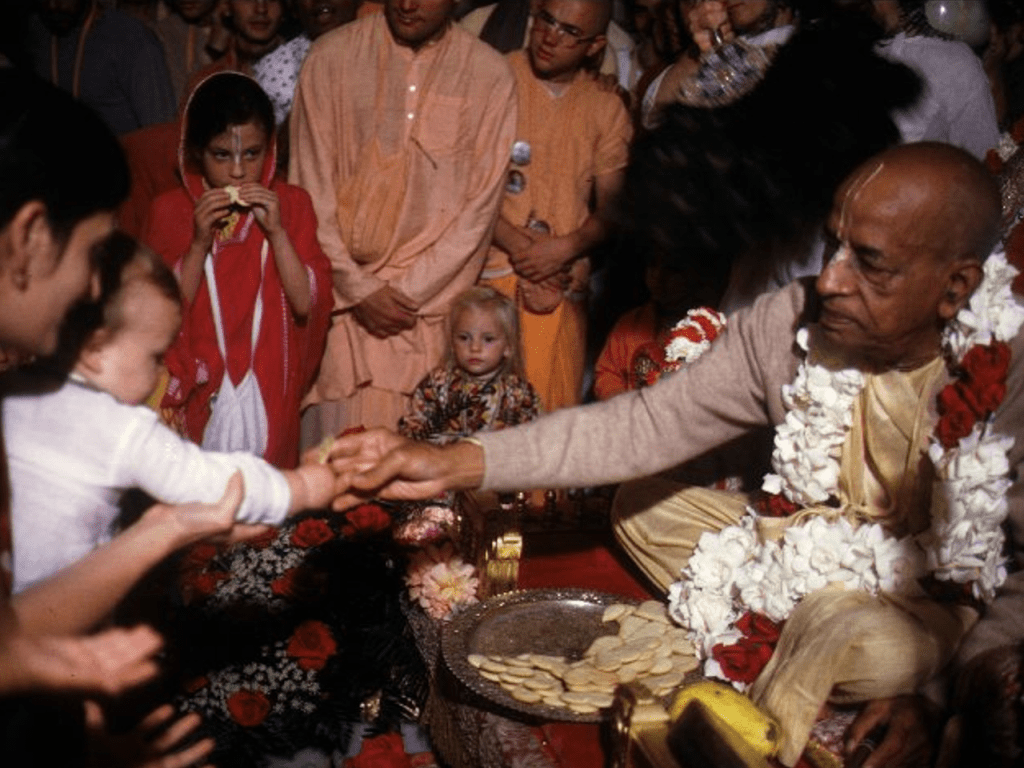
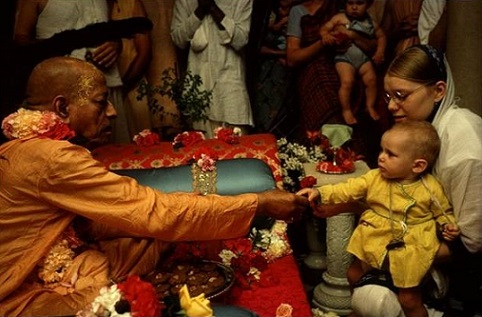
श्रील प्रभुपाद हमेशा चाहते थे कि बच्चों की अच्छी देखभाल की जाए। उन्हें बच्चों से बहुत लगाव था। हमने वीडियो और तस्वीरें देखी हैं जहां प्रभुपाद बच्चों से घिरे हुए हैं, और वह उन्हें मिठाई बांट रहे हैं।
बच्चों की देखभाल एक महत्वपूर्ण सेवा है
श्रील प्रभुपाद अपने एक शिष्य को पत्र में लिखते हैं कि बच्चों की देखभाल करना एक महान सेवा है।
“मुझे यह जानकर बहुत खुशी हुई कि चंद्रमुखी को उसके जीवन की शुरुआत से ही कृष्णभावनामृत प्राप्त हो रहा है। यह उसके पिछले जीवन की कृष्ण भक्ति के कारण है। कृपया अपने बच्चों की देखभाल करें और उन्हें पूरी तरह से कृष्णभावनामृत बनाएं। यह बहुत अच्छी सेवा है।” नंदरानी को पत्र – टिटेनहर्स्ट 30 सितंबर, 1969
इस्कॉन में माता-पिता श्रील प्रभुपाद के दिशानिर्देशों का पालन करते हुए अपने बच्चों की देखभाल करते हैं। वे यह सुनिश्चित करते हैं कि बच्चों की शारीरिक, मानसिक और भावनात्मक जरूरतों का ठीक से ध्यान रखा जाए। और वे अपने बच्चों को कृष्ण की भक्ति करने के लिए भी प्रेरित करते हैं।
यह समझना होगा कि बच्चों को कृष्ण का भक्त बनने के लिए न तो मजबूर किया जाता है और न ही फुसलाया जाता है। लेकिन जब बच्चे व्यक्तिगत रूप से कृष्णभावनामृत गतिविधियों में आनंद का अनुभव करने लगते हैं तो वे कृष्ण के भक्त बन जाते हैं।
माता-पिता यह भी सुनिश्चित करते हैं कि बच्चों में जो भी प्रतिभाएँ हैं, उनका उपयोग कृष्ण की सेवा में किया जाए।
कृष्ण की कई तरह से सेवा की जा सकती है – नृत्य, नाटक, गीत, संगीत, कला, शिल्प, लेखन आदि के माध्यम से। बच्चों में पहले से ही ये प्रतिभाएँ हो सकती हैं और यदि नहीं हैं तो उन्हें जल्दी से सीखने के लिए प्रेरित किया जा सकता है।
इस्कॉन में त्योहारों और सांस्कृतिक कार्यक्रमों के दौरान हम देखते हैं कि बच्चे बड़ी संख्या में भाग लेते हैं और अपनी प्रतिभा का प्रदर्शन करते हैं।
लेकिन अगर बच्चों को ये सकारात्मक जुड़ाव नहीं मिलता है, तो वे अन्य गतिविधियों में शामिल होंगे जो हानिकारक हो सकता है।
जब माता–पिता के पास समय नहीं होता है तो बच्चे बुरी आदतें अपना लेते हैं
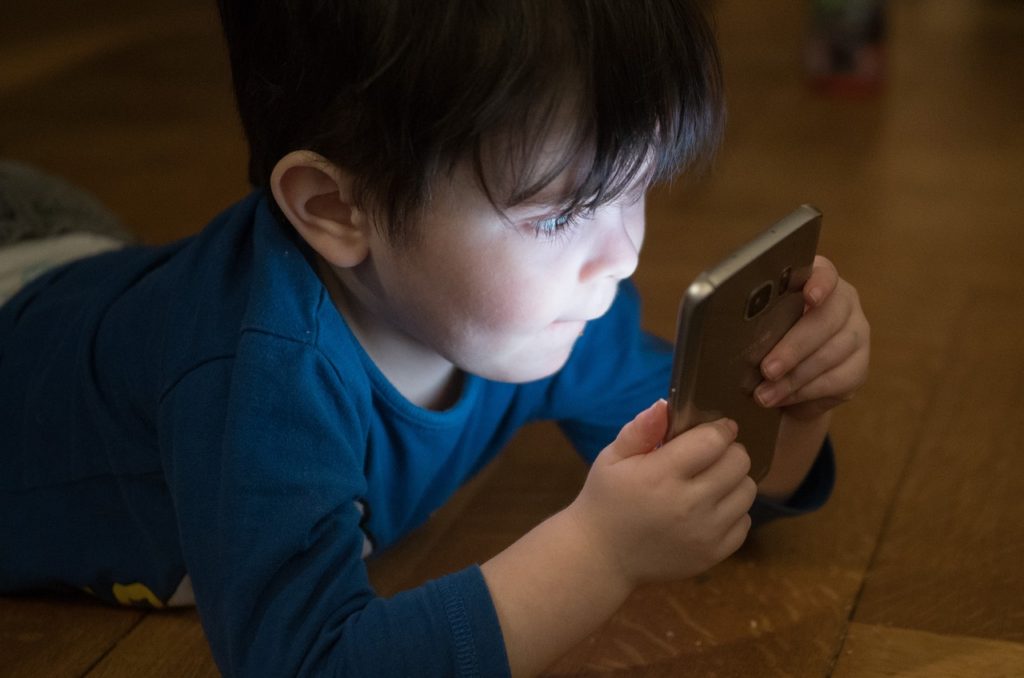
आजकल माता-पिता व्यस्त रहते हैं इसलिए उनके पास अपने बच्चों के लिए समय नहीं होता है। इसलिए वे बच्चों को व्यस्त रखने के लिए मोबाइल थमाते हैं। उन्हें इस बात का एहसास नहीं है कि यह छोटा सा इलेक्ट्रॉनिक उपकरण अगर बुद्धि के साथ इस्तेमाल नहीं किया गया तो एक फ्रेंकस्टीन राक्षस में बदल सकता है।
बच्चों को मोबाइल की लत लगने के कई उदाहरण हैं और माता-पिता को इससे निपटने में मुश्किलों का सामना करना पड़ता है।
उत्तर प्रदेश के बरेली जिले में एक तीन साल के बच्चे का बिस्तर गीला करने का मामला सामने आया है। जांच करने पर डॉक्टर ने पाया कि बच्चा अपने मोबाइल फोन का इतना आदी था कि वह बाथरूम भी नहीं जाता था।
वह रोजाना लगभग आठ घंटे कार्टून – डोरेमोन और मोटू पतलू – देखने में बिताता था। उसने यह आदत विकसित की क्योंकि उसकी माँ उसे व्यस्त रखने के लिए मोबाइल फोन देती थी ताकि वह शांति से घर का काम कर सके।
बरेली अस्पताल के डॉक्टरों ने कहा कि यह बच्चा अकेला नहीं है जो हमेशा मोबाइल से जुड़ा रहता है. अस्पताल को कुछ महीनों में 10 से 18 वर्ष के बच्चों और किशोरों के 39 मामले मिले, जो अब केवल आभासी (वर्चुअल) दुनिया में रहना पसंद करते हैं।
वे ऑनलाइन गेम खेलने, कार्टून देखने या सोशल मीडिया पर चैट करने में घंटों बिताते हैं। डॉक्टरों का कहना है कि माता-पिता को दोष देना चाहिए क्योंकि वे ही अपने बच्चे को साइबर दुनिया के सामने लाते हैं।
डॉक्टर बच्चों की बुरी आदतों के लिए माता–पिता को जिम्मेदार ठहराते हैं
अस्पताल के मनोचिकित्सक डॉ. आशीष कुमार ने टाइम्स ऑफ इंडिया को बताया, “ज्यादातर मामलों में यह बात सामने आई है कि माता-पिता अपने बच्चों को कम उम्र में ही मोबाइल दे देते हैं ताकि बच्चों को व्यस्त रखा जा सके ताकि उनका खुद का काम प्रभावित न हो। यही आगे चलकर बच्चों में लत और बुरे व्यवहार का कारण बनता है।”
बच्चों को समय की जरूरत होती है और कई माता-पिता इन दिनों अपने काम में व्यस्त रहते हैं, इसलिए वे अपने बच्चे को ज्यादा समय नहीं दे पाते हैं। बच्चों को व्यस्त रखने के लिए वे उन्हें वीडियो गेम खेलने या कार्टून देखने के लिए मोबाइल देते हैं। जब बच्चे घर पर होते हैं तो गैर कामकाजी माताएं अपने बच्चों के साथ समय बिताने के बजाय पसंदीदा टीवी सीरियल देखना पसंद करती हैं।
फोन पर ज्यादा समय बिताने वाले बच्चे अपनी पढ़ाई और नींद को भी नजरअंदाज करने लगते हैं। वे अंततः आभासी (वर्चुअल) दुनिया में रहना शुरू कर देते हैं और अपने जीवन की तुलना सोशल मीडिया पर मिलने वाले लोगों से करने लगते हैं।
यह बेहद जरूरी है कि बच्चों को बढ़ने के लिए स्वस्थ माहौल मिले। बच्चे की देखभाल करना माता-पिता का सबसे महत्वपूर्ण जिम्मेदारी है।
बच्चों की देखभाल करना भगवान की पूजा से ज्यादा जरूरी है
एक बार जब श्रील प्रभुपाद को पता चला कि उनकी एक महिला शिष्या अपने बच्चे की ठीक से देखभाल नहीं कर रही है, तो उन्होंने तुरंत उन्हें एक पत्र लिखा कि उनके लिए अपने बच्चे की देखभाल करना भगवान की पूजा करने से अधिक महत्वपूर्ण है।
“आपके लिए, बाल-पूजा, भगवान-पूजा से अधिक महत्वपूर्ण है। यदि आप उसके साथ समय नहीं बिता सकते हैं, तो पुजारी के कर्तव्यों को छोड़ दें। कम से कम आपको अपने बेटे की चार साल की उम्र तक अच्छी तरह से देखभाल करनी चाहिए, और यदि उस समय के बाद आप उसकी देखभाल करने में सक्षम नहीं हो, तो मैं उसकी देखभाल करूँगा। ये बच्चे हमें कृष्ण द्वारा दिए गए हैं, वे वैष्णव हैं और हमें उनकी रक्षा के लिए बहुत सावधान रहना चाहिए। ये सामान्य बच्चे नहीं हैं, ये वैकुंठ के बच्चे हैं, और हम बहुत भाग्यशाली हैं कि हम उन्हें कृष्णभावनामृत में आगे बढ़ने का मौका दे सकते हैं। यह बहुत बड़ी जिम्मेदारी है, इसकी उपेक्षा न करें या भ्रमित न हों। आपका कर्तव्य बहुत स्पष्ट है।“ अरुंधति को पत्र-एम्सटर्डम 30 जुलाई 1972
श्रील प्रभुपाद ने इस्कॉन की सभी माताओं और पिताओं के लिए एक मानक निर्धारित किया है – अपने बच्चे की देखभाल करना आपकी सबसे महत्वपूर्ण जिम्मेदारी है। और यह केवल इस्कॉन के भक्तों पर ही लागू नहीं होता है बल्कि वास्तव में यह सुनिश्चित करना प्रत्येक माता-पिता का कर्तव्य है कि बच्चे हमेशा सकारात्मक गतिविधियों में लगे रहें।
इस्कॉन बच्चों के सुखी और स्वस्थ जीवन के लिए कार्यक्रम आयोजित करता है
समाज की जरूरतों को समझते हुए इस्कॉन ने विशेष रूप से बच्चों के लिए कई कार्यक्रम शुरू किए हैं। इन सभी कार्यक्रमों का उद्देश्य बच्चों को एक स्वस्थ वातावरण में बढ़ने में मदद करना है ताकि वे अपनी वास्तविक क्षमता का एहसास कर सकें और एक सफल, खुशहाल और मूल्य आधारित जीवन जी सकें। ये कार्यक्रम यह भी सुनिश्चित करते हैं कि बच्चे कृष्णभावनामृत का आनंद लेना शुरू कर दें
इस्कॉन श्रीमद्भगवद्गीता प्रश्नोत्तरी (क्विज) का आयोजन करता है जिसमें कई स्कूल भाग लेते हैं। इसके साथ ही उनके लिए साप्ताहिक कार्यक्रम होते हैं और त्योहारों के दौरान कई सांस्कृतिक कार्यक्रम होते हैं जिनमें कई बच्चे उत्साह से भाग लेते हैं।
ये कार्यक्रम पूरी दुनिया में कई इस्कॉन केंद्रों पर सफलतापूर्वक चल रहे हैं। इस्कॉन न्यू टाउन कोलकाता भी बच्चों के लिए कार्यक्रम आयोजित करता है और कई माता-पिता अपने बच्चों को ऐसे ज्ञानवर्धक कार्यक्रमों में दाखिला दिलाने में दिलचस्पी दिखा रहे हैं।
और इन कार्यक्रमों में भाग लेने से बच्चे कृष्णभावनामृत में आनंद का अनुभव करने लगते हैं और बुरी आदतें नहीं अपनाते हैं।
Search
Recent Posts
-
Srimad Bhagavatam at ISKCON Newtown...
September 3, 2026
-
Srimad Bhagavatam at ISKCON Newtown...
September 1, 2026
-
Janmashtami: Celebrating Krishna’s Appearance Through...
August 17, 2026
-

Gopinatha Pattanayaka: 6 Lessons for...
August 16, 2026
-
What Does Krishna Say About...
August 11, 2026
When children find joy in Krishna Consciousness, they give up habits which are unhealthy
When children begin experiencing joy in Krishna Consciousness, they easily give up any activity which is not good for their healthy and happy life. Taking good care of children is important because children is God’s gift to the parents and also to the world.
But if the parents are neglectful and do not give proper guidance to the little ones then there is great possibility that they will indulge in self-destructive habits.
Srila Prabhupada always wanted that children should be given best care. He was very fond of children. We have seen videos and pictures where Prabhupada is surrounded by kids, and he is distributing sweets to them.
Taking care of children an important service
In a letter to his disciple Srila Prabhupada writes that taking care of children is a great service. “I am so glad to learn that Candramukhi is getting Krishna Consciousness from the very beginning of her life. This is the advantage of her previous life’s advancement in Krishna Consciousness. Please take care of your children and make them perfectly Krishna Conscious. That is very great service.” Letter to Nandarani — Tittenhurst 30 September, 1969
Devotee parents in Iskcon following the guidelines of Srila Prabhupada give lots of love and care to their child. They make sure that children’s physical, mental and emotional needs are taken care properly. And they also inspire their kids to practice devotion to Krishna and also ensure that their children experience joy in Krishna Consciousness. .
It has to be understood that children are neither forced nor coaxed to become a devotee of Krishna. But when they start personally experiencing joy in Krishna Conscious activities they become a devotee of Krishna.
Parents also make sure that whatever natural talents kids are having is used in the service of Krishna.
Krishna can be served in many ways – through dance, drama, song, music, art, craft, poetry, prose and so on. Children may already have these gifts and if not then they can quickly be inspired to learn them.
In Iskcon during festivals and cultural programs we see children participating in large numbers and showcasing their talents.
But if children do not get these positive engagements, then they will surely find some other means of engagement which is many times harmful.
Children pick unhealthy habits when parents have no time to them
These days since parents are busy so they do not have time for their kids. So, in order to keep the kids busy they hand them mobile. They do not realize that this little electronic device if not handled with intelligence can turn into a Frankenstein monster.
There are many examples of children getting addicted to mobile and parents face a tough time to deal with them.
There was a case of a three-year-old child in Bareilly district of Uttar Pradesh who was suffering from bed wetting. Upon examining, the doctor found that the child was so addicted to his mobile phone that he did not even go to bathroom.
He spent almost eight hours daily watching cartoons – Doraemon and Motu Patlu. He developed this habit because his mother used to give him mobile phone to keep him busy while she did her household chores.
The doctors at the Bareilly hospital said that the child is not alone who is always hooked to mobile. The hospital received 39 cases in couple of months of children and adolescent between the age group of 10 to 18 who now only prefer to live in the virtual world.
They spend hours playing online games, watching cartoons or chatting on social media. The doctors say that the parents are to be blamed because it is they who expose their child to the cyber world.
Doctors blame parents for children’s harmful habits
Dr Ashish Kumar, a psychiatrist at the hospital, told TOI, “In majority of the cases, it came to light that parents provide mobile to their children at an early age to keep the kids busy so that their own work is not affected. This later becomes a cause of addiction and bad behaviour among children.”
Children needs time and many parents these days are busy in their work, so they do not give much time to their child. To keep children busy, they give them mobile to play video games or watch cartoons. When children are at home then non-working mothers prefer watching their favourite TV serials than spending time with their children.
Children who spend long hours on phone start neglecting their studies and also sleep. They eventually start living in the virtual world and start comparing their lives with the people they meet on social media.
It is extremely important that children get a healthy atmosphere to grow. Taking care of the child is the most important responsibility of a parent.
Taking care of child more important than deity worship
Once when Srila Prabhupada came to know that one of his female disciples is not properly taking care of her child then he immediately wrote her a letter saying that for her taking care of her child is more important than doing deity worship.
“For you, child-worship is more important than deity-worship. If you cannot spend time with him, then stop the duties of pujari. At least you must take good care of your son until he is four years old, and if after that time you are unable any more to take care of him then I shall take care. These children are given to us by Krishna, they are Vaisnavas and we must be very careful to protect them. These are not ordinary children, they are Vaikuntha children, and we are very fortunate we can give them chance to advance further in Krishna Consciousness. That is very great responsibility, do not neglect it or be confused. Your duty is very clear.” Letter to Arundhati — Amsterdam 30 July, 1972
Srila Prabhupada has set a standard for all the mothers and fathers of Iskcon – Taking care of your child is your most important responsibility. And this is not only applicable to Iskcon devotees but in fact it is the duty of each and every parent to make sure that children have healthy engagements for their overall healthy growth.
Iskcon’s children program for happy and healthy living
Understanding the need of the society Iskcon has come up with programs especially for children. The purpose of all these programs is to help the child grow in a healthy atmosphere so that they can realize their true potential and lead a successful, happy and value based happy life.
Iskcon organises quiz based on scriptures like Bhagavad Gita in which many schools participate. Along with this there are weekly programs for them and during festivals there are many cultural programs in which several kids participate enthusiastically.
The programs have been successfully going on at many Iskcon centres all over the world. Iskcon New Town Kolkata also organizes program for the kids and many parents are showing keen interest in enrolling their kids for such enlightening programs.
And by participating in these programs children begin experiencing joy in Krishna Consciousness and easily give up habits which are unhealthy.
Search
Recent Posts
-
Srimad Bhagavatam at ISKCON Newtown...
September 3, 2026
-
Srimad Bhagavatam at ISKCON Newtown...
September 1, 2026
-
Janmashtami: Celebrating Krishna’s Appearance Through...
August 17, 2026
-
Gopinatha Pattanayaka: 6 Lessons for...
August 16, 2026
-
What Does Krishna Say About...
August 11, 2026
मैं भगवान राम से उनके चरण कमलों की शरण माँगता हूँ
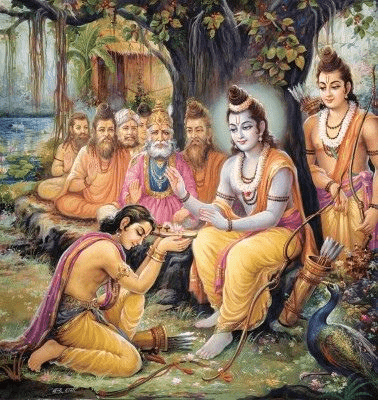
हे भगवान राम, रामनवमी के इस शुभ अवसर पर, मैं आपके चरण कमलों की शरण माँगता हूँ। आपके चरण कमल इस संसार की सभी बद्ध आत्माओं का एकमात्र आश्रय हैं जो इस संसार में कठिन संघर्ष कर रहे हैं। लेकिन आश्चर्य की बात यह है कि आपकी माया से आच्छादित होने के कारण अधिकांश लोगों को पता ही नहीं चलता कि वे पीड़ित हैं।
औरों की तो क्या बात, मैं स्वयं पीड़ित होते हुए भी सोचता हूँ कि मैं पीड़ित नहीं हूँ। और वास्तव में, हे भगवान राम, मैं अभी भी अपने दिल में एक आशा रखता हूँ कि मैं इस दुनिया में खुश रह सकता हूँ।
एक बेबस जिंदगी
मेरी हालत कसाई की चाकू के नीचे जीने के लिए संघर्ष कर रहे एक बेबस मुर्गे की तरह है। मैं देखता हूं कि कई जगहों पर दर्जनों मुर्गियां को एक छोटे से लोहे के पिंजरे में बंद कर दिया जाता है और कसाई द्वारा मांस के रूप में बेचने के लिए दुकान पर ले जाया जाता है।
उनके पैर एक-दूसरे से और पिंजरे से बंधे होते हैं और वे ताजी हवा के लिए एक-दूसरे से संघर्ष करते हैं। बस यह सुनिश्चित करने के लिए कि मुर्गे बेचे जाने से पहले न मरें, व्यापारी उस जेल के अंदर कुछ अनाज और एक कटोरी पानी डाल देता है।
और बेचारे मुर्गे उन दानों को खाते हैं, पानी पीते हैं और इसे ही अपना जीवन मान लेते हैं। कत्लखाने में, वे अपनी आंखों के सामने देखते हैं की कैसे बेरहमी से उनके साथियों का सिर काट दिया जाता है।
लेकिन फिर भी मुर्गे को लगता है कि कल मैं बच गया था और आज भी बच जाऊंगाहूं। जब वह इस तरह उम्मीद कर रहा होता है तो कसाई अपना हाथ पिंजरे में डालता है, उसके पंखों को पकड़ता है और उसे पिंजरे से बाहर निकालता है। फिर वह वजन मापने के लिए मुर्गे को तौलने की मशीन पर रखता है ताकि खरीदार से उसे उचित मूल्य मिल सके। और फिर सिर काटने के लिए अपना चाकू उठा लेता है।
कसाई के हाथ में मुर्गा जीवन के लिए कठिन संघर्ष करता है, लेकिन न तो कसाई और न ही खरीदार उसपर कोई दया दिखाता है और आसपास के लोग भी कोई हमदर्दी नहीं दिखाते।
गलत उम्मीद
मेरी हालत बहुत अलग नहीं है। मैं हर पल देखता हूं कि लोग जीवित रहने के लिए संघर्ष करते हैं लेकिन फिर भी वे जीवित रहने में विफल रहते हैं। समय हमें किसी भी क्षण नीचे गिरा देता है। लेकिन फिर भी मुझे उम्मीद रहता है कि एक दिन ऐसा आएगा जब मैं यहां हमेशा खुशी से रहूंगा।
इस संसार में, मैं भौतिक प्रकृति की लहरों द्वारा लगातार ऊपर-नीचे उछाला जा रहा हूँ। मैं शारीरिक दर्द, भावनात्मक दर्द से गुजरता हूं। लोग मेरे साथ विश्वासघात करते हैं, मेरा अपमान करते हैं, लेकिन फिर भी मैं इस उम्मीद में रहता हूँ कि समय के साथ चीजें सामान्य हो जाएंगी। लेकिन सच्चाई यह है कि इस भौतिक दुनिया में सुख की उम्मीद करना रेगिस्तान में आम के रस की उम्मीद करने जैसा है।
इसलिए, मुझे यह समझने की आवश्यकता है कि अपने भले के लिए मुझे भौतिक जीवन से बाहर आना होगा और आध्यात्मिक जीवन अपनाना होगा। मुझे अब सच्चाई पता है। इसलिए, मैं अपने सभी भौतिक आसक्तियों को छोड़ना चाहता हूं और हमेशा के लिए आपके चरण कमलों से जुड़ना चाहता हूं।
मैं भगवान राम के चरण कमलों की शरण लेने में विफल रहता हूं
आपके चरण कमल ही मुझे सभी भौतिक दुखों से राहत दिला सकते हैं। प्रिय भगवान राम, मैं बस आपके चरण कमलों को पकड़ कर हमेशा वहां रहना चाहता हूं और शांति का अनुभव करना चाहता हूं। यदि मैं आपके चरण कमलों की शरण में रहूँ जो किसी भी मनोकामना को पूरा करता तो सभी मनोकामनाएँ पूरी होंगी।
परन्तु मेरी एक ही इच्छा है और वह है सदा आपके चरण कमलों की शरण में रहना। यदि आप मेरी यह इच्छा पूरी कर दें, तो मेरा जीवन सफल हो जाएगा। मैं सदा आपकी सेवा करूँगा और सदा सुखी रहूँगा।
मैं जानता हूँ कि जो कोई शुद्ध मन से आपके पास आता है, उसे आप आश्रय देते हो। लेकिन आपके चरण कमलों की शरण लेने की आवश्यकता जानने के बावजूद, मेरा हृदय जो अभी भी इस दुनिया की नश्वर वस्तुओं और नश्वर प्राणियों से जुड़ा हुआ है, मुझे अपना जीवन पूरी तरह से आपको समर्पित करने की अनुमति नहीं देता है।
मैं सभी भौतिक प्रेम को त्यागने के लिए कठिन प्रयास कर रहा हूँ लेकिन मैं ऐसा करने में सक्षम नहीं हूँ। मेरा मन और इंद्रियां जो असीमित भौतिक इच्छाओं से भरा है, मुझे इस दुनिया में पीड़ित होने के लिए मजबूर करत हैं। मैं क्या करुँ समझ नहीँ आता? मेरे पास इससे बाहर आने की क्षमता और ताकत नहीं है।
मैं बिल्कुल असहाय हूं। जिस प्रकार रावण ने माता सीता का हरण किया था, उसी प्रकार मेरे अनियंत्रित मन और इन्द्रियों ने मेरा अपहरण कर लिया है और मुझे इस भौतिक संसार तक सीमित कर दिया है ।
भवसागर को पार करने के लिए एक पुल का निर्माण करें
एक सीख जो माता सीता ने हमें सिखाई है वह यह है कि किसी भी स्थिति और परिस्थिति में कभी भी आपकी चरण कमलों को नहीं छोड़ना चाहिए। हालाँकि रावण ने सीता का अपहरण किया, धमकाया, प्रताड़ित करने की कोशिश की, आप में विश्वास खत्म करने की कोशिश की लेकिन सीता ने कभी आपकी शरण नहीं छोड़ी। माता सीता को पूरा विश्वास था कि आप उसे बचाने जरूर आओगे।
हनुमान और सुग्रीव के नेतृत्व में वानर योद्धाओं ने आपकी कृपा से लंका जाने के लिए समुद्र पर एक विशाल पुल का निर्माण किया। लंका में, आपने रावण और उसकी राक्षसों की दुष्ट सेना का विनाश किया और माता सीता को बचाया।
मेरे पास आपके पास आने की क्षमता नहीं है। जैसे आपने सीता तक पहुँचने के लिए एक पुल का निर्माण किया, कृपया करके एक पुल का निर्माण करें ताकि उस पर चल कर मैं तेजी से भवसागर को पार कर सकूँ और आपके चरण कमलों तक पहुँच सकूँ जो सभी दुखों से पूर्ण सुरक्षा प्रदान करता है।
मेरी भौतिक इच्छाओं को मार दें, आपके चरण कमलों का आश्रय कभी नहीं छोडूंगा
जिस तरह आपने रावण की असीमित सेना को मार डाला, उसी तरह आप मेरी असीमित भौतिक इच्छाओं को मार दें जो लगातार मुझे परेशान करते हैं। आपने रावण के हृदय में बाण मारकर उसका वध करके माता सीता को रावण की कैद से छुड़ाया था।
इसी तरह, अपना तीर मेरे हृदय में मारकर मेरी सभी भौतिक इच्छाओं को आप समाप्त कर दें जो मुझे आप से दूर रखता है।
और मेरे हृदय को आपकी सेवा करने की इच्छाओं से भर दें। एक बार मेरा हृदय सभी अवांछित सांसारिक इच्छाओं से मुक्त हो जाएगा, तो मैं सभी दुखों से मुक्ति प्राप्त कर लूंगा।
और हे भगवान राम, एक बार जब मेरा हृदय आपके चरण कमलों की शरण में रहने की इच्छा से भर जाएगा तो मैं सदा सुखी रहूंगा और फिर मैं आपके चरण कमलों का आश्रय कभी नहीं छोडूंगा।
Search
Recent Posts
-
Srimad Bhagavatam at ISKCON Newtown...
September 3, 2026
-
Srimad Bhagavatam at ISKCON Newtown...
September 1, 2026
-
Janmashtami: Celebrating Krishna’s Appearance Through...
August 17, 2026
-
Gopinatha Pattanayaka: 6 Lessons for...
August 16, 2026
-
What Does Krishna Say About...
August 11, 2026
Begging Lord Rama for the shelter of his lotus feet
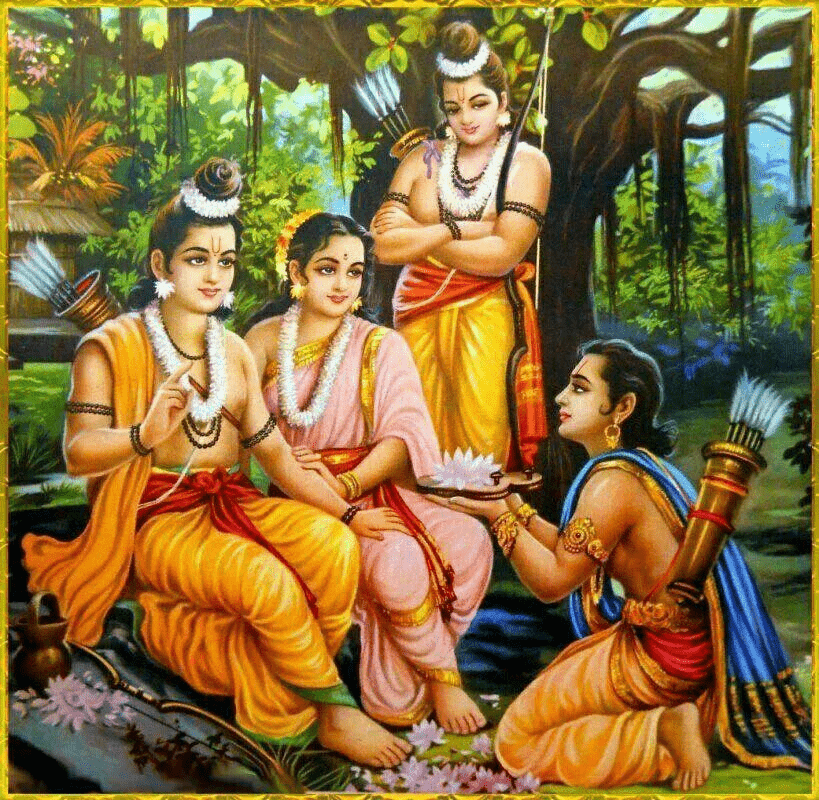
Dear Lord Rama, on this auspicious occasion of Ram Navami, I beg for the shelter of your lotus feet. Your lotus feet is the only shelter of all the conditioned souls of this world who are struggling hard in this world. But surprisingly because of being covered by your illusory energy most of the people do not even realize that they are suffering.
What to speak of others, I myself though suffering think that I am not suffering. And in fact, in spite of being beaten severely by the laws of material nature again and again I still carry a hope in my heart that I can be happy in this world.
A helpless life
My condition is akin to a helpless chicken struggling for survival under the butcher’s knife. I see at many places dozens of chickens are stuffed in a small iron cage and are carried by the butcher to the shop to be sold as meat.
Their legs are tied with each other and with the cage and they jostle with each other for fresh air. Just to make sure that the chickens do not die before being sold, the cruel businessman puts some grains and a bowl of water inside that prison.
And the poor and powerless chickens eat those grains and drink the water and consider it to be their life. In the slaughterhouse, in front of their eyes they see their fellow mates being picked one by one and butchered.
But still a chicken thinks that yesterday I survived and today I may survive too. When it is hoping in this way the butcher puts his hand in the cage, grabs it by its wings and pulls it out of the cage. Then he puts the chicken on the weighing machine to measure its weight so that he can get proper price from the buyer. And then picks up its knife to sever the head.
The chicken in the hand of the butcher struggles hard for life, but neither the butcher nor the buyer shows any mercy and the people around it too does not show any sympathy.
False hope
My condition is not very different. I see every moment people struggle for survival but still they fail to survive. The ruthless time can knock us down at any moment. But still I hope that a day will come when I will live here happily forever.
In this world, I am being constantly tossed up and down by the miserably waves of the material nature. I go through physical pain, emotional pain. Fellow beings betray me, insults me but still I continue with my wretched material life hoping that things will become normal in due course of time. But the truth is that expecting happiness in this material world is like expecting fresh mango juice in a desert.
So, I need to understand that for my own good I have to come out of the miserable material life and take to spiritual life. I know the truth now. So, I want to give up all my material attachments and want to get attached to your lotus feet forever.
I fail to take shelter of lotus feet of Lord Rama
Your lotus feet can only provide relief to me from all material miseries.
Dear Lord Rama, I want to just grab your lotus feet and be there forever and experience peace. If I remain under the shelter of your lotus feet which can grant any wish then all my wishes will be fulfilled.
But I have only one wish and that is to always remain under the shelter of your lotus feet. If you grant me this wish, then my life will be successful. I will serve you eternally and be happy forever.
I know that you give shelter to anyone who comes to you with pure heart. But in spite of knowing the necessity and urgency of taking shelter of your lotus feet my heart which is still attached to the mortal things and mortal beings of this world does not allow me to fully dedicate my life to you.
I am trying hard to give up all material love but I am not able to do so. My mind and senses are impregnated with unlimited material desires and it forces me to suffer in this world. I am not sure what to do. Also, I do not have the capability and strength to come out of it.
I am utterly helpless. Just like the demon Ravana captured mother Sita, similarly I am also in the captivity of my uncontrolled mind and senses. And they have confined me to this material world. I know that you appeared in this world and performed wonderful pastime with your eternal consort, mother Sita, to teach us many invaluable lessons.
Build a bridge to cross over the ocean of material existence
And one of the lessons which Mother Sita taught us was to never leave your lotus feet in any situations and circumstances. Although Ravana kidnapped her, threatened her, tried to torture her, tried to destroy her faith in you but she never succumbed to it. With great patience, determination and faith that you will surely come to rescue her she continued with her devotion.
You empowered monkey warriors headed by Hanuman and Sugriva to build a humongous bridge on the ocean to go to Lanka. In Lanka, you annihilated Ravana and his evil army of demons for mother Sita.
I do not have the capability to come to you. Just like you built a formidable bridge to reach to your beloved Sita, please build a bridge so that travelling on it I can swiftly cross the ocean of material existence and reach to your lotus feet which provides complete protection from all miseries.
Kill my material desires & I will never leave your lotus feet
Just like you killed unlimited armies of Ravana, similarly, please kill unlimited material desires which like a ghost constantly give me unlimited anxiety. You rescued mother Sita from the captivity of demon Ravana by shooting an arrow in his heart and killing him.
Similarly, shoot your arrow in my heart and kill all my material attachments which is keeping me away from you. And also impregnate my heart with the desire to always serve you and always love you.
Once my heart will attain freedom from all unwanted worldly desires, it will attain freedom from all miseries.
And once my heart is flooded with the desire to be constantly under the shelter of your lotus feet then I will attain complete perfection and will become eternally happy.
Dear Lord Rama, I will then never leave the shelter of your lotus feet.
Search
Recent Posts
-
Srimad Bhagavatam at ISKCON Newtown...
September 3, 2026
-
Srimad Bhagavatam at ISKCON Newtown...
September 1, 2026
-
Janmashtami: Celebrating Krishna’s Appearance Through...
August 17, 2026
-
Gopinatha Pattanayaka: 6 Lessons for...
August 16, 2026
-
What Does Krishna Say About...
August 11, 2026
Principles and Values for a Successful Krishna Conscious Marriage life discussed during Grihastha training course at Iskcon Newtown Kolkata
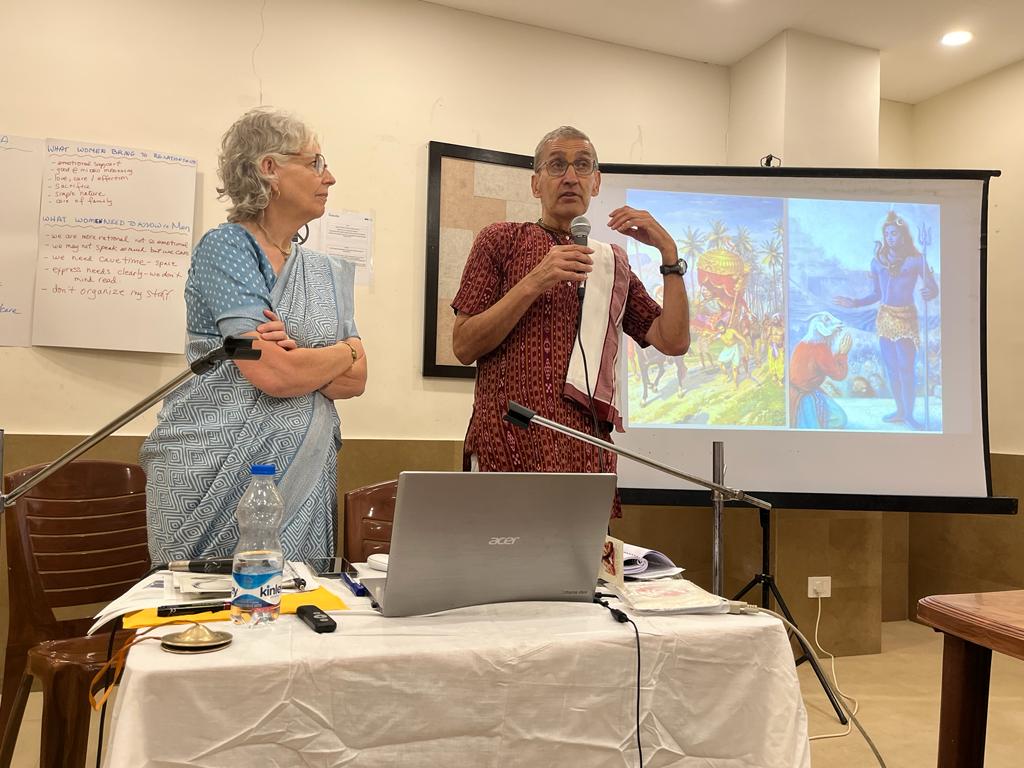
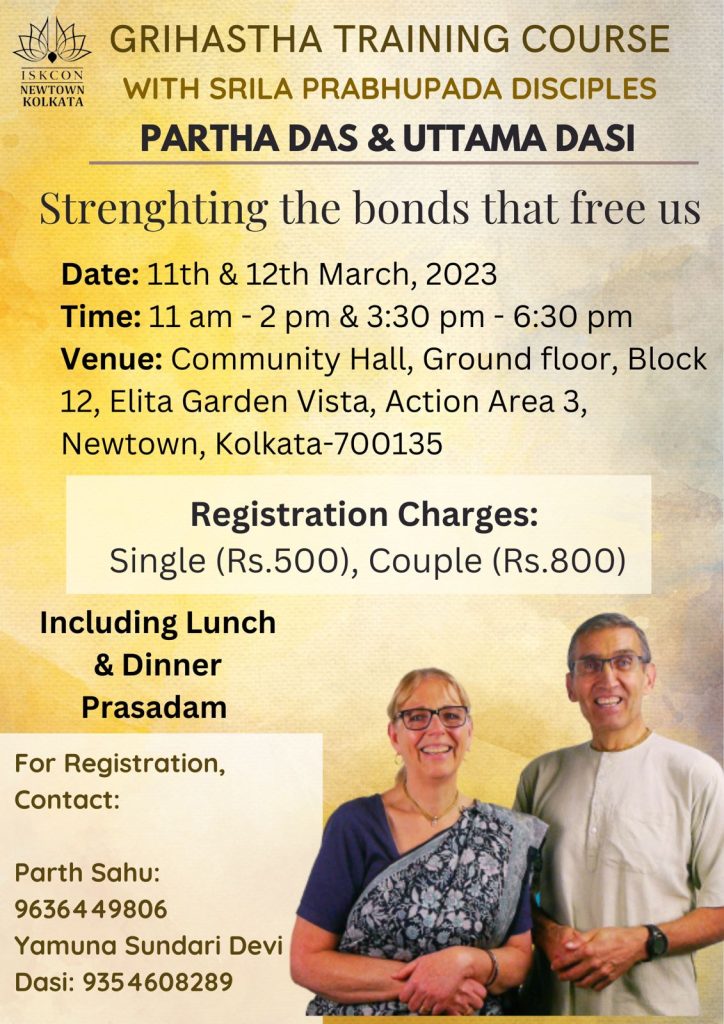
A two day grihastha training course on how to be successful and happy in Krishna Conscious marriage was organized at Iskcon Newtown, Kolkata on 11th & 12th March, 2023. The course was entitled – Strengthening the bonds that free us.
Married devotees and those devotees who are planning to enter into grihastha ashram attended the training to learn important tips to lead a happy Krishna Conscious married life.
Temple brahmacharis too attended the course to get a better understanding of grihastha ashram and its importance in Iskcon society.
Training was conducted by HG Parth Prabhu and HG Uttama Devi Mataji. Both are Srila Prabhupada’s disciples and are happily married for more than 50 years. Their life is testimony to the fact that if a devotee couple comes together for a higher purpose without any ulterior motive then they not only live a successful married life but they can also guide hundreds of grihastha devotees to be happy in Krishna Conscious marriage.
Devotee marriage is different
Devotee marriage is different from other marriages because devotees marry for higher purpose. Krishna is always the centre of their life and they both together try their best to serve Krishna. And the devotee couple also actively serve the mission of Srila Prabhupada.
The training was based on the teachings of scriptures and Srila Prabhupada’s instruction to grihastha devotees. They discussed the challenges which a husband and wife faces in today’s fast paced world and how a Krishna Conscious couple should navigate through those challenges and continue living together happily.
Marriage means responsibility
Tips were given as how in today’s world devotee couple can sort out their differences amicably. Srila Prabhupada in many of his teachings emphasize that marriage means responsibility. Both the husband and wife should come together to serve each other with a goal to ultimately please Krishna and there is no question of separation.
Srila Prabhupada says, “But marriage means to take full responsibility of a woman. That is real marriage, Vedic marriage. We, when I get married our boys and girls, the boy takes this vow that “I take responsibility of your maintenance throughout your whole life,” and the girl promises that “I desire to serve you throughout my whole life.” So the woman, the female, is the energy. When a man comes at home, he sees that everything is nicely decorated, my wife is well-dressed and foodstuff is nicely prepared, he becomes encouraged. He can work more nicely. Therefore woman is the energy. The woman gives the energy and he can work.” Room Conversation — October 20, 1968, Seattle
Various case studies and research materials published by professional marriage counsellors and psychologists were too part of the training. Even these professionals say that spouses should work hard to develop health bond with each other. And if the couple want happy and satisfying life then marriage should last life long and there should not be separation.
12 Principles and Values for a Successful Krishna Conscious Marriage
This was also the purpose of seminar – to help devotee couple develop strong bond with each other and never even think of divorce. It was a comprehensive marriage and family course for couples before and after marriage, leaders, and everyone concerned.
The training included in-depth exploration, interactive exercises, role plays, journaling and education in the following areas:
- 12 Principles and Values for a Successful Krishna Conscious Marriage in alignment with Srila Prabhupada and the sastras.
- Male/Female Paradox- Gender roles and cultural Norms, Understanding Differences and Expectations.
- Communications — Healthy Communication, Saboteurs of Healthy Communication, Empowering Communication Skills, Sustaining Family Relationships.
- Affection and Intimacy-Krsna Conscious Perspectives on Sex Life, Connection and Loving Exchanges.
- Managing Conflict-Danger Signs in Marriage, Signs of Abusive Relationships, Conflict Resolution Styles, Win-win decision making.
- Children and Parenting —Patterns and Skills of a Healthy Family, Children’s Needs, Parenting Styles and how we are influenced.
- Balanced lifestyle – Personal development / Spirituality, Values.
Marriage is Krishna’s gift
Marriage is sacred and it is for entire life. But unfortunately, in today’s time it has lost its sacredness and couples decide to get separated even for trivial issues. In Krishna Conscious marriage both husband and wife understand that they have come together only by the blessing of Krishna.
Marriage is a gift which Krishna has given them and how happily they live together is a gift they can give to Krishna.
Yes, it’s true when two different individuals come together there will be differences and disagreements but if there is mutual respect and love for each other then one can overcome any challenge.
But if there is selfishness and exploitative mentality then even a small issue can snowball into a big controversy. Both husband and wife have to equally take responsibility of making marriage successful.
If a husband tries and wife remains indifferent or vice – versa then there will be serious challenge in the marriage and can even lead to separation. This will displease Krishna, Srila Prabhupada and all the acharyas. It will also have negative impact on one’s Krishna Conscious life.
There should be no divorce
Srila Prabhupada would very strongly say that there should be no divorce at any cost. In this age of Kali yuga, people do not hesitate to go for divorce. So, devotees in Iskcon should do their best to avoid divorce.
Devotees wear Vaisnava dress, put tilak, wear kanti mala, carry bead bag and have love for Srila Prabhupada, so we should not do anything which will displease Srila Prabhupada.
Sometimes some devotees justify divorce saying that since the couple was not happy with each other, so it was better they got separated. And they also give examples of devotees who are happy in their second marriage or third marriage and so on.
But Srila Prabhupada did not approve this. He says that it’s a dog life. Just like dog changes partner again and again for sense gratification, similarly, so called devotees changes partner again and again.
Below are few of the statements of Srila Prabhupada on divorce.
“The divorce is also dog’s business. Dog is having sex intercourse with this female dog and another, another, another, another. It is animalism, That’s all.”
Morning Walk — May 28, 1974, Rome
Yes, in case of abuse, physical or emotional, one does not have any option but to move out of the marriage. But unfortunately those who want to separate may start claiming that they are being abused. Anyway, how much sincere we want to be in our spiritual life is our decision.
We can cheat the world but not Krishna. He knows the truth and we will get the reaction as per our own karma. Also, if someone’s husband or wife runs away from the marriage then it’s a different situation.
Srila Prabhupada never thought about divorce
Srila Prabhupada gives his own personal example that although he had disagreement with his wife but neither he nor his wife ever thought about divorce.
“The modern, so-called advanced boys and girls, they are now after divorce. But before that, even there was misunderstanding between husband and wife, quarrel, there was no question of divorce. Take my life practical. I was a householder. Now I have given up. So practically I did not agree with my wife, but there was no dream of divorcing. You see? Neither she dreamt, neither I dreamt. This was unknown. Now they are being introduced.”
Press Interview — December 30, 1968, Los Angeles
We don’t allow divorce
“A man wants a woman, and a woman wants a man, so we say, “All right, take it. Live peacefully, but don’t change partners.” We don’t allow divorce; once they’re married there is no separation. Nor do we allow boys and girls to live together as friends. If a man wants a woman and a woman wants a man, they should become united by marriage, live peacefully and advance in Kṛṣṇa consciousness. That is our proposal.” Interview with the New York Times — September 2, 1972, New Vrindaban
Dangerous to allow Divorce
“That is very dangerous law to allow divorce. Divorce should not be allowed. Even there is some disagreement between husband and wife, it should be neglected.” Room Conversation with Director of Research of the Dept. of Social Welfare — May 21, 1975, Melbourne
Selfish motives leads to divorce
“As soon as there is discrepancy in my satisfaction I divorce my wife. Or the wife sees that “This husband is useless.” She also divorces. So everywhere, the whole material world is going on on the basis of sense satisfaction.” Room Conversation — September 24, 1969, London
Conclusion – Live together & love each other forever.
Hope the seminar will help the devotees to understand the true meaning of grihastha life and the importance of preserving the marriage lifelong. Just like a sannyasi takes a vow to serve Krishna with body, mind and words, similarly husband and wife take vow in front of Krishna and the fire to love and serve each other for entire life and never get separated.
This Grihastha Training will help devotees to lead a successful and blissful Krishna Conscious married life. This will please Krishna, Srila Prabhupada and the entire devotee community.
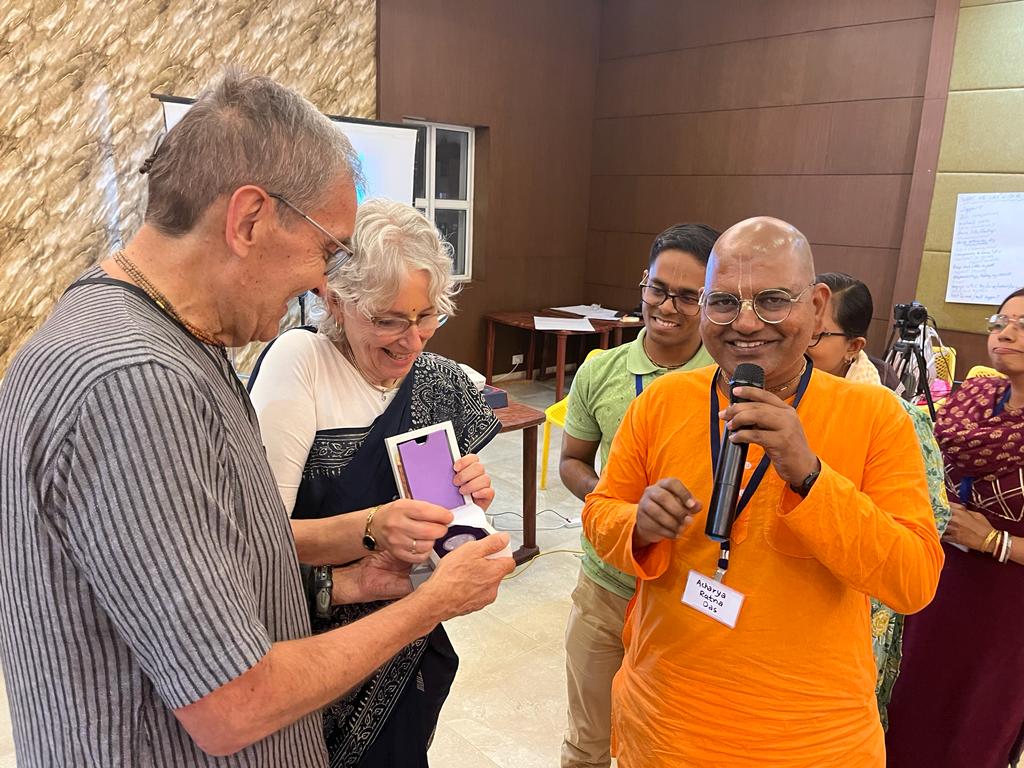
At the end HG Acharya Ratan Prabhu honoured HG Parth Prabhu and HG Uttama Devi Mataji & thanked them for conducting the Grihashta Training course which will surely help the devotees to be successful in their Krishna Conscious marriage life
Search
Recent Posts
-
Srimad Bhagavatam at ISKCON Newtown...
September 3, 2026
-
Srimad Bhagavatam at ISKCON Newtown...
September 1, 2026
-
Janmashtami: Celebrating Krishna’s Appearance Through...
August 17, 2026
-
Gopinatha Pattanayaka: 6 Lessons for...
August 16, 2026
-
What Does Krishna Say About...
August 11, 2026
Why Rukmini faints when Krishna teases her?
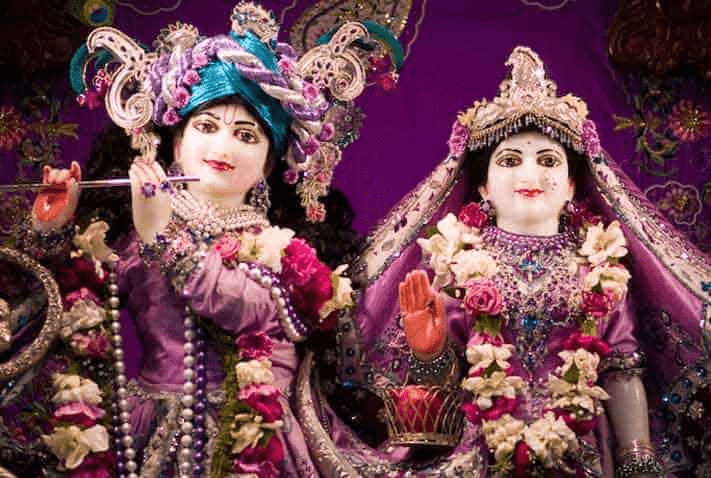
To spice up his marital bliss, Krishna teases Rukmini. Rukmini Devi, a gentle, polite, submissive wife of Krishna always wanted to give the best joy to the Lord of her heart. However one day, Krishna who is always willing to fulfil the desires of his beloved devotees had a desire to see the angry face of Rukmini.
He wanted that Rukmini who is the epitome of gentleness to quarrel with him. So, to fill her heart with anger, Krishna begins to tease her. But the words spoken by Krishna jokingly pierced the tender heart of Rukmini Devi, the source of the goddess of fortune.
You erred in choosing me as your husband
In order to invoke anger in her, Krishna said that you committed a big mistake by marrying me. There were many great kings who were eager to marry you. In fact, your marriage was fixed with Sisupala. He is rich, powerful, heroic and also a king. But mistakenly you chose me. I am not a king. I am merely a cowherd man.
Also, I am not heroic. I fled the battlefield when Jarāsandha attacked me. I abandoned the city of Mathura and took shelter of the ocean. Now with my family members and friends, I am living in Dwarka away from Mathura. In Dwarka, I am not the king. Ugrasena is the ruler and I follow his order.
Being satisfied within myself, I do not have attraction for wife, children and wealth. In fact, those who worship me are materially poor. The beggars adore me, and the rich are indifferent to me. Why do you want to be the wife of someone whose friends are poor? You erred in choosing me.
“We care nothing for wives, children and wealth. Always satisfied within Ourselves, We do not work for body and home, but like a light, We merely witness.” Srimad Bhagavatam 10.60.20
Rukmini always thought that amongst all of Krishna’s wives she was his most beloved. But when she heard these words from Krishna, she began thinking that Krishna has not accepted me whole heartedly. Her thoughts did not just end there.
She now feared that there could be a possibility that my beloved Krishna may abandon me. This put her in great anxiety. Krishna teases Rukmini to make her angry but instead she became horrified.
Thought of separation from Krishna
Rukmini could not bear the thought of being separated from Krishna even for a moment. We conditioned souls do not feel the pain of separation from Krishna. But pure devotees cannot even think of living without Krishna even for a moment.
Once Madhumangala said to Krishna that while we are playing sometimes you go behind the tree and we are not able to see you for a moment, this causes unbearable pain to us. We cannot live without you even for a second. We live only for you.
As the thought of separation from Krishna overwhelmed her, Rukmini fell on the ground and fainted. Krishna realized that Rukmini did not get his joke, in fact she completely misunderstood him. Krishna teases Rukmini so that he can enjoy more with her but Rukmini got heartbroken by his words.
Rukmini is Chandravali
Rupa Goswami in his Lalit madhav and Vidagdh madhav mentions which gopis from the Vraj lila manifest as queens in Dwarka.
In Dwarka, Rukmini is Chandravali and Satyabhama is Radharani. Chandravali’s mood is different from Radharani’s mood. She does whatever Krishna asks her to do. She does not become angry at Krishna.
So, when Krishna was teasing Rukmini then she was responding as per her mood. Soon Krishna realized that he is dealing with Chandravali and not Radharani. Krishna
Krishna pacifies Rukmini
When Krishna saw that Rukmini has become unconscious, he immediately got down from the bed and lifted her and caressed her. With pleasing words, he consoled her and said that he was only trying to tease her and also gave the reason for it.
He said that the greatest pleasure which a husband enjoys is when he jokes with his wife. I was trying to do so but you misunderstood me. A husband enjoys light-hearted banter with his wife in her private quarters and when the wife becomes angry then husband enjoys great pleasure later in consoling her.
“The Supreme Lord said: O Vaidarbhī, do not be displeased with Me. I know that you are fully devoted to Me. I only spoke in jest, dear lady, because I wanted to hear what you would say. I also wanted to see your face with lips trembling in loving anger, the reddish corners of your eyes throwing sidelong glances and the line of your beautiful eyebrows knit in a frown. The greatest pleasure worldly householders can enjoy at home is to spend time joking with their beloved wives, My dear timid and temperamental one.” Srimad Bhagavatam 10.60.29 – 31
Rukmini’s answer to Krishna
Krishna’s words pacified Rukmini. She now began smiling. But she was angry too because of Krishna’s words. Or we can say that she started countering Krishna in an angry mood because Krishna wanted to see her angry. And Rukmini as per her nature does what pleases Krishna.
Rukmini said:
“I know, I am not qualified to be your wife because no one can be equal to you. You are most glorious and most lovable. I am not the best match for you but what can I do I got attracted to you. In fact, anyone who hears about you quickly becomes mad for you. This is what happened with me. And this is your fault, not the fault of those whom you drive mad. As soon as I heard about you, I decided to marry you and no one else.
The false kings
You praised the kings saying that they are the rulers of the kingdom, are rich and powerful. But the truth is that they are not the kings because they are always under the control of the three modes of material nature and the powerful time.
Not just that they are worthless puppet who are always under the control of women. They are no better than dogs and assess. An intelligent woman should not even think of marrying such unfortunate men.
“O infallible Kṛṣṇa, let each of the kings You named become the husband of a woman whose ears have never heard Your glories, which are sung in the assemblies of Śiva and Brahmā. After all, in the households of such women these kings live like asses, oxen, dogs, cats and slaves.” Srimad Bhagavatam 10.60.44
Your devotees chose to be poor
You say you are poor, but you are the proprietor of this universe. The first being of this creation, Lord Brahma, comes from your navel. He is your devotee. Lord Shiva is your devotee. And your devotees are not at all poor.
Many times they choose to be materially poor because they want to relish the spiritual wealth. Always absorbed in thinking about you, they are always blissful. Your devotees are most fortunate and they always aspire to be with you. I also have the same desire. I always want to be with you.
I only want you
I never look at anybody even for a moment other than you, not even Lord Brahma and Lord Shiva. I only want you. I only desire you. You are the most wonderful person in the entire creation. You cannot be compared with anyone.
If I would have failed to get you in this life then I was ready to extend my austerity to next life but I would have never accepted anyone other than you as my husband.”
Never choose anyone else
Rukmini Devi is teaching an important lesson to all the devotees of Krishna – we should never choose anyone else other than Krishna. Even if it takes many lifetimes, we should patiently wait for Krishna to come and accept us. Just like Rukmini is a chaste wife of Krishna, we should be a chaste devotee of Krishna.
We should always say, “Krishna, I only desire you. Please come and accept me.”
Rukmini only wanted Krishna, so she ultimately got Krishna. Krishna shows that if the desire of a devotee is too strong then he also cannot resist fulfilling that desire.
Krishna responds to the quality of our devotion, our service and our eagerness to have him. Quality of Rukmini’s devotion was so strong that Krishna immediately responded and accepted her as his wife.
Plan to be successful in Krishna Consciousness
We see that before her marriage, Rukmini was always planning how to be successful in her Krishna Consciousness. Although at her home conditions were not favourable for her to be a devotee of Krishna but still she did not give up Krishna.
Her brother Rukmi considered Krishna as an enemy. And her father because of pressure from his son, Rukmi, agreed to marry her to Sisupala who was also an enemy of Krishna. But she did not give up hope.
With determination she continued pursuing Krishna. She secretly called a brahmana and sent a letter to Krishna. That letter can be considered the first love letter since the dawn of creation.
In that letter, she poured her heart into it. She expressed her desire to marry him. She requested Krishna to come and pick her up from her palace and take her away. In the letter, she also explained in detail that how Krishna can come and kidnap her and marry her. She told him the place where to come and also the exact time when he should come.
Strong determination attracts Krishna’s attention
Rukmini was also clear that if Krishna fails to reciprocate with her feelings then she would end her life rather than marry Sisupala or anyone else. That was her resolve.
She thought that if Krishna will not come then it is her fault because her devotion is not strong enough to attract Krishna’s mercy. So, she was ready to continue her austerity life after life till she gets Krishna as her husband. She was determined to have Krishna.
“O lotus-eyed one, great souls like Lord Śiva hanker to bathe in the dust of Your lotus feet and thereby destroy their ignorance. If I cannot obtain Your mercy, I shall simply give up my vital force, which will have become weak from the severe penances I will perform. Then, after hundreds of lifetimes of endeavor, I may obtain Your mercy.”
Śrīmad-Bhāgavatam 10.52.43
Rukmini Devi’s life teaches us the importance of determination in our Krishna conscious journey. Situations and circumstances are sometimes favourable and sometimes unfavourable but we should always practice Krishna Consciousness.
For that we need strong determination. And off course patience is also required. We cannot expect quick result always. The Supreme Personality of Godhead, Krishna, also tests our endurance many times.
Krishna teases Rukmini to glorify her
Krishna teases Rukmini to show to the world the love she had for him. The Supreme Lord ,Krishna, teases his beloved wife Rukmini to glorify her transcedental qualities. Rukmini is not just the queen of Dwarka, but she is the queen of Krishna’s heart.
Let us pray at the lotus feet of Rukmini to instil our heart with love for Krishna.
Krishna acknowledges Rukmini’s love for him in these beautiful words:
“In all My palaces I can find no other wife as loving as you, O most respectful one. When you were to be married, you disregarded all the kings who had assembled to seek your hand, and simply because you had heard authentic accounts concerning Me, you sent a brāhmaṇa to Me with your confidential message.” Śrīmad-Bhāgavatam 10.60.55
Krishna further says that your love for me is so great that I cannot do anything to reciprocate with your pure love. I can simply thank you for this.
“When you sent the messenger with your most confidential plan and yet I delayed going to you, you began to see the whole world as void and wanted to quit your body, which could never have been given to anyone but Me. May this greatness of yours remain with you always; I can do nothing to reciprocate except joyfully thank you for your devotion.” Śrīmad-Bhāgavatam 10.60.57
Search
Recent Posts
-
Srimad Bhagavatam at ISKCON Newtown...
September 3, 2026
-
Srimad Bhagavatam at ISKCON Newtown...
September 1, 2026
-
Janmashtami: Celebrating Krishna’s Appearance Through...
August 17, 2026
-
Gopinatha Pattanayaka: 6 Lessons for...
August 16, 2026
-
What Does Krishna Say About...
August 11, 2026
12 names of Lord Chaitanya which gives complete perfection
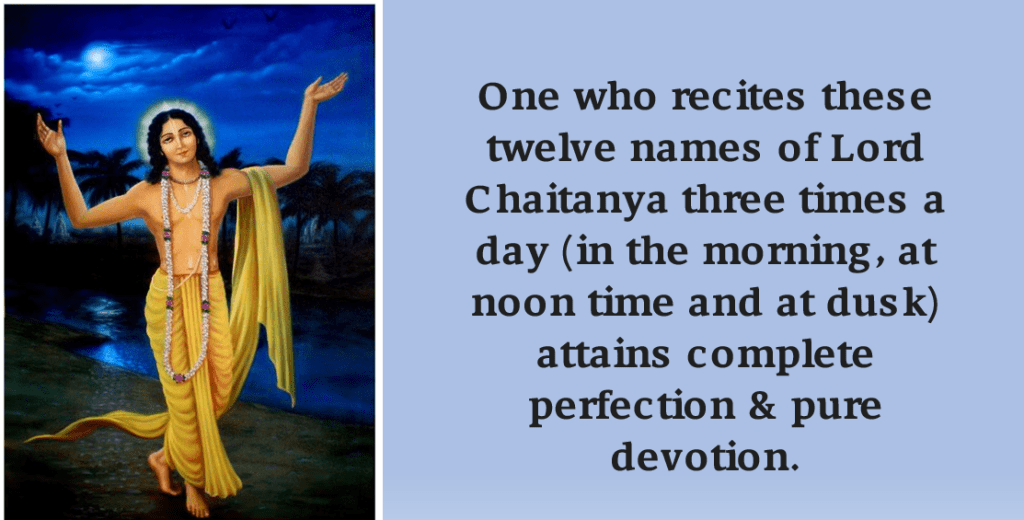
In Sri Krsna-Chaitanya-Dvadasa-Nama-Stotram, Sarvabhauma Bhattacharya writes about 12 important names of Lord Chaitanya. He further says that these glorious names of Chaitanya if chanted daily brings auspiciousness in life.
Twelve principal names of Lord Chaitanya Mahaprabhu are:
(1) caitanyah krsna-caitanyo gaurango dvija-nayakah
yatinam dandinam caiva nyasinam ca siromanih
(2) raktambara-dharah sriman navadvipa-sudhakarah
prema-bhakti-pradas caiva sri-saci-nandanas tatha.
Sri Krsna-Chaitanya-Dvadasa-Nama-Stotram by Sarvabhauma Bhattacharya:
Meaning of each of the 12 names of Lord Chaitanya are as follows:
- Chaitanya — The living force
- Krsna-Chaitanya — The all-attractive Supreme living force
- Gauranga — He of fair bodily complexion
- Dvija-Nayaka — The hero amongst the twice-born brahmanas
- Yatinam Siromani — The crest jewel of sannyasis (who wander freely)
- Dandinam Siromani – The crest jewel of sannyasis (who carry staffs)
- Nyasinam Siromani — The crest jewel of sannyasis (who renounce everything).
- Raktambara-Dhara — He who wears red cloth
- Sriman — The supreme opulent one
- Navadvipa-Sudhakara — The source of nectar in Navadvipa
- Prema-Bhakti-Prada — The bestower of ecstatic loving devotion
- Sri-Sachi-Nandana — The delightful son of mother Sachi.
One who recites these twelve holy names of the Lord three times a day (in the morning, at noon time and at dusk) will attain complete perfection in their life and will surely attain pure devotion unto the lotus feet of Lord Chaitanya which is the ultimate shelter of all living entities.
Re-established religious principles in true spirit
After Lord Krishna completed his pastime in this mortal world and left for his eternal world, religious principles started declining. In fact, before the advent of Chaitanya Mahaprabhu, there was almost no religion because no one was following the scriptures as it is. In fact, people had forgotten the purpose of scriptures. There was no scriptural discussion and hardly anyone chanted the names of Krishna.
If anyone chanted the names of Krishna, the general belief was that such people are either fool or because of poverty are hungry so are helplessly crying the name of God. Chaitanya Mahaprabhu re-established religious principles. His profound teachings dispelled all the misconception which people had regarding religion and the unscrupulous religious leaders who were misguiding people in the name of religion got exposed and defeated.
Living corpse to lively devotee
Chaitanya means living force. His advent brought life because people were able to forgo painful material life and joyfully started living happy Krishna Conscious life.
Material life is no life because God is not the centre of life, so it is full of suffering. If we fail to understand that we are parts and parcels of God then we are as dead and dull as stone. Just like stone has no life, similarly we are nothing but living corpse.
But Chaitanya Mahaprabhu taught us that for our own benefit, we should rise above material consciousness and situate ourselves into Krishna Consciousness. If we do so, then we can live happily forever in the association of Krishna who is source of all happiness.
Krishna who is not black
Chaitanya Mahaprabhu is Krishna who is not black. He has golden complexion. Also he is in the mood of the topmost gopi of Vrindavan. Many times experienced devotees do not put peacock feather on him because if we put peacock feather then it means that we are interfering with the mood of Chaitanya Mahaprabhu.
Most of the time Mahaprabhu is in the mood of Srimati Radharani, and we know that Radharani does not put peacock feather. He is always absorbed in the thoughts of Krishna. He is not stable; he is always agitated for Krishna prema.
Why he came here?
There are many reasons why Chaitanya Mahaprabhu came. One of the reasons is that he came to pay debt to the gopis. When Krishna left Vrindavan then gopis continuously cried for Krishna in separation. So, as Chaitanya Mahaprabhu he always cried like the gopis feeling separation from Krishna.
In Bhagavad Gita 4.11, Krishna says, ye yatha mam prapadayante, “As all surrender unto Me, I reward them accordingly.” So, Krishna is eager to give something to the devotees, but pure devotees of Krishna do not ask anything from him. They only want to give something to Krishna. They always want to serve him.
Sanatana Goswami says that when Krishna asks devotees to ask something from him then devotees say three times “no”. He explains that three times no means – in past no, in present no and in future no. So, to pay debt to such dear devotees who have no personal desire or motive, Krishna comes as Chaitanya Mahaprabhu to give them prema.
He is always keen to distribute prema, pure love of Godhead. But he gives prema to only those who are simple and not duplicitous and have no ulterior motives.
Advaita Acharya told to Chaitanya Mahaprabhu that do not give prema to those who are proud of wealth, power and beauty. Give prema to those who are simple and chant the names of Krishna.
He will award prema if our heart is free of prema for sense enjoyment
So, if we want to get prema of Lord Chaitanya Mahaprabhu then we should be simple hearted and have love for the holy names.
We see Haridas Thakura had no material opulence, but he got Chaitanya Mahaprabhu prema. He did not get any higher material education neither he possessed any wealth or wielded any power.
But he was simple, humble and had no ulterior motives, was not duplicitous in his behaviour and was always eager to chant the name so Krishna, so Chaitanya Mahaprabhu awarded him love for Krishna and he came to be known as Namacharya.
If with humility and simplicity, we accept the shelter of Chaitanya Mahaprabhu then all opulence of Chaitanya Mahaprabhu will manifest. .
We should not have any material desires. Even if the desires are there then we should ignore it and not try to think about it especially when we are chanting the names of Krishna. It is because whatever is in the mind when we chant will manifest. So, if we have material desires then those desires will get fulfilled but it will pull us way from Krishna.
We should always be humble. And many times, without humiliation, we don’t become humble. For eg Keshav Kashmiri was very proud of his scholarship but when he was defeated by Chaitanya Mahaprabhu he became humble and fell at his lotus feet. When we offer our obeisances, it shows our humility and it burns our pride.
Chaitanya Mahaprabhu appeared in this world to destroy our pride and our false attachment to this material world. So, let us all be under the shelter of Lord Chaitanya Mahaprabhu and continuously chant his holy names.
Note: This article is based on a Srimad Bhagavatam class given by His Holiness Bhakti Dhira Damodar Swami Maharaj at Iskcon Newtown Kolkata, India.
Search
Recent Posts
-
Srimad Bhagavatam at ISKCON Newtown...
September 3, 2026
-
Srimad Bhagavatam at ISKCON Newtown...
September 1, 2026
-
Janmashtami: Celebrating Krishna’s Appearance Through...
August 17, 2026
-
Gopinatha Pattanayaka: 6 Lessons for...
August 16, 2026
-
What Does Krishna Say About...
August 11, 2026
When Lord Krishna steals sweet rice for Madhavendra Puri
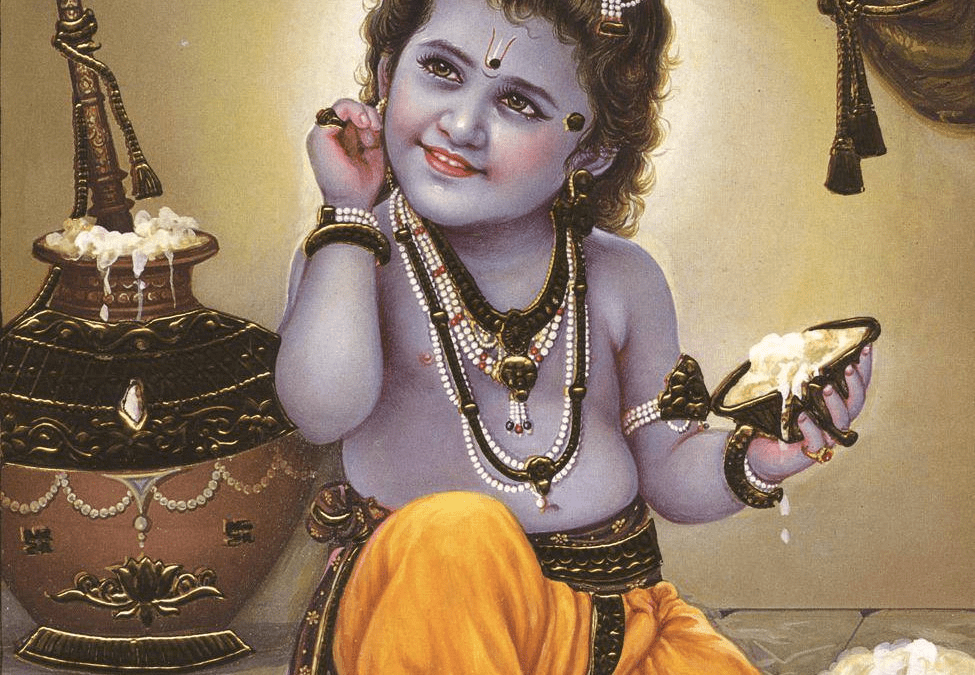
Krishna is famous for stealing butter in Vrindavan but there is a beautiful pastime in which he steals sweet rice for his devotee Madhavendra Puri.
Krishna always reciprocates with the desire of his devotee but his pure devotees have no personal desire. Their desire is always to serve the desire of the Lord.
Lord’s desire or our own desire
Now let us ask what desire we carry in our heart? What we do when we go in front of Krishna? Do we ask him his desire, or do we tell him our desire? Most of us have a long list of desires and we expect the Lord to fulfil our desires. If he fulfils it, we think that it was his duty to do so and if our desires are not fulfilled then we become upset with the Lord. Most of us follow this ritual.
Now let us ask ourselves that how many times have we ever asked Krishna about his desires, his likes and dislikes? Or do we even care about his desire? For us God is just our caretaker. We want him to take care of each and every aspect of our life.
But pure devotees of Lord have no personal desire. Their only desire is to fulfil all the desires of the Lord in all situations and in all circumstances. Krishna also shares his feelings only with those who have unflinching and unmotivated love for him. Madhavendra Puri is one such great devotee with whom Krishna shared his personal desires.
Krishna reveals his desires to Madhavendra Puri
First, he asked Madhavendra Puri to install his deity on top of Govardhan hill. Madhavendra Puri with the help of the villagers installed the deity of Gopal on top of Govardhan hill and worshipped the Lord in a very grand way.
And later Lord Gopal asked him to bring sandalwood pulp from Jagannath Puri and apply on him to give him soothing experience. Madhavendra Puri immediately left to full the order of the Lord. Let us see how Krishna reciprocates with the love of Madhavendra Puri and how Madhavendra Puri was always eager to serve the Lord without any personal motive or desire.
Madhavendra Puri’s desire to taste amṛta-keli & his lamentation
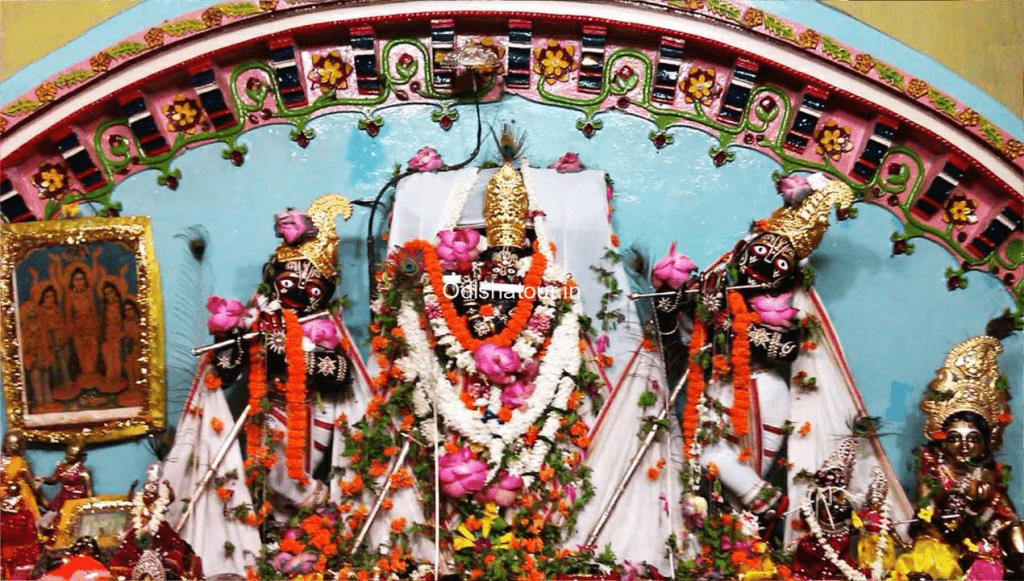
On the way to Jagannath Puri, Madhavendra Puri came to Remuna. In Remuna there is a beautiful deity of Krishna called Gopinath. Madhavendra Puri was so happy to see the deity. He inquired from the temple priest that how the Lord is served here.
The brahmana said that the Supreme Lord is worshipped very nicely here and one of the great attractions is that the Lord is offered one special sweet rice daily which is called amrit keli.
“The brāhmaṇa priest said, “In the evening the Deity is offered sweet rice in twelve earthen pots. Because the taste is as good as nectar [amṛta], it is named amṛta-keli. This sweet rice is celebrated throughout the world as gopīnātha-kṣīra. It is not offered anywhere else in the world.” Śrī Caitanya-caritāmṛta, Madhya-līlā 4.117-118
While the discussion was going on sweet rice was placed in front of Gopinath. Seeing the delicious preparation, a thought came to Madhavendra Puri’s mind – If I could taste it then I can prepare it for my Gopal in Govardhan. But soon he felt terrible. How can I even think about tasting sweet rice which is being offered to Gopinath?
Devotees prepare food only for the pleasure of the Lord
Devotees with great love and care prepare food for the pleasure of the lord. Many people prepare food which they like and offer to the lord so that later they can eat it. Some who are addicted to tea and coffee even offer tea and coffee to the lord.
And there are those who cook food using onion and garlic and give it to the lord. Because they like onion and garlic so they put the plate in front of the Lord and later they enjoy such food. The motive is not to satisfy the Lord but to satisfy themselves.
What Krishna likes and he does not like he has already mentioned in the scriptures. And his pure devotees have also clarified it multiple times. If we prepare food which is not sanctioned in the scriptures, then the Lord will not accept it.
So, devotees prepare only those food items which are authorized by the scriptures. And when devotees prepare food for the Lord, they put their heart into it and then request Krishna to accept it. Devotees put the plate having delicious food items in front of the Lord and chant proper mantras and request the Lord to eat it.
When the Lord eats his food then during that time the devotee meditate on how Lord enjoys his food cooked by mother Yashoda with his cowherd friends and they also chant his holy names.
Krishna steals sweet rice for Madhavendra Puri
So, when the thought of tasting amrit keli (sweet rice) came into the mind of Madhavendra Puri, he felt that he has committed an offense. He did not say anything but remained in the temple till the arati of Lord was performed.
After the arati he left the temple and began chanting the names of Krishna in the marketplace of Remuna.
Meanwhile in the same night the temple priest had a unique dream. In his dream Gopinath appeared and told him that he has stolen a pot of sweet rice for his devotee Madhavendra Puri and he should take it and give it to him. Pujari was perplexed.
He got up and went inside the deity room. There he saw a pot of sweet rice under the garment of the Lord. The merciful Lord had stolen the sweet rice and had hid it under his garments.
Pujari was so amazed seeing the grace of the Lord. He immediately picked the pot of amrit keli and ran outside the temple. He did not know who Madhavendra Puri is. So, he began calling his name and announcing that Gopinath has stolen sweet rice for him, so, he should come immediately and enjoy the mercy of the Lord.
“Holding the pot of sweet rice, the priest called, “Will he whose name is Mādhavendra Purī please come and take this pot! Gopīnātha has stolen this pot of sweet rice for you!.” Śrī Caitanya-caritāmṛta, Madhya-līlā 4.133
The priest continued, “Would the sannyāsī whose name is Mādhavendra Purī please come and take this pot of sweet rice and enjoy the prasādam with great happiness! You are the most fortunate person within these three worlds!” Śrī Caitanya-caritāmṛta, Madhya-līlā 4.134
Madhavendra Puri in ecstasy seeing the mercy of the Lord
Hearing his name being called, Madhavendra Puri came out and identified himself. And when he came to know that Gopinath had stolen sweet rice for him, he was filled with ecstasy. When a pure devotee of Krishna works tirelessly to serve the Lord then Lord also reciprocates with that love.
Madhavendra Puri relished amrit keli. He then washed the pot and broke it into pieces and tied those pieces to his cloth. And later everyday he would eat a bit of the earthen pot and would experience great ecstasy.
From that day onwards Gopinath came to be known as Kshirachora Gopinatha – Gopinath who stole kshira (sweet rice) for his devotee.
But that night Madhavendra Puri was little worried too. He thought that soon everyone will come to know that the Lord has stolen sweet rice for me. So, people will throng to see me, and this will impact my devotion to the Lord.
His glory reaches Puri
To avoid public attention, he immediately left the place for Jagannath Puri. But before he could reach Puri dham his glories reached there. Everyone glorified him in Jagannath Puri.
But Madhavendra Puri was focused on his goal. He had come to collect sandalwood for his Gopal deity. He knew that Gopal is waiting for him in Govardhan. The residents of Jagannath Puri were happy to help him. They arranged sandalwood for him and also arranged two assistants to carry sandalwood.
Gopal asks to apply sandalwood paste to Gopinath
While returning back to Govardhan, he came again to Remuna to take darshan of Gopinath. The temple priests and other devotees were so happy to see him. In Remuna, Gopal appeared in the dream of Madhavendra Puri in the night and said that you can apply the sandalwood paste to Gopinath because I am non different from Gopinath.
When the devotees in Remuna heard the desire of Lord Gopal they were so happy. It was celebration time in Remuna. Daily chandan paste was prepared and was applied to Lord Gopinath. In this way Madhavendra Puri was able to fulfil the desire of Krishna.
If we always serve Krishna’s desire, we will always be in bliss
Pure devotees like Madhavendra Puri appear in this world to teach us, the conditioned souls, that real satisfaction and happiness is in always serving the Lord and not our own senses.
Madhavendra Puri just had a little desire to taste sweet rice and Krishna immediately steals sweet rice for him. Important is not how Krishna steals sweet rice. But why Krishna steals sweet rice for Madhavendra Puri?
It is because Madhavendra Puri had great love for Krishna and was always eager to serve Krishna. And to reciprocate with the love of Madhavendra Puri, Krishna steals sweet rice for him.
This is personally confirmed by Krishna. “I have accepted your service due to your ecstatic love for Me.” Śrī Caitanya-caritāmṛta, Madhya-līlā 4.40
Krishna tells the characteristics of his pure devotees in Gita, “Always chanting My glories, endeavouring with great determination, bowing down before Me, these great souls perpetually worship Me with devotion.” Bhagavad Gita 9.14
So, instead of focussing on our desires, if we try to always serve Krishna’s desires then we will always be in bliss. Now let us ask ourselves – are we endeavouring to satisfy Krishna’s desires or are still obsessed with our personal desires?
Search
Recent Posts
-
Srimad Bhagavatam at ISKCON Newtown...
September 3, 2026
-
Srimad Bhagavatam at ISKCON Newtown...
September 1, 2026
-
Janmashtami: Celebrating Krishna’s Appearance Through...
August 17, 2026
-
Gopinatha Pattanayaka: 6 Lessons for...
August 16, 2026
-
What Does Krishna Say About...
August 11, 2026
Gita tells us that we are spiritual beings & not a programmable robot
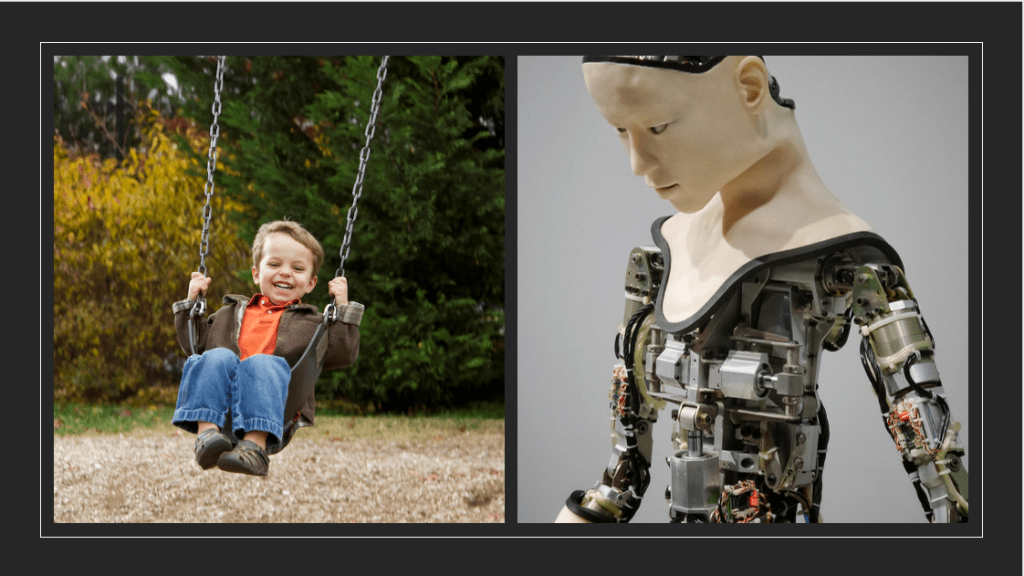
Are we programmable robots or spiritual beings with spiritual consciousness, let us see what Bhagavad Gita says about it.
Modern scientific viewpoint states that we the human beings are nothing but a bag of chemicals & we came into existence owing to some spontaneous chemical reactions and will cease to exist once the chemical reaction ceases.
Scientific theory epitomizes the doctrine of the renowned atheist charvak muni who said when this body dies nothing is left. So, one must enjoy ones life as much as possible. Beg, borrow and steal but enjoy was his message to the humankind.
Modern educational curriculums are designed taking into consideration the aforementioned viewpoint.
Why a robot will have feelings for other robots
Scientists believe that a human brain can be programmed to act in a particular way in the same manner as a robot is programmed in laboratories to act in a particular way.
Today in schools & colleges a student’s brain is stuffed with loads of information to ensure that his brain is programmed to believe that he is the doer of everything and this life of his is to enjoy to the fullest. Every year across the world schools & colleges are manufacturing highly skilled robots, loaded with technical savoir faire.
So, since schooldays itself these mechanized robots starts considering this life to be full & final and are ready to resort to any means to enjoy this (& only this) life. If I am a bag of chemicals & my colleagues or my friends or my family members are also a bag of chemicals then what’s the harm in destroying that bag? I have to enjoy my life any how (beg, borrow & steal).
How a robot can solve life’s problems
However, when confronted with any adversity these highly talented mechanized robots tries to switch on their intelligence button but fails to find out that particular program which can solve their problem.
So, we find these highly skilled, highly intelligent and high profile robots hangings itself with a small rope from the ceiling of the house, taking dollops of rat poison to end the troublesome safari of life or taking the shelter of the sleeping pills.
In spite of being force- fed dollops of arguments against suicide, drug abuse, depression why is it that even the most knowledgeable materialistic brain (high profile engineers, doctors, scientists, business magnates, lawyers) easily succumb to it.
Inundated with plethora of materialistic information human intelligence fails to do an RCA (Root Cause Analysis) of the problem. The brain tries to find the solution based on the existing source codes which were force – fed in schools & colleges to ensure that the being turns out to be a technological masterpiece (robot) unparalleled and unequivocally the best.
However unfortunately, unlike the computer program the output is not always as per the expectations.
Differences between a robot and us
Let us understand the difference between a robot and a human being.
Robot is a mechanical machine devoid of any consciousness whereas human beings are spiritual beings full of consciousness. Unlike human being a robot does not feel pain & pleasure, tears does not start pouring down from it’s eyes with love and ecstasy upon seeing it’s own creator (mother & father) or fellow robots (brothers & sisters).
The flaw of the modern education system is that it does not answer the questions: who we are, what is the purpose of this life & why do we suffer. It provides information only to deal with dead matter. There is no information about isvara(the Supreme Lord), jiva (the living entity), prakrti (nature), kala (eternal time) and karma (activity) in today’s educational curriculum.
We should understand that we are not a robot devoid of consciousness instead we are spiritual beings full of consciousness. In Bhagavad Gita, Lord Krishna very clearly says that we are spiritual beings. He explains that we are souls and our material body is functioning only because of the presence of soul within this material body.
“That which pervades the entire body you should know to be indestructible. No one is able to destroy that imperishable soul.” Bhagavad Gita 2.17
As a soul we are sat-cit-ananda i.e. eternal, blissful and full of knowledge. A robot will not experience pain or pleasure. At the most, it can be programmed to smile, to laugh or even to shed tears.
But we the human beings cannot be programmed to show emotions in a mechanical way. We actually experience happiness or distress and accordingly express our feelings. Why just the human beings, in fact all living beings like animals, birds, aquatics etc experiences pain and pleasure.
Gita has answer to all the important queries
We are undergoing pain, pleasure and happiness owing to our previous karma. And we are getting affected by it because as Bhagavad Gita explains we are spiritual beings.
As Srila Prabhupada explains, “We are suffering or enjoying the results of our activities from time immemorial, but we can change the results of our karma, or our activity, and this change depends on the perfection of our knowledge.”
As we are conditioned and fail to understand what is right or what is wrong, we should take the shelter of scriptures like Bhagavad-gita which provides answers to all our questions.
Srila Prabhupada explains,”Being an associate of Lord Krishna, Arjuna was above all ignorance, but Arjuna was put into ignorance on the Battlefield of Kuruksetra just to question Lord Krishna about the problems of life so that the Lord could explain them for the benefit of future generations of human beings and chalk out the plan of life. Then man could act accordingly and perfect the mission of human life.”
Throughout Bhagavad Gita Krishna has again and again emphaised that we are spiritual beings and so we should act accordngly if we want to lead a happy life.
Unfortunately, we have banished these religious treatises in pursuit of modernity. However, since time immemorial the priceless, timeless and sublime philosophy of Bhagavad-gita, Srimad Bhagavatam, Isopanisad, Puranas & other revered religious scriptures has been a beacon light for the entire human civilization.
A research
Recent research conducted by leading universities all over the world acknowledges the positive impact of spirituality in a person’s life.
Recently published paper ‘Impact of Adoption of Yoga Way of Life on Emotional Intelligence of Managers’ by Indian Institute of Management – Bangalore (https://www.iimb.ac.in/node/4034) states that those individual who has strong spiritual inclination has great ability to withstand failure and stress.
We spiritual beings should be spiritually empowered
Why not include Bhagavad Gita and other revered Vedic scriptures in schools and colleges curriculum. Once done the schools & colleges will no longer produce hundreds & thousands of mechanized robots every year instead, we will have young scholars who are not just technically savoir faire but are also spiritually empowered.
The paper also concludes yoga increases the Emotional Intelligence (EI) of a person which in turn increases the person’s managerial performance. It also says that Yoga can even replace six-sigma.
Empowered with the philosophy of these scriptures a person will not be bewildered when confronted with adversity; he will not be agitated, will not be frustrated and will never indulge in any life threatening and life destructive activities.
Like Arjuna he will be fearless, will always perform righteous deeds and usher the world in a new era of peace, prosperity & happiness.
Bhagavad Gita not just teaches us that we are spiritual beings but also empowers us to deal with even the toughest problems of our life.
Search
Recent Posts
-
Srimad Bhagavatam at ISKCON Newtown...
September 3, 2026
-
Srimad Bhagavatam at ISKCON Newtown...
September 1, 2026
-
Janmashtami: Celebrating Krishna’s Appearance Through...
August 17, 2026
-
Gopinatha Pattanayaka: 6 Lessons for...
August 16, 2026
-
What Does Krishna Say About...
August 11, 2026
Bhagavad Gita has solution for all our miseries
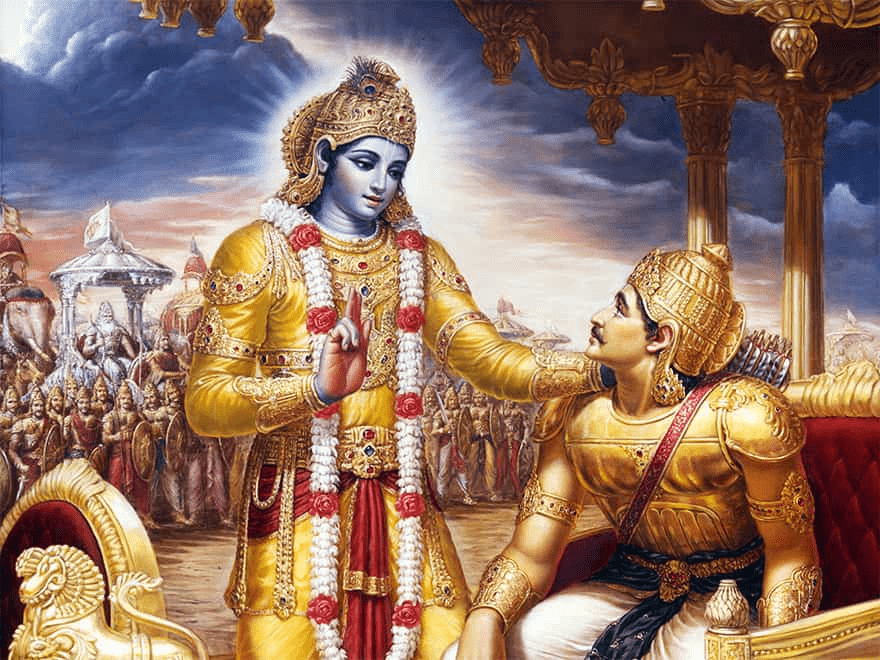
If you are tormented by miseries then do not worry, Bhagavad Gita has solution for all your miseries. None of us want suffering in our life but it comes knocking at our door. It not just knocks at our door but forcibly enters into our house, into our life.
From a rickshaw puller to a pilot flying high in the sky, from a government employee to a head of the government, from a beggar on the street to a business tycoon, from a baby in her cradle to an old man – all continuously search for happiness.
But in spite of our obsession with ‘happiness’, ‘miseries’ continuously accompany us like a shadow. Misery can be physical or can be psychological and it has a knack of appearing and disappearing at its own whims.
Types of miseries
Vedic scriptures tell us about the fourfold misery – birth, old age, disease and death. Till date since the dawn of creation there has not been a single being including non -humans who have not been affected by it. Who in this world would want to be diseased, grow old and ultimately die? But it happens to all of us.
In this world we are also subjected to three types of miseries:
- Miseries caused by nature such as excessive heat or cold, flood or famine, earthquake, tsunami etc. (adhidaivika-klesa)
- Miseries caused by the activities of fellow beings like terrorists or sometimes by our own near and dear ones. Even other species like mosquitoes, viruses too inflict on us sufferings in form of several diseases. (adhibhautika-klesa)
- Suffering caused by our own body and mind (adhyatmika-klesa). Bodily diseases, anxiety, depression, stress, fear of future etc. do not allow us to live in peace.
Scriptures are life’s manual
In spite of our repeated efforts, we are not able to defend ourselves against the onslaught of material miseries. The only approach which we consider effective is by increasing our worldly possessions and enhancing our material positions.
We think by filling our coffers with lots of money we can bribe misery when it knocks at our door and can change our destiny. But sadly, this rarely happens. Many times, we are caught off guard and suddenly we find ourselves in precarious situation.
One of the advantages of being a human being is that we have been gifted with intelligence. So, as an intelligent species shouldn’t we ask why in spite of all my efforts, irrespective of all the measures taken we are not able to free ourselves from the strong grip of grief and sorrow?
Are the precautionary measures taken by us aren’t sufficient or is it that the measures itself is erroneous and so outcome is always ineffective?
When we buy a new gadget such as an iPhone then along with it is given to us a manual which not just explains the functionalities of the device but also specifies dos and don’ts. And for effective functioning we are supposed to adhere to given guidelines.
But if we go against the advice then the device starts malfunctioning.
Similarly, we have also been given manuals by the creator of this world who is also our Supreme Father. These manuals are the sacred Vedic literatures which comprehensively give detail about this world, about our life and also delineate the process by which we can ward off all miseries and lead a peaceful life.
It will not just protect us from all dangers but will also guide us to a path which will open the door of perennial bliss.
How like Arjuna we can overcome misery
Arjuna was in abject misery and in tears just before the Mahabharat war. But after being thoroughly educated by Krishna in spiritual science he got enlightened and decided to work according to the directive of Krishna, the Supreme Lord.
By following the teachings of Bhagavad Gita which has solution to all the problems of life, Arjuna was able to come out of all miseries.
Krishna said, “Therefore, O Arjuna, surrendering all your works unto Me, with full knowledge of Me, without desires for profit, with no claims to proprietorship, and free from lethargy, fight.” Bhagavad Gita 3.30
Arjuna fought with grit without worrying about gain or loss. And since he was executing his given duties as per the laws of God, he was victorious. Krishna was always with him providing protection and guidance.
We suffer here because we go against the laws of God, we do not turn towards him, but we turn away from him. But like Arjuna, if we do all our activities as given in the scriptures and if we invite Krishna in our lives then we can protect ourselves from many unpleasant situations and circumstances.
Krishna saved Arjuna and he wants to save us too
After the Mahabharat war ended, Krishna asked Arjuna to get down from the chariot first. But Arjuna requested Krishna to get down first. Krishna advised Arjuna to do what he is being asked to do. So, Arjuna got down first and then Krishna followed.
And as soon as Krishna got down from the chariot, the chariot blew up and burned to ashes. Arjuna was horrified. Krishna explained that the weapons unleashed by Bhishma, Drona, Karna and other Kaurava warriors were extremely powerful but because of him the lethal weapons did not harm Arjuna a bit.
Arjuna always remained safe in Krishna’s hand. Krishna, the all-powerful and all merciful is our only saviour.
Yes, it is true that in this world a devotee of the Lord too undergoes through old age, disease, death and three types of miseries also affect him. But for devotees, Krishna is always there for him, just like he was for Arjuna.
Krishna shields his devotees from all dangers and provides him sufficient intelligence and inner strength which helps to nullify the miseries of this world. If we are in Krishna’s care, there is no fear and Krishna wipes all our tear.
Not just this after leaving this world we get an opportunity to return back to the kingdom of Krishna where there is no rebirth, no disease, no old age, no death, no adhidaivika-klesa, no adhibhautika-klesa and no adhyatmika-klesa.
“After attaining Me, the great souls, who are yogīs in devotion, never return to this temporary world, which is full of miseries, because they have attained the highest perfection.” Bhagavad Gita 8.15
Free from miseries we can live always happily
In Bhagavad Gita 3.10, Krishna says “Be thou happy by this yajna [sacrifice] because its performance will bestow upon you everything desirable for living happily and achieving liberation.” And the yajna in this world is chanting the names of Krishna, the Hare Krishna Mahamantra.
Chanting brings Krishna’s grace, and it opens the gateway to the spiritual world which is the abode of eternity and bliss. And so, Srila Prabhupada famously said, “Chant and be happy.”
Bhagavad Gita has solution for all our miseries, so if we live as per the guidelines of this great scripture we will never suffer and will live always happily.
Search
Recent Posts
-
Srimad Bhagavatam at ISKCON Newtown...
September 3, 2026
-
Srimad Bhagavatam at ISKCON Newtown...
September 1, 2026
-
Janmashtami: Celebrating Krishna’s Appearance Through...
August 17, 2026
-
Gopinatha Pattanayaka: 6 Lessons for...
August 16, 2026
-
What Does Krishna Say About...
August 11, 2026