Uddhava Gita on Learning from Pain: How the Mind Amplifies Suffering
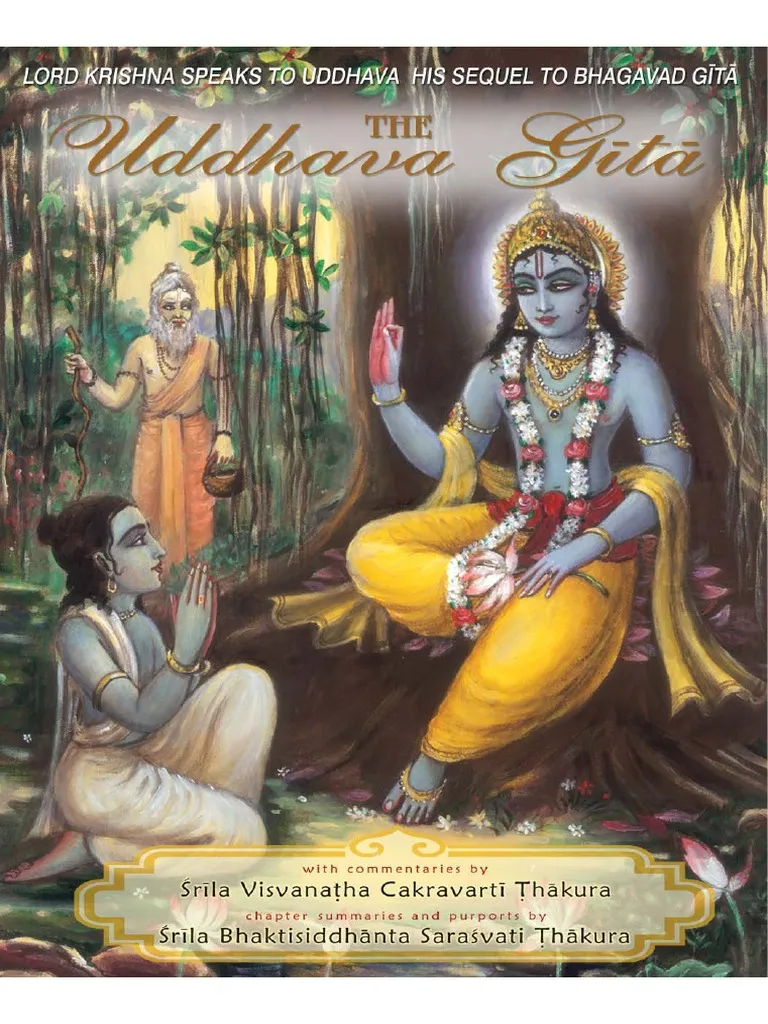
Learning from pain is an important spiritual skill which we should develop. If we do not do so then pain will consume us. But if we learn from it then we can grow in our life.
Let us try to understand how we can learn from pain.
It is the nature of the mind to amplify things. Sometimes the pain may not be that much but mind makes it look bigger. We may come cross situations, where we know we are overreacting but we don’t stop because mind do not allow us to stop.
For example, someone speaks something hurtful to us, and we speak more hurtful words to that person.
The fuel of amplification – why did it happen?
Mind creates story around pain and also around pleasure.
SAD: Modern Psychological Problem
Today the main psychological problem is that people are sad. Let us understand it using the acronym SAD.
- S: Stress
- A: Anxiety
- D: Depression
These are not much discussed in the scriptures.
Root Cause of all Problems as per scriptures
Instead, the scriptures talk about the three vices – lust, anger and greed. This is mentioned in Bhagavad Gita.
- Kama (lust / excessive material desire)
- Krodha (anger)
- Lobha (greed)
To the outside world, these vices do not seem to be a matter of concern. For e.g. a psychologist may not think lust or greed is a problem. For them, inability to fulfil lust is a problem.
In scriptures focus is not on “how mind troubles us” but “why mind troubles us.”
Scriptures teach us that if we are afflicted by lust, anger and greed then it causes stress, anxiety and depression. For example, when one is greedy, he is in anxiety. Dhritrashtra was in constant anxiety because he had greed for the kingdom and wanted his son to be the king.
The more material desires we have the more disturbed we are.
Vices are like the root of tree and stress, anxiety, depression are fruits of the tree.
Vices are the main cause of suffering.
When we address the vices then mind gets purified.
Outside people try to address anxiety by focussing on pacification of the mind and not purification of the mind.
An alcoholic wants to drink alcohol, so gets into anxiety. One solution is to give him alcohol, but it will not solve the problem. His disease will not go away and he will continue to remain in anxiety. But if a person gives up alcohol, then his anxiety is gone forever.
Mind exaggerates Pain and Pleasure
As mind exaggerates pleasure, it exaggerates pain too.
In the physical world things go wrong. For example, sometimes it is too hot and sometimes it is too cold. Amplification of pain happens because mind thinks “The world should be like this” but actually “the world is not the way I want it to be.”
There is always a gap between “How I think things should be” vs “How things actually are”
So, the pain is distance between “Mind’s should” and “World’s is”.
For e.g. In a program, I may want two serving of sweets, but only one serving is given to all.
Distance between “Mind’s should” and “World is” can be understood by the acronym – ERA.
E: Expectation (Desire to enjoy in the Future)
Things should be like this. In scriptures, the example is of Pingala. She thinks I am attractive, so people should come to me. But when are expectations are not met then she suffers. Frustration of expectation gives mind pain. Pingala thought – This should happen.” She was thinking of enjoying in the future.
R: Resentment (of the past)
This should not have happened. This was the story of Avanti Brahman. He lost everything in short span of time. Mind keeps dwelling how it could have happened and why it should not have happened.
A: Attachment: It is more for the present.
This should always be with me. Example is of Pururva. He was thinking Urvasi should be always with me. I am a king; it should be an honour for her to be with me. Also, I have done so much for her.
Mind does not react for everything. Based on our ERA, it reacts.
Attachment leads to expectation and resentment too.
Scriptures describe this as:
- Soka (lamentation – past): Example: I have lost something.
- Moha (illusion – present): Example: I will enjoy if I ger this.
- Bhaya (fear – future). Example: Something wrong may happen with me.
Today words like lamentation are considered old fashioned. Instead, words like grieving or resentment are used. Most of the time resentment is not about getting, but the impact of not getting.
Similarly, hankering is not used, but craving, longing, are being used,
Scriptures do talk about mental challenges, but focus is to understand the root cause.
For Pingala, nothing happens externally but big things happen internally.
Context Specific Teachings in Scriptures
When scriptures focus on one teaching, it focusses on one teaching only.
So, in Uddhava Gita, focus is how to practice bhakti when guru is not there.
This is why the name of the guru for Pingala, Avanti Brahmana, Pururva is not mentioned. Teachings are always context specific.
When Srila Prabhupada sent devotees to iron country i.e. Soviet Union in 1970s then there was no guarantee that they will come back. Prabhupada told them pray to Krishna and he will give intelligence – dadami budhi..
Uddhava is going to be alone when Krishna departs from this world, so it is being explained by Krishna that realization may come anywhere and at any time.
Many times, sudden moment of illumination comes. It is called epiphany.
Learning from life: If we are curious, then world will teach.
Learning from pain: If we do not allow pain to consume, then realization will come.
Lesson from pain
Pain may lead to detachment but one has to function in this world. Learning from pain does not mean to suppress suffering but to develop wisdom and understand the reality of this world.
Life is dynamic. So, every moment, we have to make decisions. Something, we have to let go and something we have to hold on. Sometimes we do it consciously and sometimes unconsciously.
We are constantly hold something and leave something.
During Srila Bhakti Siddhanta Saraswati Thakura’s time, Gaudiya Math had developed good relationships with British government. So, when Srila Bhakti Siddhanta Saraswati Thakura’s disciples went to Britain they got invitation from top government officers to speak in august forums. But nothing much happened in terms of preaching.
When Srila Prabhupada went to America, then he found that people in higher social circles are interested in his talk but are not ready to commit themselves to spiritual life. So, Prabhupada changed his strategy and began preaching to those who were ready to commit to devotional life. These were mostly hippies and at that time were not much established in the society but they were willing to become dedicated devotees.
Two Approaches to Spirituality
- Shock Absorber
- People want comfort and relief from anxiety.
- After whole day work, they come for Shayan Aarti to get relief from all the stress.
- These people won’t take services as they won’t to take anxiety.
- People in these categories are – ārtaḥ (the distressed) and artha–arthī (one who desires material gain). Bhagavad Gita 7.16
- Goal Transformer
- Spirituality as transformation of life.
- Krishna as the ultimate goal
Spiritual Outreach – Top Down and Bottom Up
Outreach can happen two ways -top down and bottom up.
Top down: We preach to some influential person and because of which many people get influenced. For example, if the head of the state becomes devotees, he will use resources to propagate Krishna Consciousness.
Bottom up: Srila Prabhupada used this approach in USA. He preached to hippies.
Should devotees not have expectations? Off course, they should have. But focus should be on purpose and not on path. If one path does not work, then use another path to achieve the purpose. Srila Prabhupada used this approach.
While preaching in India Srila Prabhupada used a different strategy. He started making life members and building big temples. Prabhupada’s purpose was to serve Krishna, and he kept on adjusting the path to achieve the purpose.
What to hold and what to let go, we have to keep on deciding.
Mind stories get aggravated when we hold on something.
Dynamic Life: Holding and Letting Go
Life constantly demands decisions:
- What to hold on to
- What to let go of
This is guided by:
- Anukūla (favorable → hold on)
- Pratikūla (unfavorable → let go)
Addressing Emotional Need helps in Bhakti
One pain we often neglect is emotional pain. We have emotional needs which we need to address. This is why it is important to have meaningful relationships with our family members and devotees.
Iskcon is a place where we get an opportunity to absorb ourselves in devotion to Krishna. But Iskcon is also a place where we should develop strong relationship with the devotees.
Iskcon is like
- Home (belonging): We feel that we belong to a spiritual family.
- Office (service): Here we are delegates various services.
- School (learning): We attend classes and learn who we are and how to develop relationship with Krishna.
- Training ground (growth): We get trained in various services.
Paramārthika vs Vyavahārika
- Paramārthika: Spiritual reality (Understanding that we belong to Krishna)
- Vyavahārika: Practical/operational reality (functioning daily in life)
We understand that spirituality cannot heal physical pain. As devotees, we understand difference between soul and body but we do not much understand difference between soul and mind.
We also need to know that there is difference between Spiritual strength and Emotional strength.
All bhakti activity will give spiritual strength, but bhakti activity may necessarily not give emotional strength. We have to find out what I need for emotional strength.
For some chanting gives emotional strength.
But some needs emotional strength to chant.
So, we need to nurture emotional strength. We should talk to devotees, try to unburden ourselves. We should feel cared for. In any relationship appreciation is important. Appreciation is need of human heart.
When we get appreciation for what we do, we feel valued and care for. But we should be careful that we are not getting attached to appreciation for whatever we do.
Summary
Learning from pain is the central message of this discusison.
Mind constructs stories and amplifies it. Mind amplifies both pleasure and pain.
Today people are always in
S: Stress
A: Anxiety
D: Depression
So, all are SAD.
Root cause of all suffering:
- Kama (lust)
- Krodha (anger)
- Lobha (greed)
Cause of Pain
Distance between “mind’s should” and “world is” is the cause of pain.
Greater Distance, greater pain. Understanding it by the acronym – ERA.
E: Expectation. Eg. Pingala
R: Resentment. Eg. Avanti Brahman
A: Attachment. Eg Pururva
Life should be Dynamic
Hold on to Purpose: eg Prabhuada did not give the purpose of spreading Krishna Consciousness
Let go path: Prabhupada changed the path to achieve the purpose.
Handling Pain
Just learning from pain is not important, we should also know how to handle pain. Pain can be tolerated if it is small. If pain is big then it needs to be addressed.
The Uddhava Gita teaches the importance of learning from pain. We see how Pingala, Avanti Brahman and Pururva learned from pain and transformed their lives. So, we should never succumb to pain, but we should transcend all pain by taking shelter of the Supreme Lord Krishna who relieves pain of all who take his shelter.
Note: Above article is based on the lecture given by HG Chaitanya Charan Prabhu at Iskcon Newtown Kolkata on 19th June 2026)
Read Series of articles on Uddhava Gita




Search
Recent Posts
-
Srimad Bhagavatam at ISKCON Newtown...
September 1, 2026
-
Janmashtami: Celebrating Krishna’s Appearance Through...
August 17, 2026
-

Gopinatha Pattanayaka: 6 Lessons for...
August 16, 2026
-
What Does Krishna Say About...
August 11, 2026
-
Are you ready to choose...
August 2, 2026