ISKCON holds candlelight protest against the attack on Hindus & Iskcon in Bangladesh

ISKCON devotees held candlelight protest in Kolkata and West Bengal against the attack on Hindus and Iskcon devotees in Bangladesh.
While the world sleeps and remains indifferent to the plight of the Hindus in Bangladesh, Iskcon devotees in Bangladesh and in India are trying to wake the indifferent regime by holding protests. Iskcon Kolkata protested outside Bangladesh Deputy High Commission in Kolkata. Hundreds of devotees holding candles protested the attack and the gruesome killing of Iskcon devotee and other innocent Hindus in Bangladesh. HG Radheshyam Prabhu a senior Iskcon devotee and President Iskcon Pune led the protest with kirtan.
Iskcon to hold protest all over the world against the attack
Iskcon has decided to protest all over the world in front of Bangladesh High Commission. Radharaman Das, Vice President, ISKCON Kolkata said, “Cycle of violence in Bangladesh in past few days hasn’t stopped. There was dance of death inside ISKCON temple on Friday. ISKCON will continue to protest outside Bangladesh High Commissions across the world until the guilty are punished”
Iskcon devotees also protested in Siliguri, West Bengal with a torch rally.
Protest is happening also in Bangladesh. Hindus and non communal Bangladeshis have taken to the street to protest the violence against the Hindus in Bangladesh.
The world remained silent when Hindus were being attacked and killed in Bangladesh. The Indian government led by Prime Minister Narendra Modi has not issued any official statement on the anti Hindu riots in Bangladesh. Some of the media reports suggested that the Indian government is satisfied with the efforts of Bangladesh government in controlling the riot. However Iskcon Bangladesh has strong refuted that the situation in Bangladesh is normal. Hindus and Iskcon devotees are still living in fear.
Expressing deep anguish at such reports Iskcon Bangladesh tweeted, “The news reported that India has praised Bangladesh’s efforts to control the situation. Who says the situation is under control @MEAIndia ? Are Indians blind? Never expected From India.”
Devotees killed, temples destroyed, Bhagavad Gita desecrated, Srila Prabhupada deity burnt
Heart wrenching videos of brutal attacks by Muslim mobs on Hindus is slowly surfacing. A Iskcon devotee is critically injured. Not sure if he survived or not. Even if he survives will he be able to lead a normal life?
Srimad Bhagavad Gita, Hindu holy book, desecrated, temples burnt. Secular world remained silent. Secular Hindus did not say anything else they will lose their secular credentials. Placard activists did not find time from their busy schedule to tweet in support of Bangladeshi Hindus. Reason is simple – #HindusLivesDoesNotMatter
Deity of Srila Prabhupada, founder acharya of Iskcon and a prominent vaisnvav saint desecrated in Bangladesh. Violent Muslim mobs attacked Hindus and Hindu temples because they alleged (falsely) that their holy book was demeaned. So they have been killing Hindus, destroying Hindu temples, desecrating Hindu holy scriptures like Bhagavad Gita and burning the deity of acharyas like Srila Prabhupada.
While Hindus suffer brutal attack in Bangladesh, world remains silent
As the world remained mute spectator and did not come out to support the Hindus in Bangladesh, Iskcon Bangladesh in deep anguish tweeted a quote of Martin Luther King Jr., “We Will remember not the words of Our enemy, but the silence of Our Friends.”
Without any support from the Bangladesh government and the Indian government Hindus in Bangladesh are fighting for survival. They know that the world will not hear their cry. They have to be there for each other and wipe the tears of their near and dear ones.
So they have decided to come out on the street and protest the attack on Hindus and Iskcon devotees in Bangladesh. It is always better to die fighting than being slaughtered like a goat in the slaughterhouse.
Search
Recent Posts
-
Srimad Bhagavatam at ISKCON Newtown...
September 3, 2026
-
Srimad Bhagavatam at ISKCON Newtown...
September 1, 2026
-
Janmashtami: Celebrating Krishna’s Appearance Through...
August 17, 2026
-

Gopinatha Pattanayaka: 6 Lessons for...
August 16, 2026
-
What Does Krishna Say About...
August 11, 2026
Significance of Gita Jayanti – the day when Krishna spoke Bhagavad Gita to Arjuna
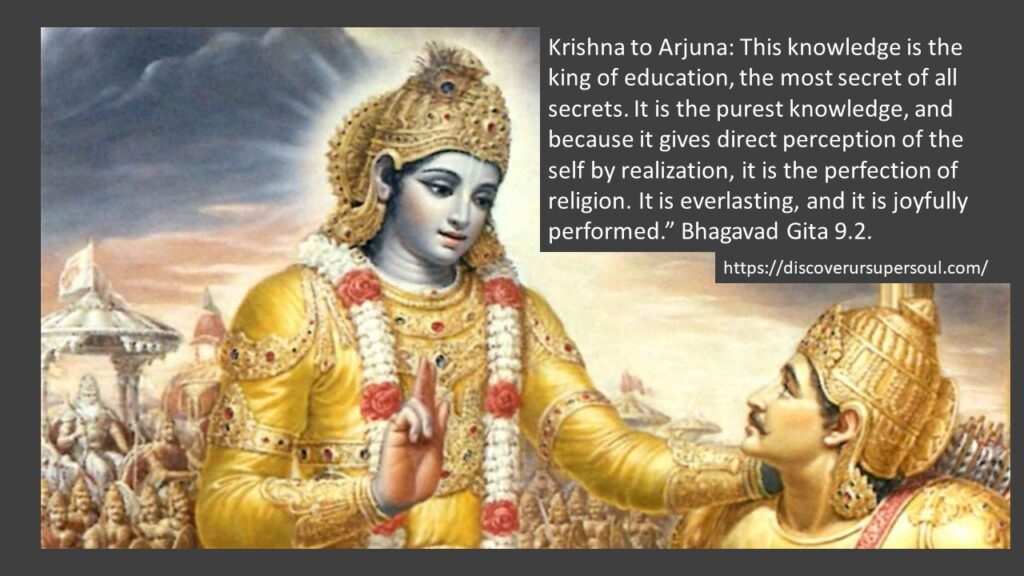
Gita Jayanti is the day when Krishna spoke Bhagavad Gita to Arjuna, the day has lots of significance. It was spoken by Krishna to Arjuna about 5000 years ago. This sublime message of Bhagavad Gita was spoken at the battlefield of Kurukshetra. The setting was unprecedented. Millions of mighty Pandava and Kaurava warriors had swarmed the battlefield of Kurukshetra. The armies from both the sides were ready to take the life and give the life.
But just before the beginning of the war, Arjuna got completely bewildered. He lost the desire to fight the most important battle of his life. He wanted to run away from the battlefield and was ready to live by begging. But Arjuna was fortunate because Krishna was with him. Krishna was Arjuna’s friend, philosopher and guide. The bewildered warrior who had won many battles in his life turned towards Krishna. With tears in his eyes, fear in his heart and in a faltering voice he begged Krishna to help him, to show him the right path, “Now I am confused about my duty and have lost all composure because of miserly weakness. In this condition I am asking You to tell me for certain what is best for me. Now I am Your disciple, and a soul surrendered unto You. Please instruct me”: Bhagavad Gita 2.7.
Krishna is a well-wishing friend of all. He is ever ready to help those who seek his shelter. He shows special mercy to his devotees. So, when Arjuna beseeched Krishna for help, Krishna immediately came to Arjuna’s rescue. He removed ignorance from Arjuna’s heart which was the main cause of Arjuna’s perplexity.
By all the Vedas, Krishna is to be known
In Bhagavad Gita, Krishna speaks about five main topics – Isavara (God), Jivatma (Soul), Kala (Time), Karma (actions) and Prakriti (Nature). In Gita, Krishna reveals his identity that he is the Supreme Personality of Godhead. “I am the source of all spiritual and material worlds. Everything emanates from Me. The wise who perfectly know this engage in My devotional service and worship Me with all their hearts.” (Bhagavad Gita 10.8). The purpose of all the Vedic literatures is to know Krishna, “vedais ca sarvair aham eva Vaidya” which means “by all the Vedas, Krishna is to be known”. Krishna also reveals our true identity that we are souls, parts and parcel of Krishna. Once we realize this identity of ours and start working to develop relationship with Krishna, all the problems of our life will end.
Always think of Krishna and do your duty
Krishna also speaks about prescribed duties, capricious work and inaction. Prescribed duties are activities which one performs as enjoined in the Vedic scriptures, capricious work are the activities which are not recommended in the scriptures and inaction is not doing one’s duty at all. Krishna advised Arjuna to perform his prescribed duties by keeping him always in the centre and without any attachment for the result. “Therefore, Arjuna, you should always think of Me in the form of Kṛṣṇa and at the same time carry out your prescribed duty of fighting. With your activities dedicated to Me and your mind and intelligence fixed on Me, you will attain Me without doubt.” Bhagavad Gita 8.7
If we always keep Krishna in the centre of our life and do all our duties, we will live happily in this world. and after leaving this body and this world, we will attain Krishna and go to the kingdom of Krishna which is free from birth, old age, disease and death. Krishna promises that those who come under his shelter has nothing to fear, “Abandon all varieties of religion and just surrender unto Me. I shall deliver you from all sinful reactions. Do not fear.” (Bhagavad Gita 18.66).
After hearing the sublime message of Gita, Arjuna’s bewilderment goes away and he decides to act as per Krishna’s instruction, “Arjuna said: My dear Krishna, O infallible one, my illusion is now gone. I have regained my memory by Your mercy. I am now firm and free from doubt and am prepared to act according to Your instructions.” Bhagavad Gita 18.73.
Bhagavad Gita is the king of all knowledge
The Gita is the crest jewel of all Vedic literatures. It is called Raja Vidya – the king of all knowledge. Singing the glories of Bhagavad Gita, Krishna says, “This knowledge is the king of education, the most secret of all secrets. It is the purest knowledge, and because it gives direct perception of the self by realization, it is the perfection of religion. It is everlasting, and it is joyfully performed.” Bhagavad Gita 9.2. If all the Vedic literatures are cows then Bhagavad – Gita is the milk of the cow i.e. it is the essence of all the Vedic literatures. Krishna is the milkman, Arjuna is the calf who drinks the milk. The same milk is now available to us in the written form by the great sage, Vyasa – Dev.
This holy book full of transcendental wisdom has impacted the conscience of humankind for ages. The glories of Gita stems from the fact that it transcends all the artificial boundaries of caste, creed, religions, race, nation and gender. Bhagavad – Gita is not just 5000 years old. It has been in existence since the dawn of creation. Krishna informs Arjuna that “I instructed this imperishable science of yoga to the sun-god, Vivasvan, and Vivasvan instructed it to Manu, the father of mankind, and Manu in turn instructed it to Iksvaku” Bhagavad Gita 4.1. Since the knowledge got lost by the influence of time so Krishna again spoke it to Arjuna. Through Arjuna, Krishna is speaking this sublime message to us.
What is the best way to celebrate Gita Jayanti and understand its significance?
Gita wasn’t spoken only for Hindus or Indians. It is for the entire humanity. Great scholars throughout the ages have sought refuge of this pearl of wisdom when confronted with challenges. It has inspired world fame leaders like Gandhi, Churchill, Einstein, Newton and several others. After reading Bhagavad – Gita a Hindu will become a better Hindu, a Muslim a better Muslim, a Christian a better Christian and a Jew a better Jew. Srila Prabhupada’s commentary on Bhagavad Gita is known as “Bhagavad Gita As It Is.”
It is the best selling edition of Bhagavad Gita in the whole world. More than 100 million copies of “Bhagavad Gita As It Is” has been sold. And this book has been translated into more than 80 languages.
Gita Jayanti is celebrated every year in the month of December. The best way to celebrate Gita Jayanti and understand its significance is by reciting the Bhagavad Gita verses. Along with the verses recitation, we should also read the meaning of the verses. The devotees read entire Bhagavad Gita on the day of Gita Jayanti. At Iskcon temples and at different Iskcon centers there is Bhagavad Gita recitation and also Gita Jayanti Yagna. Not just this on the day of Gita Jayanti, people come forward and distribute Bhagavad Gita. They happily give Gita as gift to their friends, family members and also to those who cannot afford it.
Let us pray to Krishna on the auspicious occasion of Gita Jayanti to show us the right path so that we can know Him, love Him and understand the significance of this great book. And let us also pray to Arjuna that like him we also surrender completely to Krishna after reading Bhagavad Gita.
This year Gita Jayanti is being celebrated on 14th December, Tuesday, 2021.
Search
Recent Posts
-
Srimad Bhagavatam at ISKCON Newtown...
September 3, 2026
-
Srimad Bhagavatam at ISKCON Newtown...
September 1, 2026
-
Janmashtami: Celebrating Krishna’s Appearance Through...
August 17, 2026
-
Gopinatha Pattanayaka: 6 Lessons for...
August 16, 2026
-
What Does Krishna Say About...
August 11, 2026
Iskcon Temple attacked in Bangladesh, one Iskcon devotee killed

In a shocking incident, Iskcon temple was attacked in Bangladesh and one devotee was killed. The attack happened in Noakhali, Bangladesh. Temple suffered significant damages. Pictures posted by Iskcon on its twitter handle shows the extent of damage. Pictures of Lord Krishna and Srimati Radharani can be seen lying on the floor.
“ISKCON temple & devotees were violently attacked today by a mob in Noakhali, Bangladesh. Temple suffered significant damage & the condition of a devotee remains critical. We call on the Govt of Bangladesh to ensure the safety of all Hindus & bring the perpetrators to justice.”
One Iskcon devotee killed in Temple attack in Bangladesh
But the most shocking part of the attack was that one of the young devotees was killed. Regarding the death of Partha Das, Iskcon said on Twitter, “It is with great grief that we share the news of a ISKCON member, Partha Das, who was brutally killed yesterday by a mob of over 200 people. His body was found in a pond next to the temple. We call on the Govt of Bangladesh for immediate action in this regard.”
Why attack a Iskcon temple in Bangladesh?
The fanatic Muslim mobs have been attacking Hindu temples for last few days because they allege that their holy book was insulted at Durga Puja pandal. Preliminary investigation has shown that none of the Hindus were involved in any kind of desecration of Muslim holy book. But still the violent mobs have been attacking Hindus.
Iskcon temples were not involved in any kind of activity which would have hurt the sentiments of the Muslim majority population then why the Iskcon temples were attacked in Bangladesh? It seems that the allegation of desecration is just an excuse to target the Hindu Community. It is a ploy to fill fear in the hearts of Hindus so that they stop celebrating Hindu festivals. So, Hindus in Bangladesh will have only two options – either to flee Bangladesh or stop being a Hindu.
World remains a mute spectator on the attack on Iskcon in Bangladesh
When George Floyd, 46, was killed in US there was outrage all over the world. #BlackLivesMatter became a global movement. Partha Das was just 25 years old when he was killed. His only crime was that he was a devotee of Krishna. Will there be outrage across the world on his death? Will the prominent global personality speak for him? Will there be a candlelight march for him? Most probably not. The reason is because he is a Hindu. And the kinds of attack happening against the Hindus across the world, it seems that “Hindu Lives Does Not Matter.”
All the devotees of Iskcon and all the Hindu communities in Bangladesh are living in fear. They are fearful because they know that there is hardly anyone who will come in their support.
Iskcon has never engaged in any kind of violence. It is an educational spiritual organization. Iskcon has branches all over the world and it spreads the message of peace and harmony everywhere. It also does lots of social service. And its service is not confined to Hindu community. But Iskcon serves everyone – be it a Muslim, Christians, Buddhists, Sikhs.
But unfortunately the blood thirsty mob attacked Iskcon in Bangladesh and the world community remained and remains a mute spectator.
Search
Recent Posts
-
Srimad Bhagavatam at ISKCON Newtown...
September 3, 2026
-
Srimad Bhagavatam at ISKCON Newtown...
September 1, 2026
-
Janmashtami: Celebrating Krishna’s Appearance Through...
August 17, 2026
-
Gopinatha Pattanayaka: 6 Lessons for...
August 16, 2026
-
What Does Krishna Say About...
August 11, 2026
Why Upadeshamrita or Nectar of Instruction a perfect guide for all devotees?
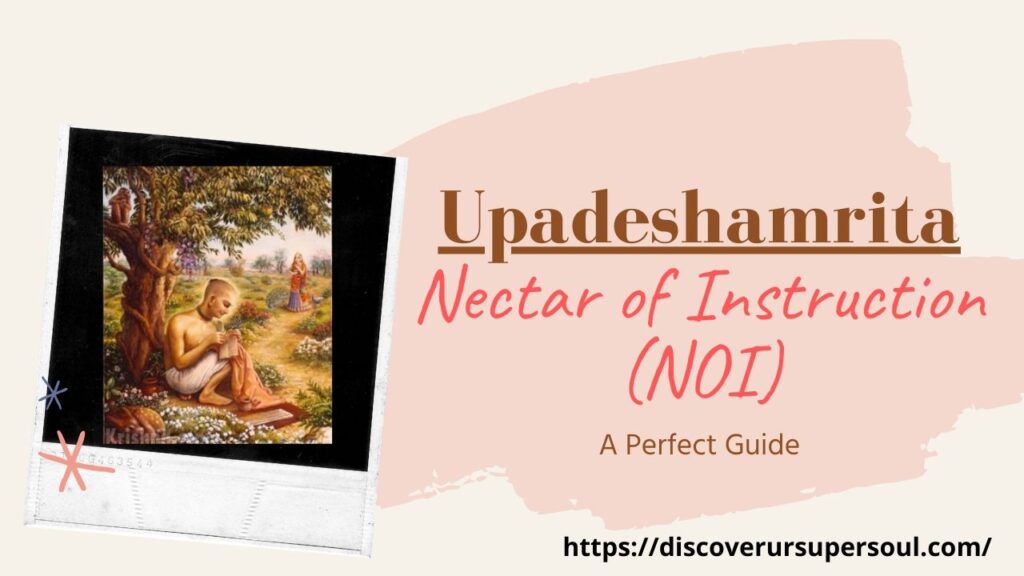
Upadeshamrita or Nectar of Instruction (NOI) teaches us how to practice devotion to Krishna with right attitude. So, it is considered a perfect guide for all the devotees of Krishna.
This book has many important guidelines which helps one to become a pure devotee of Krishna.
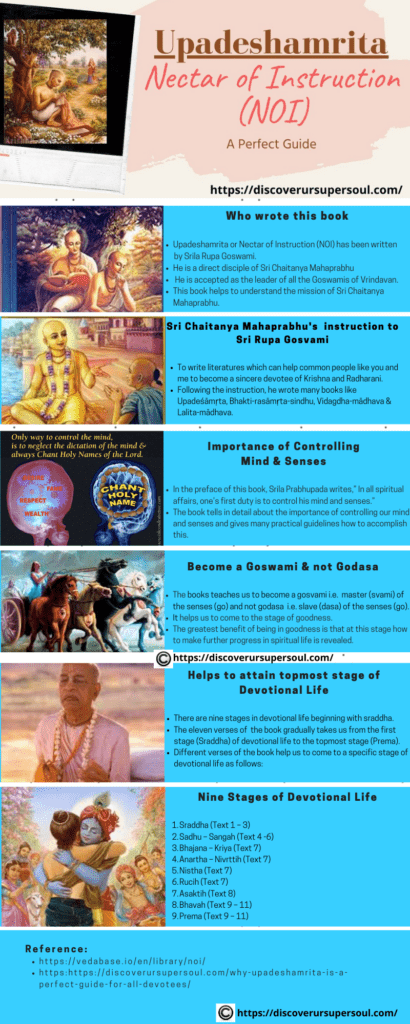
The book has been written by Srila Rupa Goswami who is one of the six prominent Gosvamis of Vrindavan.
These six Goswamis have played a pivotal role in re-establishing the worship of Lord Krishna based on the teachings of Sri Chaitanya Mahaprabhu.
The six Gosvamis of Vrindavan are:
- Srila Rupa Gosvami
- Srila Sanatana Gosvami
- Srila Raghunatha Bhatta Gosvami
- Srila Raghunatha Dasa Gosvami
- Srila Jiva Gosvami
- Srila Gopala Bhatta Gosvami
Srila Rupa Goswami is a direct disciple of Sri Chaitanya Mahaprabhu. He is accepted as the leader of all the Goswamis of Vrindavan.
This book Upadeshamrita which is also known as “Nectar of Instruction (NOI)” in English helps us to understand the mission of Mahaprabhu.
What is the mission of Sri Chaitanya Mahaprabhu?
Vedic literatures clearly say that Sri Chaitanya Mahaprabhu is the supreme Personality of Godhead. He appeared in this world in the mood of Srimati Radharani having a golden complexion like Srimati Radharani.
He appeared on this planet in the glorious land of Mayapur to teach us how to love Krishna.
The conjugal love of Krishna with Srimati Radharani and other gopis are most exalted. It cannot be understood with any mundane knowledge. That love is pure, is sublime and is devoid of any tinge of lust.
But unfortunately, people out of ignorance misunderstand that love. So, Mahaprabhu came here to help us understand that transcendental love.
Instruction to write Upadeshamrita
We can understand the mood and mission of Mahaprabhu by reading the books written by the Gosvamis. Mahaprabhu has written only 8 Siksastakam verses. However he trained many of his followers like Rupa Goswami and Sanantana Goswami and instructed them to write literatures. These literatures help common people like you and me to become a sincere devotee of Krishna.
Following the instruction, Srila Rupa Goswami wrote many books such as Upadeśāmṛta, Bhakti-rasāmṛta-sindhu, Vidagdha-mādhava and Lalita-mādhava. Among all these books, Upadeśāmṛta, is considered a must for those who have started practicing devotion to Krishna.
In fact, just by following the guidelines given in this book one can become a perfect devotee of Krishna. And ultimately make his life successful.
The first duty of an aspiring devotee
In the preface of Upadeshamrita, Srila Prabhupada writes,” In all spiritual affairs, one’s first duty is to control his mind and senses.”
We all suffer in this world because of our uncontrolled mind and senses. In fact, the hero of Mahabharata war, Arjuna, without any hesitation tell Krishna that it is easy to control the wind than to control the mind. Bhagavad Gita 6.24.
Unless our mind and senses are under our control and we are not under its control it is not possible to practice devotion to Krishna.
The book talks in detail about the importance of controlling our mind and senses. It not just talks about the importance but also gives many practical guidelines as how we can accomplish this.
What happens if we do not control our mind and senses?
Many times, we may be practicing devotional life for many years, but we may not see progress in our spiritual life. When I say progress, it means internal progress. Externally we may dress like a devotee. We may even speak eloquent philosophy but that is not the most important thing.
Yes it is true that as devotees we should wear devotional dress as far as possible. And also have good knowledge of Krishna conscious philosophy. However if we are not able to internally purify ourselves then it is not going to help us a lot.
When we practice devotion then automatically name, fame and money start coming. We get attached to it many times. And instead of developing taste in chanting the holy names of Krishna, in reading spiritual books like the books written by Srila Prabhupada, we start devising means by which we can earn more name and fame.
We should never think that we have become an advanced devotee and start disregarding the guidelines of the scriptures.
Check your heart constantly
We need to constantly check if the vices of our hearts like lust, greed, pride, anger, envy, illusion and false ego are decreasing or not. If not, then it means that we are not sincerely practicing devotional life.
And no one is going to check our heart. It is our responsibility to monitor and examine our internal progress. If we are not focusing on our internal purification, then it is just a matter of time that we will start feeling frustrated in our spiritual life.
So, we see that many senior devotees even sannyasis start facing difficulties even though they might have been practicing devotional life for several years.
This is why great personalities write such books so that we can practice devotion to Krishna with proper understanding and not whimsically.
Krishna has given us free will. He has given us the freedom to make choices in our life. If we practice devotional life without following the guidelines of the scriptures, we will continue to suffer in this world.
But if we choose to practice devotion to Krishna as per the guidelines of the scriptures like Nectar of Instruction (NOI), then we will be able to elevate our consciousness which and make our life successful.
Why it is necessary to come to the stage of goodness?
In this world we are always under the control of the three modes of material nature – goodness, passion, and ignorance. Most of the time we are either in ignorance or in passion. In fact, we keep on oscillating between these two modes.
If we are in passion and ignorance making progress in spiritual life is very difficult.
This book helps us to transcend the lower modes and come to the stage of goodness. Stage of goodness is conducive for our devotional life.
Srila Prabhupada writes, “One must promote himself to the platform of goodness, sattva-guṇa, by following the instructions of Rūpa Gosvāmī, and then everything concerning how to make further progress will be revealed.”
The greatest benefit of being in goodness is that at this stage how to make further progress in spiritual life is revealed.
Are we Gosvami or Godasa?
To become a perfect devotee of the Lord it is imperative that we subdue the urges of our mind and senses.
Those who achieve this feat gets the title of gosvami. Go means senses and svami means master. Those who master the art of controlling the mind and senses get the title of Gosvami.
But those who fail to do so get the title of Godasa i.e. slave (dasa) of the senses (go).
We have to become a perfect Gosvami. Then only it is possible to become a perfect devotee of Krishna. Else we will continue to suffer in this world.
Upadeshamrita (Nectar of Instruction) helps to attain the topmost stage of devotional life
There are nine stages in devotional life beginning with sraddha. The eleven verses of Upadeshamrita or Nectar of Instruction (NOI) gradually takes us from the first stage (Sraddha) of devotional life to the topmost stage (Prema). Different verses of the book help us to come to a specific stage of devotional life as follows:
- Sraddha (Text 1 – 3)
- Sadhu – Sangah (Text 4 -6)
- Bhajana – Kriya (Text 7)
- Anartha – Nivrttih (Text 7)
- Nistha (Text 7)
- Rucih (Text 7)
- Asaktih (Text 8)
- Bhavah (Text 9 – 11)
- Prema (Text 9 – 11)
The book teaches us to practice devotion to Krishna with right attitude. It is a perfect guide for all the devotees. It has the first set of instructions for the neophyte devotees. If we follow these instructions as it is then we will surely attain Krishna.
Search
Recent Posts
-
Srimad Bhagavatam at ISKCON Newtown...
September 3, 2026
-
Srimad Bhagavatam at ISKCON Newtown...
September 1, 2026
-
Janmashtami: Celebrating Krishna’s Appearance Through...
August 17, 2026
-
Gopinatha Pattanayaka: 6 Lessons for...
August 16, 2026
-
What Does Krishna Say About...
August 11, 2026
Essence of Bhagavad Gita according to Srila Prabhupada, the founder acharya of Iskcon
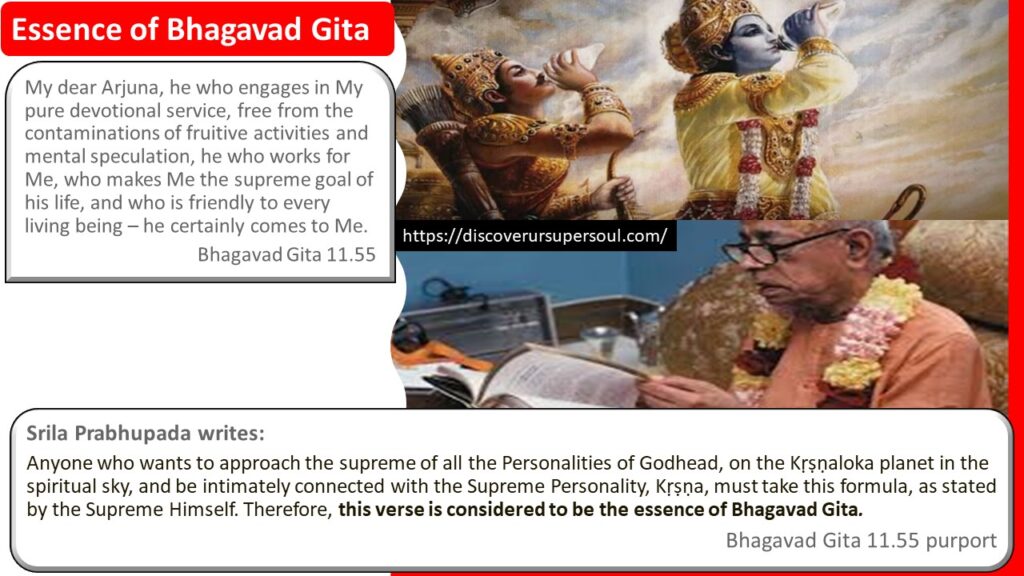
Srila Prabhupada, the founder acharya of Iskcon, writes that Bhagavad Gita 11.55 is the essence of Bhagavad Gita.
Lord Krishna says in Bhagavad Gita 11.55, “My dear Arjuna, he who engages in My pure devotional service, free from the contaminations of fruitive activities and mental speculation, he who works for Me, who makes Me the supreme goal of his life, and who is friendly to every living being – he certainly comes to Me.”
Here Krishna has given us a process following which we can attain him. In fact, Krishna is giving a guarantee that we will go back to him. So, Srila Prabhupada calls this verse the essence of Bhagavad Gita.
Let us discuss how we can apply this formula given by Krishna in our personal life and attain the ultimate goal of our life.
All work should be done in relationship with Krishna
We all have to work for living but we should not be attached to the results of our work. We should know that Krishna is the proprietor of everything. It implies that Krishna is the enjoyer of the fruits of our work. So, all the results of our work should be offered to Krishna. Srila Prabhupada explains, “No work should be done by any man except in relationship to Kṛṣṇa. This is called kṛṣṇa-karma. One may be engaged in various activities, but one should not be attached to the result of his work; the result should be done only for Him.” Bhagavad Gita 11.55 purport.
Whatever activities we do we should do it in relationship with Krishna. Doing activities in relationship with Krishna also means we should do only those activities which is authorized in the scriptures. Any activity which is against the sastric injunctions should be given up. So, we should not choose those occupation to earn money which break the four regulative principles like no meat eating, no gambling, no intoxication and no illicit sex.
As a practicing devotee, you and I should do work for the pleasure of Krishna. We should not be attached to the fruits of our work. And we have to make sure that we do not do anything which is not authorized in the scriptures.
Earned money should be used to serve Krishna
Most of the devotees are householders, grihastas. A grihasta has to work outside and earn money. But we should be careful that we do not use the earned money for personal enjoyment. Money belongs to Krishna, so it should be used to serve Krishna. Krishna should always be the centre of our life.
Our house is Krishna’s house, so we should make it a temple of Lord Krishna
The house you and I live in does not belong to us. Krishna owns it and has presently allowed you and me to live there. Since the house belongs to Krishna, so it should be converted into a temple of Lord Krishna. We should have a nice and big altar of Lord Krishna in the house, which I have currently. We should worship the Lord daily with love and devotion as per the instructions of Srila Prabhupada. Altar should be clean. The altar and the Lord should be decorated beautifully with colourful flowers. At home we should cook nice food items for the Lord and should offer him with love and devotion.
Daily we should chant Krishna’s holy names and perform kirtan at home. Also we should make sure that our family members become devotees of Lord Krishna. And we should do our best to engage them in devotional life.
Visit the temple regularly, serve the deities and the devotees
It is also important that we should regularly visit the nearby Iskcon temples and do service there. Based on our capacity, we should also donate money to the temple which will help the temple in serving the Lord and in spreading Krishna Consciousness.
Attaining Krishna should be the only and ultimate goal of our life
Krishna should be our only worshipable Lord and our only goal should be to attain love of Krishna and return to the spiritual abode of Lord Krishna. To attain Krishna, we should engage in the nine process of devotional life especially hearing and chanting the Lord’s names. Srila Prabhupada has given us a process by which we can constantly engage in hearing and chanting. For this, it is important that we regularly associate with the devotees of Krishna.
However, we may come across those people also who are not devotees of Krishna especially at our workplace or in our neighbourhood. But we should make sure that we have only working relationship with them not heart to heart relationship. We should not waste our time in discussing mundane topics with them like of politics, sports or movies. But instead, we should have a desire to always associate with the devotees of Krishna. And in that association, we should discuss Krishna Conscious subject matters and help each other in advancing in spiritual life.
One important aspect is that we should strictly avoid those who are against Krishna Consciousness like mayavadis, agnostics and those who speak ill of Krishna. Their company will spoil our consciousness.
Serving the humanity by spreading Krishna Consciousness
I should do my best to share Krishna with others. Making people Krishna Conscious is the greatest welfare activity. All are suffering in this world because they have forgotten Krishna. All the problems like economic problem, social problem, political problem is there because people do not live as per the rules and regulations of Vedic scriptures. Once a person becomes a devotee of Krishna and start living Krishna Conscious life then all the problems will disappear.
Srila Prabhupada explains, “A Kṛṣṇa conscious person knows that if a man is suffering it is due to his forgetfulness of his eternal relationship with Kṛṣṇa. Therefore, the highest benefit one can render to human society is relieving one’s neighbor from all material problems. In such a way, a pure devotee is engaged in the service of the Lord.” Bhagavad Gita 11.55 purport
Following the footsteps and guidelines of Srila Prabhupada we should preach the message of Krishna. This is the best way to serve the society and the humanity. This will bring peace and bliss everywhere.
Conclusion
The ultimate essence of Bhagavad Gita is to take complete shelter of Krishna. The Supreme Personality of Godhead, Krishna, appeared in this world to give this message to us. He has given us a process in Bhagavad Gita 11.55 by which we can purify our heart and return back to Krishna. If we engage in the service of Krishna as prescribed by Krishna without any motive and enjoying mentality then we will attain complete perfection.
In conclusion we can say, “the essence of Bhagavad Gita is to know Krishna, to serve Krishna and to return back to Krishna.”
Search
Recent Posts
-
Srimad Bhagavatam at ISKCON Newtown...
September 3, 2026
-
Srimad Bhagavatam at ISKCON Newtown...
September 1, 2026
-
Janmashtami: Celebrating Krishna’s Appearance Through...
August 17, 2026
-
Gopinatha Pattanayaka: 6 Lessons for...
August 16, 2026
-
What Does Krishna Say About...
August 11, 2026
Know the seven principles of pure devotional service
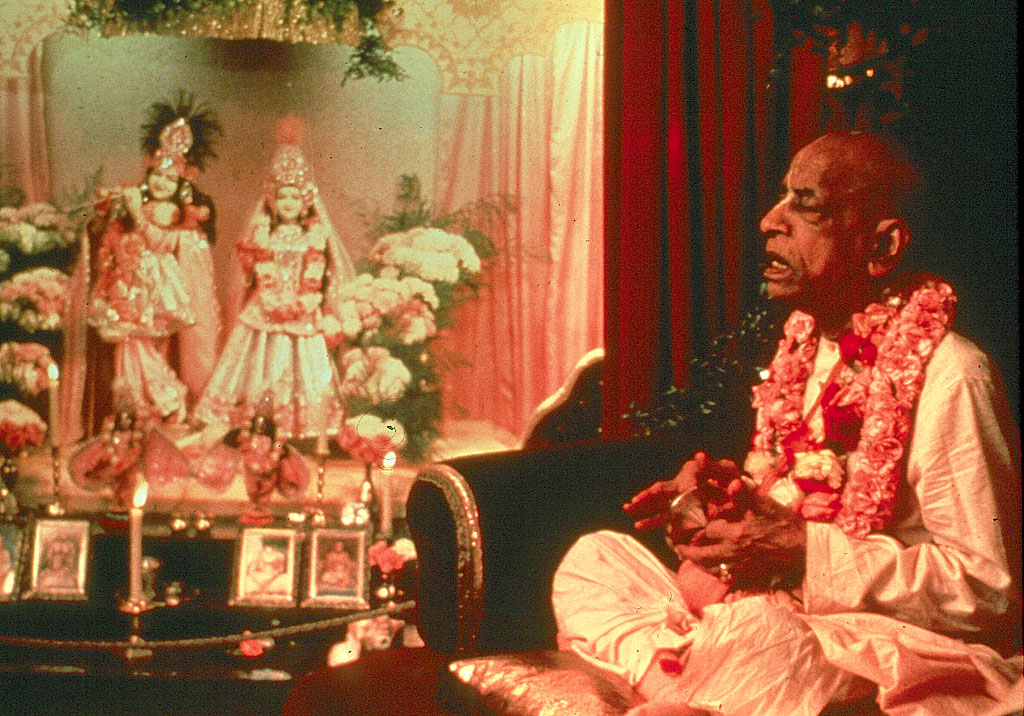
Krishna explains the principles of pure devotional service in Bhagavad Gita. Let us discuss the seven most important principles of pure devotional service given in Bhagavad Gita.
1) Only non-envious can know and understand Krishna
Krishna does not reveal himself to those who are envious of him. In Bhagavad Gita 9.1, Krishna says that he is revealing the most confidential knowledge about him to Arjuna only because Arjuna is non envious of him. Krishna does not like to speak about him to those who envy his qualities.
Just like we have feelings, similarly Krishna has feelings. Just like we do not want to share our life with those who are not friendly with us similarly Krishna also avoids such unfriendly envious people. So, if we want to know the secret of pure devotional life then we have to first free ourselves from all envy which we have for Krishna.
Many people envy Krishna because Krishna has unlimited transcendental qualities which is unparalleled. We, the living beings, in this world also have a secret desire to become God or Krishna. So, when we hear Krishna’s extraordinary qualities, we desire to have those. But we cannot have it, so we envy Krishna.
There are many such examples of those who envied Krishna. For example, Sisupala resented Krishna. When Yudhishthira was performing Rājasūya sacrifice, for Agra-pūjā, Krishnawas selected. All the assembled dignitaries were happy to worship Krishna first in Rājasūya sacrifice but Sisupala could not tolerate Krishna’s glories, so he started blaspheming Krishna. Sisupala was finally killed. So, Krishna avoids revealing his secret to people with Sisupala’s mentality. He does not want to disturb the mind of envious souls.
Purge envy for Krishna and for everyone
But if you and I purge envy for Krishna from our heart then Krishna will open his heart to us. He will impart us the most confidential knowledge about pure devotional life the way he revealed to Arjuna. And that knowledge will drive away all ignorance from our heart and free us from all miseries.
We should not just give up envy for Krishna but we should not envy anyone in this world. Our heart should be free from all the envy. Giving up envy for everyone is one of the most important principles of pure devotional service.
“The Supreme Personality of Godhead said: My dear Arjuna, because you are never envious of Me, I shall impart to you this most confidential knowledge and realization, knowing which you shall be relieved of the miseries of material existence.” Bhagavad Gita 9.1
2) Bhakti or devotion to Krishna is the king of all knowledge
The topmost knowledge is that knowledge which can solve all the problems of our life. And that knowledge is knowledge of bhakti, devotion to Krishna. The goal of life is to know Krishna and go to Krishna. This can be achieved only by Bhakti.
So, Krishna, says that bhakti or direct devotion to Krishna is the most confidential knowledge, rāja-guhyaṁ. It is the king of all knowledge, rāja-vidyā. This knowledge is everlasting. And while performing devotional service to Krishna one experiences lots of bliss, so bhakti is su–sukham.
Bhakti basically means śravaṇaṁ and kīrtanaṁ. Śravaṇaṁ means hearing Krishna’s wonderful pastimes and kīrtanaṁ means chanting Krishna’s wonderful names and singing his glories. These activities are pleasing to the heart. Not just that devotees also enjoy delicious prasadam, offered food to Krishna.
So, devotional life means hearing, singing, dancing, chanting, enjoying Krishna prasadam and ultimately attaining blissful eternal spiritual world. This is attained by bhakti. So, this is the topmost knowledge, the king of all knowledge.
3) Faith in Krishna is must to attain Krishna
If we do not have faith in Krishna or in the process of devotional service, then we will not attain Krishna. And if we fail to attain Krishna, we will continue to remain in this material world where repeated birth and death takes place.
“Those who are not faithful in this devotional service cannot attain Me, O conqueror of enemies. Therefore they return to the path of birth and death in this material world.” Bhagavad Gita 9.3
Srila Prabhupada explains, “Faith is created by association with devotees.” Bhagavad Gita 9.3 purport. Those who have faith in Krishna have complete conviction that “If I will serve Krishna then I will attain complete perfection in life.” But those who do not have faith in Krishna find the path of bhakti difficult. The fortunate souls who have faith in Krishna joyfully perform bhakti.
Those who have firm faith in Krishna continuously chant Krishna’s glories, practice devotion with great determination, always bow down to Krishna and worship him with love and devotion. Bhagavad Gita 9.14
4) Krishna sees the intent of our action
In Bhagavad Gita 9.26, Krishna gives a very simple process by which we can worship him, please him and attain him. “If one offers Me with love and devotion a leaf, a flower, a fruit or water, I will accept it.” Bhagavad Gita 9.26
The items mentioned here is so easily obtainable that anyone can worship him. But in this verse Krishna mentions one important ‘qualification’ which we should have. And that is devotion, bhakti, in our heart. Krishna is not interested in externals, but he sees what is there in our heart. If our intention is pure and we offer these simple items with love and devotion then Krishna will happily accept it.
5) Do everything as an offering to Krishna
Krishna should be the centre of our life. Whatever activities we do, it should be done as an offering to Krishna. Krishna says in Bhagavad Gita 9.27, “Whatever you do, whatever you eat, whatever you offer or give away, and whatever austerities you perform – do that, O son of Kuntī, as an offering to Me.”
If we do so we will free ourselves from all bondage that arises due to various activities we do in this world. The auspicious and inauspicious results will not bind us and affect us. In fact, by always keeping Krishna in centre while doing any activity we will ultimately attain Krishna. Also it is important that we do only those activities which is authorized by the scriptures.
6) Krishna’s devotee never perishes
In Bhagavad Gita 9.22, Krishna says that his devotee will never suffer because he personally takes care of those who are devoted to him. The Supreme Lord says, “..those who always worship Me with exclusive devotion, meditating on My transcendental form – to them I carry what they lack, and I preserve what they have.” Bhagavad Gita 9.22. Again, to reiterate that how merciful he is towards his devotees, he says that his devotees never perish. Bhagavad Gita 9.31
Even his devotee may commit abominable sins, still Krishna makes sure that his devotees become pure and sinless. Sometimes past conditioning of devotees may be so strong that he may indulge in sinful activities. But since he has taken shelter of Krishna by chanting his holy names, so his heart eventually gets purified of all sins and all sinful tendencies. The devotee feels sorry for his sinful deeds. He seeks forgiveness from the Lord, takes a vow not to commit any sins again and with firm determination again starts practicing devotional life.
Srila Prabhupada explains, “The material contamination is so strong that even a yogī fully engaged in the service of the Lord sometimes becomes ensnared; but Kṛṣṇa consciousness is so strong that such an occasional falldown is at once rectified. Therefore the process of devotional service is always a success.” Bhagavad Gita 9.30
Krishna is so merciful towards his devotees that he protects him in all situations and circumstances and makes sure that his devotees come back to him.
7) Whoever takes shelter of Krishna attain ultimate destination
Everyone is eligible to practice devotion to Krishna. There is no qualification required to start practicing bhakti. Even a sinful man can start practicing bhakti and get purified. For example, Mrugrari was a cruel hunter but once he started practicing bhakti under the guidance of sage Narada he became pure and attained Krishna. Krishna does not see our material qualification and is also willing to forgive our past abominable activities.
He just sees if we have a strong desire to sincerely practice process of devotional life or not. If we have, he showers his mercy upon us. This mercy is available for anyone who is committed in spiritual life. Brahmanas and non -Brahmanas, men and women, rich and poor all are qualified to attain love of Krishna.
Krishna gives us a formula by which we all can attain him for sure, “Engage your mind always in thinking of Me, become My devotee, offer obeisances to Me and worship Me. Being completely absorbed in Me, surely you will come to Me.” Bhagavad Gita 9.34
Conclusion
These are the most important principles of pure devotional service discussed in Bhagavad Gita. If we abide by these pure devotional service principles then we will be able to attain Krishna and perfect our life.
Search
Recent Posts
-
Srimad Bhagavatam at ISKCON Newtown...
September 3, 2026
-
Srimad Bhagavatam at ISKCON Newtown...
September 1, 2026
-
Janmashtami: Celebrating Krishna’s Appearance Through...
August 17, 2026
-
Gopinatha Pattanayaka: 6 Lessons for...
August 16, 2026
-
What Does Krishna Say About...
August 11, 2026
Bhagavad Gita 9.26 explains how to easily do Krishna Bhakti
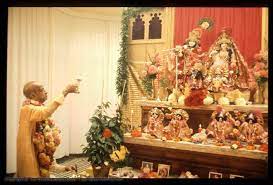
Bhagavad Gita 9.26 explains how to do Krishna bhakti, devotion to Krishna, easily and attain Krishna. The process given is simple and can be performed by anyone.
Lord Krishna says, “If one offers Me with love and devotion a leaf, a flower, a fruit or water, I will accept it.” Bhagavad Gita 9.26
Krishna sees the intent of our action
The Supreme Personality of Godhead, Krishna, is not much interested about the items we are offering to him, but he is interested with what intention we are offering those items to him. Krishna is the Supreme Personality of Godhead. He owns everything which is there in the entire creation. He is self-sufficient. So, he does not need anything from us. But he expects one thing from us and i.e. love. And that love should be free from all desires. Should be pure and selflessly.
Most important qualification to do Krishna Bhakti
It is not that only rich people can worship Krishna. Or only Hindus or those born in India can worship Krishna. It is also not that only brahmanas, learned philosophers or scholars are eligible to worship him. Also, Krishna is not saying that only men can worship him. He has not put any such conditions. In fact, through this verse Krishna is inviting each one of us to become his devotee. Men and women, young and old, rich and poor, Indians and non-Indians, Hindus and non-Hindus all the eligible to become a devotee of Krishna.
This is why in this verse Krishna is saying that he accepts offering from anyone who has devotion, bhakti, for him. “Devotion to Krishna” is the most important and the only qualification required to become a devotee of Krishna. So, in this verse the word bhakti is mentioned twice.
Explicating Krishna’s magnanimity, Srila Prabhupada writes, “Who is such a fool that he does not want to be Kṛṣṇa conscious by this simple method and thus attain the highest perfectional life of eternity, bliss and knowledge?” Bhagavad Gita 9.26 purport.
Is it not true? Anyone can get a fruit or a flower or a leaf or water and worship Krishna. Is there any place on this earth where these items are not available? Definitely not. So, Krishna the Supreme Father of all living beings, aham bija-pradah pita, is giving everyone the opportunity to become his devotee and come back to him.
Krishna refused Duryodhana’s feast
In Mahabharat we see that Duryodhana had arranged for a big feast for Krishna, but Krishna refused to eat those food items because Duryodhana had no love for Krishna. Instead, Krishna enjoyed simple food items at the house of Vidura because Vidura and his wife, Vidurani, had great love for Krishna.
Vidura’s wife, Vidurani, was so overwhelmed to see Krishna that while offering banana, she offered him the banana peels instead of the fruit. Seeing her love for him, Krishna happily started eating the banana peels. Krishna is not hungry for food. Although self-satisfied Krishna always looks for our love.
What food to offer to Lord Krishna?
In this verse one other important point to be noticed is that Krishna talks about only vegetarian items which he accepts as offering. He does not say stuffs like egg, fish, meat, liquor etc. If he would have wanted those, he would have mentioned those. So as devotees we should only offer those items which Krishna likes. That is true love. So, we should offer only vegetarian items to him. Fruits, milk, vegetables, grains, water should be offered to Krishna with love.
We also eat food for survival. So, first we should offer food to Krishna and then we should accept those food in the form of prasad or Krishna’s remnants. Eating food without offering to Krishna incurs sin. But when we eat Krishna prasad then we are freed from all kinds of sins.
Krishna confirms this in Bhagavad Gita 3.13, “The devotees of the Lord are released from all kinds of sins because they eat food which is offered first for sacrifice. Others, who prepare food for personal sense enjoyment, verily eat only sin.”
Srila Prabhupada explains the benefit of eating Krishna prasad, “….preparing nice, simple vegetable dishes, offering them before the picture or Deity of Lord Kṛṣṇa and bowing down and praying for Him to accept such a humble offering enable one to advance steadily in life, to purify the body, and to create fine brain tissues which will lead to clear thinking.” Bhagavad Gita 9.26 purport
However, while preparing the food and offering the food to Krishna the element of bhakti, devotion should always be there. If we do not serve Krishna with love, we won’t get Krishna’s love.
How Krishna eats food we offer to him?
This verse also establishes one important fact that Krishna is personal and not impersonal. The impersonalist philosophers will not be able to understand this verse. The impersonalists wrongly think that Krishna has no form, no senses. But how can Krishna relish the food items offered to him without senses. The impersonalists fail to understand that Krishna too has senses like us.
But unlike us Krishna’s senses are transcendental. Our senses are limited and can perform only one function. For example, we can only see with our eyes, eat with our mouth and smell from our nose. But Krishna can do anything by any of his senses. He can see with his eyes, hear from his eyes and only can eat with his eyes. Similarly, he can eat, see, hear, walk, talk from his mouth. His senses are extremely powerful. He impregnates the living entities in this world just by looking at the material nature.
Krishna too has feelings and he loves to reciprocate with the devotees in a personal way. So, when we offer food to Krishna with love then he accepts it, eats it and enjoys it. And when we are able to give joy to Krishna our life gets filled with joy.
Conclusion
This verse explains how to do Krishna bhakti easily and effectively. The process explained is so simple. The only requirement is that it should be done with love and devotion. And the end result is that we will attain Krishna.
Search
Recent Posts
-
Srimad Bhagavatam at ISKCON Newtown...
September 3, 2026
-
Srimad Bhagavatam at ISKCON Newtown...
September 1, 2026
-
Janmashtami: Celebrating Krishna’s Appearance Through...
August 17, 2026
-
Gopinatha Pattanayaka: 6 Lessons for...
August 16, 2026
-
What Does Krishna Say About...
August 11, 2026
What Krishna says about demigod worship in Bhagavad Gita?
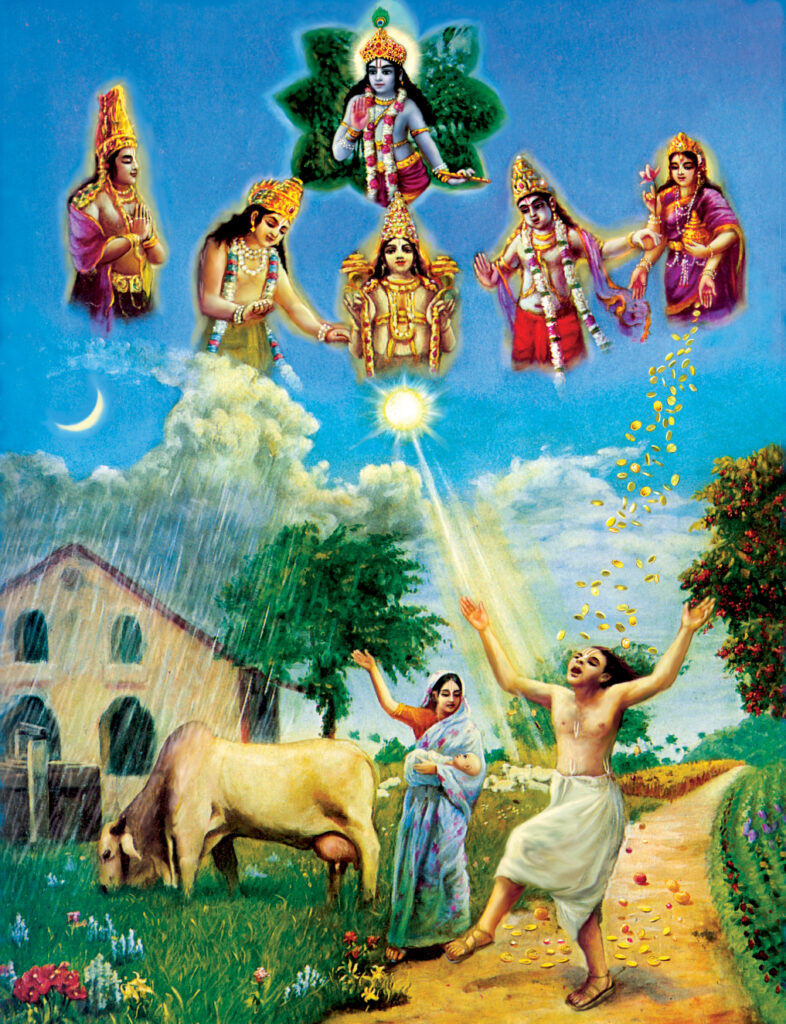
Lord Krishna in Bhagavad Gita discourages the worship of demigod. Those who do not know the difference between Krishna and demigod, worship demigod believing that demigods are also Supreme God like Krishna. So, Krishna says in Bhagavad Gita that “men of small intelligence worship demigod.” Generally, those people who have lots of material desires surrender to demigods and engage in demigod worship. Demigod worshipped believe that a particular demigod can quickly give them results.
Who are demigods?
Demigods are jiva tattva, living beings, like you and me. They also live in this material world. Demigods are much more powerful than you and me but they are not as powerful as Krishna or Krishna’s plenary expansion. Demigods live in the higher planets like sun planet, moon planet and other heavenly planets. Because of their punya (piety) they have been given very important responsibilities by Krishna to manage this material universe.
They are empowered representative of Lord Krishna, the Supreme Lord. They get their power from Krishna. Let us understand relationship between Krishna and the demigods.
- Just as a king has different ministers to take care of his kingdom, similarly the demigods assist Krishna in managing this material creation.
- All the ministers in a kingdom work under the king as per his instructions. Similarly, the various demigods who have been given different responsibilities to manage the affairs of this material universe work under Lord Krishna. They act as per the will of Krishna.
- Just as ministers remain in the cabinet as per the pleasure of the king similarly the demigods remain in their position as per the pleasure of Krishna.
Indra, Surya, Chandra, Vayu etc are demigods. Even Lord Shiva and Lord Brahma are demigods. But Lord Shiva has a unique position.
Importance of performing yajnas to please demigod
Krishna says in Bhagavad Gita 3.10 that to live happily in this world and to attain liberation it is important that we cooperate and please the demigods. Demigods are pleased by the performance of sacrifices, yajnas. And when they are pleased, they supply all the necessities of life so that we can live happily in this world. Bhagavad Gita 3.11.
Who is actually worshipped in yajna?
However, when one performs yajna for the demigods then one indirectly worships Lord Vishnu or Lord Krishna. Lord Vishnu is the plenary expansion of Lord Krishna. Lord Vishnu is the yajna – pati. The yajna – kunda is the mouth of Lord Vishnu and the fire of the yagna – kunda is the tongue of Lord Vishnu. In all the yajnas Lord Vishnu is the chief beneficiary.
Srila Prabhupada, the founder acharya of Iskcon, explains, “Some of the yajnas are meant to satisfy particular demigods; but even in so doing, Lord Viṣṇu is worshiped in all yajnas as the chief beneficiary. It is stated also in the Bhagavad-gita that Kṛṣṇa Himself is the beneficiary of all kinds of yajnas: bhoktaraṁ yajna-tapasam.” Bhagavad Gita 3.11 purport.
The results one gets by worshipping the demigods is actually given by Lord Krishna only. Krishna says this in Bhagavad Gita 7.22.
So, if we worship Lord Krishna directly then there is no need to separately worship the demigods.
In this age of Kaliyuga the best yajna is the sankirtana yajna i.e. the chanting of the Hare Krishna Mahamantra. It pleases Krishna and when Krishna is pleased demigods also become happy.
Why the result one gets by worshipping demigods is limited and temporary?
Those who are less intelligent and does not know that demigods are parts and parcel of Krishna worship demigods for material benedictions. Since demigods are not Supreme Lord, so the result one gets by worshipping the demigods are limited and temporary.
The worshipped of demigod goes to the planet of demigod after leaving the body. They live in the planet of demigod till his piety is not exhausted. Once their pious deeds come to an end, they have to leave the planet of demigod and have to come to the earthly planet again. Also, we have to understand that the planets of the demigods are in this material universe only. The planets of demigods are devastated at the time of annihilation. Also, those who reside on the planet of demigods continue to live in this material world only where there is repeated cycle of birth and death.
But when one becomes a devotee of Krishna then he returns to the planet of Krishna which is permanent and from there no one returns to this material world.
Krishna says, “Men of small intelligence worship the demigods, and their fruits are limited and temporary. Those who worship the demigods go to the planets of the demigods, but My devotees ultimately reach My supreme planet.” Bhagavad Gita 7.23.
When one goes to the planet of Krishna then one never comes back to this material world. In the planet of Krishna there is no disease, old age and death. Also, there is no misery. Everyone lives happily with Krishna for eternity.
When we worship Krishna, the results are limitless and permanent.
So, it is said that instead of worshipping the demigods one should worship Krishna, the Supreme Lord. In fact, demigods also worship Lord Krishna.
Why separate worship of demigod not required for devotees of Krishna?
In Srimad Bhagavatam 4.31.14, it is explained that if we water the root then automatically the branches, twigs and leaves gets satisfied and if we feed the stomach then the entire body gets nourished. Similarly, if we worship and serve the Supreme Lord Krishna then automatically all the demigods and the living entities gets satisfied. It is because the demigods and living entities are parts and parcels of Krishna.
So, for devotees of Krishna separate worship of demigod is not required as explained in Bhagavad Gita. In Krishna’s Govardhan Lila also we see that Krishna did not approve the worship of Indra, the demigod. And in that pastime, we see that Indra, the king of heaven, begs forgiveness from Krishna for his mistake. He understands and accepts that Krishna is the Supreme Personality of Godhead, and he is subordinate to Krishna. He is Indra because Krishna gave him that post. Indra one of the most prominent demigods, while offering prayers to Lord Krishna says, “O Lord, You have shown mercy to me by shattering my false pride and defeating my attempt [to punish Vṛndāvana]. To You, the Supreme Lord, spiritual master and Supreme Soul, I have now come for shelter.” Srimad Bhagavatam 10.27.13
So, devotees of Krishna respect the demigods but worship Krishna, the Supreme Lord. This in fact pleases the demigods. So Bhagavad Gita recommends worship of Krishna and not the worship of demigod.
Search
Recent Posts
-
Srimad Bhagavatam at ISKCON Newtown...
September 3, 2026
-
Srimad Bhagavatam at ISKCON Newtown...
September 1, 2026
-
Janmashtami: Celebrating Krishna’s Appearance Through...
August 17, 2026
-
Gopinatha Pattanayaka: 6 Lessons for...
August 16, 2026
-
What Does Krishna Say About...
August 11, 2026
Know the seven benefits of Bhakti Yoga in this age of Kali Yuga
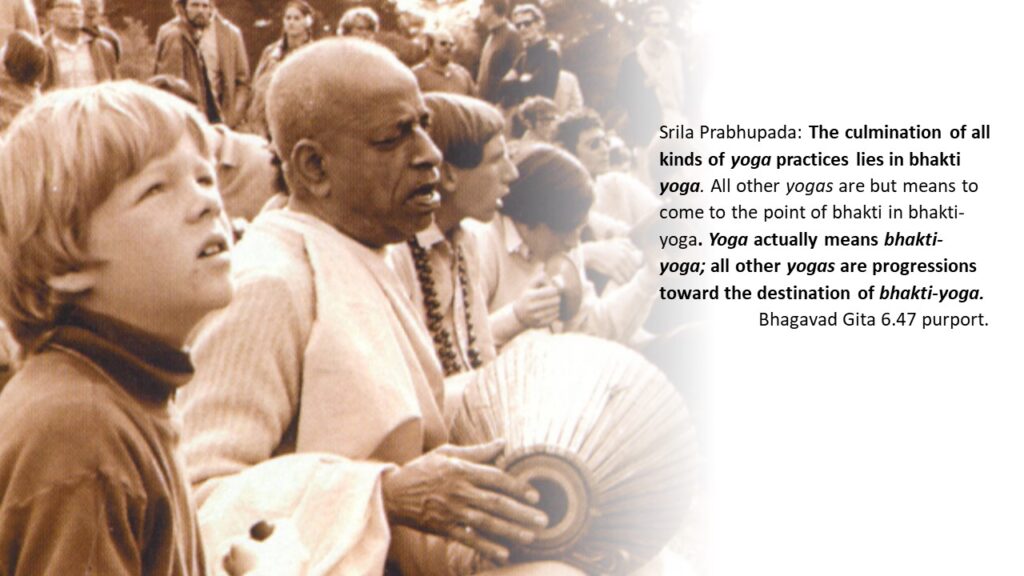
There are unlimited benefits of Bhakti Yoga. There are many yoga systems explained in the scriptures but amongst all these yoga practices Bhakti Yoga is considered topmost. Especially in this age of Kaliyuga it is quite difficult to practice other yoga systems like Karma Yoga, Jnana Yoga and Astanga Yoga but it is easy to practice Bhakti Yoga.
Let us see the challenges of other yoga systems and benefits of Bhakti Yoga.
Challenges in Karma Yoga
There are two types of Karma Yoga – sakama karma yoga and niskama karma yoga.
In karma yoga one may have understanding about the Supreme Lord but he may not know that the Supreme Lord is Lord Krishna.
A sakam karma yogi will have attachment to the fruits of his activities and he may worship the Lord for material results. In fact, sometimes a sakam Karma yogi may also approach demigods for results.
A sakam karma yogi gradually comes to the platform of niskama karma yoga. Niskama karma yoga means no attachment for fruitive results. Coming from the stage of sakam karma yoga to niskama karma yoga may take lots of times, it could be many lifetimes also. In Niskama Karma Yoga, the practitioners have to do his duties perfectly as per the scriptures following varnashrama dharma but he should not be attached to the results.
It means while doing his work he should be completely detached. It is easy to say but quite difficult to practice.
Challenges in Jnana Yoga
In Jnana Yoga one acquires knowledge by studying 24 material elements. Jnana Yoga is also called sankhya yoga. By studying and analysing the 24 material elements, a Jnana Yogi tries to understand that they are souls and not material body comprising of gross and subtle elements. They also try to understand this material world and come to the conclusion that everything in this material world is temporary. With this understanding they develop renunciation.
For Jnana yogi, renunciation means negation. It means that they have to suppress all their desires and emotions and remain inactive. But as souls we cannot remain inactive. Souls need constant engagement. So, the process of Jnana yoga is dry and not pleasing to the heart.
Challenges in Astanga Yoga
In astanga yoga the practitioner has to go through different stages of eightfold yoga system. The eightfold yoga system includes – yama, niyama, āsana, prāṇāyāma, pratyāhāra, dhāraṇā, dhyāna and samādhi. The process of elevation is gradual here. In Bhagavad Gita 6.11 – 6.14, Lord Krishna explains how astanga yoga should be practiced.
“To practice yoga, one should go to a secluded place and should lay kuśa grass on the ground and then cover it with a deerskin and a soft cloth. The seat should be neither too high nor too low and should be situated in a sacred place. The yogī should then sit on it very firmly and practice yoga to purify the heart by controlling his mind, senses and activities and fixing the mind on one point. One should hold one’s body, neck and head erect in a straight line and stare steadily at the tip of the nose.” Thus, with an unagitated, subdued mind, devoid of fear, completely free from sex life, one should meditate upon Me within the heart and make Me the ultimate goal of life.” Bhagavad Gita 6.11 – 6.14
In this age of kali yuga people are short lived and their mind is always agitated, so it is difficult to practice astanga yoga. These days there are almost no forest, so finding a secluded place is also very challenging.
Moreover, to practice astanga yoga one has to leave his home which may not be possible for all. For women to leave home and live in a secluded place to practice astanga yoga will be very difficult.
7 benefits of Bhakti Yoga in this age of Kaliyuga
Now let us see why Bhakti Yoga is topmost. And what are the benefits of Bhakti Yoga as compared to other yoga systems.
1. Anyone can do Bhakti Yoga
There is no prerequisite to perform Bhakti Yoga. Men, women, young, old, Hindus, non-Hindus, Indians, non-Indians everyone is eligible to perform Bhakti Yoga. In Bhakti Yoga the most important requirement is that one has to chant the holy names of Krishna like the Hare Krishna Mahamantra and follow four regulative principles of no meat eating, no gambling, no intoxication and no illicit sex.
2. Easy to Control mind and senses in Bhakti Yoga
In all the other three yoga process – karma yoga, jnana yoga and astanga yoga – one has to put in a lot of efforts for practicing sense and mind control. But in Bhakti Yoga the emphasis is not much on sense and mind control, but the emphasis is more on using the senses and mind in serving Krishna. Now when the senses and mind are absorbed in serving Krishna then the senses and mind automatically gets purified. And for the practitioner of Bhakti Yoga it becomes easy to control the purified senses and mind.
3. Bhakti Yoga is about relationship with Krishna
In Jnana Yoga and Astanga Yoga the process is to renounce the world, renounce the relationship. So, it is not pleasing to heart. But in Bhakti Yoga the emphasis is on developing everlasting relationship with Krishna and Krishna’s devotees, so it is pleasing to the heart.
4. One works for Krishna’s pleasure
In Niskama Karma Yoga, once does work just as a matter of duty without any desire for result. But in Bhakti Yoga one does work for the pleasure of Krishna. For example, Srila Prabhupada was always engaged in work, but he did it for the pleasure of Krishna and so Srila Prabhupada was always joyful. We see in Ramayana Hanuman worked hard for Lord Rama’s pleasure. Similarly, Arjuna fought the Mahabharat war for the pleasure of Krishna.
5. Krishna reveals knowledge in Bhakti yoga
Śravaṇaṁ (hearing) and kīrtanam (chanting) is important part of Bhakti Yoga. A Bhakti Yogi relishes the pastimes of Lord Krishna and its philosophical explanation. Hearts get purified by regularly hearing Krishna’s pastimes. And gradually the knowledge is also revealed to the Bhakti Yogi that they are souls parts and parcel of Krishna. A Bhakti Yogi gradually understands his constitutional position as the servant of Krishna and understands that this material world is temporary. He also understands about this world and how this world functions.
6. Purification is easy and much quicker in Bhakti Yoga
In Karma yoga, Jnana Yoga and Astanga Yoga purification takes lots of times, sometimes many lifetimes. But in Bhakti Yoga one gets quickly purified especially if one gets association of pure devotees. Mrugrari, the cruel hunter, got purified by the association of sage Narada. Similarly, hippies who were indulging in many sinful activities got purified by the association of Srila Prabhupada. In my personal life also I have seen that once I started practicing Bhakti Yoga then it became easy to give up many sinful habits like meat eating, attraction towards opposite sex etc.
7. In Bhakti Yoga one attains Krishna and goes back to Krishna’s abode
In Karma Yoga and Jnana Yoga one may come to the stage of Brahman realization. So a Karma Yogi and Jnana Yogi after leaving the body will merge into Brahman effulgence. In Astanga Yoga one may come to the stage of Paramātmā realization. An Astanga Yogi as per his consciousness gets the next destination after leaving the body. But it is only in Bhakti Yoga that one may have Bhagavan realization. Bhagavan realization is topmost, and it includes Brahman and Paramātmā realization. A Bhakti Yogi can only attain Krishna and return back to Krishna’s abode, Goloka Vrindavan.
Bhakti yoga is topmost
These seven benefits of Bhakti Yoga establishes that Bhakti Yoga is topmost yoga. This is also confirmed by Lord Krishna. “And of all yogīs, the one with great faith who always abides in Me, thinks of Me within himself and renders transcendental loving service to Me – he is the most intimately united with Me in yoga and is the highest of all. That is My opinion.” Bhagavad Gita 6.47
Srila Prabhupada explains, “The culmination of all kinds of yoga practices lies in bhakti yoga. All other yogas are but means to come to the point of bhakti in bhakti-yoga. Yoga actually means bhakti-yoga; all other yogas are progressions toward the destination of bhakti-yoga.” Bhagavad Gita 6.47 purport.
Knowing this a Bhakti Yogi engages every moment of his life in the service of Krishna and lives happily in this world and leaves for Krishna’s abode after leaving this world.
Search
Recent Posts
-
Srimad Bhagavatam at ISKCON Newtown...
September 3, 2026
-
Srimad Bhagavatam at ISKCON Newtown...
September 1, 2026
-
Janmashtami: Celebrating Krishna’s Appearance Through...
August 17, 2026
-
Gopinatha Pattanayaka: 6 Lessons for...
August 16, 2026
-
What Does Krishna Say About...
August 11, 2026
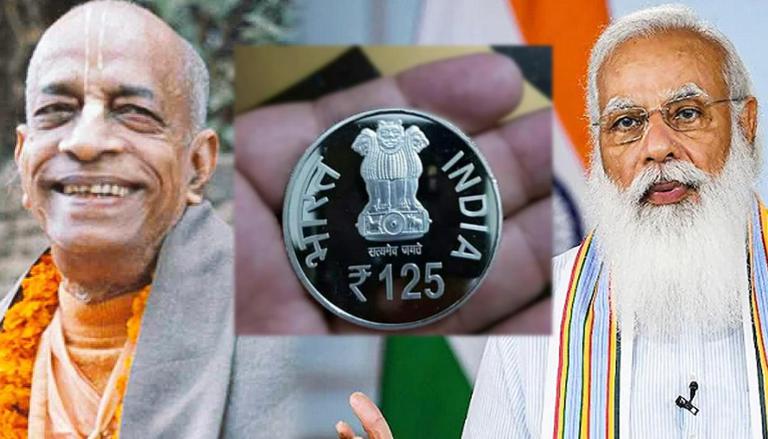
Srila Prabhupada 125th Birth Anniversary Coin released by Prime Minister of India, Shri Narendra Modi
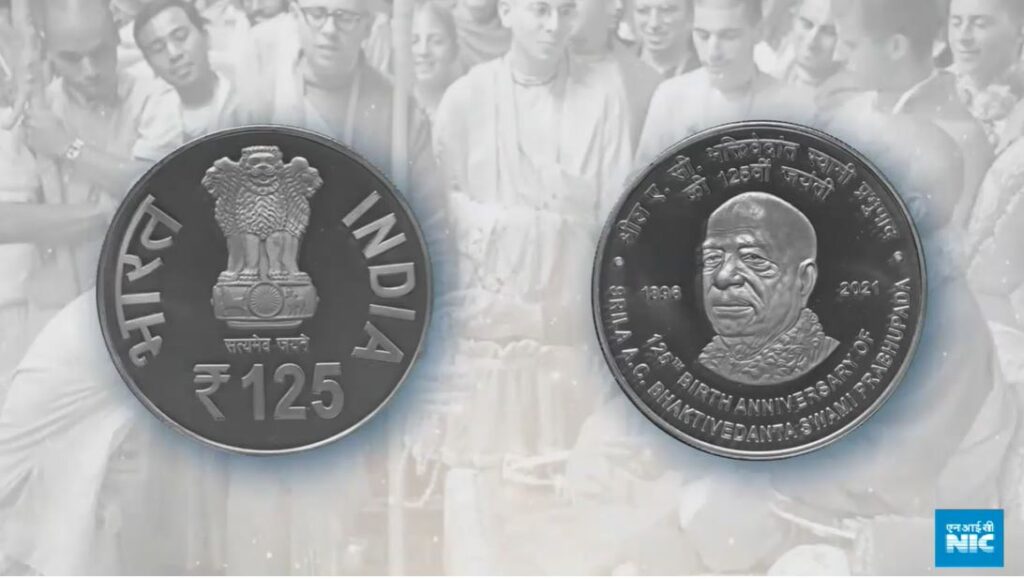
The Prime Minister of India Shri Narendra Modi released a special commemorative coin of Rs 125 on the occasion of 125th Birth Anniversary of Srila Bhaktivedanta Swami Prabhupada who is loving called as Srila Prabhupada.
The coin was released via video conferencing on 1st September 2021 at 4:30 pm IST. Devotees from different parts of the world joined the ceremony via video conferencing. The program was also telecasted live on many India News Channels.
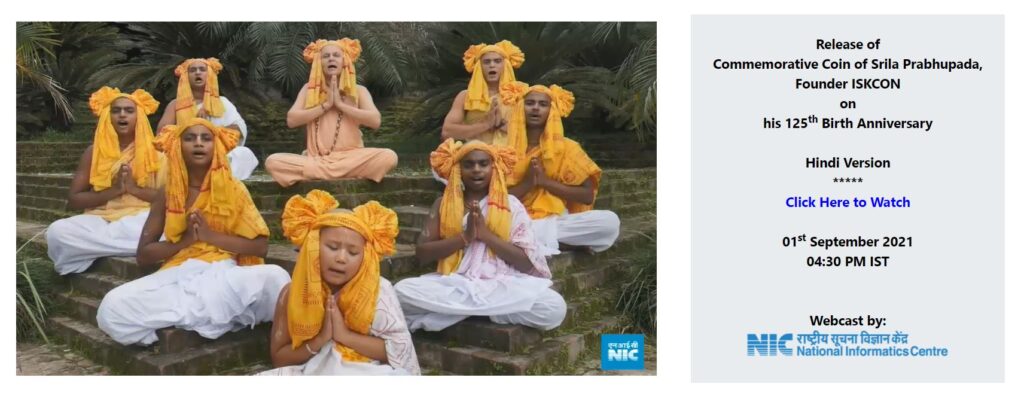
Program began with Mangalacaran by students of Iskcon Gurukul, Mayapur
The program started with the recitation of prayers by the students of Iskcon Gurukul, Mayapur. They recited Mangalacaran Prayers.
Minister of Culture, Shri G Kishan Reddy glorifies Srila Prabhupada
After Mangalacaran Prayers by Iskcon Gurukul students, the program coordinator requested, Shri G Kishan Reddy who is a Minister of Tourism, Culture and Development of North Eastern Region of India to say few words on this auspicious occasion.
The honourable minister said:
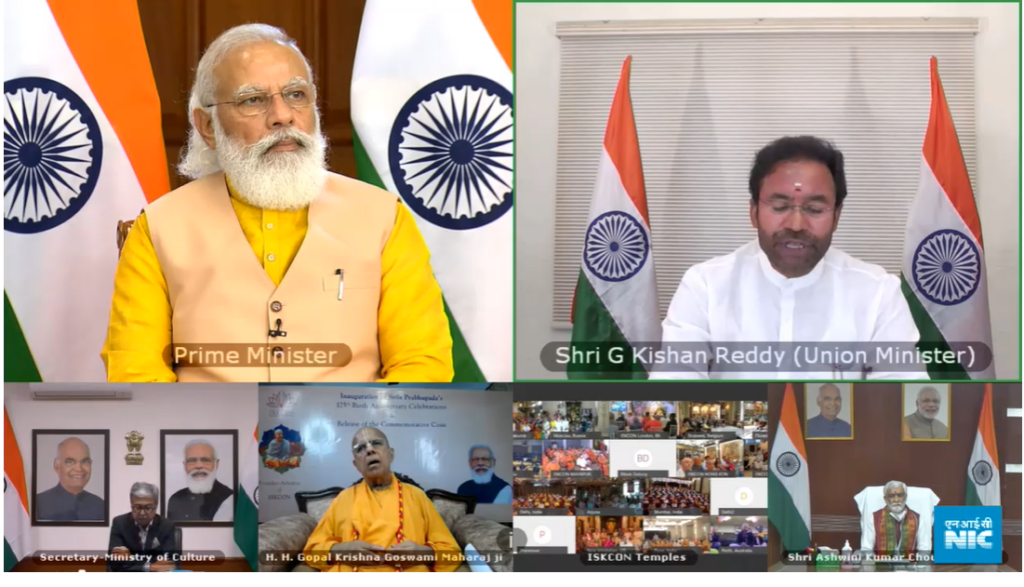
“Srila Prabhupada’s life is of dedication, devotion and courage. He promoted Krishna all over the world. He promoted India’s culture, knowledge and tradition all over the world. Prabhupada gave practical solution to all the problem. And he preached the message of Vasudhaiva Kutumbakam, the world is one family. Due to Srila Prabhupada one can see big number of people of different nations wearing dhoti, kurta and sari. We see them chanting Hare Krishna and speaking on puranas.
Srila Prabhupada brought cultural revolution. He is the ambassador of Indian culture and philosophy. Today Iskcon is the greatest bridge between west and east. Srila Prabhupada several times stressed the need to revive India’s spiritual cultural. Iskcon has been in the forefront in the service of downtrodden. During Covid they were cooking 4000 meals daily for people. Srila Prabhupada introduced Jagannath Rath Yatra in western world, this is one of his great achievements.
Under Prime Minister Modi India has grown. Ayurveda has become an alternative medicine. Today, India is being recognised in the world for her spirituality.
I welcome all for this event.
I thank Prime Minster Modi for releasing coin on the 125th birth anniversary of Srila Prabhupada.”
HH Gopal Krishna Goswami Maharaj speaks on the occasion of release of coin of Srila Prabhupada on his 125th Birth Anniversary
After the speech of the Minister, the program coordinator requested HH Gopal Krishna Goswami Maharaj, a senior disciple of Srila Prabhupada, and Iskcon GBC to speak.
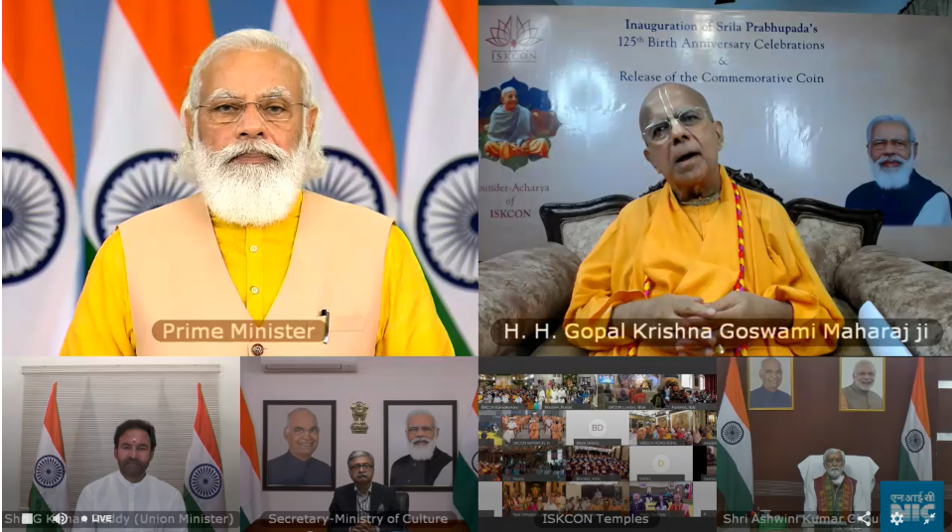
HH Gopal Krishna Goswami Maharaj said:
“Respected Prime Minster Mr Narendra Modi, Ministry of culture, I am grateful for your time. As you know this year is Srila Prabhupada’s 125th birth anniversary. Around 500 years ago, Chaitanya Mahaprabhu had predicted that in all corners of the world Hare Krishna Mahamantra will be chanted.
Prabhupada was born in 1896 in Kolkata. In 1922, he met a renowned Vaisnava saint and scholar Srila Bhaktisiddhanta Saraswati Thakura who became his spiritual master. At that time, he was with Gandhiji’s movement. He was good in English, so his spiritual master, Srila Bhaktisiddhanta Saraswati Thakura, asked him to take the message of Bhagavad Gita to the western world.
This instruction was given in 1922 but he was able to go to west in 1965. He went into cargo ship, was having only Rs 40 with him. It was 35 days journey. On his way, he was thinking how to spread the message of Krishna and Chaitanya. With great struggle he reached USA. And with great struggle, he opened the first Krishna Consciousness centre in New York. Today all over the world Iskcon temple is present.
70 crore Vedic books translated by Srila Prabhupada distributed all over the world
Today even westerns devotees wear Indian Vaisnav dress like dhoti, kurta and saris. They put tilak. Srila Prabhupada translated Vedic scriptures in English language. Today more than 70 crore Vedic books translated by Srila Prabhupada have been distributed all over the world. Many renowned universities use it.
These books are today available in almost all the languages. Prabhupada translated more than 70 books. He wanted that these Vedic books should be read by whole world and not just by Indians. In this modern age also we can live as per the Vedas.
May God shower his mercy upon Prime Minister Modi and his government
We are thankful to Prima Minister Modi for his precious time. Srila Prabhupada’s desire was to make everyone in the world happy. We should take benefit of the scriptures and live happily. Along with that Srila Prabhupada started food for life. Today food for life is in all parts of the world. Lakhs are getting the benefit. During Covid pandemic, we opened camps for the people.
Influence of Vedic culture is spreading all over the world. We are thankful to the Prime Minister that he came to inaugurate world’s largest Bhagavad Gita. You are inaugurating the coin; we thank you for that.
May God give great mercy to your government. It is important that we should also have spiritual knowledge. When praja, people, take benefit of this knowledge, they get benefitted. May Lord give you strength to serve the country. Thank you very much. Hare Krishna!”
Release of Commemorative Coin of Srila Prabhupada, Founder Iskcon on his 125th Birth Anniversary
After the speech of HH Gopal Krishna Goswami Maharaj, the program coordinator requested Prime Minister Modi to unveil the coin on the occasion of Srila Prabhupada’s 125th birth anniversary. Everyone was eagerly waiting for this moment.
The Prime Minister released the commemorative coin with remote.
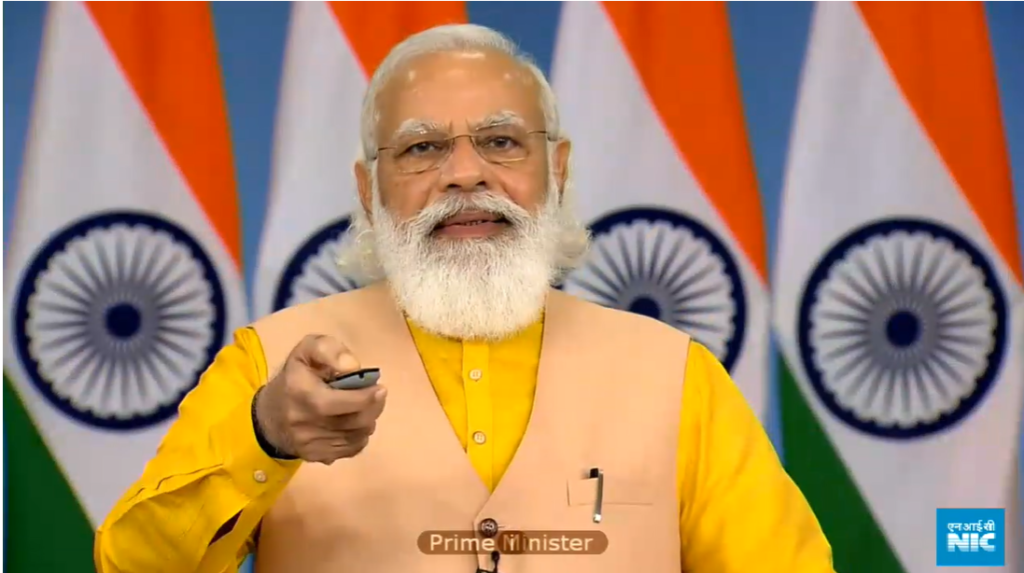
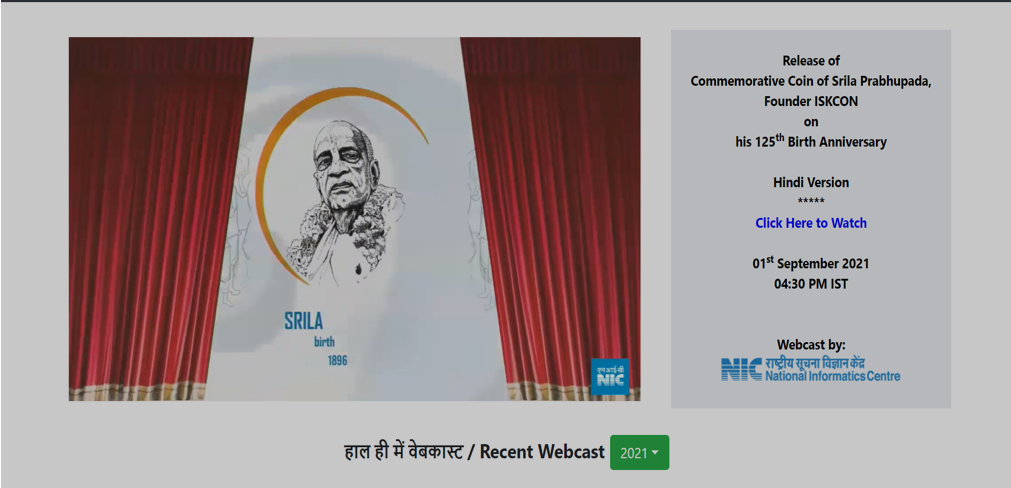
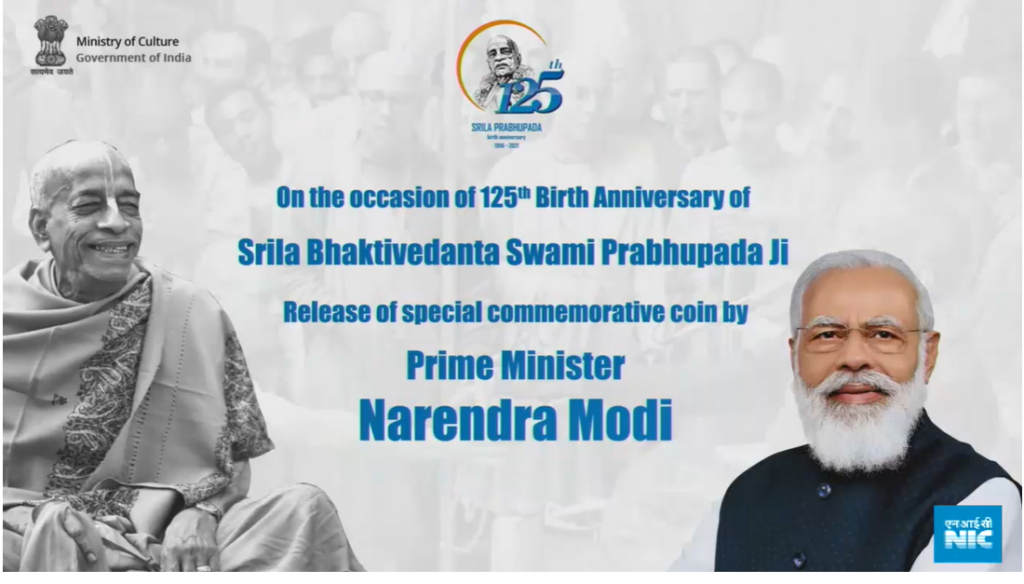
Prime Minister of India, Shri Narendra Modi, speaks on the occasion of release of coin of Srila Prabhupada on his 125th Birth Anniversary
After releasing the coin, Prime Minster Shri Narendra Modi spoke the following words praising Srila Prabhupada and Iskcon:
“Today is a very auspicious day. Two days back was Janmashtami and today is 125th birth anniversary of Srila Prabhupada. I see on my screen devotees from all over the world. It seems that lakhs of mind and body is connected to common Consciousness which is Krishna Consciousness. This is what Srila Prabhupada preached all over the world.
We all know that Srila Prabhupada was a transcendental devotee. Along with that he was a great Bharat Bhakt. He participated in non-cooperation movement of Mahatma Gandhi. He refused to take degree from Scottish college Kolkata during the non-cooperation movement.
On his 125th birth anniversary, India is celebrating 75th year of independence which we are celebrating as Azadi Ka Amrit Mahotsav. Srila Prabhupada used to say that he is travelling to different parts of the world because he wanted to give great treasure of India to the world in the form of knowledge and culture. And he was doing so to serve the entire humanity.
Swamiji’s guru, Srila Bhaktisiddhanta Saraswati Thakura, saw his competence and gave him the instruction to take India’s philosophy to the western world. Srila Prabhupada took the words of his spiritual master seriously and made it his mission.
Srila Prabhupada’s Atmanirbhar Bharat (self-reliant India)
As part of Azadi Ka Amrit Mahotsav, our purpose is to benefit and serve the world. To achieve this, it is important to have help of all. We can imagine if Srila Prabhupada gave so much to the world and if we all by his blessings try together then how much we will gain. Message of love can be spread to each person. How much we can give to the society and to the humanity. India’s sustainable lifestyle and ayurvedic science will benefit all.
Srila Prabhupada talked about Atmanirbhar Bharat (self-reliant India). Today India has made this her purpose and we are moving in that direction. Whenever I talk about Make in India and Atmanirbhar Bharat, I tell my officials and businessmen to learn from Iskcon.
When we go to other countries people greet us by Hare Krishna. We feel so happy, so proud. We feel at home. Just imagine if we get the same response for our make in India products then how much proud we will feel. We can learn from Iskcon and achieve our make in India goal.
Chaitanya Mahaprabhu bound the world with Bhakti
Krishna said to Arjuna to attain knowledge and finally surrender to Krishna. This is called Bhakti Yoga which is given in Chapter 12 of Bhagavad Gita. Bhakti Yoga kept India’s culture alive when India was under subjugation. If Bhakti was not there then we do not know where would India have been.
During that period Chaitanya Mahaprabhu bound the world with Bhakti. He gave the mantra of viswas (faith) to the people. He broke caste barrier and established relationship between jiva (soul) and the Lord. In India many sages and saints have come from time to time. When world wanted Bhakti yoga, Srila Prabhupada came and Iskcon came.
Srila Prabhupada’s struggle to establish Iskcon
For Prabhupada, it was not easy to start Iskcon. He established Iskcon when he was 70 years old. This is the age when most people retire. It is very inspirational for all of us. We see people start saying they are too old to do or too young to do. But Srila Prabhupada from young age to old age continued focussing on his mission.
When he went to west to spread Krishna Consciousness, he did not have anything other than Bhagavad Gita and other scriptures. He got two heart attacks during his journey. He had no money, no place to stay and no surety of food.
In the words of Atal ji, former Prime Minister of India, kisi chamatkar se kam nahi (It is not less than a miracle).
Iskcon temples and Gurukuls all over the world
Today in different parts of the world there are many Iskcon temples and Iskcon gurukuls. Iskcon has taught umang (enthusiasm), ulas (celebration) and manavta par viswas (faith in humanity). We see in different parts of the world devotees singing and dancing in kirtan.
For others it is utsav (festival) but for us it is part of our life. This attracts people. It is giving new hope to people all over the world. In Bhagavad Gita, Lord Krishna says that when someone loves jiva, the soul, and does not hate anyone, he is loved by God. This thought process has been propagated by Iskcon.
Iskcon devotees doing Krishna seva and are brand ambassador of India
I remember when there was earthquake in Kutch, Gujarat, Iskcon came forward to help. Whether its natural calamity in Uttarakhand or Orissa, Bengal cyclone, Iskcon came to help. During Covid you all have been helping people.
In spite of the pandemic Iskcon served food to lakhs of people, made hospitals for Covid patients and is helping in vaccination.
I thank all the devotees of Iskcon. Iskcon devotees are not only doing Krishna seva (service) but also, they are brand ambassador of India.
Thanks to all. Hare Krishna!”
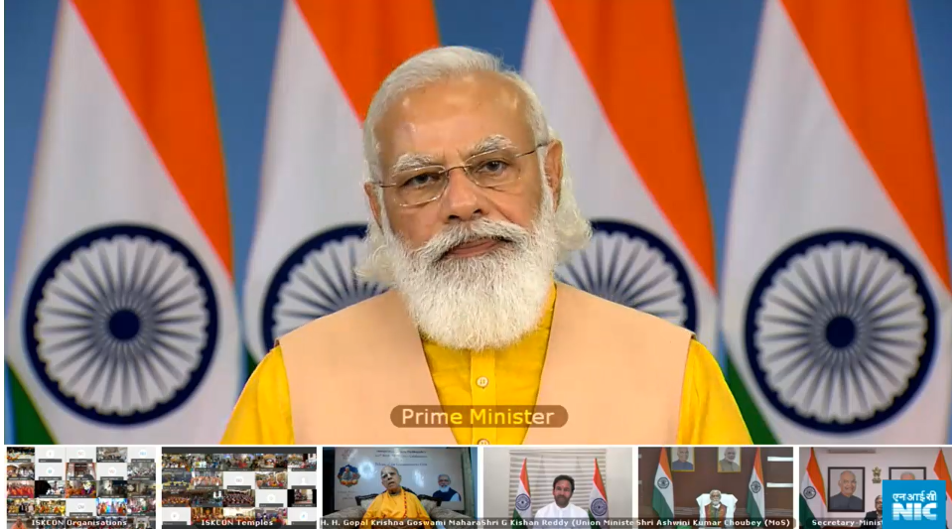
With this the program to honor Srila Prabhupada on his 125th Birth anniversary by releasing Rs 125 coin in his memory concluded.
Note: I have paraphrased the speech of HH Gopal Krishna Goswami Maharaj, Prime Minister Shri Narendra Modi and Union Minister, Shri G Kishan Reddy.
Watch the video of the entire program here: https://pmindiawebcast.nic.in/2021/1sep21.html
Search
Recent Posts
-
Srimad Bhagavatam at ISKCON Newtown...
September 3, 2026
-
Srimad Bhagavatam at ISKCON Newtown...
September 1, 2026
-
Janmashtami: Celebrating Krishna’s Appearance Through...
August 17, 2026
-
Gopinatha Pattanayaka: 6 Lessons for...
August 16, 2026
-
What Does Krishna Say About...
August 11, 2026