Who is Goddess Durgā?
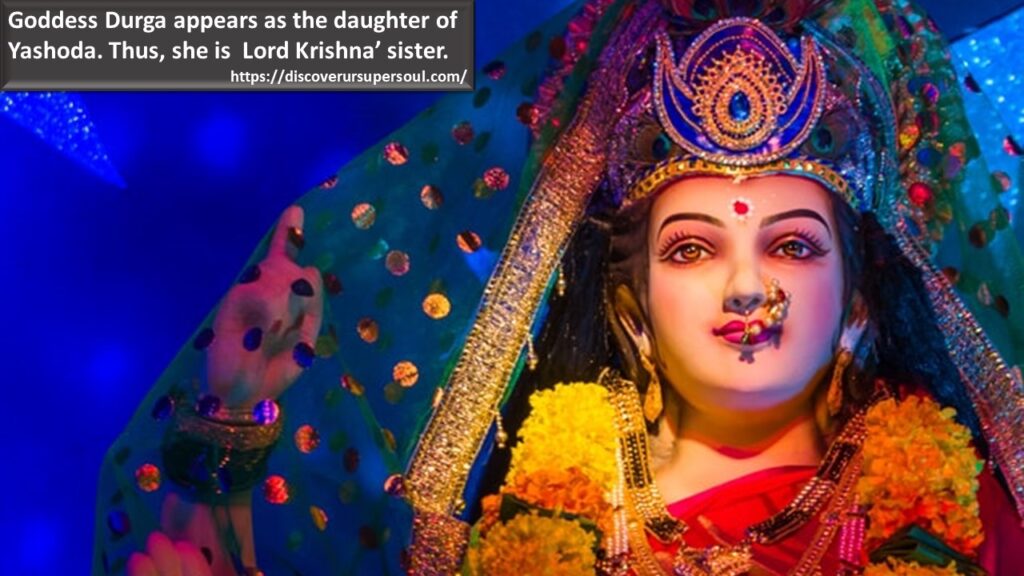
Brahma Samhita 5.44 explains that Goddess Durga is the “creating, preserving and destroying agency” of this material world. But she does not act independently, she does everything as per the wish of Lord Krishna. Durgādevī is also known as Māyādevī, the illusory energy of Lord Krishna. In this world she appears as the daughter of Yashoda. Thus, she is a sister of Krishna.
“The external potency Māyā who is of the nature of the shadow of the cit potency, is worshiped by all people as Durgā, the creating, preserving and destroying agency of this mundane world. I adore the primeval Lord Govinda in accordance with whose will Durgā conducts herself.” Brahma Samhita 5.44
Characteristics of Goddess Durga
Srila Bhaktisiddhanta Saraswati Thakura describes following characteristics of Goddess Durga in Brahma Samhita 5.44 purport.
- The world, in which Brahmā takes his stand and hymns the Lord of Goloka, is Devī-dhāma consisting of the fourteen worlds and Durgā is its presiding deity.
- She is ten-armed, representing the tenfold fruitive activities.
- She rides on the lion, representing her heroic prowess.
- Durgā tramples down Mahīṣāsura, representing the subduer of vices.
- She is the mother of two sons, Kārttikeya and Gaṇeśa, representing beauty and success.
- Goddess Durga is placed between Lakṣmī and Sarasvatī, representing mundane opulence and mundane knowledge.
- She is armed with the twenty weapons, representing the various pious activities enjoined by the Vedas for suppression of vices.
- And she holds the snake, representing the beauty of destructive time.
Why does Goddess Durga come to this material world?
In this material world which is described as “fort”, Durgā plays an important role. “Fort” in Sanskrit means Durga. And Durgā Devi is the presiding deity of this fort (durga) which is like a prison house. To protect this fort, she carries ten different types of weapons in her hands. So, no one can escape from this fort no matter how powerful he may be.
Krishna confirms this in Bhagavad Gita 7.14, daivī hy eṣā guṇa-mayī/mama māyā duratyayā. “This divine energy of Mine, consisting of the three modes of material nature, is difficult to overcome.”
Different names of Goddess Durgā
Durgā Devi is the external potency of Krishna, the Supreme Personality of Godhead. In this world she is worshipped in different places by different names. Srimad Bhagavatam 10.2.11-12 says the following things about Durgā Devi:
“Lord Kṛṣṇa blessed Māyādevī by saying: In different places on the surface of the earth, people will give you different names, such as Durgā, Bhadrakālī, Vijayā, Vaiṣṇavī, Kumudā, Caṇḍikā, Kṛṣṇā, Mādhavī, Kanyakā, Māyā, Nārāyaṇī, Īśānī, Śāradā and Ambikā.”
Who comes to this material world?
People like us who have forgotten our service to Krishna are sent to this prison, fort. And here, we the souls are bound in gross and subtle material body. Gross body comprises of earth, water, fire, air and ether. Subtle body consists of mind, intelligence and false ego.
So, in this mundane world we do not have full freedom and the material pleasure which we get here is always contaminated by pain.
Three types of sufferings in this world
In a prison, the prisoners are punished for different crimes. A prison cannot expect comfortable life confined in a cell. So, we see that in this world we constantly experience different kinds of sufferings. Scriptures explain three different types of suffering we undergo in this mundane world.
- adhidaivika-klesa: Sufferings caused by the higher powers like the demigods.
- adhibhautika-klesa: Sufferings caused because of other living beings
- adhyatmika-klesa : Sufferings because of one’s own body and mind
These punishments which we get here is to remind us that this is not our permanent home, and no amount of material comforts can free us from miseries. Through these punishments Durgā Devi wants to reform us, the prisoners.
Regarding Durgā Devi’s activities in this world, Srila Prabhupada explains, “She is Vaiṣṇavī. She is a great devotee of Kṛṣṇa. But she has accepted a thankless task: to punish. The policeman is a sincere government servant, but he has accepted a task, nobody likes him. If some policeman comes here, immediately you shall feel disturbed. But he is the sincere servant of government. That is the position of Māyā. Her business is to punish these rascals who have come to enjoy here. You see? But she is a sincere servant of God.”
Goddess Durga fulfils material desires reluctantly
But in spite of so much suffering you and I still want to enjoy this world. Most of the people due to ignorance believe that with the help of material wealth they can live happily here. So, they seek material benedictions like wealth, property, worthy progeny, beautiful spouse, good health from Goddess Durgā. Goddess Durgā can fulfil material desires.
“By sacrifices of animals, ordinary human beings will worship you gorgeously, with various paraphernalia, because you are supreme in fulfilling the material desires of everyone.” Srimad Bhagavatam 10.2.10
Although she fulfils these desires, but she does it reluctantly. Because she knows that in this world which comprises of 14 planetary systems no one can be permanently happy. Death which is the supremely reality of the material world snatches away everything from us. So, she wants us to go back to Krishna and live in Krishna’s kingdom, Goloka Vrindavan, where everything is eternal including our life.
When does Goddess Durgā becomes happy?
She becomes happy when she sees a soul trying his best to become a devotee of Krishna. Srila Bhaktisiddhanta Saraswati Thakura explains, “The work of purifying these penalized jīvas is the duty devolved upon Durgā. She is incessantly engaged in discharging the same by the will of Govinda. When, luckily. the forgetfulness of Govinda on the part of imprisoned jīvas is remarked by them by coming in contact with self-realized souls and their natural aptitude for the loving service of Kṛṣṇa is aroused, Durgā herself then becomes the agency of their deliverance by the will of Govinda.” Śrī Brahma-Saṁhitā 5.44 Purport
Goddess Durgā, the sister of Krishna, comes to this world to make us a devotee of Krishna. So let us not pray to her for material wealth. But let us beg her for spiritual wealth. Let us pray to her to remove all material desires from our hearts and make us a devotee of her beloved Krishna.
Search
Recent Posts
-
Srimad Bhagavatam at ISKCON Newtown...
September 3, 2026
-
Srimad Bhagavatam at ISKCON Newtown...
September 1, 2026
-
Janmashtami: Celebrating Krishna’s Appearance Through...
August 17, 2026
-

Gopinatha Pattanayaka: 6 Lessons for...
August 16, 2026
-
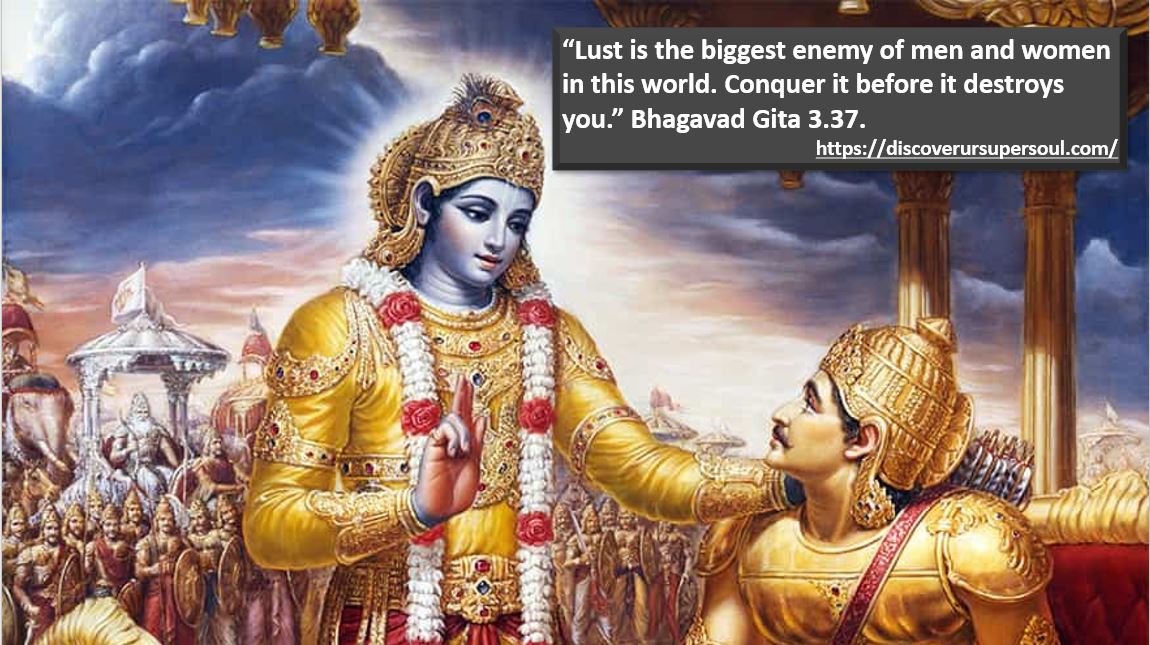
What Does Krishna Say About...
August 11, 2026
My prayer to Lord Krishna on his appearance day, Janmashtami
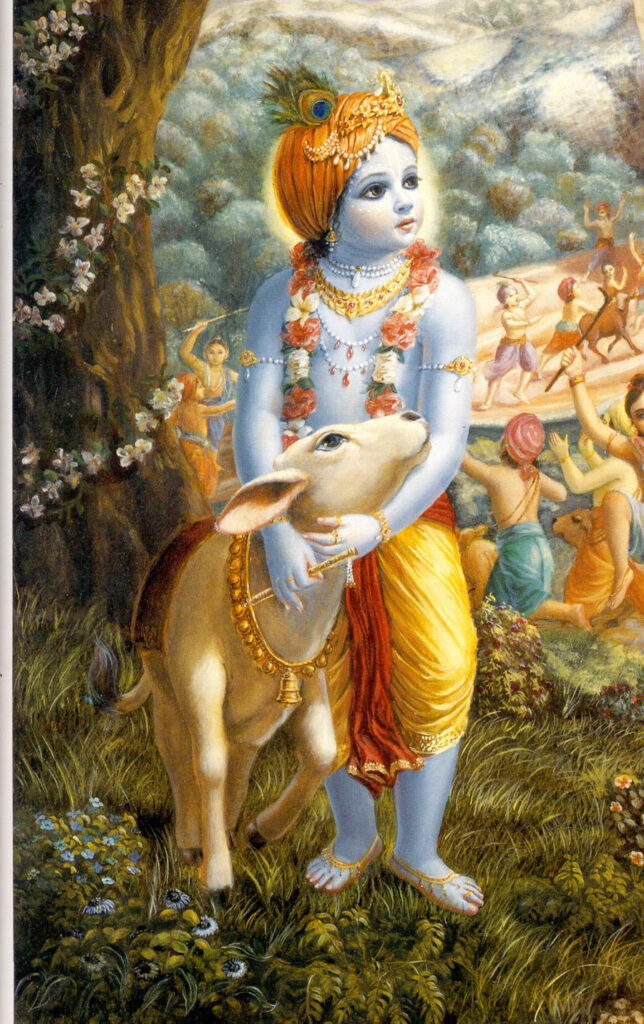
Dear Krishna, the day when you appeared in this world is celebrated as Janmashtami all over the world. This year, 2021, we are celebrating Janmashtami on 30th August. In Bhagavad Gita 8.15, you say that this world is duhkhalayam, abode of miseries. But still you appear here in every millennium because you feel pain when you see us in pain.
But unfortunately, people like me who have chosen to live here do not realize that we are in pain. In fact, our consciousness is so blunted that many times we consider pain as pleasure. Just like a hog who considers stool as a palatable food.
In spite of trying my best I have hardly experienced any happiness in this world. Any success or achievement we get here is always accompanied with fear and anxiety. So, in reality there is no happiness. But in spite of these experiences, I hope again and again of finding happiness in this material world.
My mind is always full of desires. And with a shame I want to admit that all my desires are material. And this is the root cause of all my sufferings.
My wrong desires making me miserable
I do not have desire to take your shelter. Although in Bhagavad Gita 18.66 you say to me through Arjuna that if I take your shelter then you will free me from all my past sins and thus I won’t suffer here. “Abandon all varieties of religion and just surrender unto Me. I shall deliver you from all sinful reactions. Do not fear.” Bhagavad Gita 18.66.
In fact, by taking your shelter I will be freed from all the fear of this world. But still, I fail to follow your instructions. It is because my mind is always overflooded with material desires.
Many times, I have tried to purge all worldly cravings from my mind but again and again I have failed.
You say in Bhagavad Gita that you reciprocate with us as per our desires – ye yathā māṁ prapadyante/tāṁs tathaiva bhajāmy aham. “As all surrender unto Me, I reward them accordingly.” Bhagavad Gita 4.11.
But as I said earlier Krishna, all my desires are wrong desires. And this is the reason that I am living here all alone away from you.
Why I am not able to see you, Krishna?
Although I voluntarily decided to not live with you but you never abandoned me. Right now also you are present in my heart as Supersoul, Paramatma. But because of my contaminated consciousness I cannot see you. A blind person sees darkness everywhere even when the sun is shining bright. Similarly, a spiritually blind person like me fails to see your beautiful effulgent transcendental form although you are here in my heart.
How unfortunate I am. My anarthas (vices) – lust, greed, pride, anger, envy, illusion – is separating me from you. I do not have the power to free myself from these anarthas. Honestly speaking I also do not have much desire to free myself from these anarthas.
Krishna, you are most merciful
Dear Krishna, please be merciful upon me. You have been merciful even to the demons who came to kill you. Putana came to give you poisonous milk, but you removed all the poisons from her milk and gave her the position of a mother in your spiritual kingdom. Who can be more merciful other than you?
Because of my wrong desires my mind has become poisonous and is now not allowing me to devote my life to you. It has made me insane. Although I try to serve you but my powerful mind does not allow me do so.
But why should I blame my mind?
It is me who have misused my free will and allowed the mind to enjoy the so-called pleasures of this world.
Unfortunately, I forgot to control my mind
In the journey of my life I forgot to control my mind. And now my mind controls me. I do not remember the exact date when my mind started overpowering me. But if I try to look back I find that I have always been under the subjugation of my mind. I have been in this material world for many lifetimes. And in each life I have just tried to enjoy the material pleasures through my mind and senses.
And now my mind has become so strong that it refuses to listen to me. It disobeys me. It controls me. I am a puppet of my mind. But I do not want to suffer anymore because of my mind. I am going through these sufferings because of my unholy desires. I know that as soon as I develop the desire to serve you all my misfortune will go away from my life.
All the miseries will disappear just as darkness disappears as soon as the sun appears.
My prayer to Lord Krishna
On this auspicious occasion of Janmashtami I beseech you Krishna to purify my desires. Shower your mercy upon me so that I develop spiritual desire, the desire to constantly serve you. I beg you to purify my heart of all the anarthas which is separating me from you. Dear Lord Krishna, please consider my prayer. I am an ignorant person who does not know what is good for me.
Like a madman in the mental asylum thinks that he is the king of the whole world. Afflicted by my material madness I think I can control my life. But the fact is that I am just a puppet, and you are the puppeteer.
Please take control of my mind and make me your puppet.
Dear Lord Krishna, my prayer at your lotus feet on this auspicious occasion of your appearance day is that please purge my mind of all material thoughts. Let my mind only think of you. Let my mind experience joy in always singing your glories. Let my mind develop distaste for the illusionary pleasures of this temporary world.
Let my mind have only one desire – the desire to serve you every moment of my life, life after life.
Search
Recent Posts
-
Srimad Bhagavatam at ISKCON Newtown...
September 3, 2026
-
Srimad Bhagavatam at ISKCON Newtown...
September 1, 2026
-
Janmashtami: Celebrating Krishna’s Appearance Through...
August 17, 2026
-
Gopinatha Pattanayaka: 6 Lessons for...
August 16, 2026
-
What Does Krishna Say About...
August 11, 2026
Vyasa Puja offering to Srila Prabhupada on his 125th Appearance Day
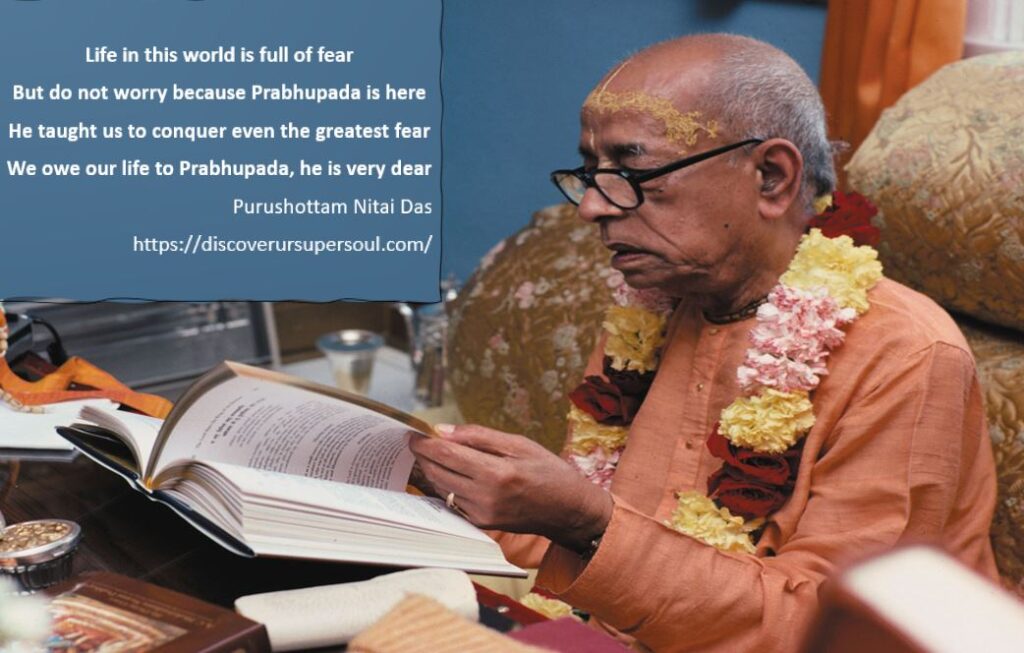
Dear Srila Prabhupada,
Please accept my humble obeisances.
This year we are celebrating your 125th Vyasa Puja. But because of my ignorance I do not know how to glorify you. Please forgive me for my incompetence. I owe my life to you. You are full of compassion, full of mercy. This is the reason you are ready to shower your mercy upon souls like me who do not have much inclination towards spiritual life. To save unfortunate souls like me you came to this world. You carried the teachings of Lord Chaitanya with you. You were always eager and ready to serve your dear Lord, Lord Chaitanya. And to please him you were even ready to go to hell and serve the suffering souls there.
In one of your diary entries, you share your heart.
Srila Prabhupada’s Diary
Sunday 6 March 1966
Sunrise at 6/30. Sunset at 5/53 Moon rise at 5/28 Full Moon 8/46 pm.*
Today whole day passed at Monroe Ananda Ashram. In the morning there was kirtan and it was very much appreciated.
Returned from Monroe at 6 pm.
Talked with Mr. Majid of Tehran (Iran). Interested in spiritual rejuvenation of the world. Took lesson for more than one and a half hour.
According to Mayapur Panjika* today is Adhivas day of Gour Purnima. Devotees at Vrindaban and Nabadwipa are enjoying the celebration. I am here alone without any devotee companion. But I have come here to serve the Lord and not for personal happiness. I am prepared to live in hell even if I am able to serve the Lord. Sri Chaitanya Mahaprabhu wanted that His mission should be propagated all over the world and that is my objective. I do not mind the inconvenience personally felt.
Source: https://prabhupadabooks.com/diaries/beginning/1/1/sunday_6_march
Because of your extraordinary determination you have succeeded in your mission of fulfilling Lord Chaitanya’s mission. Today it is because of your mercy that millions of people like me are being saved from going to hell.
Why happiness always eludes us?
Each one of us struggle in this world to be happy but we do not know what it means to be happy. We think that by satisfying the demands of our material mind and senses we will become happy. We think that if we get power, position, prestige in the society then we will become happy. So, we dedicate our life in serving the unholy demands of our senses and mind. But in spite of our best efforts, happiness eludes us.
If a thirsty man drinks sea water to quench his thirst, then he will become more miserable. Similarly, when we try to satisfy our hungry heart with the things of this contaminated world, we become more miserable. You came to educate us that the hunger of our heart can only be satisfied if we give our heart to Krishna. Srila Prabhupada, you taught us how to sincerely practice devotion to Krishna. You practically showed us how we can become a sincere devotee of Krishna even in this age of Kaliyuga.
Srila Prabhupada’s greatest gift to mankind
In fact, millions of people all over the world should be eternally indebted to you because you have opened the door of the spiritual world for each and everyone of us. I never new there is some place called spiritual world. Most of the people did not know about it. Although the acharyas have spoken about it, Krishna himself has spoken about it but in this age of downfall this supreme transcendental secret was almost forgotten. You revived that knowledge and showed us the glimpse of the spiritual world through your transcendental literatures. This is the greatest gift you have given to mankind. You came to invite us to join Krishna in Krishna’s abode.
Without light darkness cannot be quelled. Similarly, you made it clear that without Krishna happiness is impossible. You gave us hope that attaining Krishna’s abode is indeed possible. The only requirement is that we should purify our hearts of all material desires and enthrone Krishna in our hearts.
Srila Prabhupada taught how to experience spiritual pleasure in material world
It is not that we will experience spiritual joy only when we will return to the spiritual world. If we live as per your teachings, then even in this life we can enjoy transcendental pleasure.
In Bhagavad Gita 18.54 purport you write, “The world is miserable for the materially infected person, but for a devotee the entire world is as good as Vaikuṇṭha, or the spiritual sky.” You taught us that we can be freed from our material diseases if we constantly engage all our senses and the mind in the service of Krishna. If we do so, then this world will not inflict sufferings upon us.
“A devotee’s senses are not attracted by material enjoyment. And even though the material world is full of misery, the devotee considers this material world to be also spiritual because everything is engaged in the service of the Lord. The difference between the spiritual world and material world is the mentality of service.” (Śrīmad-Bhāgavatam 9.4.25)
In one of the lectures HH Gopal Krishna Goswami Maharaj says that we do not have to do anything extra. Whatever is required to go to the spiritual world has been given to us by Srila Prabhupada. So, we just need to follow your instructions as it is.
Begging for the shelter of Srila Prabhupada on his 125th Vyasa Puja
Dear Srila Prabhupada, this year we are celebrating your 125th Vyasa Puja. Although we cannot see you today with our mundane eyes, but you are always present in our heart. Today your books and teachings are transforming the lives of millions of people all over the world. You are saving us from going to hell. You are the one who is transferring the sufferings souls of this world to the spiritual world.
Dear Srila Prabhupada, on this auspicious occasion of your 125th anniversary of appearance, Vyasa Puja, I beg at your lotus feet for your shelter. Please purify my intelligence so that I can understand your instructions. And please give me strength and determination so that I do not deviate from spiritual standards and live my life as per your teachings and instructions.
Life in this world is full of fear
But do not worry because Prabhupada is here
He taught us to conquer even the greatest fear
We owe our life to Prabhupada, he is very dear
Your insignificant servant
Purushottam Nitai Das, Kolkata
Search
Recent Posts
-
Srimad Bhagavatam at ISKCON Newtown...
September 3, 2026
-
Srimad Bhagavatam at ISKCON Newtown...
September 1, 2026
-
Janmashtami: Celebrating Krishna’s Appearance Through...
August 17, 2026
-
Gopinatha Pattanayaka: 6 Lessons for...
August 16, 2026
-
What Does Krishna Say About...
August 11, 2026
Gaur Nitai deities arrive in Iskcon Newtown Kolkata
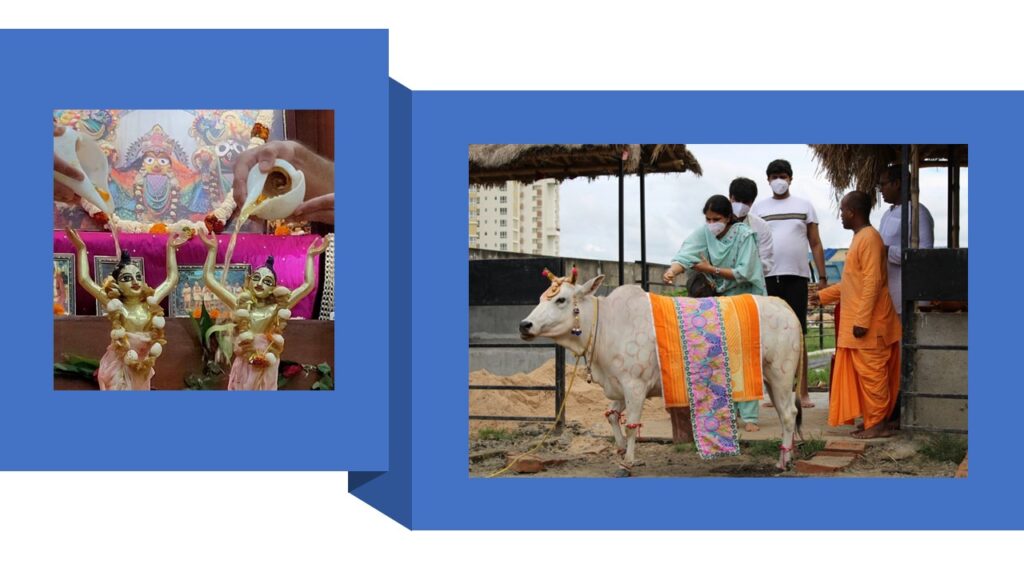
Gaur Nitai deities have arrived in Iskcon New Town Kolkata. To welcome the deities, a special program was held on 23rd August 2021. The deities will be installed after few months. If everything goes fine then may be during Nityananda Trayodashi period the deities will be installed. Iskcon New Town Kolkata is also called as Iskcon Goshala.
HG Dayaram Prabhu, President Iskcon Kolkata, spoke how the Iskcon Newtown Temple within a short span of time have grown significantly. The number of brahmacharis (monks) staying in the temple have increased and also many congregation devotees have got connected to the temple.
This is what HG Dayaram Prabhu said:
Srila Prabhupada went alone to the west without any support. He was penniless and got two heart attacks during his journey. But he never gave up. He had faith and conviction that if I try to fulfill the instruction of my guru maharaj then automatically things will happen. He went to the west and it is said that rest is history.
Before him other sannyasi disciples of Srila Bhaktisiddhanta Saraswati Thakura also went to preach in the west but did not get much success. Even with the support of the institution – Gaudiya Math. They were brilliant sannyasis. Some even spoke German but did not get much success. But Srila Prabhupada was penniless. With conviction, he surrendered.
Commitment of one, two or three people can change things. It is always one or two committed people who change the world.
Two years back we decided that we will have centers in Kolkata – in Goshala and in Motijheel. But there were lots of doubt that how it will work. It was decided that initially Iskcon Kolkata, 3c Albert Road temple will give support. But I am surprised with both the centers have done well. Have become self-sufficient and there are lots of development.
Devotees should work hard to build big Iskcon temple
Preaching has expanded. Temple is nicely maintained. Big brahmachari room has come up. Things developed without our expectation. It has picked up momentum now. If all devotees come together and put their mind and heart then things happen. We did not expect so much fund raising. Devotees can take more responsibility to build big temple. We have to bring it into reality.
HH Bhakti Charu Swami Maharaj wanted this to happen. Unfortunately he left his body. Krishna is giving more responsibility. Krishna sends result. Ultimately, we cannot lay claim on the result because result is in Krishna’s hand. In Bhagavad Gita it is mentioned that five things causes result and one of them is paramatma. If we put endeavour then Krishna will empower us. Even congregational devotees can do incredible service.
Congregation Devotees can also play a major role in building the temple
Prabhupada send to London three grihasta couples. They went without any support to London. More or less without any help three couples established huge preaching in United Kingdom. They brought George Harrison in fold, one the famous Beatles. He was so much inspired by three couples and their commitment. Because of his push, Hare Krishna became household name.
Western devotees were from degraded background. People with such background were so much transformed in 3 years that they did huge preaching. I do not see any reason why we cannot do it.
Problems will be there but if we do our duty Krishna will reciprocate
There is nothing that can stop us other than our lethargy. I humbly request that do not let petty issues come in our way to render service to Prabhupada. There is no painless and difficult less situation in his world, it is duḥkhālayam aśāśvatam. Problems will be there, we have to face it. But we have to work in spite of it.
Srila Prabhupada faced so many problems. He had no place to stay, he stayed with drunkards, his typewriter was stolen, drug addicts would come to harm him. But he was determined. Nothing can hinder our progress. Initially there were problems with funds. Now it is taken care.
If we do things properly then eventually a big temple will come. If we do our duty then Krishna will reciprocate.
Devotees sing Boro Krpa Koile Krsna
After Dayaram prabhu’s talk devotees sang one of the most famous songs written by Srila Prabhupada – Boro Krpa Koile Krsna
This song was written by Srila Prabhupada on Jaladuta when he was about to arrive Amercia for the preaching mission.
After the beautiful song, HG Ananga Mohan Prabhu spoke.
This is what HG Ananga Mohan Prabhu said
One saintly person was going from village to village with disciples and giving blessings. In One village, he said that be happy and live here together. And in another village, he said that may you all separate.
His disciples were surprised. One of them asked that why you gave these two different blessings in two villages.
Guru explained:
In the village where I said may you all always stay together, the people there were bad in their behaviour. So, if they stay together in the same village then bad things won’t spread.
In the village where I said that may you all separate because in that village all are good people. If they spread everywhere then they will spread good things.
Kolkata has given so many devotees who are now going to different places and spreading Krishna Consciousness.
In every one and half a month we should have such sanga of devotees where all the devotees can together. It is such a blissful thing.
Once one devotee complained to Srila Prabhupada that the President of the temple is always chastising. But one nice thing about him is that he sings nice. Prabhupada said that I am happy that you are glorifying that he sings nice. You should tolerate every other things of him just like I am tolerating you.
Even Gaudiya mission was a glorious mission but faced problem. Srila Prabhupada took the best things and gave to his disciples. Iskcon is growing nicely. So many centers are getting inaugurated.
Srila Prabhupada birthplace to be offered to the entire world
We all should come together for Srila Prabhupada. We are offering Srila Prabhupada birthplace to the entire Iskcon devotees of the world on 31st August and 1st Sep. If we serve with happy mind then glories will come to us. We should do best to sustain our centres and assist other centres too. We should have love among each other and be sensitive to others as well.
Devotees take darshan of the recently arrived Gaur Nitai deities in Iskcon Newtown Kolkata
Devotees got an opportunity to take darshan of the beautiful Gaur Nitai deities at Iskcon Newtown Kolkata which have arrived from Jaipur. New puja room for the deities are also built and it was inaugurated by HG Dayaram Prabhu. After the inauguration devotees went in a queue to the puja room for darshan.
The deities are still in the boxes. The boxes were opened so that we could take blessings of the deities. HG Acharyaratan Prabhu requested devotees to not click pictures of the deities as the deities have not yet been installed. The darshan was accompanied with melodious Hare Krishna kirtan.
Devotees felicitated, program ends with Guru Puja and prasadam
Those devotees who have been working hard to serve the temple and build the new temple were felicitated.
At the end HG Radharaman Prabhu explained that how at war footing construction is going on at Srila Prabhupada’s birthplace.
At the end there was Srila Prabhupada Guru Puja followed by delicious prasadam.
Hope that Gaur Nitai Deities will be installed in Iskcon Newtown Kolkata soon and the devotees will get an opportunity to take darshan of the deities and serve the deities.
Search
Recent Posts
-
Srimad Bhagavatam at ISKCON Newtown...
September 3, 2026
-
Srimad Bhagavatam at ISKCON Newtown...
September 1, 2026
-
Janmashtami: Celebrating Krishna’s Appearance Through...
August 17, 2026
-
Gopinatha Pattanayaka: 6 Lessons for...
August 16, 2026
-
What Does Krishna Say About...
August 11, 2026
My Prayer to Lord Balarama on Balarama Jayanti
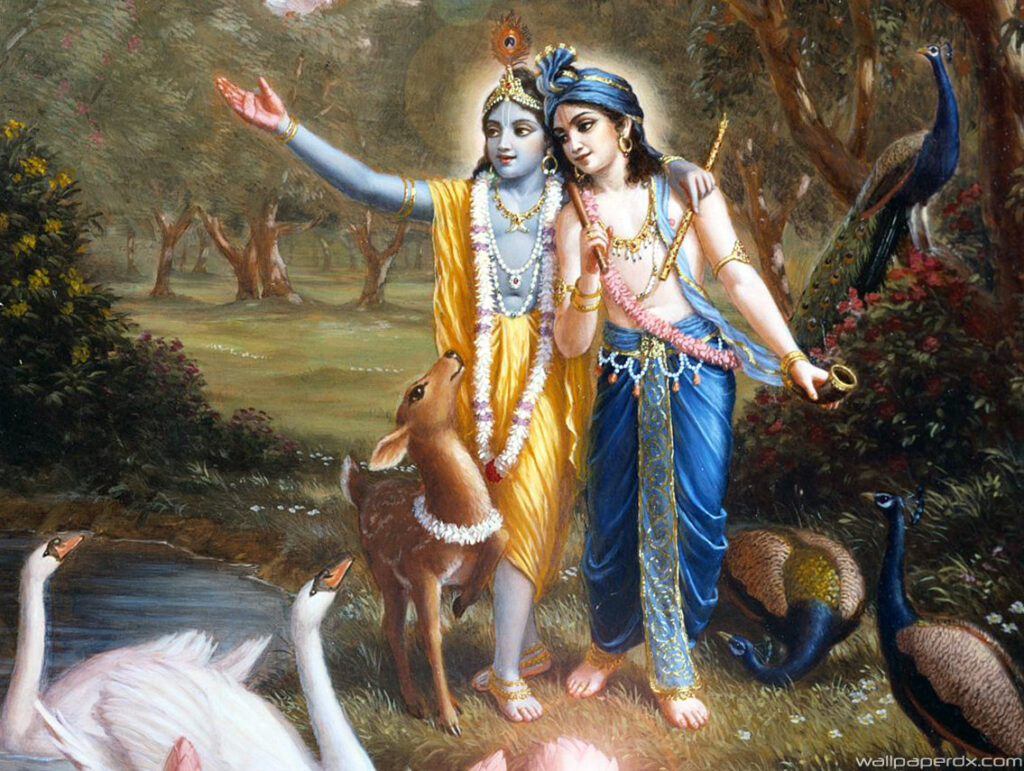
Today is Balarama Jayanti, the day of Lord Balaram. It is on this day that Lord Balarama appeared in this material world. Son of Rohini, the darling of braja, Lord Balaram came to this world for people like us. He appeared as elder brother of Lord Krishna. On this auspicious day I pray at the lotus feet of Lord Balaram to give me intelligence and determination so that I can become sincere in my spiritual practice.
Balarama serves Krishna in five rasas
Lord Balarama, you are the first plenary expansion of Krishna. You are always with Krishna. You live to serve Krishna. You serve Krishna in all the five rasas – shanta rasa, dasya rasa, sakhya rasa, vatsalya rasa and madhurya rasa.
To serve Krishna in shanta rasa you expand through your energy as Goloka Vrindavan where Krishna performs so many wonderful pastimes. To serve Krishna you become Krishna’s crown, flute, slipper, clothes, ornaments, umbrella, bed, clothes.
You always try to serve Krishna as menial servant in dasya rasa and assist him in his pastime. Srila Prabhupada writes, “Although Lord Baladeva appeared before the birth of Lord Kṛṣṇa and is therefore Kṛṣṇa’s worshipable elder brother, He used to act as Kṛṣṇa’s eternal servitor.” Sri Caitanya-caritamrta Adi Lila 6.76
In sakhya rasa, you play, wrestle, argue, fight, dance and eat with Krishna.
In vatsalaya rasa you are always concerned about Krishna’s well-being. You make sure that Krishna has eaten properly. When it is late you ask Krishna to return home. In the forest when it is dark you become very protective for Krishna.
To serve Krishna in madhurya rasa, you expand as Ananga Manjari and become the younger sister of Radharani. You then assist Radha and Krishna in their conjugal pastime.
You are always engaged in serving Krishna, the Supreme Lord.
Also Read: Damodar Lila: Why Balaram could not untie Krishna
Balarama always accompanies Krishna
When Krishna expands as Lord Vishnu, you become Ananta Sesa. As Anant Sesa you become the bed of Lord Vishnu, you become the crown of Lord Vishnu. You have innumerable hoods and uncountable mouth. From each of your mouth you continuously glorify the Supreme Lord.
When Krishna appeared as Lord Rama you appeared as his younger brother Lakshman. Because you cannot live without a moment away from Rama, you accompanied Lord Rama and mother Sita in the forest. For the 14 years when you lived in forest you decided not to sleep even for a moment so that you can serve Lord Rama and his consort mother Sita every moment.
Balarama teaches us to always serve Krishna
With these examples you teach us that every moment of our life should be utilized in serving the Lord. My life should be only for the service of the Lord. When will I get the determination and desire to follow your instructions and serve you constantly? Even after hearing again and again that the purpose of life is to serve you and Krishna, I still prefer to serve my sensual desires.
Dear Balarama I pray for your mercy
Instead of developing attraction for the Supreme Lord Krishna I still remain attracted towards the flickering pleasures of this material world. Instead of developing deep attachment for Krishna I still remain attached to this ephemeral world. Although I know that this world is temporary still I live as if I have to live here forever. In spite of knowing that this body is perishable I am always busy trying to satisfy the never-ending demands of my body. Instead of utilizing my senses in serving you, I am busy serving my senses and mind. Instead of accepting you as my master, I have become slave of my mind and senses. Most of the time, I find myself busy serving the unholy demands of my senses.
Because of being in this material world for many lifetimes my material disease has become too severe. As a terribly sick person becomes insane and forgets what is good for him or bad. My material disease is so severe that I fail to understand what is good for me and what is bad for me.
An expert doctor can cure a seriously patient. You are the Supreme doctor, so please consider my plea and cure me of all material diseases.
You are my only shelter
Other than you, I do not have any shelter. If you leave me, where will I go.
Although I know the importance of taking your shelter but still I fail to take your shelter. My mind is not in my control. My senses refuse to listen to me.
Just like a child caught up in the middle of the ocean surrounded by blood sucking crocodile cries desperately for help. I am also caught up in this material world surrounded by the poisonous senses. I seek your help. I am helpless in front of my powerful senses. Again and again I try to serve you but again and again my senses do not allow me to serve you.
Other than you, no one can rescue me. No one is as merciful like you. A helpless child in the middle of the gigantic ocean can be saved by an expert swimmer. You are the creator of the gigantic oceans. Upon you the entire material universe rests. So be merciful upon me and save me from the unending miseries of this material world.
Dear Balarama I beg for your shelter
Please purify my senses so that my senses start taking pleasure in serving the lotus feet of Krishna.
Please remove all the impurities from my mind and inundate it with Krishna conscious thoughts.
Please give me intelligence so that I become convinced that material pleasure is the cause of all the misery and not the source of happiness.
Please bless me so that each and every moment of life I should only think of Krishna.
Please shower your mercy upon me so that I lose all taste for this material world.
Human life is useless if it is not used in the service of the Lord. I got this human life by your mercy. So, I beg you to be merciful upon me so that I do not waste my human birth. Request you to free me from my helpless condition and give me the shelter of your divine lotus feet.
Search
Recent Posts
-
Srimad Bhagavatam at ISKCON Newtown...
September 3, 2026
-
Srimad Bhagavatam at ISKCON Newtown...
September 1, 2026
-
Janmashtami: Celebrating Krishna’s Appearance Through...
August 17, 2026
-
Gopinatha Pattanayaka: 6 Lessons for...
August 16, 2026
-
What Does Krishna Say About...
August 11, 2026
The most important reason behind Ravana’s death
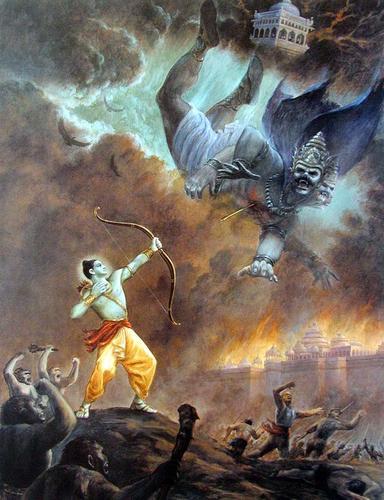
Lust was the most important reason behind Ravana’s death. Shurpanakha, his sister cunningly planted the seed of lust in Ravana’s heart which became the cause of his downfall.
Shurpanakha wanted revenge because Rama and also Lakshman had refused her proposal of marriage. In anger, she tried to attack Sita and so Lakshman had to cut her nose. It was just a token punishment. She was furious. With her disfigured nose, she barged into the assembly of Ravana.
Shurpanakha describes Sita’s beauty to Ravana’s
Crying pitiful she said, “Ravana, my beloved brother, in the forest I saw a woman called Sita whose beauty is incomparable in the entire creation. Such a lovely woman who is more beautiful than any celestial woman is meant to be your wife. For you, I tried to snatch her away from her husband, Rama. But Lakshman, Rama’s brother, attacked me and cut my nose. For your sake, I suffered. Sita’s beauty is not of this world. She has a tender body, lotus eyes, soft lips and glowing face. If you get her, you will enjoy pleasure more than what the celestial beings enjoy. Go in the forest to see her beauty. And if you have any feelings for your sister then do punish the two brothers.”
Shurpanakha’s description of Sita’s beauty charmed the heart of Ravana. The more he thought about her, the flame of the fire of lust made him mad for her. He became desperate for her. He wanted Sita, Rama’s wife, at any cost.
Shurpanakha succeeded in her mission. She had cleverly planted the seed of lust in Ravana’s heart. She knew her brother was lusty. So, he will definitely try to get Sita. And when Rama and Lakshmana will oppose, his brother will kill the two brothers. Thus, she will succeed in avenging the insult.
Why Ravana failed to satisfy his lust?
In Bhagavad Gita 2.62 – 2.63, Krishna says that our miseries start taking shape as soon as we start contemplating on the objects of the senses. Contemplation gradually leads to attachment for the object and attachment give rise to lust. A lust haunted person tries his best to satisfy his material desires. But the way this world is created that no matter how best we try, we cannot fulfil our lust. Trying to satisfy lust is like pouring ghee in fire. The more we try to satisfy our lusty desires, our craving for that desire keeps on increasing. And our sufferings too increase in that proportion.
Just like a spark if unchecked has the capability of burning the entire house. Similarly, even a tiny little material desire if not checked slowly becomes too big to handle. It completely overpowers us and compels us to act on that desire. Many times, our worldly desires force us act in a sinful way for which we have to suffer.
Ravana’s misery began as soon as he developed a desire to enjoy Sita. To satisfy his nasty craving he kidnapped Sita and brought her to his kingdom, Lanka. But he failed to enjoy with Sita. Whenever he approached Sita, she rebuked him. He was insulted again and again by Sita. The mighty king of Lanka had become a laughingstock.
Did Ravana had a chance to rectify his mistakes?
It was not that Ravana, the demon king, did not have the chance to rectify his mistake.
His well-wishers tried to reason with him, make him understand the dangerous path he was pursuing.
Vibhishana, his brother, told him that it is improper to kidnap another’s wife. Mandodari, his chaste wife, who was herself extremely beautiful, tried to counsel him to give up attachment for another woman. Hanuman, Lord Rama’s dearest devotee, too tried to persuade him to return mother Sita. But Ravana, the ten-headed lusty fool refused all the good advice.
And finally, Lord Rama had to kill him.
Most important reason behind Ravana’s death
No one was the cause of Ravana’s misery, humiliation and death. Lust was the main reason behind Ravana’s death, the cause of his ultimate annihilation. History is testimony to the fact that lusty men (and also women) have never lived happily. Many powerful kings lost their kingdom because of their obsession for opposite sex.
The lesson which we should learn from Ravana’s life is that we should never allow lust to grow in our heart. We should constantly check our heart for any lusty desires. If it is there then nip it in the bud. Because if left unchecked then it will completely destroy us.
Everything begins with contemplation. Ravana heard about Sita’s physical beauty then began contemplating upon it and eventually started acting on that wrong desire. And finally, lust became the main reason behind Ravana’s death.
How can we engage our senses in positive spiritual activities?
What we see, what we hear, what we read and with whom we associate plays an important role in shaping our thought process. So, we should not allow our senses to indulge in any wrong activities. But senses need constant engagement and mind cannot remain empty. So, we should give our senses positive engagement.
- If we engage our eyes in reading spiritual literatures like Krishna book or Ramayana then our mind will constantly contemplate on the pastimes of Lord Krishna and Lord Rama. We will slowly lose taste for reading books which arouse lusty desires.
- If we engage our eyes in seeing the beautiful deities of Krishna and Rama then our eyes will remain absorbed in relishing the divine form of the Lord. Eyes will then not look for lusty objects.
- If we regularly hear kirtan and pastimes of the Lord then those transcendental words will constantly reverberate in our ears. In fact, our ears will again and again look for an opportunity to hear those divine words.
Association with devotees of Lord can transform our life completely. There are several examples in scriptures regarding this. A prostitute, Lakshahira, full of lusty desires went to Haridas Thakura to pollute him. But instead of polluting the great devotee, she quickly got purified of her lusty desires because of Haridas Thakura’s association. Haridas Thakura would always remain absorbed in chanting the names of Krishna. When Srila Prabhupada went to west in 1965 then scores of American boys and girls were quickly able to give up their sinful habits because of Prabhupada’s association. They became sincere devotees of Krishna.
How a devotee develops distaste for all lusty desires and enjoys spiritual bliss?
Sincere devotees of Lord never allow their senses to go astray. They carefully engage their senses in devotional activities of the Lord. So, they do not get enticed by any lusty desires. Devotional services to the Lord are so satisfying and pleasing that the devotees lose all taste for all material desires.
Sri Yamunacarya, a great devotee of Lord, confidently says, “Since I have been engaged in the transcendental loving service of Kṛṣṇa, realizing ever-new pleasure in Him, whenever I think of sex pleasure I spit at the thought, and my lips curl with distaste.” Bhagavad Gita 5.21
A devotee remains engaged 24 hours in a day in the service of the Lord so that lusty thoughts and desires does not sneak in in his heart. When the Supreme Lord Rama, the killer of the lusty emperor Ravana, sees a devotee’s sincere spiritual endeavor then with his divine arrow of love he flushes out all the desires for lust from the devotee’s hearts. The devotee then experiences everlasting transcendental pleasure which the Vedic scriptures talk about.
Search
Recent Posts
-
Srimad Bhagavatam at ISKCON Newtown...
September 3, 2026
-
Srimad Bhagavatam at ISKCON Newtown...
September 1, 2026
-
Janmashtami: Celebrating Krishna’s Appearance Through...
August 17, 2026
-
Gopinatha Pattanayaka: 6 Lessons for...
August 16, 2026
-
What Does Krishna Say About...
August 11, 2026
Video: Six glories of Hare Krishna Mahamantra
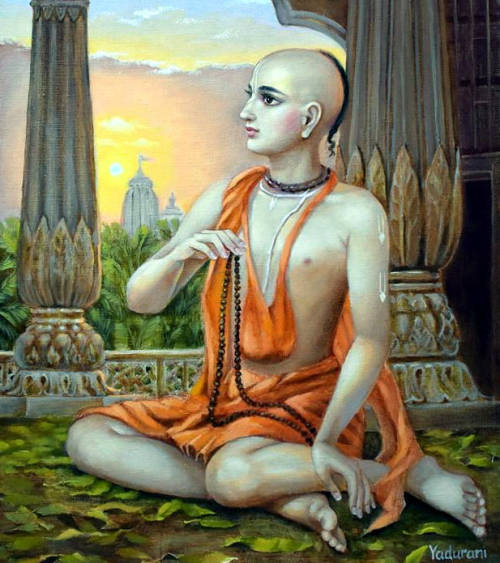
There are unlimited glories of Hare Krishna Mahamantra. If we want to grow in our spiritual life then we should chant this great mahamantra sincerely.
Sri Chaitanya Mahaprabhu who is none other than the Supreme Lord Krishna appeared in this world to teach lesser mortals like you and me to chant this mantra with utmost sincerity.
In Sri Siksastakam Verse 1, Chaitanya Mahaprabhu has described the glories of this great mantra.
In this video, I discuss those glories of Hare Krishna Mahamantra.
Once we understand the glories of this mantra, we will be inspired to chant it more and more.
Once one person asked Srila Prabhupada, “Swamijī? Are we to believe in that by chanting the holy name of Kṛṣṇa that we can attain a higher conscious level on this earth and attain self-realization without going through all the rigors of the old Vedas, scriptures?”
Prabhupada said: “Yes. This is the special concession for the conditioned soul of this age, that if you simply chant Hare Kṛṣṇa mahā-mantra, then your heart will be purified. Ceto-darpaṇa-mārjanam (CC Antya 20.12). Then everything will be revealed. This is special concession.”
Prabhupada travelled all over the world to spread the chanting of Hare Krishna Mahamantra. Many westerners who did not know about Krishna and were indulging in sinful activities became pure just by chanting this mantra. This mantra is extremely powerful especially in this age of Kali which is called the age of downfall.
Hare Krishna Mahamantra has transformed the lives of millions of people all over the world. You and I also have the opportunity to change our life for good by chanting this mantra.
Chanting will purify our hearts of all the impurities, free us from all the sinful reactions which is the cause of all the sufferings and will connect us to Krishna.
Once we establish our relationship with Krishna, we will attain complete perfection in our life.
Search
Recent Posts
-
Srimad Bhagavatam at ISKCON Newtown...
September 3, 2026
-
Srimad Bhagavatam at ISKCON Newtown...
September 1, 2026
-
Janmashtami: Celebrating Krishna’s Appearance Through...
August 17, 2026
-
Gopinatha Pattanayaka: 6 Lessons for...
August 16, 2026
-
What Does Krishna Say About...
August 11, 2026
How to control the senses by Krishna Consciousness?
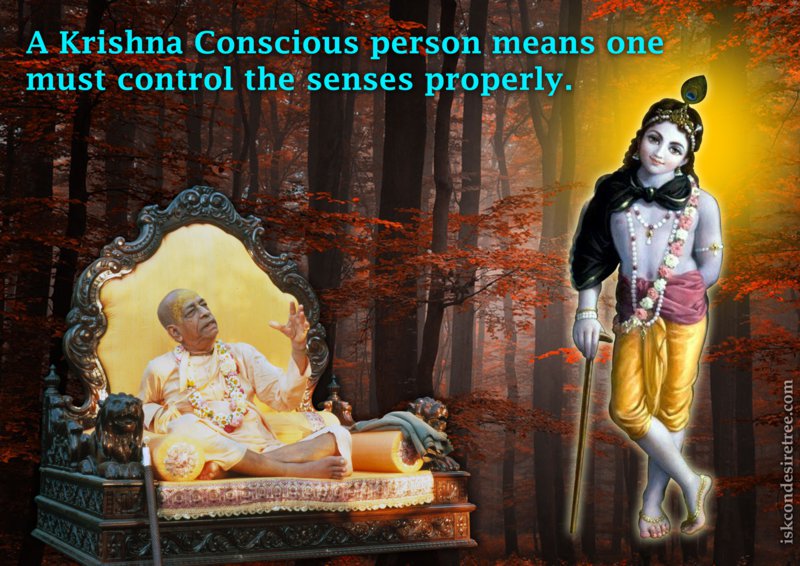
Bhagavad Gita explains how to control the senses by practicing Krishna Consciousness. For a devotee of Krishna controlling the senses is easy.
Sense control is very much required if you want to lead a peaceful, successful and happy life. If you do not try to control your senses, senses will control you. And will compel you to act whimsically and keep you disturbed most of the time.
Bhagavad Gita 2.62 and 2.63 explain in detail how a person who fails to control his senses and tries to gratify it ultimately suffers.
Let us see how it happens.
How uncontrolled senses leads to a person’s fall down and suffering?
- First a person begins contemplating on the objects of the senses. Contemplating on the objects of the senses means developing material desires and hoping to fulfil it. A person thinks that if the material desires are fulfilled, he will become happy.
- By constantly contemplating on sensual objects, he slowly develops attachment for them.
- Attachment gradually transforms into lust.
- It is not easy to satisfy the lusty desires. So, when lust is not fulfilled the person becomes upset and angry and many times even wild.
- Anger leads to delusion.
- In delusion memory is bewildered. Person forgets all the good advice of the past and all the bad experiences of the past.
- Bewildered memory leads to loss of intelligence.
- And when intelligence is lost, the person starts acting foolishly, even indulge in sinful activities.
- This leads to his fall down and brings suffering.
So, everything starts with contemplation on the sensual objects. It is not that only when all your senses focus on sense objects then only you will fall down. Even one of your uncontrolled senses have the capability to destroy our life.
Krishna says so this in Bhagavad Gita 2.67, “As a strong wind sweeps away a boat on the water, even one of the roaming senses on which the mind focuses can carry away a man’s intelligence.”
Can we completely stop the activities of the senses?
So, if you do not want to fall down and do not want to suffer then the first and the most important thing you should do is to stop contemplating on the objects of the senses. And stop getting allured by material desires.
Material desires cannot make us happy. Even if we fulfil our material desires, still we will remain dissatisfied. You and I have already experienced it many times. Things of this world cannot satisfy us because we are “spirit souls” and not “material souls.”
So, what to do with our senses? Should we stop the activities of the senses? Definitely Not. Senses always need engagement. Its activities cannot be stopped. So, we need to give engagement to the senses.
Scripture says that if we want to lead a peaceful and happy life then we should engage all our senses in spiritual activities. And instead of contemplating on material desires, contemplate on spiritual activities which will help us to grow in our spiritual life.
When our senses are spiritualized, we, the spiritual beings, begin experiencing happiness in life which we always look for in this world.
How to always engage the senses in spiritual activities?
Engaging the senses in constant spiritual activities is not difficult.
Srimad Bhagavatam gives the example of a great devotee called Ambarish Maharaj. The great king would always engage all his senses in Krishna Conscious activities. Let us see how he did it.
“Mahārāja Ambarīṣa always engaged his mind in meditating upon the lotus feet of Kṛṣṇa, his words in describing the glories of the Lord, his hands in cleansing the Lord’s temple, and his ears in hearing the words spoken by Kṛṣṇa or about Kṛṣṇa.
He engaged his eyes in seeing the Deity of Kṛṣṇa, Kṛṣṇa’s temples and Kṛṣṇa’s places like Mathurā and Vṛndāvana, he engaged his sense of touch in touching the bodies of the Lord’s devotees, he engaged his sense of smell in smelling the fragrance of tulasī offered to the Lord, and he engaged his tongue in tasting the Lord’s prasāda.
He engaged his legs in walking to the holy places and temples of the Lord, his head in bowing down before the Lord, and all his desires in serving the Lord, twenty-four hours a day. Indeed, Mahārāja Ambarīṣa never desired anything for his own sense gratification.
He engaged all his senses in devotional service, in various engagements related to the Lord. This is the way to increase attachment for the Lord and be completely free from all material desires.” Srimad Bhagavatam
By these spiritual activities, Ambarish Maharaj’s senses had become completely pure. So, he always remained peaceful and happy. The great king has shown us the process to control the senses by practicing Krishna Consciousness.
Why Krishna helps a devotee to control the senses?
Once our senses are engaged in Krishna Conscious activities, it will become easy to control the senses. It is because we won’t be fighting alone with our senses. By our own endeavour to control the senses is a herculean task.
But since we engage in the service of Krishna, so Krishna who is the master of the senses, Hrsikesa, helps us to control our senses.
Srila Prabhupada explains, “As enemies are curbed by superior force, the senses can similarly be curbed, not by any human endeavor, but only by keeping them engaged in the service of the Lord.” BG 2.68 purport
If we practice Krishna Consciousness, it becomes easy to control the senses.
To control the senses, do we need to give up worldly responsibilities?
It is not that to control our senses by Krishna Consciousness we have to run away from our worldly responsibilities and became a renunciate. Many people have a false notion that renunciation means giving up material duties. Arjuna also thought so. So, he also wanted to give up his duty of fighting. He said to Krishna, “Instead of fighting it is better for me to retire to a forest and live by begging.” Arjuna thought that Krishna will appreciate him for his desire for renunciation.
But to his surprise, Krishna wasn’t amused. He disapproved Arjuna’s idea of renunciation of work.
Krishna said to Arjuna, “What do you mean by renouncing the work? You cannot live without working in this world. Even to maintain your physical body you have to work.”
One may externally give up one’s duty, but his mind and senses will keep on dwelling on it. Arjuna may give up his kshatriya duty of fighting, but in his mind, he will continue thinking about his enemies and will remain disturbed. If he goes for begging and someone refuses to give him alms, he will become angry. As a kshatriya warrior his psycho-physical nature is not to beg and live. Begging and living is ideal for a brahmana who dedicates his life in the service of God.
So, Krishna wanted Arjuna to follow his nature and do his prescribed duty as per the scriptures. Krishna advised Arjuna to practice karma – yoga [in Kṛṣṇa consciousness] without attachment. It will help him to engage his mind and senses positively in the service of the Lord.
What is Krishna’s advice to us?
Through Arjuna, Krishna is also giving us an important lesson in life. We should not give up our responsibilities but instead we should work in this world as per the directive of the scriptures.
In my personal life also, I find that my nature is to work in the outside world and earn livelihood. Initially I was thinking that working outside means indulging in sense gratification. But after reading Srila Prabhupada’s books and discussing with senior devotees I understood that it is not that I have to give up my work, but instead I have to do my work in proper consciousness.
The money which I get is also because of the mercy of Krishna and it should be utilized in practicing Krishna consciousness, helping my family members to practice Krishna Consciousness and helping Iskcon in spreading Krishna consciousness. This is the best way to engage the senses and purify the senses.
So, to control the senses it is important that we practice Krishna Consciousness sincerely.
Read: How to gain control over your mind as per Bhagavad Gita?
Search
Recent Posts
-
Srimad Bhagavatam at ISKCON Newtown...
September 3, 2026
-
Srimad Bhagavatam at ISKCON Newtown...
September 1, 2026
-
Janmashtami: Celebrating Krishna’s Appearance Through...
August 17, 2026
-
Gopinatha Pattanayaka: 6 Lessons for...
August 16, 2026
-
What Does Krishna Say About...
August 11, 2026
Did women in Vedic period enjoy equal rights?
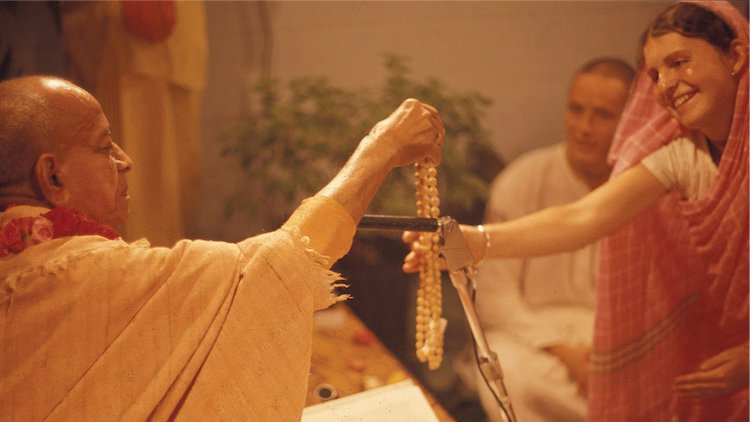
Yes, women in Vedic period enjoyed equal rights as men. There are many examples to establish this fact. Vedic scriptures do not advocate discrimination.
Vedic India made sure that women are properly taken care and they are not exploited. Their physical needs as well as emotional needs were properly addressed. Today too those who live as per the Vedic instructions does not see any difference between men and women. They understand that God has created both men and women so there should not be any gender discrimination.
However, there are feminists and left scholars who selectively pick some statements from the Vedas and say that Vedas advocate women discrimination.
Women not allowed in few temples
For example, in India, there are certain social customs and rituals where women (as well as men) are expected to follow certain norms.
For example, there are few temples like Shani Shingnapur or Sabarimala where women are not allowed as per the tradition. Without understanding the reason behind such norms, feminists and left liberal pseudo scholars start condemning the age-old custom.
Men not allowed in few temples too
But you will be surprised to know that there are temples in India where men are also not allowed. For example, in Ma Linga Bhairavi temple in Coimbatore men are not allowed. In Lord Brahma’s temple at Puskar, Rajasthan married men are not allowed. And there are other temples too where men are not allowed.
So, if women are not allowed in some temples and we say it is discrimination against women. Then we should also say that there is discrimination against men because men are also barred from entering some temples.
Why the outrage?
Is it that the feminists and leftist people have developed some love for the Vedic demigods that they want women to enter the temple? Definitely not. Their purpose and motive are quite obvious. They want to indulge in their favourite pastime – Hindu bashing and criticising the Vedas.
Let us put aside this unending cacophony for a while and try to analyse the Vedic perspective on the position and status of men and women in human society.
What Vedas say about men and women?
In Bhagavad Gita 2.13, Lord Krishna informs us that we are neither men nor women, but we are spirit souls. As a soul presently we are occupying a man’s body or may be a woman’s body. In the next life a man can become a woman and a woman can become a man. As long as we are in this material world, we will keep on occupying different bodies based on our karma. If our karma is little good, we get a human body and can be either a man or a woman. But if our karma is bad, we will get an animal body.
As long as we are in this material world we will keep on transmigrating into different species and suffer the repeated cycle of birth and death. So, Vedas ask us to free ourselves from this repeated cycle of birth and death. And this can be possible only when we return back to the spiritual world. In the spiritual world there is no death and there is no suffering.
Whether we are a man or a woman, we suffer here and we will die one day. So, we should not be obsessed with our bodily designation of being a man or a woman. But we should utilize this precious human life to attain liberation and return to kingdom of Krishna.
Both, men and women, have the opportunity to perfect their life by practicing devotion to Krishna.
Vedas recommend both men and women to practice varnashrama
How to perfect our human life is explained in Vedas. The sacred Vedas say that both men and women should follow the varnashrama system of life. Varnashrama helps one to lead a happy life in this world and also helps to attain liberation from this world. Women in Vedic period followed Varnashrama dharma.
Vedas recommend 4 ashrams – Brahmachari ashram (Student Life), Grihastha ashram (Household life), Vanaprastha ashram (Retired Life) and Sannyasa ashram (Renounced Life). Suppose that we live for hundred years.
Brahmachari ashram
For 25 years one should live like a brahmachari, during this period strict vows of celibacy is observed.
Grihastha ashram
For 25 years to 50 years, one should live in grihasta ashram. It means that man and woman should get married, live together in a house, beget children and take care of them. There could be a possibility that some brahmachari may not want to get married. So, they can continue to live like a celibate monk in a monastery. In the household life also husband and wife are expected to sincerely practice spiritual life.
Vanaprastha ashram
After 50 years both husband and wife are supposed to enter into vanaprasta ashram. In vanaprasta ashram both husband and wife dedicate their life completely in practicing spiritual life. They do not focus on earning money and do not have any physical relationship.
Sannyasa ashram
Finally, there is sannyasa ashram. Generally, men take sannyasa and women return back to her grown up children. For women to follow the strict vows of sannyasa like living alone and going door to door to beg alms is generally difficult. But when women live with her children then she completely focusses on her spiritual life and remain detached from material activities.
Varnashrama gives equal rights to women
Vedas teach that both men and women should live in such a way that they help each other to elevate their consciousness. And they should not become the cause of bondage to each other in this material world.
This material world is temporary, and all relationship of this world is temporary. Our eternal relationship is only with the Supreme Lord. So, we have to get detached from this temporary relationship and develop ever- lasting permanent relationship with the Supreme Lord. Vedas focus on this aspect of life and so ask both men and women to live by this principle.
If we study Vedic scriptures scrutinizingly, we will find that it does not discriminate between men and women at all. But it gives a process called varnashrama following which men and women can live happily in this world. And finally attain liberation from this ephemeral world by developing love for the Supreme Lord, Krishna.
Varnashrama gives equal rights and opportunities to women to practice devotion to God. So, women in Vedic period were never discriminated. There was gender equality.
Famous female saints of India
Those who cry saying that Vedas promote women discrimination should read the history of India without any prejudice. This will remove their veil of ignorance.
During Vedic period there were even women rishis such as Romasha, Gargi, Maitreyi, Apala, Aditi and others. And few hundred years back we had great women devotees of the Lord – Mira Bai, Sri Gangamata Goswamini, Sri Jahnava Mata, Sri Sita Thakurani etc. These women rishis were well versed in Vedas. The 126th hymn of the first book of Rig Veda was revealed to Romasha, a woman.
In India women are not just allowed inside a temple but are also given an opportunity for deity worship. This can be seen in ISKCON temples all over the world. In Iskcon temples, women devotees also give discourse on literatures like Bhagavad Gita and Srimad Bhagavatam. There are very few temples, maybe two or three, where women are not allowed. And as discussed earlier, there are temples where men are also not allowed. So there is no specific gender discrimination.
Now let us go through few of the Vedic quotes on women.
Vedic Quotes on Women
- Bhishma to Yuddhisthira: “O ruler of the earth the lineage in which daughters and the daughters-in-law are saddened by ill treatment, that lineage is destroyed. When out of their grief these women curse these households, such households lose their charm, prosperity and happiness.” (Mahabharata, Anushashanparva, 12.14).
- Vedas state that when a woman marries then she enters “as a river enters the sea” and “to rule there along with her husband, as a queen, over the other members of the family”. (Atharva-Veda 14.1.43-44).
And there are many such statements in the sacred book about women. So where is the discrimination against women?
Conclusion
Those who are genuine and open minded after reading sacred Vedas conclude that Vedas do not discriminate women. During Vedic period women had equal rights as men. Today too those who sincerely follow Vedic teachings always respects women and never illtreat them.
Vedic scriptures consider men and women as equals. Krishna, the Supreme Lord, is our father and Vedas are our mother.
So how can a loving and caring father and a soft-hearted mother discriminate against their own children?
Search
Recent Posts
-
Srimad Bhagavatam at ISKCON Newtown...
September 3, 2026
-
Srimad Bhagavatam at ISKCON Newtown...
September 1, 2026
-
Janmashtami: Celebrating Krishna’s Appearance Through...
August 17, 2026
-
Gopinatha Pattanayaka: 6 Lessons for...
August 16, 2026
-
What Does Krishna Say About...
August 11, 2026
How to give up greed as per Vedic scriptures?

Vedic scriptures say that to lead a peaceful and happy life we should give up greed. If we fail to do so, we will always be miserable.
In Nectar of Instruction (NOI) Text 2, it is explained why it is important to give up greed. And how greed for worldly things can be given up completely.
Srila Rupa Goswami, the author of Nectar of Instruction (NOI), in this verse talks about giving up
- atyāhāraḥ: which means over-accumulating things of this ephemeral world, and
- prayāsaś: which means over-endeavouring to over-accumulate things of this sensual world.
He writes, “If we fail to give up atyāhāraḥ and prayāsaś then our devotional service to Lord Krishna will get spoiled.”
Let us see why it is so important to give up greed and how greed for material things impedes our devotional journey.
We human beings have developed the habit of hoarding things. We think if we accumulate lots of stuffs, we will become lot more happy. So, we work hard to earn more so that we can accumulate more. But what is the limit?
How much is good enough to make us happy?
It is said that Jayalalithaa, the former Chief Minister of Tamil Nadu, India, had 10,500 saris, 750 slipper and 500 wine glasses. I don’t think that she was able to wear all the saris and slippers and drink wine in all the glasses. And she is not an exception. There are many such examples.
But let us ask ourselves, “Do we need so many things in our life?”
We need 3 times food in a day, water to drink, proper clothes to wear and a house to live. And if we put aside our greed then these things can be easily obtained. In fact, God has provided us everything to live happily in this world.
God has already taken care of our important needs
We human beings work hard to earn food, but animals do not have to work hard for food. Food and water are abundantly available for them and for us too. Elephants need huge quantity of food for survival and it is readily available. Unless and until man interferes with the nature, animals and birds have sufficient food and water for survival.
But man exploits the natural resources for selfish purpose and try to usurp everything to satisfy his wanton desires.
There is not enough for man’s greed
Srila Prabhupada explains it with an example in NOI Text 2 Purport.
Suppose that there is a bag of rice lying on the road. Birds will come and eat few grains and go away. Some animals may come and eat and go away. But what will a human being do. He will immediately take away the whole bag. He thinks, “Only I should have it. I will not share it with others.”
So, Mahatma Gandhi said, “In this world there is enough for man’s need but not enough for man’s greed.”
One thing I have observed that birds and animals do not overeat. Have we ever seen an overweight peacock or sparrow or crow or rabbit or dog? I have not seen till now. They are intelligent enough to know their limit.
We should also understand our limit. Accumulating certain quantity of food grains is not wrong. Having few sets of dress and shoes and other necessities is not wrong. But over-accumulation is condemned in the scriptures.
If we do our duty honestly and sincerely keeping God in the center, then all our material needs will be taken care.
In fact, for our material needs we do not even have to ask from God. Because as a loving and caring father, he has ensured that everything is there in this world for leading a decent life.
But we remain dissatisfied and so we go to God and ask him to fill our material desires.
Does Krishna fulfills our material desires?
I have seen few of my colleagues in IT sector are desperate to go to America or United Kingdom or any European country for job assignment. But they do not get the chance. They get frustrated. When we invite them for our weekly Bhagavad Gita program then most of the time, they are reluctant to come.
But after lots of persuasion they start coming. They start chanting few rounds of Hare Krishna Mahamantra. And suddenly they get the opportunity to go to onsite.
They become supremely excited. Krishna is supremely merciful. He resides in the hearts of all and he knows a person’s desire. If a person does not have karma to go to onsite, he will never be able to go. But Krishna can change karma. So, when one starts chanting his name and praying for the fulfillment of desire then Krishna mercifully fulfills it.
In fact, if Krishna fulfills our desire then we should become extremely grateful to him. Some do become grateful. And also become devotee of Krishna.
But unfortunately, some people fail to recognize Krishna’s mercy. Once their desire is fulfilled, they forget Krishna. They fail to understand that just by approaching Krishna their desire was fulfilled and if they continue chanting the holy names of Krishna then how much happy Krishna will make him.
Ideally speaking, we should never approach Krishna with any material desire.
Our only desire should be to serve him without any desire.
We have a desire to show off
One of my senior colleagues took a big house in Milton Keynes, United Kingdom on rent. And by the end of almost every month he used to borrow money from me. He knew that I won’t tell others that he is borrowing money. I too kept my promise, I did not say to others about this. He wanted to show to others that how rich he is.
He also frequently changes his iPhone. As soon as a new model comes, he buys it and sells the old one even though the old iPhone is working perfectly fine.
Two Examples
- Once a student after completing his education got a job. He worked for couple of years and was able to save good amount of money. He wanted to invite his parents who lived in village to the city. And using all his savings, he booked flight tickets for his parents. When someone asked him that what was the need. His parents would have come by train. He said that he wanted to show his friends in the village that he has become so rich that he can now book flight tickets for his parents. I am sure his parents might not be aware that he is squandering money. Serving parents is wonderful but one has to be practical. And most importantly there is no need to show off to others.
- One man at the age of around 60 years had saved two crore rupees. It was sufficient to lead a comfortable life after retirement. But he spent entire two crore rupees in getting his daughter married. And at the age of 60, he is again running to get a job. When asked, he said, “She is my only daughter and I wanted to show to my relatives that how much I love my daughter. All my relatives will always remember that how lavishly the marriage was organized.” He could have got his daughter married in one crore and the remaining one crore would also have been sufficient for his retired life.
But the desire to show off is most of the times so intense that people stop using their intelligence.
How our desire to feel special is exploited?
Dale Carnegie in his book “How to Win Friends and Influence People” writes and I am paraphrasing it “People have a great desire to feel they are special.”
The advertising industry knows this very well. They exploit people’s intense longing to be special.
So, the product is not marketed based on its usability but based on how it is going to satisfy a buyer’s ego.
So, they tell a man that if he uses this particular saving gel then all the girls will be attracted to him.
They tell a woman that if she uses this facial cream then all men will fall for her and all the girls will envy her.
They use taglines like “Neighbors envy owner’s pride.”
And we easily get fooled. We spend lots of money in buying things which we do not even need. We start buying branded products because it makes us feel special. The same product of same quality may be available in local store at much cheaper rate, but we prefer branded products.
To buy more, we have to earn more. To earn more we have to work more.

And we get caught up in the rat race of this material world. This is why we see that today people have difficulty to give up greed.
How this material world makes us struggle hard
As long as we are in this material world and as long as we have greed to enjoy this world we will suffer. This material world is called Pa-varga.
It means that in this world we are forced to work very hard. The word consists of five Sanskrit letters – pa, pha, ba, bha and ma. Each of these letters explain our struggle.
- Pa stands for parisrama i.e. “hard labor.” Everyone in this world has to struggle hard for survival.
- Pha stands for phena,”foam.” When a horse works very hard, foam starts coming from his mouth. Similarly, when we work very hard, we get tired, our tongue becomes dry and foam forms in our mouth.
- Ba stands for bandha,”bondage.” In spite of all our hard work the three modes of material nature i.e. goodness, passion and ignorance bind us in this world.
- Bha stands for bhaya, “fear.” In this world we always live in fear because we are uncertain of the future.
- Ma represents mrtyu, “death.” No matter who we are, how much powerful or great we are, we all will be forced to leave this world one day.
We are eternal travelers in this world
Once a traveler visited a monk in a monastery. He saw the monk did not have any belongings. The traveler was surprised.
He asked, “Where are your belongings?”
The monk replied, “Where are yours?”
“Well, I am a traveler. So, I carry only few necessary things.”
“So am I,” the monk said.
I heard this parable long back. It is so true. We all are eternal travelers in this material world. As a soul we migrate from one body to another.
Just turn the pages of history and you will find that all the great conquerors – Alexander the great, Napoleon the great, Akbar the great – were forced to leave this world one day. And when their soul left for another destination, they had to leave all their possessions here only. And their body was either burnt or buried.
Despite knowing this, we are caught up in this rat race of material existence. We struggle hard to accumulate things to prove to others how great we are.
Remember in a rat race even if we win, we will remain a rat only.
If we do not give up greed to enjoy name, fame and money, we will continue to suffer. In fact, we will waste our human form of life which is for self-realization.
An industrialist who builds a huge factory also has to leave everything at the time of death. Many times, a thought comes to my mind. It could happen that the industrialist takes birth again and he may be trying to get a job in the same factory which he had established. He may stand in a queue desperate for a job and he may be rejected.
We all may laugh at this thought.
What happens to a cobbler who remembers his past life?
Srila Prabhupada in NOI Purport 2 tells the story of a cobbler.
A cobbler was living near a big mansion. Somehow, he remembered his past life. And he remembered clearly that he was the owner of that mansion. Now his children and grandchildren were living in the mansion. He had lots of affection for them. But he could not do anything. How will his children accept him as his father? At present he was a pauper.
In his previous life he was living like a king.
One day he could not control himself and decided to visit the mansion to inform his loving children and grandchildren that he was their father, their grandfather, and the original owner of the mansion.
What do you think happened?
The security guards stopped him at the gate. Why will they allow a cobbler inside the house?
And then the desperate cobbler narrated the deep secret to the guards. “In my previous life I was the owner of this mansion. Those staying inside are my children.”
What do you think happened next?
Everyone laughed at him.
When his children came to know that a cobbler is claiming to be their father and standing at the gate then the children asked the guards to throw him away. In fact, they beat him with slippers and kicked him out of that place.
Fortunately, we do not remember our past lives else we would have always felt miserable.
How to give up greed as per the Vedic scriptures like Bhagavad Gita?
So, what to do? Should we stop working? Should we stop earning money?
Definitely not.
Scriptures never tell that we should stop working. They just ask us to give up greed. Because greed can never be fulfilled. It makes people miserable.
So, the holy books emphasize that we should do our duty without greed, in a responsible way. Also while working in this world we should not neglect our spiritual duty. Purpose of human life is to attain liberation and return to the the spiritual world.
So, scriptures say that give up greed, simplify your lives, have sufficient time to practice devotional life and return back to Krishna.
Krishna should always be the center of our life. We should do only that work which are sanctioned by the scriptures. And the work should be done for the pleasure of Krishna. Finally, all the result should be offered to Krishna.
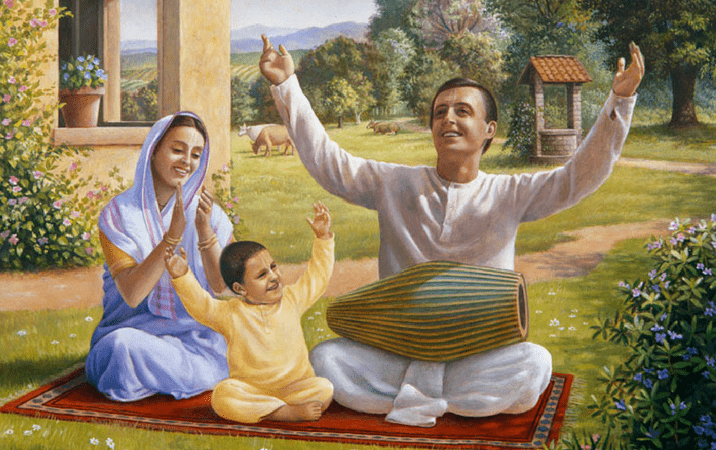
By working in this way, we will live happily in this world and after leaving this world we will go back to the spiritual world. This is what Krishna teaches us in Bhagavad Gita.
O son of Kunti, all that you do, all that you eat, all that you offer and give away, as well as all austerities that you may perform, should be done as an offering unto Me. Bhagavad Gita 9.27
But if we do not give up greed, if we continue doing atyāhāraḥ & prayāsaś then we will remain stuck in this world and the greed within our heart will always keep us miserable.
So, in Nectar of Instruction, Srila Rupa Goswami , says us to give up greed.
Search
Recent Posts
-
Srimad Bhagavatam at ISKCON Newtown...
September 3, 2026
-
Srimad Bhagavatam at ISKCON Newtown...
September 1, 2026
-
Janmashtami: Celebrating Krishna’s Appearance Through...
August 17, 2026
-
Gopinatha Pattanayaka: 6 Lessons for...
August 16, 2026
-
What Does Krishna Say About...
August 11, 2026