Amazing facts about the massive chariots of Jagannath, Baladeva & Subhadra
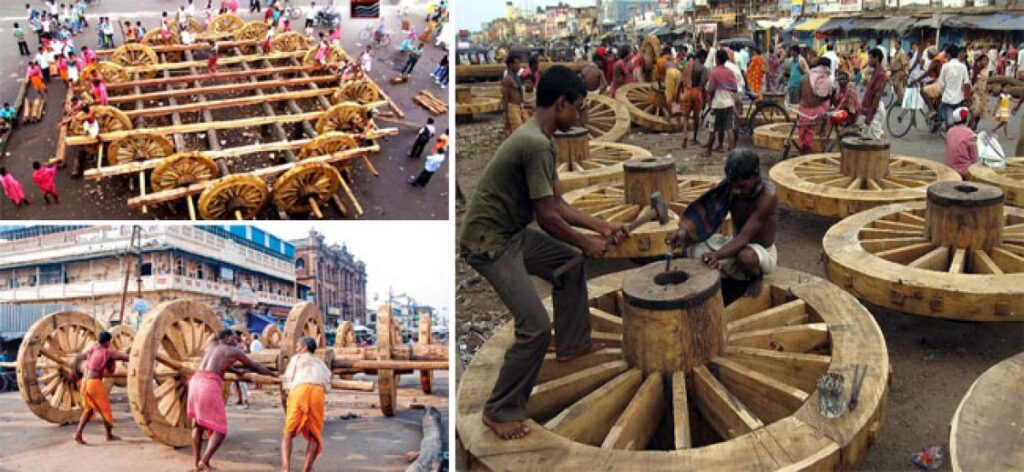
We all might have seen the massive chariots on which Lord Jagannath, Lord Baladeva & Subhadra Devi rides in Puri during the world famous Rath Yatra festival. The chariots are so humongous that when the Britishers saw it they were amazed.
In fact, the English word juggernaut has come from the word Jagannath.
Merriam-Webster describes the history of word Juggernaut as follows: In early 14th century Friar Odoric, a Franciscan missionary, saw a massive Rath Yatra festival in Puri, India. He saw a huge deity of Lord Jagannath on an enormous chariot and thousands of people pulling the chariot. He was fascinated by the sight. He carried this story to Europe and eventually it spread throughout Europe. By 19th century the Europeans had started using the word juggernaut to refer to any enormous object which had crushing capability.
The dictionary defines juggernaut as a massive inexorable force, campaign, movement, or object that crushes whatever is in its path.
The huge chariots are unique and such chariots are not built in any other parts of the world.
Let us see the amazing facts about the massive chariots of Jagannath, Baladeva & Subhadra
Lord Jagannath’s chariot
- Lord Jagannath’s chariot is called Nandighosa.
- It is 45 ft high and 45 ft broad at the level of its wheels.
- The chariot has 16 wheels and each wheel is seven ft in diameter.
- The chariot contains 832 pieces of wood
- Daruka is the charioteer
- Number of horses are 4
- Colour of the horses are white
- Name of the rope is Sankhachuda
- Weapons on the chariot are Sankha and Chakra
- Name of the flag is Trailokyamohini
- Lord Jagannath’s chariot is adorned with red and golden yellow strip of cloth.
Lord Baladeva’s chariot
- Lord Baladeva’s vehicle is called Taladhwaja.
- It is 44 ft high
- It has 14 wheels and diameter of the wheel is 6’6”
- The chariot has 763 pieces of wood
- Matali is the charioteer
- It has 4 horses
- The horses are black in colour
- Name of the rope is Basuki
- Weapons on the chariot are Hala & Musala
- Name of the flag on the chariot is Unnani
- Lord Baladeva’s chariot has red and green strip of cloth.
Subhadra Devi’s chariot
- Subhadra’s chariot is known as Devadalana/Darpadalana/Padmadhwaja.
- It is 43 ft high.
- It has 12 wheels and diameter of the wheel is 6 feet.
- The chariot has 539 pieces of wood.
- Arjuna is the Charioteer
- Number of horses are 4
- The horses are red in colour
- Name of the rope is Swarnachuda
- Weapons on the chariot are Padma & Kalhar
- Name of the flag on the chariot is Nadambika
- Subhdra’s chariot has red and black colour cloth.
How the chariots are built?
The chariots are built every year from the wood of trees brought from Dasapalla, Orissa, an erstwhile princely state. Hereditary carpenters build the chariots.
When the construction of the chariots starts?
The construction begins on Akshaya Tritiya, the first day of summer when candana – yatra also starts. In 58 days the work gets completed. The process to procure the wood and build the chariots has remained the same since the inception of Rath Yatra.
What happens to the chariots after Rath Yatra festival?
After the festival i.e. after Ulta Rath Yatra the chariots are dismantled, and the woods are used as fuel in the temple kitchen of Jagannath Puri. The temple kitchen is said to be the largest in the world.
The Lord is worshipped and served opulently in Puri.
How the food is prepared for Jagannath in world’s largest kitchen?
- 5000 trained cooks get involved in preparing food for the Lord.
- 56 different varieties of vegetarian dishes are cooked daily for the Lord.
- All the food (bhoga) prepared are first offered to Lord Jagannath, Lord Baladeva and Subhadra Devi.
- After being offered to Lord Jagannath, the sanctified food (prasad) is offered to Bimala Devi. Bimala Devi is Parvati and her deity is in the temple premise.
- After that the food goes to Anand Bazar (pleasure market) and is available for all to enjoy and honour.
- The temple kitchen has the capacity to feed between 2,000 to 200,000 people daily.
Jagannath on wheels comes calling and inviting
Every year on the day of Rath Yatra, Lord Jagannath comes out of His magnificent temple along with His brother and sister riding on the majestic chariots. He comes on the street to invite us to join Him in His ever-relishing pastimes.
Millions from all over the world come to welcome him, to have a glimpse of Him, to shower their affection on Him. On this day, everyone forgets their worldly identities – men and women, rich and poor, young and old, Hindus and non – Hindus, all participate in the Rath Yatra festival. They joyfully pull the long ropes tied to the chariots.
The camaraderie among the lovers of the Lord is in full display. The devotees are not just eager to pull the ropes but they encourage and assist others in pulling the rope.
The ropes bind the heart of the devotees with that of the Lord, the heart gets cleansed of all dirt and love for the Lord manifests.
“When Lord Jagannatha is on His Rath-yatra cart and is moving along the road, at every step there is a loud presentation of prayers and songs chanted by large assemblies of brahmanas. Hearing their hymns Lord Jagannatha is very favorably disposed towards them. He is the ocean of mercy and the true friend of all the worlds.” (Sri Jagannathastaka)
Search
Recent Posts
-
Srimad Bhagavatam at ISKCON Newtown...
September 3, 2026
-
Srimad Bhagavatam at ISKCON Newtown...
September 1, 2026
-
Janmashtami: Celebrating Krishna’s Appearance Through...
August 17, 2026
-

Gopinatha Pattanayaka: 6 Lessons for...
August 16, 2026
-
What Does Krishna Say About...
August 11, 2026
Why did Lord Jagannath’s chariot stop for Salabega, his Muslim devotee?
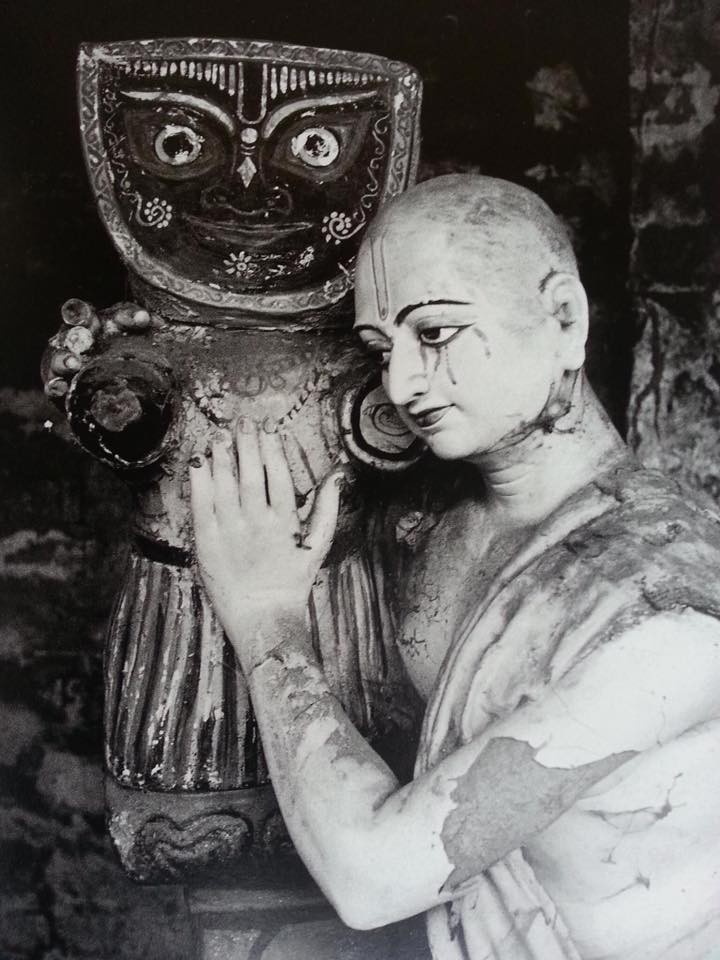
There are innumerable pastimes associated with Jagannath Puri Rath Yatra festival. One of the most famous pastimes is when Lord Jagannath’s chariot stopped for Salabega,a Muslim devotee. This pastime took place around 400 years ago in 17th century.
But who was Salabega? Why did Lord Jagannath’s chariot stop for him? Why he was not there during Rath Yatra?
The chariot did not move even by an inch
Millions of people from far of places had come to welcome Lord Jagannath. Meditating on the Supreme Lord’s wonderful qualities they were pulling the ropes of the majestic chariot on which Lord Jagannath was seated. Brother Baladeva and little sister Subhadra were also on their respective chariots.
But suddenly Lord Jagannath’s chariot had stopped. Thousands of people were trying their best to pull the ropes of the chariot. But the chariot did not move even by an inch. The Lord was not willing to move ahead. No one could understand what has happened. What could be the reason? Everyone wondered. Just few moments back Jagannath’s chariot was swiftly dancing through the streets.
But now the Lord was not in a mood to budge. Is He upset? Why would He be upset? The broad smile on His face was conveying that He isn’t unhappy. But His big eyes were anxiously looking for someone today, so he stood still. Who was that fortunate soul for whom Jagannath was waiting?
Meanwhile Salabega was running towards Puri with a hope to see the Lord.
Who was Salabega?
Salabega was Muslim by birth and was the son of a Mughal subedar. Once he got severely ill but got miraculously cured when he started chanting Jagannath’s names. He thus became a devotee of Lord Jagannath. Once with a desire to see Lord Jagannth, he went to the Jagannath temple. But he was not allowed to enter the temple because he was a non-Hindu. Salabega immediately left for Vrindavan to perform his devotion. While in Vrindavan, he came to know about the Rath Yatra festival and with a desire to see Lord Jagannath he left for Puri.
Salabega falls sick on his way to Puri
But on the way, he fell sick. He thought that he would not be able to reach Puri in time and will not be able to see the Lord. He felt helpless and desperately prayed to Lord Jagannath to wait for him until he reaches Puri – satasa pacasha kosha cali na parai/moha jivajaen nandighose thiva rahi. “It is very difficult to walk the 750 kosas (distance between Vrindavan and Puri) to see You. Please remain on Nandighosha (Jagannath’s chariot) until then.”
Jagannath‘s chariot stopped for Salabega
And today Lord Jagannath, the Lord of the Universe, to fulfill the wish of his dear devotee was waiting for him anxiously. Salabega reached and saw the beautiful Lord, with tears in his eyes he offered prayers. Lord was happy, Salabega was satisfied and now when the devotees pulled the ropes Jagannath’s chariot started rolling again.
How does the chariot move?
The chariot does not move by the efforts of the devotees. It moves because of the love of the devotees. The Lord gives all of us an opportunity to pull his chariot. When he sees devotion in our hearts then he allows himself to be pulled by us and the chariot begins to move.
Countless such pastimes are associated with Rath Yatra festival. The festival is unique and massive. It is one of the most important festivals of India. The history of Rath Yatra festival is too old to be dated.
Lord Jagannath is the Lord of the universe. He is the Lord of all – Hindus, Muslims, Christians, Sikhs, Parsis, Jews, rich, poor, black, white, brown, men, women, young and old.
He is Supreme Father of all the living entities. He loves us all. He is an ocean of mercy.
On the Rath Yatra day, he comes out of his temple to shower his mercy upon all his children. For him, everyone of us are dear to him. The Lord waited for Salabega, the Supremely Merciful Lord is waiting for us too. With His open arms, He is welcoming us. Let us let go all our worldly attachments and embrace the Lord in our hearts.
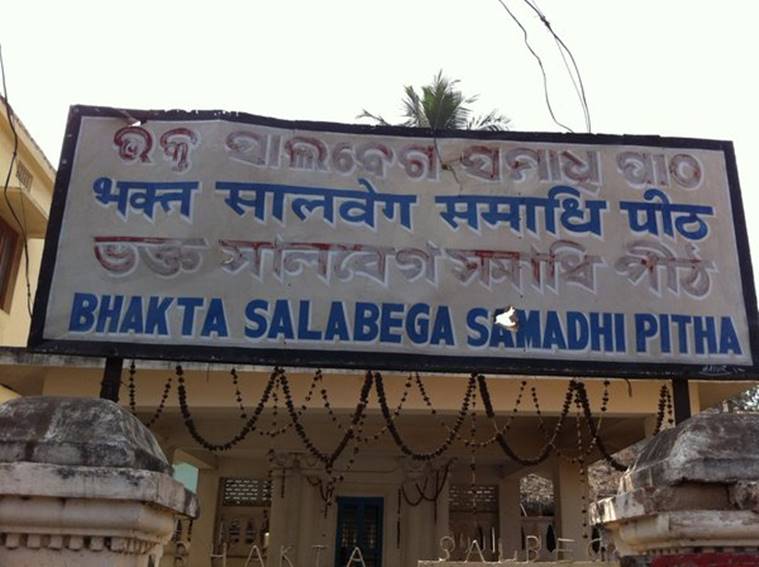
To celebrate Salabega’s devotion, every year the chariot of Jaganntah stops briefly near his samadhi.
Also Read:
Search
Recent Posts
-
Srimad Bhagavatam at ISKCON Newtown...
September 3, 2026
-
Srimad Bhagavatam at ISKCON Newtown...
September 1, 2026
-
Janmashtami: Celebrating Krishna’s Appearance Through...
August 17, 2026
-
Gopinatha Pattanayaka: 6 Lessons for...
August 16, 2026
-
What Does Krishna Say About...
August 11, 2026
What is the reason behind Hathi Besha of Lord Jagannath?
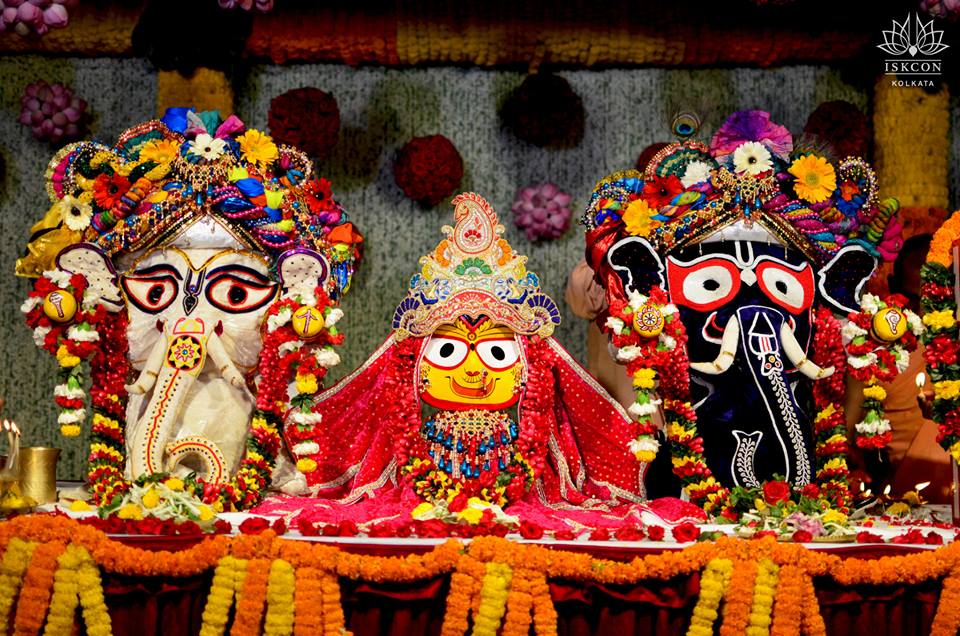
We might have seen many pictures of Lord Jagannath having Hathi Besha or elephant head like Ganesha, the son of Lord Shiva. It looks so different. What could be the reason behind Hathi Besha of Lord Jagannath?
Specially on the day of Snana Yatra, Lord Jagannath is decorated as Gajanana or Hati Besha. His face is decked up as having an elephant head.
Lord Jagannath is extremely merciful and fun loving. He is known for many sweet pastimes which delights all. He goes extra mile to please anyone and everyone.
The Lord took the Hathi Besha because he wanted to satisfy the desire of a person who visited his temple in Puri.
A devotee of Ganesha visits the temple
Ganapati Bhatta was a devotee of Lord Ganesha. Once he came to Jagannath Puri. He had heard a lot about the temple in Puri and the different festivals which are conducted in the temple. He had come during Snana Yatra time and went to the temple to participate in the bathing ceremony of the Lord. He was excited.
But when he saw Lord Jagannath was not having an elephant head like Ganesha, he became disappointed.
He left the place. He had given his heart to Ganesha and wanted to worship only Ganesha.
Lord Jagannath resides as paramatma within everyone’s heart. He immediately understood the desire and the cause of dissatisfaction of Ganapati Bhatta.
Jagannath took the form of a brahmana
The Supreme Lord took the form of a brahmana. He went to Ganapati Bhatta. Meanwhile the devotee of Ganesha was planning to leave Puri.
As a brahmana, the Lord tried to convince Ganapati Bhatta to again visit the temple. He was reluctant. But the Lord persuaded him. So, he agreed. He decided to visit the temple in the evening.
The Lord had planned something special for him that day.
As promised to the brahmana, Ganapati Bhatta went to the temple in the evening.
Ganapati Bhatta sees Hathi Besha of Lord Jagannath
As he saw the Lord he began dancing in joy.
It was unbelievable. It was so surprising.
Lord Jagannath was having an elephant head, Hathi Besha, like Ganesha. He saw his beloved Lord Ganesha and he saw all merciful Lord Jagannath.
To please Ganapati Bhatta, Lord Jagannath appeared in this form. The Supreme Lord was having a big smile on his smile.
Ganapati Bhatta’s heart cried in joy. He bowed again and again to the Lord.
The Supreme Lord is the source of all the demigods
He now understood that Lord Jagannath is the Supreme Lord. Everything comes from him. He is the source of all the demigods. The demigods are not independent but are parts and parcels of the Supreme Lord. All the powers which they have come from the Supreme Lord only.
Srimad Bhagavatam 4.31.14 says, “As pouring water on the root of a tree energizes the trunk, branches, twigs and everything else, and as supplying food to the stomach enlivens the senses and limbs of the body, simply worshiping the Supreme Personality of Godhead through devotional service automatically satisfies the demigods, who are parts of that Supreme Personality.”
When we worship Krishna, we satisfy all the demigods
This pastime of Lord Jagannath clearly tells us that if we worship the Supreme Personality of Godhead, Sri Krishna or Lord Jagannath then there is no need to worship any demigod because Krishna is the original source of everything. During the Govardhan pastime also Lord Krishna had demonstrated that demigod worship is not required.
Śrī brahma-saṁhitā 5.1 says, “Kṛṣṇa who is known as Govinda is the Supreme Godhead. He has an eternal blissful spiritual body. He is the origin of all. He has no other origin and He is the prime cause of all causes.”
In fact, the demigods too get pleased when he sees that we are worshipping the Supreme Lord Jagannath or Lord Krishna. Lord Krishna and Lord Jagannath are the same.
Lord Jagannath is supremely merciful and magnanimous. He fulfils everyone’s desire. He has millions of devotees but to satisfy one devotee he took Hathi Besha form.
We should always approach the Lord with spiritual desire and not material desire. Material desire even if fulfilled will not bring happiness in our life.
But if our desires are devotional then it will bring us closer to the Lord and give us unlimited happiness.
Search
Recent Posts
-
Srimad Bhagavatam at ISKCON Newtown...
September 3, 2026
-
Srimad Bhagavatam at ISKCON Newtown...
September 1, 2026
-
Janmashtami: Celebrating Krishna’s Appearance Through...
August 17, 2026
-
Gopinatha Pattanayaka: 6 Lessons for...
August 16, 2026
-
What Does Krishna Say About...
August 11, 2026
Brihad-bhagavatamrita tells the journey of Gopa Kumara to Goloka Vrindavan
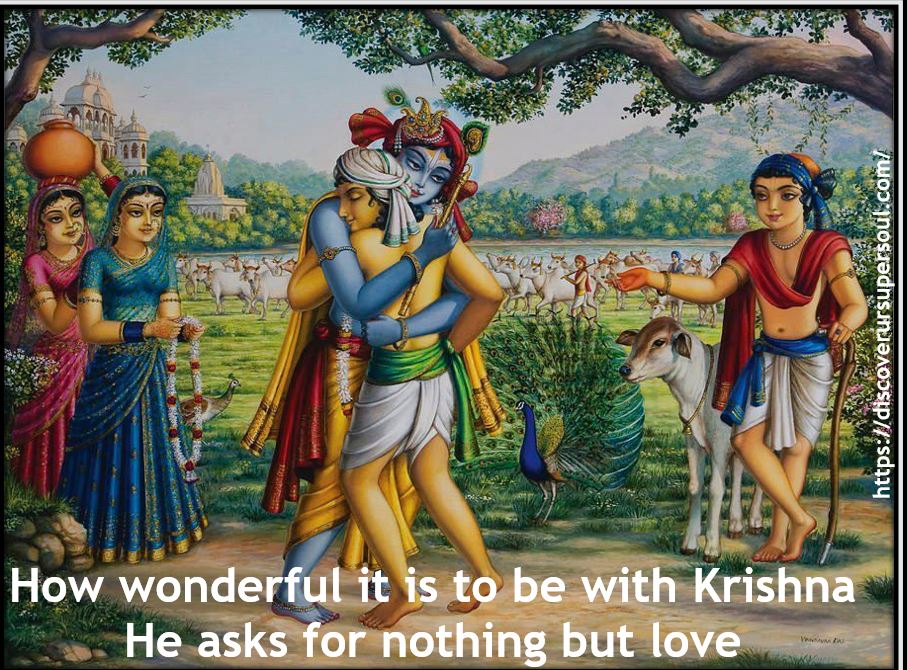
Brihad-bhagavatamrita beautifully narrates the journey of Gopa Kumara to Goloka Vrindavan. Just like you and me, Gopa Kumara was also in this material world where we are living now. But Gopa Kumara unlike us consciously decided to leave this material world and return to the spiritual world. The joy he experienced upon reaching his cherished destination cannot be described in words.
In his magnum opus, Brihad-bhagavatamrita, Sanatana Goswami explain in detail about the journey of Gopa Kumara to Goloka Vrindavan. Goloka Vrindavan is the abode of Krishna, the Supreme Personality of Godhead.
Each nugget of the book allows us to experience the emotions he went through during his travel. The book captivates our mind and tantalizes us to join Gopa Kumara in his journey.
Our never-ending journey in the material world
In this world we are on a never-ending journey. We have been wandering in this material world away from Krishna for uncountable number of years.
Sometimes we travel to the upper planetary systems to enjoy good karma. And sometimes we are compelled to go to the lower planetary systems to suffer bad karma.
Sometimes we wander in a human body, sometimes in a non – human body. And sometimes we live on land, sometimes in water and sometimes in the sky.
The dollops of happiness given to us during our travels hardly give any joy, in fact it brings more frustration.
Just as the water of the ocean cannot quench our thirst, the allurements of this world cannot satiate our hearts.
The temporary relationship of this world
During our journey we come across other travelers too. We identify them as our father and mother, brother and sister, spouse and children, friends and foes. And gradually, we start liking their company. We desire to live with them forever.
But just as the waves of the ocean devoid of emotions demolishes the castle of sand, the unconquerable time unmoved by our tears crushes all our dreams and steals all our loved ones from us.
This is the nature of this world. This is how this world has been functioning since the dawn of creation.
Krishna has already warned us
So, Krishna, the architect of this world, warns us that nowhere in this entire material creation one can enjoy perennially, miseries are everywhere because death is everywhere. Bhagavad Gita 8.16
But away from this material world is the spiritual world which is not ephemeral but is eternal. In that world there is no death and is free from all sufferings.
So Krishna asks us to return back to the spiritual world. Srila Prabhupada in his writings has underlined the importance of returning to the spiritual world thousands of time.
In fact, he started a monthly magazine and named it as “Back to Godhead (BTG).”
Just as a fish separated from the ocean will always remain miserable similarly as long as we are separated from our eternal spiritual homes we will continue to suffer.
Everyone of us has a chance to live in the kingdom of Krishna forever.
Gopa Kumara decides to return back to the spiritual world
When Gopa Kumara got the opportunity, he immediately grabbed it. With enthusiasm and confidence and complete faith he decided to march towards his final destination.
While on his journey to Goloka Vrindavan, Gopa Kumara also went to the higher planets of this material world. But he wasn’t happy there. So, from there he went to the spiritual world. He went to different spiritual planets of the spiritual world. He went to Vaikuntha, to Ayodhya, to Dwarka. In that spiritual abode he met the spiritual residents who were as glorious as the Supreme Lord and all were in utter bliss. There he experienced unlimited joy, he achieved complete perfection.
But still he missed something. He missed Krishna. He missed brajvasis. There was a tinge of dissatisfaction in his heart. His heart longed to be with Krishna. He desperately wanted to go to Goloka Vrindavan.
How will Krishna not fulfill the desire of his dear devotee!
A celestial plane which travelled faster than the speed of the mind travelling along a very wonderful path took Gopa Kumara to that glorious land which is the topmost of all the spiritual planets.
Gopa Kumara arrives in Goloka Vrindavan
Sages and saints meditate for thousands of years to get a glimpse of that land. In that glorious land of Goloka Vrindavan, Gopa Kumara’s heart attained supreme satisfaction. He wanted to see Krishna and so began searching Krishna. He saw the brajvasis, the most exalted devotees, and inquired from them about Krishna.
But they were so absorbed in Krishna that they were not able to utter a word. One elderly man who was overwhelmed with emotions in broken words showed him the palace of Gopa King, Nanda. At the palace he saw millions and millions of wonders which he had never seen or imagined.
At the entrance of the palace, Gopa Kumara inquired from an elderly brajvasi about Krishna. With a heavy heart she said, “he who has stolen our hearts left with his friends and cows in the morning to the forest to enjoy his pastimes.”
In separation brjavasis’ desperation
Unable to bear separation from Krishna the brajvasis with great difficulty were spending their time.
To alleviate their pain some had absorbed themselves in remembering his many pastimes. Some composed songs which described his many activities and sang it throughout the day.
Many got busy in preparing delicious preparations which they planned to serve him as soon as he returns. Engaged in different activities, everyone tried their best to hide their emotions, but their eyes belied them, tears constantly flowed from their eyes and in broken words they kept calling Krishna, Krishna.
It was difficult for anyone to understand whether they were in bliss or were in pain.
Whether they were with Krishna or not with Krishna.
Brajvasis desperately wait at Yamuna for Krishna
They were desperately waiting for Krishna to return from the forest. And as soon as it was evening, all frantically ran towards the shore of Yamuna. Fixing their eyes towards the forest trying their best not to blink they were eagerly waiting for him.
Suddenly the atmosphere got filled with the melodious sound of the flute. The Yamuna stopped flowing. The birds flying in the air stood still. The trees decorated with beautiful flowers spread their arms to embrace the sound.
Some of the brajvasis overwhelmed with emotions fainted. Many desperately tried looking in the direction of the sound but their tears blurred their vision. Some stood stunned.
Gopis carrying pots of delicacies ran hurriedly. Some fell on the ground. And in great pain of separation, they cried again and again. Yashoda with her husband, Nanda Maharaj, Radharani with her many friends and along with all the moving and non- moving residents of braj anxiously waited to have a glimpse of Krishna.
And Krishna arrives!
And suddenly a bluish boy in yellow garments appeared. He was decorated with forest flowers and was wearing crown made of peacock feathers. The fortunate flute whom the bluish boy had embraced with his lips joyfully danced and informed all that Krishna had arrived. It was celebration time.
Krishna was so happy to see all. After whole day work, he was back home.
But suddenly Krishna’s joy multiplied manifold.
Krishna meets Gopa Kumara after a long time
Amongst the brajvasis who had assembled at the shore of Yamuna, he saw Gopa Kumara. He stopped playing his flute. Leaving his friends, leaving his cows, and leaving all confused he ran frantically towards him.
He leaped towards Gopa Kumara and embraced him. Seeing his dear friend after such a long time, Krishna overwhelmed with emotion fainted in the arms of Sarupa.
After regaining consciousness, Krishna took the hand of Gopa Kumara in his left lotus hand and inquired, “How are you? I missed you so much, Sarupa. Every day I waited for you hoping that you will return one day for sure. I am so thankful. I am so grateful. You are back. Now please stay here. Don’t go anywhere.”
Gopa Kumara’s name in the spiritual world was Sarupa. Although Gopa Kumara had forgotten the name Sarupa but Krishna remembered. Sarupa got reunited with Krishna and with his spiritual family in the spiritual world to live eternally and blissfully.
In the spiritual world there is no anxiety, no fear, and it is free from all kinds of suffering which afflict us in this world.
Scriptures tell us that the same destiny awaits us too.
Sanatana Goswami in Brihad-bhagavatamrita describe in details about the journey of Gopa Kumara to Goloka Vrindavan.
Through this book he is also inviting you and me to take up the journey to the spiritual world.
Are we ready?
Search
Recent Posts
-
Srimad Bhagavatam at ISKCON Newtown...
September 3, 2026
-
Srimad Bhagavatam at ISKCON Newtown...
September 1, 2026
-
Janmashtami: Celebrating Krishna’s Appearance Through...
August 17, 2026
-
Gopinatha Pattanayaka: 6 Lessons for...
August 16, 2026
-
What Does Krishna Say About...
August 11, 2026
What Vedas say about calamities like Coronavirus?
Why we suffer? What Vedas say about calamities like coronavirus? Was there any period in the history of mankind when there was no suffering. Let us try to reflect on these topics.
If we turn the pages of history we would find that we the living beings have been suffering in this world since the time Brahma created this universe. At present we are devastated by the deadly coronavirus which has killed thousands of people all over the world and have brought billions of people to their knees.
The world has always been ravaged by severe calamities and wars which have killed millions of people.
- The plague in India (1896 to 1939) resulted in the death of 12 million people.
- Spanish Flu took 12 million lives in only 3 months in 1918 in India.
- Influenza affected a third of the world’s population and claimed between 50 and 100 million lives.
- In USA, the most developed country of the world, on an average 27,000 to 70,000 people die because of the common Flu every year.
- In World War 1 around 37 million people died.
- In World War 2 around 60 – 70 million people died.
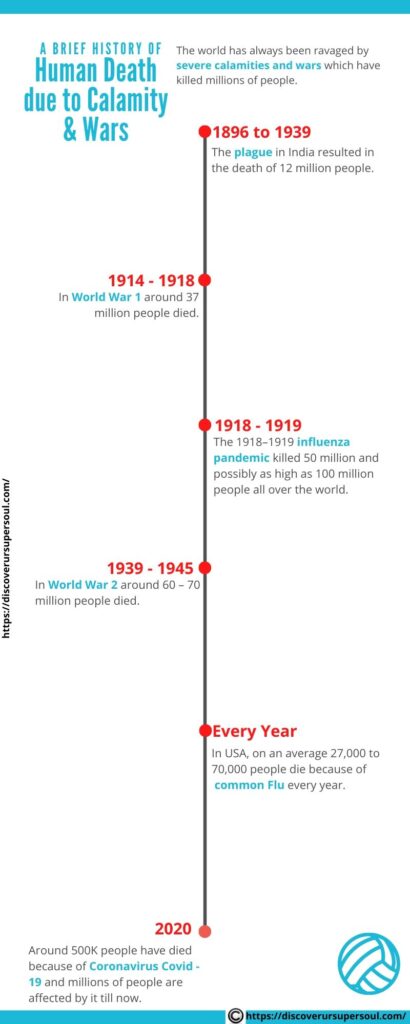
This history is just of 100 years. And more over whether there is pandemic or no pandemic people continue to die every day.
Our forefathers faced almost the same problems which we are facing now. Our suffering is not new. Hopefully in few months there will be medicine or vaccination available for the virus. The scientist who will discover the medicine will most probably get a Nobel Prize, we will pat on our back saying that we have won a war against the material nature.
And we will start living again as if nothing had happened till the time some other calamity in some other form will strike us.
Lord Krishna without any ambiguity says that this world is full of miseries – duhkhalayam asasvatam (B.G. 8 .15). He does not give any false hope.
It means that coronavirus or any other calamity will continue to inflict unlimited suffering upon us as long as we remain in this ephemeral material world.
Brahma looking at the unfortunate condition of the living beings tells to Lord Vishnu, “O great actor, my Lord, all these poor creatures are constantly perplexed by hunger, thirst, severe cold, secretion and bile, attacked by coughing winter, blasting summer, rains and many other disturbing elements, and overwhelmed by strong sex urges and indefatigable anger. I take pity on them, and I am very much aggrieved for them.”
The scriptures tell about the three types of miseries which always afflict us.
The only solution as per the wise sages and sacred Vedas is to take shelter of the Supreme Lord who can provide us all protection from all the sufferings. He can even take us back to the spiritual world which is free from all diseases, where there is no calamity and where there is no death.
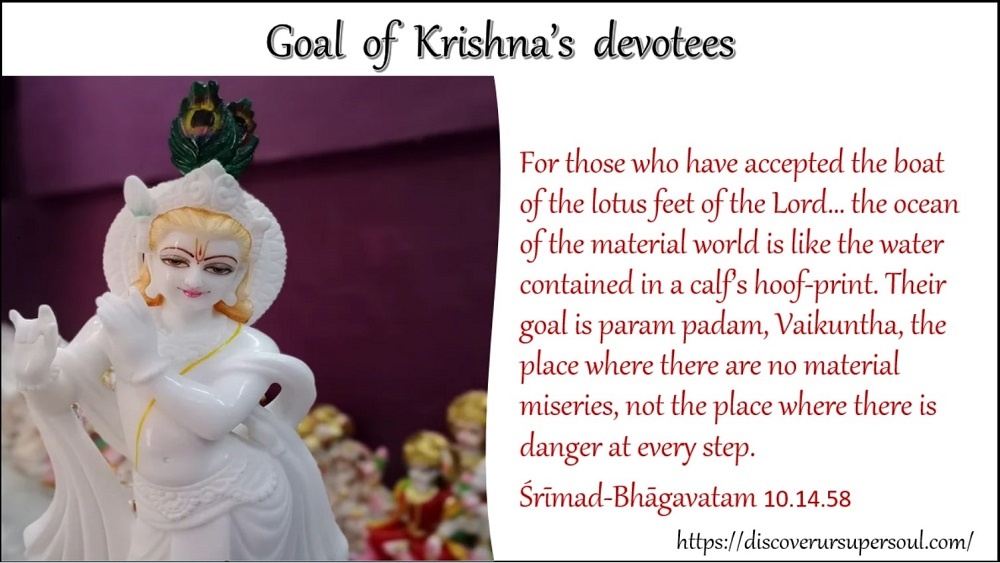
Brahma explains the great fortune of those who surrender to Lord Krishna, “For those who have accepted the boat of the lotus feet of the Lord… the ocean of the material world is like the water contained in a calf’s hoof-print. Their goal is param padam, Vaikuntha, the place where there are no material miseries, not the place where there is danger at every step.” Śrīmad-Bhāgavatam 10.14.58
The Supreme Lord is always present in his holy names like the Hare Krishna Mahamantra and in the deity form. He personally comes in this material world in various incarnations as Lord Krishna, as Lord Rama, as Lord Chaitanya to invite us back to the blissful spiritual world.
And as Lord Jagannath, Lord Krishna even comes out of the temple during Rath Yatra. He goes on the street showering his blessings upon everyone even upon those who are not interested in devotional life.
And if anyone participate enthusiastically and welcome the Lord during the Rath Yatra festival then he quickly destroys the vast ocean of sins which is causing unlimited suffering.
Vedas say that as long as we remain addicted to this material world we will suffer from calamities like Coronavirus.
But if we take shelter of the lotus feet of the Supreme Lord all our sufferings will dissipate. Lord Krishna is an ocean of mercy, he is our true friend.
If we develop friendship with him, if we take his shelter then we can save ourselves from all the miseries even in this world and in next life we can return back to the spiritual world which is filled with bliss.
Search
Recent Posts
-
Srimad Bhagavatam at ISKCON Newtown...
September 3, 2026
-
Srimad Bhagavatam at ISKCON Newtown...
September 1, 2026
-
Janmashtami: Celebrating Krishna’s Appearance Through...
August 17, 2026
-
Gopinatha Pattanayaka: 6 Lessons for...
August 16, 2026
-
What Does Krishna Say About...
August 11, 2026
What is the best way to overcome maya?

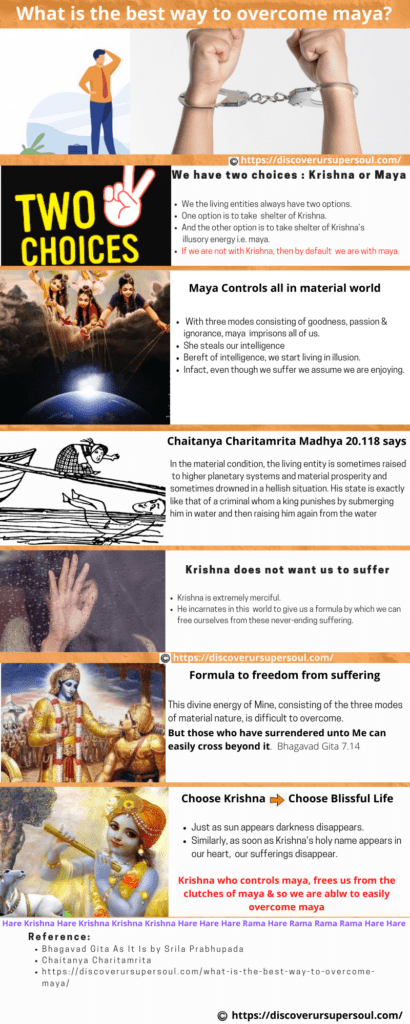
We the living entities always have two options. One option is to take shelter of Krishna. And the other option is to take shelter of Krishna’s illusory energy i.e. maya. If we are not with Krishna, then by default we are with maya.
And when our master is maya then we are in a dangerous situation because maya constantly subject us to many kinds of sufferings.
Maya is extremely powerful. It consists of three modes of material nature. With these three modes, maya shackles the living entities and imprisons them in this world.
The miserable condition of all the living entities is best explained by Lord Chaitanya, “In the material condition, the living entity is sometimes raised to higher planetary systems and material prosperity and sometimes drowned in a hellish situation. His state is exactly like that of a criminal whom a king punishes by submerging him in water and then raising him again from the water.” Chaitanya Charitamrita Madhya 20.118
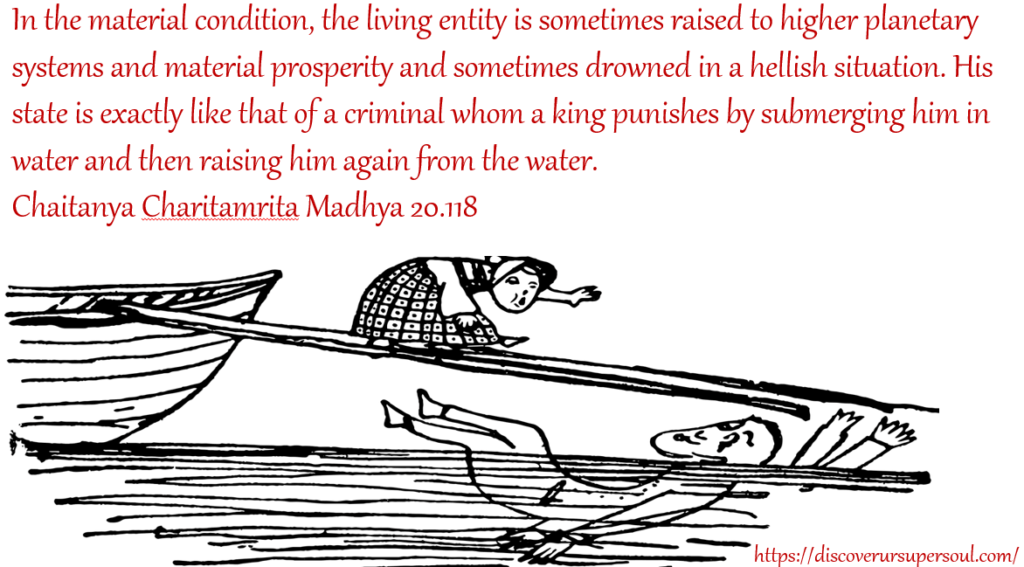
Along with it maya also steals the intelligence of all her prisoners who start living in the illusion that he/she is enjoying here. For example, a hog eats stool and thinks he is happy. Bereft of intelligence we, the conditioned souls, begin to believe that suffering is part and parcel of our life. We start living with it. We all know we are going to die. But still we live as if we are never going to die.
We become so ignorant that we don’t even question as why we are suffering in this world and why we are dying.
But Krishna is extremely merciful. He incarnates in this world to give us a chance to free ourselves from these never-ending suffering.
If we choose Krishna we choose an eternal blissful life.
But if we choose not to choose Krishna, we choose a life of suffering.
Because on our own we cannot free ourselves from the clutches of maya. Krishna says in BG 7.14, “This divine energy of Mine, consisting of the three modes of material nature, is difficult to overcome. But those who have surrendered unto Me can easily cross beyond it.”
So, if we want freedom from pain and suffering then we need to choose Krishna.
The best way to take shelter of Krishna is to chant the holy names of Krishna like the Hare Krishna Mahamantra. Chaitanya Charitamrita Adi, 7.76 says, “For spiritual progress in this Age of Kali, there is no alternative, there is no alternative, there is no alternative to the holy name, the holy name, the holy name of the Lord.”
When we chant we awaken our dormant love for Krishna. We start getting closer and closer to Krishna. Just as sun appears darkness disappears. Similarly, as soon as we invite Krishna to reside in our heart by chanting his beautiful names all the sufferings begin disappearing from our heart.
Krishna frees us from the clutches of maya. We no longer suffer from the vicious cycle of birth and death. We start leading a blissful life.
Krishna is the best master. He is our best well-wisher. He can help us to easily overcome maya.
Search
Recent Posts
-
Srimad Bhagavatam at ISKCON Newtown...
September 3, 2026
-
Srimad Bhagavatam at ISKCON Newtown...
September 1, 2026
-
Janmashtami: Celebrating Krishna’s Appearance Through...
August 17, 2026
-
Gopinatha Pattanayaka: 6 Lessons for...
August 16, 2026
-
What Does Krishna Say About...
August 11, 2026
How to attain freedom from never ending suffering?
We all want freedom from never ending sufferings but in spite of that we are kncoked down by suffering again and again.
The Coronavirus pandemic has killed thousands of people all over the world. Even the wealthiest and the mightiest people of the world are helpless in front of it.
It has plunged the whole world into misery. As we are struggling for survival and trying our best to save ourselves from this tiny little virus, let us pause for a moment and ask ourselves as why we are always subjected to suffering in this world?
Or why suffering never ceases to end in this world? And is there any place in the entire creation of God where there is no suffering and where we can live fearlessly?
Its not that people were free from the diseases before the attack of the virus. It will also not happen that once the cure of the virus has been found people will never suffer from any diseases. People were dying in the past; people are dying in the present and people will continue to die in the future.
Suffering in this world is everywhere
In fact, Bhagavad Gita 8.16 says that there are no planets in the entire material universe where there is no suffering and no death.
Miseries in this world follow us like a shadow.
We do not want to suffer from any disease but still we suffer. None of us want to grow old but every moment we grow old. In fact, a tiny little kid playing carelessly in its pram is also growing old every second.
We all want to live forever. We all want to remain united with our parents, with our spouse, with our siblings, with our children, with our friends forever. But we are forced to get separated. But we are not able to save them when the agents of death take them away from us. We helplessly watch as they are slowly devoured by death.
Their tears and our tears do not melt the heart of the cruel and emotionless death. A day will come when we will also be forced to leave this world.
As per the stringent laws of the material universe we cannot live here permanently. And as per the laws of this world as long as we live here, we will also have to undergo different types of sufferings.
Three types of sufferings
The scriptures tell about three types of miseries which always afflicts anyone and everyone in this world.
- adhidaivika-klesa: Sufferings caused by the higher powers like the demigods. Droughts, earthquakes, storms and other natural calamities come under this category.
- adhibhautika-klesa: Sufferings caused because of other living beings like insects, mosquitoes, or fellow human beings.
- adhyatmika-klesa: Sufferings because of one’s own body and mind. For example, mental anxiety, fear, indecision, other mental illness or physical problems related to our body.
Everything ends one day
We make so many plans to mitigate these miseries. We anchor our hope on technological advancement hoping that it will succeed one day in shielding us against all the miseries which nature inflict upon us. We believe that by creating more wealth, we will attain freedom from never ending suffering. Wealth will help us to secure our future and we can then celebrate our life.
And most importantly we desperately hope that a day will come when the medical science will discover an elixir which will make us immortal.
Like us, our forefathers too had the same wishes. They too did not want to suffer. They too did not want to die.
But history is testimony to the fact that no one has ever succeeded in bypassing the laws of this material world.
The Supreme Lord, our original father, and the architect of this world have clearly said that this world is temporary, this body of ours is temporary, this world is full of suffering, this body of ours is full of suffering and no matter how hard we try everything is going to come to an end one day.
The rebellious child
So, did God create us to live miserably and die miserably? Does God enjoy seeing us, his children, suffer? Definitely Not.
In fact, most of the children of God are supremely blissful and are celebrating their life in the company of God in the kingdom of God. But unfortunate souls like us decided to be here in this material world away from God.
Sometimes a child out of foolishness rebels against his family, rejects his father’s wise advice and runs away from his house. Away from his home, away from his family and away from his loving and caring mother and father he simply suffers.
Our condition is akin to that rebellious son. We are suffering because we ran away from our spiritual homes and came to this material world. In the spiritual world under the shelter of Krishna we were enjoying our life along with the residents of the spiritual world. And away from Krishna here we are suffering every moment.
Are we destined to suffer forever?
So, what is the solution? Are we condemned forever? Are we going to suffer forever.? Are we never going to attain freedom from never ending suffering? Not at all. Although we leave Krishna, but Krishna never leaves us. He always lives with us in our heart as Parmatma. He incarnates in this world again and again to invite us to return back to his abode.
And he is always accessible to us through his holy names. Padma Purana says that the name of Krishna and Krishna Himself are identical.
So when we are chanting his names with sincerity, it means we are directly associating with him and taking his shelter. To live a life free of suffering and free of fear we do not have to wait to return back to the spiritual world. In fact, while living in this world, we can experience supreme bliss and live without fear.
Krishna frees us
Sufferings end when we reconnect with Krishna
When we practice devotion to Krishna our sufferings vanish because we get cleansed of all our sins. We eventually attain freedom from never ending suffering. Also, when we take shelter of Krishna then Krishna who is the controller of this material world takes charge of our life.
A tiny little fish can swim against the gigantic waves which can devour gigantic ships because it has taken shelter of ocean. Similarly, we too start living fearlessly in this world which is inundated with unlimited miseries by taking shelter of Krishna.
Prahlada Maharaj while offering his prayers to the Lord says, “O best of the great personalities, I am not at all afraid of material existence, for wherever I stay I am fully absorbed in thoughts of Your glories and activities.”
Material solution to the material suffering can give temporary relief. But the suffering eventually comes in different form and continues knocking us down again and again.
But Krishna promises that if we turn towards him then he will free us from all past sins and will remove all sufferings from our life. Bhagavad Gita 18.66
Krishna also assures that once we return back to his abode then we will never come again to this material world which is full of suffering.
“From the highest planet in the material world down to the lowest, all are places of misery wherein repeated birth and death take place. But one who attains to My abode, O son of Kuntī, never takes birth again.” Bhagavad Gita 8.16
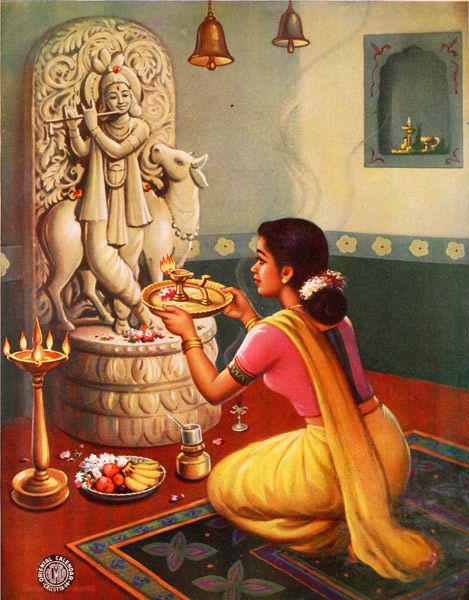
So, let us worship the lotus feet of Krishna, the son of mother Yashoda, which makes one fearless and brings all auspiciousness. This is the best solution to attain freedom from never ending suffering.
Search
Recent Posts
-
Srimad Bhagavatam at ISKCON Newtown...
September 3, 2026
-
Srimad Bhagavatam at ISKCON Newtown...
September 1, 2026
-
Janmashtami: Celebrating Krishna’s Appearance Through...
August 17, 2026
-
Gopinatha Pattanayaka: 6 Lessons for...
August 16, 2026
-
What Does Krishna Say About...
August 11, 2026
Prahlada: The rebellious son of a rebellious father
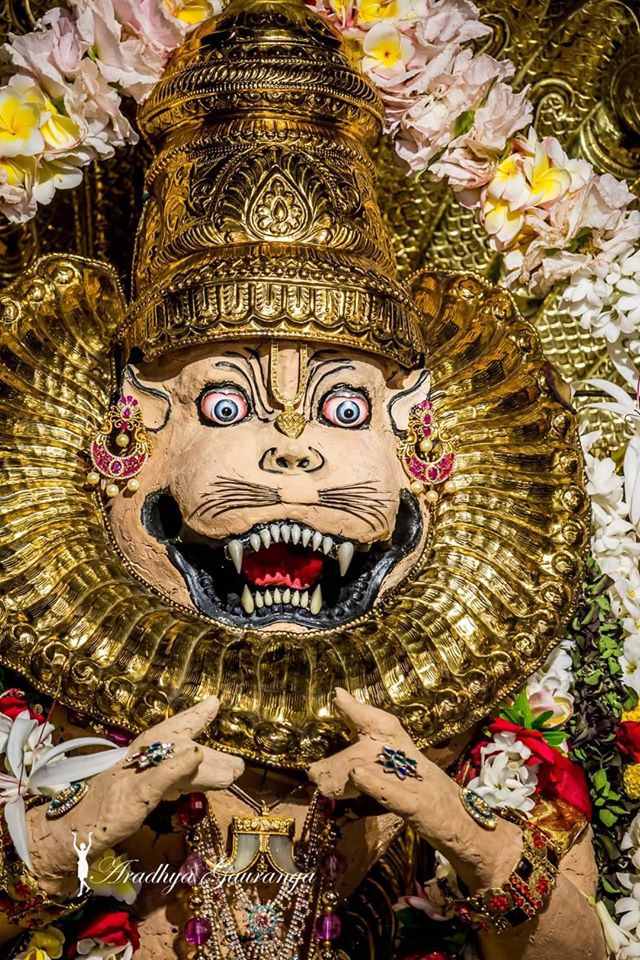
The best among the great demigods, Lord Shiva and Lord Brahma, were afraid to go near the Supreme Lord. Even Lakshmidevi, Lord’s own consort, was not ready to go near her own husband. This ferocious form of Lord was never seen before by anyone. He had appeared from a pillar and had the form of half man and half lion and he came to be known as Narasimhadeva.
He had just ripped apart the demoniac body of the evil king, Hiranyakasipu, who had created mayhem in the universe. And was now sitting on the same majestic thrown on which once Hiranyakasipu sat and ruled the universe.
His humongous body touched the sky. His angry eyes which resembled molten gold was looking in all the directions. His tongue sharp like a sword was moving in all directions looking to slay any miscreants. He had effortlessly killed thousands of faithful soldiers of Hiranyakasipu by his nails.
His hairs which extended in the sky scattered the clouds and forced them to run here and there. The celestial planes which were flying in the sky got thrown into the outer space and upper planetary system by the touch of his hairs. His breathing agitated the vast seas and the oceans. And because of his roaring the gigantic elephants in the world began crying.
Extremely angry he pulled out the intestine of Hiranyakasipu and wore it as a garland.
Even after killing all the demons his anger had not subsided. And all the learned personalities of the universe were not knowing what to do. At that moment, father of the universe, Lord Brahma approached five-year-old little Prahlada and asked him to go and pacify the Lord.
Prahlada whose heart was inundated with the love of the Lord, who had fearlessly faced the might of Hiranyakasipu and he who had extraordinary faith in the mercy of the Lord humbly approached and bowed his head on the lotus feet of the Lord.
Just as a cub does not fear the lion similarly Prahlada was fearless in front of the half-man-half-lion God.
As soon as Narasimhadev saw his little devotee, his eyes which were burning with anger got flooded with compassion. He raised his blood-soaked hands which had killed innumerable demons to bless the little child. And now he wasn’t roaring in anger but had a peaceful smile on his face which brought great relief and joy to all.
The Lord discriminates none. He envies none. He is not partial to anyone. He is equal to all. But he himself says “but those who renders service unto Me in devotion is a friend, is in Me and I am also a friend to him.” Bhagavad Gita 9.29.
And Lord Narasimhadev appeared in his never seen before form only to protect his devotee who in spite of facing unprecedented atrocities never gave up his devotion to the Lord.
Prahlada had unquestionable belief that the Lord whom the books of wisdom describe as Supreme will always be there to protect him, to shelter him in every situation and in every circumstance. Even if he is in the midst of a dense forest surrounded by ferocious animals who are salivating to rip apart his flesh to feast upon it the Lord will come for sure to save him. Even if he is in the middle of a turbulent ocean being tossed up and down by the gigantic waves the Lord will come there and extend his hand to rescue him. Even if all human beings of this mortal world turns against him, disbelieves him, try their best to dishonour him, try their best to give him unprecedented sufferings, employs all means to eliminate him but still the Lord who resides in the core of his heart will never abandon him, he will at each and every moment be there to save him, to protect him.
Prahlada’s faith wasn’t blind. He was a fortunate soul. In the womb of his mother, Kayadu, he heard sage Narada reciting the glories of the Lord. The spiritual sound transcending all material limitations penetrated his heart and washed away all material impurities which becomes the cause of forgetfulness of the Lord.
So, when he came out of the womb of his mother, he did not see the world with material eyes but saw with purified eyes. He saw Lord everywhere. He experienced Lord everywhere. He understood that the Lord is the cause of all causes.
The sun which never fails to rise in the morning gets its effulgence from the Lord.
The wind which never ever stops its journey gets all its ability from the Lord.
The flower which spreads its aroma far and wide gets the fragrance from the Lord.
The waves of the ocean rise up and goes down at the will of the Lord.
The living beings walk and talk, live and die only by the sanction of the Lord.
A spiritually awakened person experiences the Lord.
A student of the Vedas learns about the Lord.
Spiritually ignorant men and women fail to understand the Lord. And the demons despise the Lord.
Hiranyakasipu, the demon, hated the Lord. He rebelled against the Lord. He thought he is better than the Lord. He wanted to be worshipped like the Supreme Lord.
Prahlada, a spiritually awakened intelligent soul, refused to accept him the Supreme Lord. He rebelled against his own father, Hiranyakasipu. He did not fear him whom even the demigods feared. He did not fear even death because he saw the merciful Lord everywhere.
When little Prahlada was thrown from the top of the mountain, he saw the beautiful Lord who had extended his arms to embrace him. When he was forced into the fire the huge flames became like the soothing rays of the moon. When he was forced to drink poison, the poison became nectar and nourished him. When the elephants tried to trample him by their gigantic legs then those legs became as soft as lotus petals giving him pleasure and not pain.
When the evil king did not learn his lessons and continued employing many means to kill his own son who was just five-year-old the furious Lord appeared from the pillar to slay the king. Mere by his nails the Lord ripped apart the gigantic body of the mighty king and crushed the arrogance of all who rebelled against the Lord.
The devotees like Prahlada appears to teach us that Lord never abandon’s his devotee. He is the only shelter in this world. And we should have complete faith in him. In fact, to assure all the doubtful soul’s the Lord has declared boldly that “My devotee never perishes.” Bhagavad Gita 9.31.
We too can live fearlessly amidst any calamity if we practice devotion to the Lord like Prahlada and have complete faith in the words of the Lord like Prahlada.
Search
Recent Posts
-
Srimad Bhagavatam at ISKCON Newtown...
September 3, 2026
-
Srimad Bhagavatam at ISKCON Newtown...
September 1, 2026
-
Janmashtami: Celebrating Krishna’s Appearance Through...
August 17, 2026
-
Gopinatha Pattanayaka: 6 Lessons for...
August 16, 2026
-
What Does Krishna Say About...
August 11, 2026
Iskcon Communication Ministry’s guidelines for speaking during COVID – 19 pandemic

COVID – 19 pandemic has killed thousands of people all over the world. It has brought a global crisis. Iskcon devotees too are suffering and unfortunately some have even lost their lives because of the pandemic.
Devotees do not want people to suffer. So, in Iskcon, devotees are trying their best to serve people of the entire world.
- At several Iskcon temples and Iskcon centres devotees are working hard to prepare food packets and are distributing it to the needy people.
As of now Iskcon in India is preparing meal for more than 5 lakh people daily.
- Iskcon devotees all over the world who are doctors, nurses and healthcare experts are working day and night to treat the patients. They are risking their lives and are serving wholeheartedly.
- Devotees are chanting extra rounds of Hare Krishna Mahamantra so that it creates auspiciousness in the whole world and end the pandemic.
- Iskcon Chowpatty has organized 1 crore japa yajna campaign where devotees from all over the world come in a conference call and chant and pray together for the people of the whole world.
- Some devotees have also taken the onus of helping elderly people who are extremely vulnerable during this time.
- Some devotees as per their capacity are trying their best to help people from humble background who are suffering because of no job.
But along with these commendable services, it is also important that devotees during their conversation with others or during classes (which are mostly happening online these days) speak in such a way that it should be soothing to the hearts.
Anuttama Dasa, GBC Member, Minister of Communications, have advised that devotees should not speak anything which may appear insensitive and which tries to belittle the suffering of the people.
Sometimes neophyte devotees because of immaturity or lack of complete understanding of Krishna conscious philosophy may utter certain words which may appear insensitive. Mature devotees should guide them and make them understand that a devotee is always compassionate to others suffering.
Scriptures are filled with the stories of devotees who exhibited extraordinary compassion towards all.
Vāsudeva Datta had so much compassion for all the living beings of the world that with tears in his eyes he prayed to Lord Chaitanya, “Let me suffer for the sinful activities of all the people of the whole world. Let all their sins, all their karma fall upon me. Let me go to hell and suffer on their behalf. But please free them from all the sufferings. Please shower your mercy upon them. Please show your compassion to them.”
Sri Chaitanya Mahaprabhu was so moved hearing the prayers of Vāsudeva Datta that his eyes were filled with tears of love and he embraced him.
Mahārāja Rantideva whose glories are sung in Srimad Bhagavatam says, “I want only to stay among all the living entities and suffer all distresses on their behalf, so that they may be freed from suffering.” SB 9.21.12
Srila Prabhupada took all the pains to preach Krishna consciousness because he wanted to save entire humanity from degrading to hellish life.
The communication ministry quotes a lecture of Srila Prabhupada where he is speaking how a devotee should have feeling for others’ distress.
Vaishnava is always feeling for others’ distress. That is Vaishnava. Vaishnava—para dukha dukhi. They’re very much afflicted with others’, I mean to say, miserable life. Just like Lord Jesus Christ, he presented himself as very much afflicted with others’ miserable condition of life. So all the Vaishnavas, devotees—It doesn’t matter which country he belongs to or which sect he belongs to. Anyone who is God-conscious or Krishna conscious. . . para dukha dukhi. Lecture July 21, 1971 New York
Whole world is in great distress.

Thousands of people have already died. Thousands of people are dying daily. Lakhs of people are in hospitals or are quarantined. Millions of people are suffering financially. The situation is so bad that family members of those who are dying because of Coronavirus are not even able to see their dead bodies. For fear of spreading the infection, the government authorities cremate the dead bodies and just inform the family members.
During this global crisis devotees should exhibit complete maturity and show compassion to all through their words and actions.
Iskcon Communication Ministry has issued following guidelines to the leaders while speaking about the pandemic, but it is applicable to all the devotees:
- Express first your heartfelt concern and prayers for those who are suffering.
- Advise all to strictly follow government guidelines/restrictions that promote public safety.
- Avoid statements that may be interpreted as callous, or lacking empathy for others’ suffering.
- While our tradition teaches that karma impacts our happiness and suffering, teach and highlight for devotees that a more essential principle for followers of Lord Chaitanya and Srila Prabhupada is karuna, compassion and mercy for others. This should guide all we do and say.
Search
Recent Posts
-
Srimad Bhagavatam at ISKCON Newtown...
September 3, 2026
-
Srimad Bhagavatam at ISKCON Newtown...
September 1, 2026
-
Janmashtami: Celebrating Krishna’s Appearance Through...
August 17, 2026
-
Gopinatha Pattanayaka: 6 Lessons for...
August 16, 2026
-
What Does Krishna Say About...
August 11, 2026
Watch the movie ‘HARE KRISHNA!’ For Free (for limited time only)
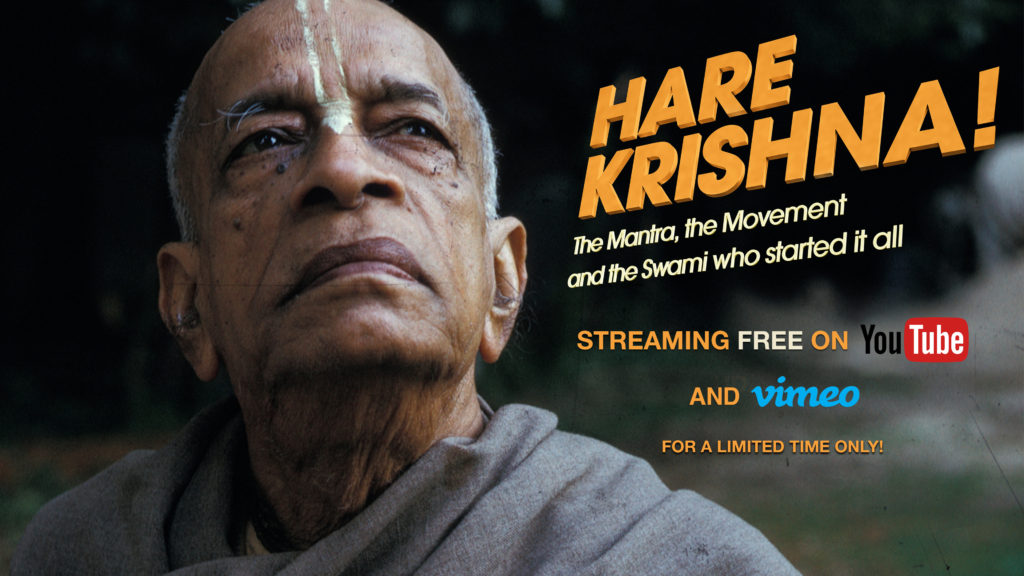
If you want to know how a man single-handedly established a worldwide spiritual movement then do watch the movie –
                     HARE KRISHNA!
The Mantra, the Movement and the Swami who started it all
This movie can be watched for free for 3 days starting Friday, April 10. The movie can be watched on YouTube and Vimeo with subtitles in 19 languages which also includes Hindi.
When to watch:
*From Friday, April 10th at 12pm (EST-USA) i.e. 9:30 pm IST
to Monday, April 13th at 12pm (EST-USA) i.e. 9:30 pm IST
Where to watch:
YouTube: https://youtu.be/zMfsz9hJz18
Vimeo: https://vimeo.com/284017187
Yadubara das/John Griesser who is the Producer and Director of the movie says, “We decided at the last minute to have a 3-day *free* viewing of HARE KRISHNA! starting this Friday, April 10…we wanted to take advantage of the Easter holidays and get it out quickly because of the urgent world crisis.”
The movie has won accolades all over the world.
- It has been released theatrically in 38 countries.
- It has got the Best Picture award in Illuminate Film Festival.
- It has the audience rating of 9.6/10 on IMDb.com and 4.9/5 on Amazon.com
- In its review comment, Red Carpet Crash, wrote, “…an uplifting spiritual experience, regardless of one’s personal beliefs or religion”
- The Washington Post called it,” …a stirring story!”
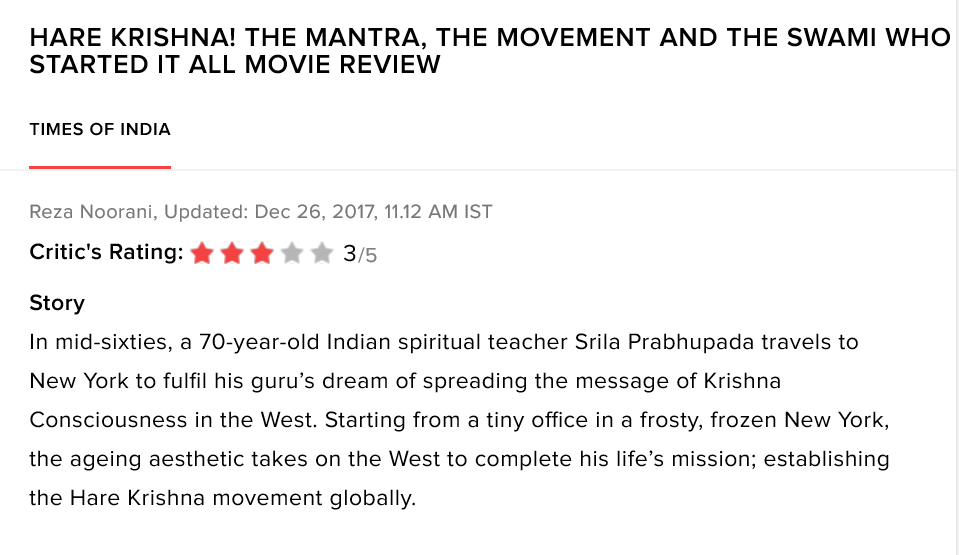
- The Times of India, gave it a rating of 3/5.
The movie is of 90 minutes.
It shows how Srila Prabhupada who was born in Kolkata, India, when India was under the British Regime led a worldwide Krishna conscious movement.
When Srila Prabhupada boarded the cargo ship, Jaladuta, in Kolkata to go to America he was almost 70 years old. The ship’s owner Smt. Sumati Morarji said, “You are old man. You are just going to die there.”
He had no money, no proper winter cloth for American winter, no proper place to stay and he did not even know if he will be able to manage food there. Almost everyone advised him not to go.
But Prabhupada was on a mission. He was not thinking about himself but was thinking
- How to bring the people of the world closer to Lord Krishna.
- How to spread the teaching of Lord Chaitanya which will bring peace and happiness in the lives of people.
So, he went. And in few years, he conquered the hearts of millions of people all over the world by his love and compassion and inspired them to practice devotion to Krishna.
The movie brilliantly depicts the challenges, the hardships which Srila Prabhupada faced in his life’s most important mission.
- How he handled the failures?
- How he cried in front of Krishna to help him bring people to his lotus feet?
- How he suffered but never gave up?
- How he survived death?
- And how he handled worldwide success?
The movie shows how young American boys and girls started getting attracted to his teachings and how they dedicated their lives in helping Prabhupada establish ISKCON, International Society for Krishna Consciousness.
Today in the virtual world we have unlimited option to watch movies which most of the time do not depict the reality of the world. Filled with music and dance commercial movies just try to entertain us. It does not transform us.
This movie is different.
This movie is for those
- Who want to do something meaningful in their life?
- Who want to know how a leader is born?
- Who want to understand the attributes of a great leader?
- Who want to know how spirituality brings ultimate happiness in our life?
Deadly coronavirus has brought unprecedented crisis in our lives. To protect ourselves from COVID – 19, we all are now locked inside our houses.
We can utilize this time to reshape our future.
A small inspiration can change the course of our life. It can help us realize our true potential. The movie has the capability to do so.
Do Watch!
Search
Recent Posts
-
Srimad Bhagavatam at ISKCON Newtown...
September 3, 2026
-
Srimad Bhagavatam at ISKCON Newtown...
September 1, 2026
-
Janmashtami: Celebrating Krishna’s Appearance Through...
August 17, 2026
-
Gopinatha Pattanayaka: 6 Lessons for...
August 16, 2026
-
What Does Krishna Say About...
August 11, 2026