Serving Krishna without worrying about success or failure
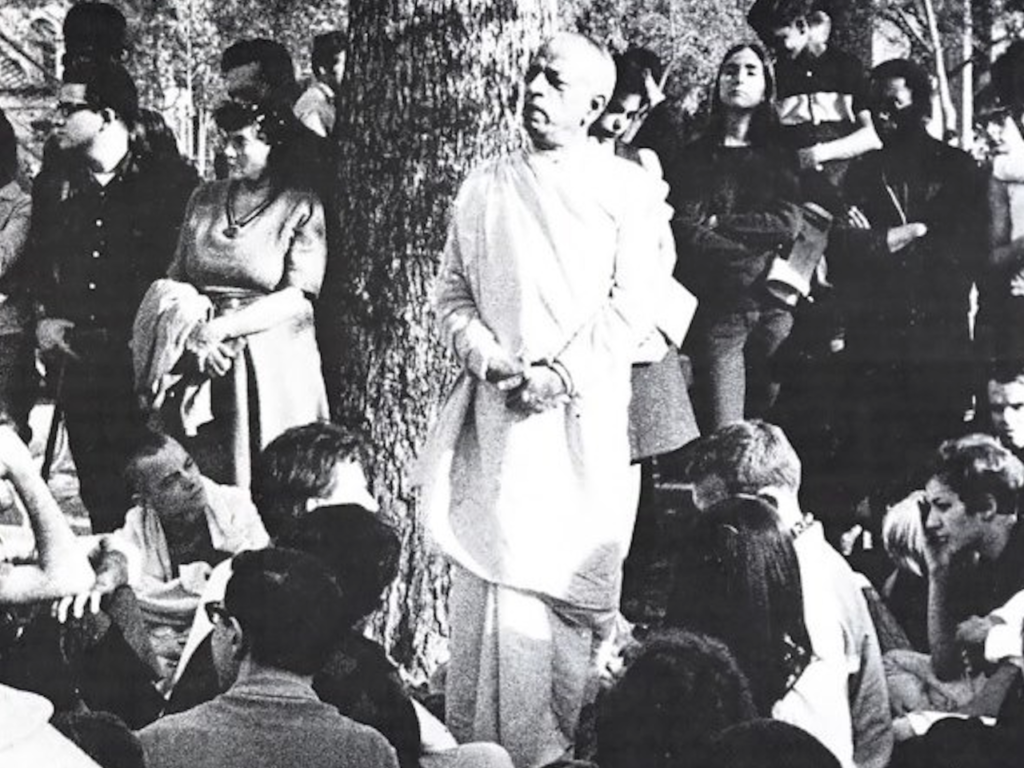
Serving Krishna should be the primary focus of our life, but that service should be done with right consciousness and without worrying about success or failure. Whatever activities we do in our life, we should do it for the pleasure of Krishna.
For example, I like to write. Whether people like my writing or not, whether my article gets published or not, I want to make a habit of writing daily for Krishna. But it is easy said than done. Because there are days when I do not write. It is not because of lack of ideas. After reading spiritual literatures like Srimad Bhagavatam, Bhagavad Gita there are so many topics on which I can write.
But still there are days when I do not write at all. And guess what, at the end of the day before going to bed, I feel terribly frustrated.
So, I often question myself that if want to write then why I do no write daily. Is it because of lack of time? Sometimes it could be. But even if time is a luxury still, I do not forget to eat my food or take a bath.
And by Krishna’s mercy and devotees’ mercy, two Krishna Conscious activity I do daily – chanting 16 rounds of Hare Krishna Mahamantra and Mangala arati.
The day I decided that I will chant 16 rounds of Hare Krishna Mahamantra daily I have continued doing it whether I like it or not. Also, once in Mayapur I decided to do Mangala arati daily and by Chaitanya Mahaprabhu’s mercy I have been doing it daily since last few years.
Mangala arati daily
I remember, once when I was in Mayapur attending Mangala arati at 4:30 am, I felt so nice, so blissful. I thought how nice it would be if I can attend morning arati daily in Mayapur at 4:30 am. But I knew that it won’t be possible because I do not stay in Mayapur.
Also, in whichever city, I may be, my work will not allow me to come to any Iskcon temple at 4:30 am. I thought what devotees do during Mangala arati. They sing prayers and worship the Lord with different items. I can do this at home too. I will get the same experience.
So, from that day I decided to do Mangala arati daily. I am not sure that how much devotion and love I have for Krishna. But I experience that after chanting & Mangala arati I feel satisfied. There are three stages of doing bhakti – out of fear, out of duty, out of love. I am mostly at the stage of fear and sometime at the stage of duty.
Not writing daily for Krishna
Now coming back to the point of writing daily. Once I decided that I will be serving Krishna by writing for him daily. So, I know I should write but still there is some force withing me which is not allowing me to understand the importance of writing Krishna Conscious article daily at least for 2 hours.
Intellectually I know that after writing for couple of hours I will feel happy. But during the process of writing, I do not experience that happiness. And so, when I begin writing my mind takes me in different directions. Sometimes I do not find motivation to open even my laptop and start writing. Sometimes although I start but after few minutes, I lose interest. So, I start browsing internet or watch some videos. After couple of hours, I realize that I wasted my time. Frustration and regret follow. Sometimes I wonder how wonderful it would have been if I would have enjoyed writing for the pleasure of Krishna.
I have read and heard about many successful persons that they hardly bothered about the end result They just enjoyed the process and the result followed.
A Story: You cannot become a painter
I read a story of a great painter. I do not recollect his name. Once a person came to the great painter and told him that he also wants to be a painter.
The acclaimed painter said, “Great. Carry on. What you want from me?”
The aspiring painter said, “But I am not sure if I will ever become a painter or not. So, can you see my painting and tell if I have the capability to become a great painter or not?”
The great painter said, “sure, bring your painting tomorrow morning.”
The aspirant came next morning with his painting. The great painter asked him to leave his painting and come in the evening.
The aspiring painter came in the evening to know the answer. He was nervous.
When the great painter saw him, he said, “I am sorry I was busy whole day, did not get time to see your painting. By the way, what did you do whole day?”
The man, still nervous, said, “I was waiting for the evening. I wanted to know your opinion.”
The painter said, “You can take away your painting. You do not have the quality of becoming a painter.”
The man with his head down took his painting and left.
Someone asked the painter, “You did not even see his painting and said that he cannot become a painter.”
The great painter said, “He wants to paint for others not for himself. He wants others approval for his craft. He does not like painting. He wants others to like his painting. If you like to paint just paint, why bother what others are saying or thinking.”
What a wonderful lesson!
If you love it, do it
So, if one wants to write for Krishna, one should just write.
If one wants to make a YouTube video for Krishna then just make it.
If one wants to sing for Krishna then sing for Krishna.
If one wants to cook for Krishna then cook for Krishna.
If one wants to do any service for Krishna then just do it. Why bother about others opinion?
Whatever we love to do, we should do it. Because if we do not do it, we will be frustrated.
This is the best way of serving Krishna.
From the life of Srila Prabhupada, we see that he wanted to preach the message of Krishna all over the world and he did it. Initially he faced so many obstacles, criticism, failures, discouragement but nothing could stop him. Why? Because he loved what he was doing. He loved Krishna and he wanted everyone to love Krishna. He enjoyed serving Krishna. So, he tried his best to engage everyone in serving Krishna. It is so simple. If we love doing something, we just do it.
Yes, it is true that while doing any activity there will be challenges and failures. If we study the life of great devotees of Krishna, we will find they too faced challenges.
Challenges while serving Krishna
I am not sure about your challenges but if I observe my life, I find that my biggest challenge is my escapist mentality. Because of wrong conditioning I run away from hard work.
Writing is a tedious task because it also involves lots of reading. Sometimes one gets stuck while writing. Thoughts stop flowing. It’s called writer’s block. Even famous writers go through it. But when one is able to smash this writer’s block then one is able to write an incredible story.
Whatever we write, everyone is not going to like it. It’s a fact and we should live with it. So, we should not be bothered what others say about our work. Our Krishna Conscious article is our offering to Krishna. Even if no one likes what we have written but if we have put in our best efforts to write a good article for Krishna then the Supreme Lord will surely accept it. To please Krishna is the purpose of all our efforts.
Dealing with failure while serving Krishna
What kinds of failure, we may encounter?
- Very few people will read my article on my website.
- My article may not get published in Iskcon’s “Back To Godhead” magazine.
- If I write a book then it may not become a best seller.
These are external failures. External success and external failures are not in our hand. Only endeavour is in our hands.
In Bhagavad Gita 8.7, Krishna to Arjuna, “Think about me and fight.”
“Therefore, Arjuna, you should always think of Me in the form of Kṛṣṇa and at the same time carry out your prescribed duty of fighting. With your activities dedicated to Me and your mind and intelligence fixed on Me, you will attain Me without doubt.” Bhagavad Gita 8.7
Krishna does not say, “Think about me and become victorious.” The Supreme Lord is asking Arjuna to focus on his duty not on his result. Many times, external failure does not matter because what may appear as failure may not be a failure.
Victory in Defeat
For example, soldiers while fighting die on the battlefield. So, one may say that death is defeat, a failure. But in true sense that soldier in spite of dying for the country has achieved great victory. In Ramayana Jatayu died while saving Mother Sita. Although he was defeated by Ravana but Lord Rama was very much pleased by Jatayu.
The Supreme Lord gave him the designation of a father and personally performed his last rites. So, if we are doing our service nicely with dedication and determination for Krishna then we will always be victorious. So called external success or failure does not matter much.
It is between me and Krishna
And why to bother too much about external success? Whatever service we do, it is for Krishna, then why to bring any third person there.
For example, when we chant the names of Krishna then we do it for the pleasure of Krishna and not for the pleasure of others. Many times, when I chant at home no one is around. No one is seeing me chanting. Chanting is just between me and Krishna. We chant because this is a vow we have taken in front of our spiritual master, in front of Krishna. Many great devotees chant because they love chanting the names of Krishna. None of us get any reward for chanting. No one comes and glorifies us that we are great chanter.
So, why should I expect others to glorify me for my writing. Or for any other Krishna conscious service.
It is easy said than done. But if we develop this mindset of doing Krishna Conscious service for the pleasure of Krishna then we will never be frustrated in any Krishna Conscious activity. Also, if we have taken up service then we should it whether we like it or not.
I have experienced that if in the day all the time is utilized in the service of Krishna, in office work and I do not do any sense gratification then at the end of the day I feel lots of joy within. And that happiness cannot be expressed in words.
That is the beauty of serving Krishna without worrying about success or failure.
Search
Recent Posts
-
Srimad Bhagavatam at ISKCON Newtown...
September 3, 2026
-
Srimad Bhagavatam at ISKCON Newtown...
September 1, 2026
-
Janmashtami: Celebrating Krishna’s Appearance Through...
August 17, 2026
-

Gopinatha Pattanayaka: 6 Lessons for...
August 16, 2026
-
What Does Krishna Say About...
August 11, 2026
श्रील भक्तिविनोद ठाकुर का जीवन और गौड़ीय वैष्णववाद को पुनर्जीवित करने में उनका योगदान
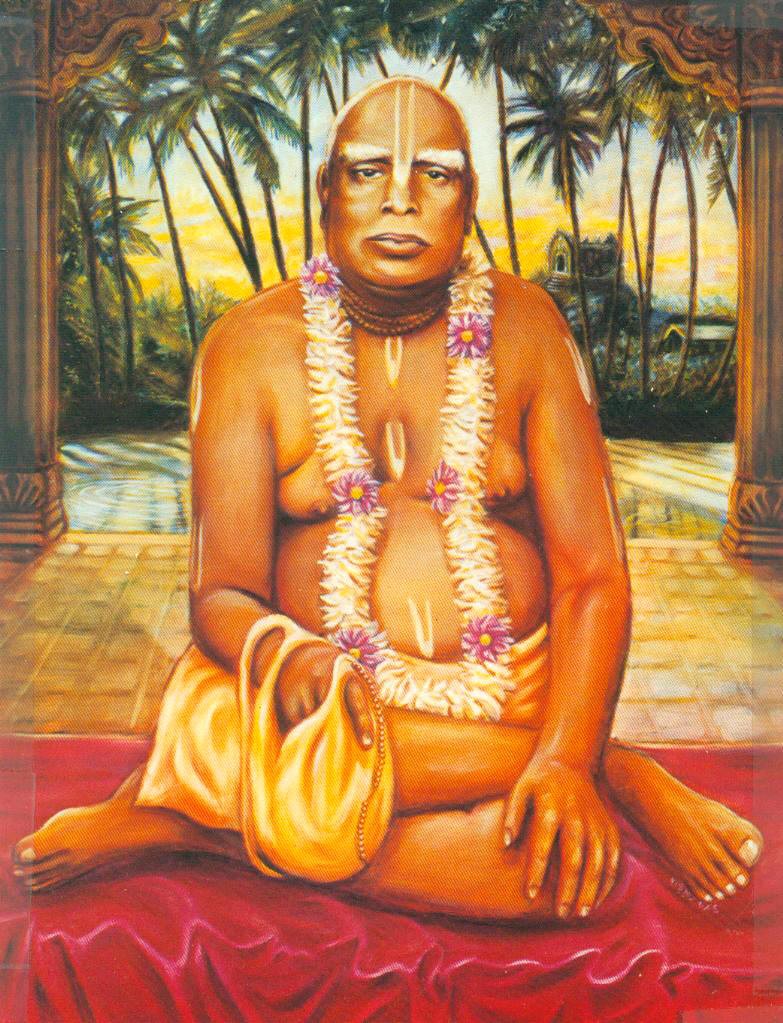
अगर हम कृष्ण भावनामृत में समर्पित रहना चाहते हैं तो हमें श्रील भक्तिविनोद ठाकुर के जीवन का अध्ययन करना चाहिए। वह एक प्रमुख वैष्णव आचार्य हैं और उन्होंने गौड़ीय वैष्णववाद को पुनर्जीवित करने में असाधारण भूमिका निभाई है। इतना ही नहीं, उन्होंने हमें अपने व्यक्तिगत उदाहरण से यह भी सिखाया कि एक आदर्श वैष्णव कैसे बनें।
आज अगर हम दुनिया के किसी भी हिस्से में जाते हैं, तो हम पुरुषों और महिलाओं को वैदिक पोशाक धारण करते हुए, माथे पर तिलक लगाते हुए, कृष्ण के नाम का जाप करते हुए देख सकते हैं। यह कैसे संभव हुआ, यह जानने के लिए हमें श्रील भक्तिविनोद ठाकुर के जीवन का अध्ययन करना होगा।
श्रीमद्भगवद गीता 3.21 में, भगवान कृष्ण कहते हैं कि आम आदमी का स्वभाव किसी ऐसे व्यक्ति के नक्शेकदम पर चलना है, जिसके पास दुनिया में अविश्वसनीय साख और उपलब्धियां हैं। यह सच है कि कृष्ण ने अर्जुन को गीता इसलिए सुनाई थी क्योंकि अर्जुन एक महान भक्त था। लेकिन यह भी सच है कि अर्जुन एक महान धनुर्धर था, वह एक अपराजेय योद्धा था। लोग ऐसे लोगों की बात ध्यान से सुनते हैं और उनकी सलाह को ईमानदारी से मानते हैं। इसलिए, कृष्ण ने गीता की दिव्य शिक्षाओं को देने के लिए अर्जुन को चुना।
कृष्ण 500 साल पहले श्री चैतन्य महाप्रभु के रूप में आए थे ताकि सभी को यह सिखाया जा सके कि सभी कष्टों से मुक्ति पाने के लिए मानव जीवन का उपयोग कैसे किया जाए। और सबसे महत्वपूर्ण बात यह है कि कैसे सभी कष्टों से मुक्त शाश्वत आध्यात्मिक दुनिया में वापस कैसे लौटा जाए।
चैतन्य महाप्रभु के आंदोलन को एक नेता की आवश्यकता थी
श्री चैतन्य महाप्रभु के इस भौतिक संसार को छोड़ने के बाद, उनके आंदोलन को वृंदावन के छह गोस्वामी और बाद में नरोत्तम दास ठाकुर, श्रीनिवास आचार्य, श्यामानंद पंडित जैसे प्रमुख आचार्यों ने आगे बढ़ाया। लेकिन धीरे-धीरे जैसे-जैसे कलियुग का अंधकार फैलने लगा, महाप्रभु के आंदोलन की चमक कम होने लगी। अधिकांश लोग भौतिकवादी जीवन में लीन हो गए और चैतन्य की शिक्षाओं को भूल गए। केवल कुछ वास्तविक वैष्णव रह गए।
कुछ लोग जो महाप्रभु की शिक्षाओं का पालन करने का दावा करते थे, वे भटके हुए थे। वे आम लोगों को गुमराह कर रहे थे और धोखा दे रहे थे। तो सच्चे आध्यात्मिक साधक और बुद्धिजीवी ऐसे ठगों से दूरी बनाने लगे। ढोंगियों ने गौड़ीय वैष्णवों को बदनाम किया। अगर चैतन्य महाप्रभु के आंदोलन को जीवित रहना था तो उसे असाधारण व्यक्तित्व के नेता की जरूरत थी।
इस समय के दौरान श्रील भक्तिविनोद ठाकुर आए, जिन्हें श्री केदारनाथ दत्त के नाम से भी जाना जाता है। उनका जन्म 2 सितंबर 1838 को बीरनगर (उलाग्राम), पश्चिम बंगाल, भारत में हुआ था।
दिव्य गुणों से भरपूर, उन्होंने श्री चैतन्य महाप्रभु की प्रामाणिक शिक्षाओं और प्रथाओं को फिर से स्थापित करने में महत्वपूर्ण भूमिका निभाई। उन्होंने चैतन्य के आंदोलन को पुनर्जीवित करने और इसके मूल गौरव को बहाल करने के लिए बहुत प्रयास किए।
भक्तिविनोद ठाकुर ने विश्वव्यापी कृष्ण भावनामृत आंदोलन की नींव रखी
यह कहना गलत नहीं होगा कि श्रील भक्तिविनोद ठाकुर ने वर्तमान कृष्ण भावनामृत आंदोलन की नींव रखी जो पूरी दुनिया में फैल गया है।
वह एक प्रकांड विद्वान थे और कई भाषाओं को जानते थे – संस्कृत, बंगाली, उड़िया, अंग्रेजी, लैटिन, उर्दू, फारसी। वे एक महान लेखक थे, उन्होंने लगभग 100 पुस्तकें और कई भक्ति गीत लिखे।
वे एक महान वक्ता भी थे। पेशे से वह एक न्यायिक मजिस्ट्रेट थे। उन्होंने अपने व्यावसायिक कर्तव्य को पूरी लगन से निभाया। वह अपने काम में बहुत माहिर थे और उनके सहयोगी और वरिष्ठ अधिकारी उनकी दक्षता के लिए उनकी प्रशंसा करते थे।
उनका विवाह श्रीमती भगवती देवी से हुआ, जो उनकी आजीवन साथी रहीं। उनके 13 बच्चे थे। भौतिक रूप से वे अत्यधिक योग्य थे और एक असाधारण गृहस्थ जीवन जीते थे। वह सभी के लिए रोल मॉडल थे।
इसलिए, जब उन्होंने श्री चैतन्य महाप्रभु की मूल शिक्षाओं का प्रचार करना शुरू किया तो लोगों ने उन्हें सुनना शुरू कर दिया। धीरे-धीरे बंगाली भद्रलोक समुदाय सहित कई लोगों ने गौड़ीय वैष्णववाद के दर्शन को समझना और उसकी सराहना करना शुरू कर दिया।
उनके प्रयासों के कारण, श्री चैतन्य महाप्रभु की शिक्षाओं और संकीर्तन आंदोलन को फिर से मान्यता मिली। वास्तव में, यह कहना अतिशयोक्ति नहीं होगी कि भगवान चैतन्य ने उन्हें व्यक्तिगत रूप से अपने आंदोलन को फिर से स्थापित करने के लिए भेजा था।
हालांकि गौड़ीय वैष्णववाद को पुनर्जीवित करने और फैलाने में उनके कई योगदान हैं लेकिन यहां हम उनके तीन प्रमुख योगदानों पर चर्चा करेंगे।
1. श्री चैतन्य महाप्रभु के जन्मस्थान की खोज की
भक्तिविनोद ठाकुर के कारण ही आज दुनिया भगवान चैतन्य के जन्मस्थान को जानती है। चूंकि लोग भगवान चैतन्य की शिक्षाओं को भूल गए थे, वे यह भी भूल गए थे कि भगवान कहां प्रकट हुए थे। भगवान चैतन्य ने भक्तिविनोद ठाकुर को अपने जन्मस्थान की खोज के लिए प्रेरित किया।
यह 1887 की बात है, जब ठाकुर भक्तिविनोद, वृंदावन जाने की योजना बना रहे थे और अपना शेष जीवन यमुना के तट पर कृष्ण के नाम का जप करते हुए बिताने चाहते थे। जब वे इस पर विचार कर रहे थे, एक रात भगवान चैतन्य उनके सपने में आए और कहा, “वृंदावन जाना अच्छा है और तुम वहाँ अवश्य जाओगे। लेकिन वृंदावन जाने से पहले तुम नवद्वीप में भी कुछ सेवा कर लो।“
यह चैतन्य की इच्छा और निर्देस थी। भक्तिविनोद ठाकुर ने तुरंत नवद्वीप जाने की योजना बनाना शुरू कर दिया। उन्होंने कृष्णनगर स्थानांतरित करने का अनुरोध किया जो नवद्वीप के निकट है। बहुत प्रयासों के बाद, वह अंततः कृष्णानगर में डिप्टी मजिस्ट्रेट के रूप में जाने में सफल रहे। कृष्णनगर से वह नियमित रूप से भगवान चैतन्य के जन्मस्थान की खोज के लिए नवद्वीप जाते थे।
एक दिव्य दृष्टि
एक बार वे रात में नवद्वीप में रानी धर्मशाला की छत पर जप कर रहे थे। जब उन्होंने उत्तर की ओर देखा तो उन्हें कुछ अजीब दिखा। एक बड़ा, सुंदर ताल का पेड़ था। पेड़ के पास एक छोटी सी इमारत थी जो पूरी तरह से दीप्तिमान थी। भक्तिविनोद ठाकुर समझ गए कि यह कोई साधारण स्थान नहीं है, यह भगवान चैतन्य का जन्मस्थान है। सार्वजनिक घोषणा करने से पहले, वह गहन शोध करना चाहते थे।
उन्होंने नरहरि सरकारा ठाकुर की चैतन्य भागवत और नवद्वीप धाम परिक्रमा का अध्ययन शुरू किया। उन्होंने नवद्वीप के कई बुजुर्गों से भी जगह के बारे में बात की और नवद्वीप के पुराने नक्शों का अध्ययन किया। गहन शोध और परामर्श के बाद, उन्हें लगभग यकीन हो गया था कि यह स्थान भगवान चैतन्य का जन्मस्थान है। अंतिम पुष्टि के लिए, उन्होंने जगन्नाथ दास बाबाजी महाराज से उस स्थान पर आने और अपना निर्णय देने का अनुरोध किया।
यह वास्तव में भगवान चैतन्य का जन्मस्थान है
जगन्नाथ दास बाबाजी महाराज भगवान चैतन्य के बहुत बड़े भक्त थे, वे गौड़ीय वैष्णव समुदाय के नेता थे। वह बहुत बूढ़े थे इसलिए उन्हें एक टोकरी में उस दिव्य स्थान पर लाया गया। जैसे ही वह उस स्थान पर आए, वह हवा में उछल गए और कहा, “यह वह स्थान है जहाँ भगवान चैतन्य प्रकट हुए थे।”
यह खबर दूर-दूर तक फैली कि भगवान चैतन्य की जन्मस्थली खोज ली गई है। भगवान की कृपा पाने के लिए हजारों भक्त उस पवित्र स्थान पर उमड़ पड़े। एक भव्य वैष्णव उत्सव का आयोजन किया गया, और सभी ने इस असाधारण कार्य के लिए भक्तिविनोद ठाकुर की प्रशंसा की।
श्रील भक्तिविनोद ठाकुर ने भविष्यवाणी की थी कि एक समय आएगा जब श्री चैतन्य महाप्रभु की महिमा दूर-दूर तक फैलेगी और दुनिया भर से लोग – जय सचिनंदन गौर हरि के नाम का जप करते हुए मायापुर आएंगे।
आज हम देखते हैं कि दुनिया भर से हजारों लोग मायापुर आते हैं और योगपीठ के दर्शन करते हैं, जहां भगवान चैतन्य प्रकट हुए थे।
2. गौड़ीय वैष्णववाद को फिर से स्थापित करने के लिए कई किताबें और लेख लिखे
गृहस्थ होने और नौकरी करने के बावजूद उन्होंने कई किताबें और लेख लिखे। अपने पूरे जीवन में उन्होंने लगभग 100 किताबें लिखीं और कई भक्ति गीत लिखे।
उनकी कुछ प्रमुख पुस्तकों में श्री चैतन्य-शिक्षामृत, वैष्णव-सिद्धांत-माला, प्रेम-प्रदीप, मनः-शिक्षा आदि शामिल हैं। उन्होंने अमृत-प्रवाह भाष्य प्रकाशित किया जो चैतन्य-चरितामृत पर उनकी बंगाली टिप्पणी है।
वैष्णव साहित्य के प्रकाशन की आवश्यकता को समझते हुए, उन्होंने कोलकाता में भक्ति भवन में एक प्रिंटिंग प्रेस की स्थापना की और इसे ‘श्री चैतन्य यंत्र’ कहा। ‘श्री चैतन्य यंत्र’ से कई पुस्तकें निकलीं, जिन्होंने श्री चैतन्य महाप्रभु की शिक्षाओं का प्रचार किया।
उन्होंने चैतन्य युग या चैतन्यवाद की शुरुआत की। इसके आधार पर गौड़ीय वैष्णव श्री चैतन्य महाप्रभु के प्रकट होने के दिन से शुरू होने वाले वर्ष के दिन की गणना करते हैं।
श्रील भक्तिविनोद ठाकुर ने चैतन्य पंजिका को भी बनाया जो एक वैष्णव पंचांग है।
उन्होंने 1881 से सज्जनतोसानी, एक वैष्णव पत्रिका, का प्रकाशन शुरू किया। इस पत्रिका ने भगवान चैतन्य के संदेश का प्रचार किया और इसे पूरे बंगाल में वितरित किया जाता था। उन्होंने अंग्रेजी पत्रिका, हिंदू हेराल्ड, में श्री चैतन्य महाप्रभु के जीवन पर एक लेख लिखा। यह वैष्णव समुदाय के लिए बहुत सम्मान और स्वीकार्यता लेकर आया।
चैतन्य की शिक्षाएं पहली बार पश्चिम पहुंचीं
श्रील भक्तिविनोद ठाकुर ने पश्चिमी दुनिया को श्री चैतन्य महाप्रभु से परिचित कराया। सन् 1896 में उन्होंने अंग्रेजी में चैतन्य महाप्रभु, हिज लाइफ एंड प्रिसेप्ट, नामक पुस्तक लिखी और अंग्रेजी भाषी राष्ट्र को भेजी।
गौड़ीय वैष्णववाद के इतिहास में यह पहली बार था कि अंग्रेजी में लिखी गई भगवान चैतन्य की शिक्षा पश्चिम तक पहुंचीं। यह भी उल्लेखनीय है कि इस्कॉन के संस्थापक आचार्य, श्रील प्रभुपाद, जिन्होंने बाद में पश्चिम में बड़े पैमाने पर प्रचार किया, का जन्म 1896 में हुआ था।
यह पुस्तक कनाडा के मैकगिल कॉलेज और लंदन के रॉयल एशियाटिक सोसाइटी जैसे कई प्रमुख संस्थानों को भेजी गई थी। 1967 में, श्रील प्रभुपाद के एक शिष्य, जो स्नातक छात्र थे, ने मैकगिल विश्वविद्यालय के पुस्तकालय में इस पुस्तक को पाया।
उन्होंने भगवान और संकीर्तन की महिमा करते हुए कई भक्ति गीत भी लिखे। इन गीतों को आज दुनिया भर में हजारों भक्तों द्वारा गाया जाता है।
3. हजारों लोगों को कृष्ण के नाम जपने और भगवान चैतन्य की शिक्षाओं का पालन करने के लिए प्रेरित किया
उन्होंने भगवान चैतन्य के संदेश का बहुत प्रचार किया। भगवान नित्यानंद के नक्शेकदम पर चलते हुए, उन्होंने नाम हट की स्थापना की जिसका अर्थ है “पवित्र नाम का बाजार।” नाम हट का उद्देश्य पवित्र नामों की महिमा फैलाना और लोगों को कृष्ण के नाम जपने और भगवान चैतन्य की शिक्षाओं का आश्रय लेने के लिए प्रेरित करना था। जब भी उन्हें अवसर मिला, उन्होंने बंगाल के विभिन्न हिस्सों की यात्रा की और भागवतम और चैतन्य चरितामृत पर व्याख्यान दिए।
जब वे जगन्नाथ पुरी में मजिस्ट्रेट के रूप में थे, तो उन्होंने भागवत-समस्त समाज की स्थापना की। इस समाज में प्रसिद्ध जगन्नाथ-वल्लभ उद्यान में भक्त भगवान कृष्ण के विषयों पर चर्चा करने आते थे।
उन्होंने मायापुर में भगवान चैतन्य की जन्मस्थली योगपीठ की खोज की थी। अब, योगपीठ में, उन्होंने गौर और विष्णु प्रिया (भगवान चैतन्य की शाश्वत पत्नी) के विग्रहों को स्थापित करने का फैसला किया। विग्रहों की स्थापना के दिन, हजारों वैष्णव इकट्ठे हुए। एक बड़ा त्योहार और संकीर्तन हुआ।
योगपीठ, मायापुर में एक भव्य मंदिर के निर्माण के लिए, उन्होंने घर-घर जाकर बंगाल के लोगों से भव्य मंदिर के निर्माण में भाग लेने का आग्रह किया।
श्रील भक्तिविनोद ठाकुर कोई साधारण व्यक्तित्व नहीं हैं। वह श्री चैतन्य महाप्रभु के आंदोलन को पुनर्जीवित करने के लिए आए और आपको और मुझे यह भी सिखाया कि कैसे भगवान चैतन्य की शिक्षाओं का ईमानदारी से पालन किया जाए।
श्रील भक्तिविनोद ठाकुर के जीवन से, हम महत्वपूर्ण सबक सीखते हैं।
सात महत्वपूर्ण सबक जो श्रील भक्तिविनोद ठाकुर के जीवन से सीखे जा सकते हैं
1. हमेशा शास्त्रों द्वारा स्वीकृत कार्यों में लगे हैं
श्रील भक्तिविनोद ठाकुर ने हमें सिखाया कि जीवन के प्रत्येक क्षण का सदुपयोग कैसे किया जाए। जब हम उनके जीवन का अध्ययन करते हैं, तो हम पाते हैं कि वे या तो कृष्ण के नाम का जप करते थे या आध्यात्मिक साहित्य पढ़ते थे या लेख और किताबें लिखते थे या कृष्ण भावनामृत दर्शन का प्रचार करते थे या अपने कार्यालय के काम में व्यस्त रहते थे।
2. समय का अच्छे से उपयोग करें
उसका दैनिक कार्यक्रम निश्चित था और वह उसका सख्ती से पालन करते थे।
- 8-10 आराम
- 10-4 लिखना
- 4-4:30 आराम
- 4:30-7 जप
- 7-7:30 पत्राचार
- 7:30-9:30 शास्त्रों का अध्ययन
- 9:30-10 स्नान, प्रसाद (आधा लीटर दूध, फल, 2 चपाती)
- 10-1 न्यायालय कर्तव्य
- 1-2 घर पर स्नान आदि
- 2-5 न्यायालय कर्तव्य
यह सुनिश्चित करने के लिए कि वे सब कुछ समय पर करें, वे अपने पास एक पॉकेट वॉच रखते थे। यद्यपि हम उनके कठिन कार्यक्रम का ठीक से पालन नहीं कर पाएंगे, लेकिन इससे हम समय के प्रभावी ढंग से प्रबंधन के महत्व को सीखते हैं।
हमें अपने दिन की योजना इस तरह से बनानी चाहिए कि हम अपने समय का उपयोग आध्यात्मिक गतिविधियों और निर्धारित कर्तव्यों में करें। इन्द्रियतृप्ति के लिए कोई खाली समय नहीं होना चाहिए।
3. फिल्मों और टीवी में समय बर्बाद न करें
उन्हें थिएटर में कोई दिलचस्पी नहीं थी। एक बार गिरीश चंद्र घोष ने अपने नाटक चैतन्य लीला के उद्घाटन के दिन भक्तिविनोद ठाकुर को आमंत्रित किया लेकिन ठाकुर ने विनम्रता से मना कर दिया। उनका मत था कि रंगमंच लोगों को उनके आध्यात्मिक लक्ष्यों से भटकाता है।
कलियुग में अधिकांश लोग वैसे भी आध्यात्मिक गतिविधियों में अधिक रुचि नहीं रखते हैं और यदि वे थिएटर के आदी हो जाते हैं तो कोई उम्मीद नहीं बची है। साथ ही, थिएटर शारीरिक सुख को बढ़ावा देता है, और कई बार पुरुषों और महिलाओं के बीच अवैध संबंध को दिखाता है।
हममें से कोई भी इससे असहमत नहीं हो सकता। आज सिनेमा, टीवी सीरियल ने थिएटर की जगह ले ली है। और जो हम देखते हैं वह अश्लीलता और हिंसा है। इसलिए, अगर हम गंभीरता से कृष्ण की भक्ति करना चाहते हैं तो हमें फिल्में और टीवी शो देखना छोड़ना होगा।
4. कृष्ण को केंद्र में रखकर ईमानदारी से काम करें
उन्होंने अपने काम को कभी बोझ नहीं समझा। उन्होंने अपना काम कुशलता से किया। डिप्टी मजिस्ट्रेट के रूप में वह अदालत में आए कई विवादों को सुलझाते थे। वह मामलों को तुरंत सुलझाते थे और यह सुनिश्चित करते थे कि पीड़ित के साथ न्याय हो। यह गृहस्थों के लिए एक बहुत ही महत्वपूर्ण सबक है।
श्रील भक्तिविनोद ठाकुर के जीवन से हम सीखते हैं कि हमें अपने काम को कभी भी बोझ नहीं समझना चाहिए और कभी भी काम से भागना नहीं चाहिए।
कृष्ण को केंद्र में रखकर हमें अपने कर्तव्यों का ईमानदारी से पालन करना चाहिए।
कृष्ण ने अर्जुन को कुरुक्षेत्र का युद्ध लड़ने और युद्ध के मैदान से न भागने का निर्देश दिया था। लेकिन युद्ध करते समय कृष्ण ने अर्जुन को सलाह दी कि वह हमेशा उनके बारे में सोचें।
5. एक आदर्श गृहस्थ बनें
उनके 13 बच्चे और एक पत्नी थी। उन्होंने एक अनुकरणीय गृहस्थ जीवन व्यतीत किया और यह सुनिश्चित किया कि उनकी पत्नी और उनके बच्चे हमेशा कृष्ण की सेवा में लगे रहें। एक बार उन्होंने कहा, “जब मैं अपने घर में प्रवेश करता हूं, तो मुझे लगता है कि मैंने वैकुंठ में प्रवेश किया है क्योंकि घर में हर कोई हमेशा कृष्ण के नाम जप में लीन रहता है।”
उनके पुत्र, श्रील भक्तिसिद्धान्त सरस्वती ठाकुर, बाद में महान वैष्णव आचार्यों में से एक बने और पूरे भारत में गौड़ीय मठों की स्थापना की। गौड़ीय मठों ने भारत और वर्तमान बांग्लादेश में गौड़ीय वैष्णववाद के प्रसार में महत्वपूर्ण भूमिका निभाई।
श्रील भक्तिविनोद ठाकुर के जीवन से हम सीखते हैं कि गृहस्थ भक्तों के रूप में, यह हमारी जिम्मेदारी है कि हम घर में एक ऐसा माहौल बनाएं जिससे हमारे परिवार के सदस्य कृष्ण भक्ति के लिए प्रेरित हों। साथ ही, हमें यह समझना चाहिए कि हमारी कृष्ण भावनामृत यात्रा में पत्नी (या पति) और बच्चे बोझ नहीं हैं।
6. प्रचार में सक्रिय रूप से भाग लें
भक्तिविनोद ठाकुर से, हम सीखते हैं कि गृहस्थ भक्तों को भी कृष्ण और चैतन्य के संदेश के प्रचार में सक्रिय भूमिका निभानी चाहिए। उन्हें एक साधारण गृहस्थ की तरह पत्नी और बच्चों से बहुत अधिक आसक्त नहीं होना चाहिए।
उन्हें भौतिक आसक्ति और आलस्य से दूर रहना चाहिए और कृष्ण भावनामृत के प्रसार के लिए कड़ी मेहनत करनी चाहिए।
7. उनके दिव्य गुण जिनकी भक्तों को कामना करनी चाहिए
वह बहुत परोपकारी थे। उनके घर से कोई खाली हाथ नहीं लौटता था। वह सभी के लिए समान थे और उन्होंने कभी भी जाति, पंथ, धर्म, लिंग और वित्तीय स्थिति के आधार पर लोगों के साथ भेदभाव नहीं किया। भगवान नित्यानंद की तरह ही उन्होंने सभी पर अपनी कृपा बरसाई। वह प्रत्येक जीव को ईश्वर की संतान मानते थे और कभी भी किसी के प्रति द्वेष नहीं रखते थे।
चूँकि वे भौतिक रूप से सफल थे इसलिए ऐसे लोग थे जो उनसे ईर्ष्या करते थे और उन्हें विभिन्न तरीकों से नुकसान पहुँचाने की कोशिश करते थे। लेकिन बाद में भक्तिविनोद ठाकुर के संत गुणों को देखकर उन लोगों को खुद पर शर्म आती थी।
भगवद गीता 17.15 में, भगवान कृष्ण कहते हैं, “सच्चे, भाने वाले,हितकर तथा अन्यों को क्षुब्ध न करने वाले वाक्य बोलना और वैदिक साहित्य का नियमित पारायण करना – यही वाणी की तपस्या है ।” वह इसी सिद्धांत पे जीते थे।
वह हमेशा सच बोलते थे और कभी ऐसा शब्द नहीं बोलते थे जिससे दूसरों को ठेस पहुंचे। और वह हमेशा हरे कृष्ण महामंत्र और कृष्ण और चैतन्य की महिमा का पाठ करने में लगे रहते थे।
निष्कर्ष
उनके योगदान कई हैं और हर योगदान को शब्दों में बयां करना मुश्किल है। उन्होंने न केवल गौड़ीय वैष्णववाद को पुनर्जीवित किया बल्कि श्रील भक्तिविनोद ठाकुर ने अपने जीवन के माध्यम से हमें सिखाया कि एक सच्चे वैष्णव कैसे बनें।
वे सभी के हितैषी थे और वे चाहते थे कि हर कोई भगवान चैतन्य की शरण ले और पूर्णता प्राप्त करे।
वे सभी को अपने आलस्य को दूर करने और एक क्षण के लिए भी विलम्ब किए बिना कृष्णभावनामृत का अभ्यास करने का आह्वान करते थे।
अपने एक खूबसूरत गीत, उदिलो अरुणा पूरबा भागे में, वह हमें, जगाने की कोशिश करते हैं।
“आपने इतना दुर्लभ मानव शरीर प्राप्त किया है, लेकिन आपको इस उपहार की परवाह नहीं है। आप यशोदा के प्रिय की सेवा नहीं करते हैं और धीरे-धीरे मृत्यु की ओर बढ़ रहे हैं। सूर्य के प्रत्येक उदय और अस्त होने के साथ, एक दिन बीत जाता है और खो जाता है। तो फिर, आप बेकार क्यों रहते हो और हृदय में निवास करने वाले कृष्ण की सेवा क्यों नहीं करते हैं?”
Search
Recent Posts
-
Srimad Bhagavatam at ISKCON Newtown...
September 3, 2026
-
Srimad Bhagavatam at ISKCON Newtown...
September 1, 2026
-
Janmashtami: Celebrating Krishna’s Appearance Through...
August 17, 2026
-
Gopinatha Pattanayaka: 6 Lessons for...
August 16, 2026
-
What Does Krishna Say About...
August 11, 2026
Life of Srila Bhaktivinoda Thakura & his contribution in reviving Gaudiya Vaisnavism
If we want to practice Krishna Consciousness sincerely then we should study the life of Srila Bhaktivinoda Thakura. He is a prominent Vaisnava acharya and has played an extraordinary role in reviving Gaudiya Vaisnavism. Not just that, he also taught us by his personal example how to be an ideal Vaisnava.
Today if we go to any part of the world then there could be a possibility that we will see men and women donning Vedic dress, having tilak on forehead, chanting the names of Krishna. It became possible because of Bhaktivinoda Thakura. To know how this became possible, we will have to reflect on the life of Srila Bhaktivinoda Thakura.
In Srimad Bhagavad Gita 3.21, Lord Krishna says that the nature of the common man is to follow the footsteps of someone who has incredible credentials and achievements in the world. It is true that Krishna spoke Gita to Arjuna because Arjuna was a great devotee. But it is also true that Arjuna had a heroic personality, he was an undefeatable warrior. People listen to such people carefully and follow their advice sincerely. So, Krishna chose Arjuna to deliver the transcendental teachings of Gita.
Krishna came as Sri Chaitanya Mahaprabhu 500 years back to teach everyone how to use the human life to attain freedom from all sufferings. And mostly importantly how to return back to the eternal spiritual world which is free of all sufferings.
Chaitanya Mahaprabhu’s movement needed a leader
After Sri Chaitanya Mahaprabhu disappeared, his mission was carried by six Goswamis of Vrindavan and later by prominent acharyas like Narottama Das Thakur, Srinivas Acharya, Shyamananda Pandit. But gradually as the dark age of Kaliyuga began spreading its fangs, Mahaprabhu’s mission started losing its sheen. Most of the people got engrossed in materialistic life and forgot the teachings of Chaitanya. Only few genuine Vaisnavas remained.
Some who claimed to follow Mahaprabhu’s teachings were deviants. They were misguiding and cheating the general people. So, genuine spiritual seekers and intellectuals started keeping distance from such deviants. The deviants brought disrepute to Gaudiya Vaisnavas. So, if Chaitanya Mahaprabhu’s movement had to survive then it needed a leader of exceptionally quality.
During this time came Srila Bhaktivinoda Thakura who is also known as Sri Kedaranatha Datta. He appeared on 2nd September 1838 in Biranagara (Ulagrama), West Bengal, India.
A devotee full of divine qualities, he played a significant role in re-establishing the authentic teachings and practices of Sri Chaitanya Mahaprabhu. He put in lots of effort to revive Chaitanya’s movement and reinstate it in its original glory.
Bhaktivinoda Thakura laid the foundation of worldwide Krishna Conscious Movement
It won’t be wrong to say that Srila Bhaktivinoda Thakura laid the foundation of present-day Krishna conscious movement which has spread all over the world.
He was an erudite scholar and knew many languages – Sanskrit, Bengali, Oriya, English, Latin, Urdu, Persian. A prolific writer, he wrote around 100 books and many devotional songs. He was also a great orator.
By profession, he was a judicial magistrate. Bhaktivinoda Thakura carried out his occupational duty diligently and he was very expert in his work and his colleagues and superiors praised him for his efficiency.
He was married to Srimati Bhagavati Devi, who remained his lifelong companion. He had 13 children. Materially he was highly qualified and led an exceptional grihasta life. He was a role model for all.
So, when he began propagating the original teachings of Sri Chaitanya Mahaprabhu then people started listening to him. Gradually scores of people including the Bengali Bhadralok community started understanding and appreciating the philosophy of Gaudiya Vaisnavism.
Because of his monumental efforts, Sri Chaitanya Mahaprabhu’s teachings and sankirtana movement revived. In fact, it won’t be an exaggeration to say that Lord Chaitanya personally sent him to re-establish his movement.
Although his contributions in reviving and spreading Gaudiya Vaisnavism is immense but here we discuss his three major contributions.
1. Discovered the birthplace of Sri Chaitanya Mahaprabhu
It is because of Bhaktivinoda Thakura that today the world knows the birthplace of Lord Chaitanya. As the people had forgotten the teachings of Lord Chaitanya, they had also forgotten where the Lord had appeared. Lord Chaitanya inspired Bhaktivinoda Thakura to discover his birthplace.
It was 1887, when Thakura Bhaktivinoda, was planning to go to Vrindavana and spend rest of his life at the bank of Yamuna chanting the names of Krishna. While he was contemplating on this, one night Lord Chaitanya appeared in his dream and said, “Going to Vrindavan is great and you will surely go there. But before going to Vraja, do some service in Navadwip too.”
It was Chaitanya’s desire and instruction. Bhaktivinoda Thakura immediately began making plans to move to Navadvipa. He requested to be transferred to Krishnanagar which is near to Navadvipa. After lots of efforts, he was finally successful in moving to Krishnanagar as Deputy Magistrate. From Krishnanagara he would regularly go to Navadvipa to search for the birthplace of Lord Chaitanya.
A divine vision
Once he was chanting on the roof of Rani Dharmashala in Navadvipa in the night. When he looked towards the north, he saw something strange. There was a big, beautiful Tala tree. Near the tree was a small building which was fully effulgent. Within his heart Bhaktivinoda Thakura understood that it’s not an ordinary place, it could be the birthplace of Lord Chaitanya. Before making a public announcement, he wanted to do thorough research.
He began studying Chaitanya Bhagavata and Navadvipa Dhama parikrama of Narahari Sarakara Thakura. He also spoke to many elderly people of Navadvipa about the place and studied old maps of Navadvipa. After extensive research and consultation, he was almost sure that this place is the birthplace of Lord Chaitanya. For final confirmation, he requested Jagannatha Dasa Babaji Maharaj to come to the place and give his verdict.
This indeed is the birthplace of Lord Chaitanya
Jagannatha Dasa Babaji Maharaj was a great devotee of Lord Chaitanya, he was the leader of Gaudiya Vaisnava community. He was very old and so he was carried in a basket to that divine place. As soon as he came to that spot, he literally jumped in the air out of spiritual ecstasy and said, “This is the place where Lord Chaitanya, the merciful Lord appeared.”
The news spread far and wide that the birthplace of Lord Chaitanya has been discovered.
Thousands of devotees thronged to that holy place to get the mercy of the Lord. A grand Vaisnava festival was arranged, and everyone praised Bhaktivinoda Thakura for this extraordinary work.
Srila Bhaktivinoda Thakura had predicted that a time will come when the glory of Sri Chaitanya Mahaprabhu will spread far and wide and people from all over the world will throng to Mayapur chanting the names of Gauranaga – Jai Sachinandana Goura Hari.
Today we see that thousands of people from all over the world come to Mayapur and visit Yogapita, the place where Lord Chaitanya appeared.
2. Wrote several books and articles to re-establish Gaudiya Vaisnavism
In spite of being a grihasta and having a day job he wrote extensively. In his entire life he came up with around 100 books and wrote many devotional songs.
Some of his prominent books include Sri Caitanya-sikshamrita, Vaishnava-siddhanta-mala, Prema-pradipa, Manah-shiksha, etc. He published Amrta-pravaha Bhasya which is his Bengali commentary on Caitanya-caritamrita.
Understanding the necessity of publishing Vaisnava literature, he established a printing press in Kolkata at Bhakti-bhavana and called it as ‘Sri Caitanya Yantra.’ From ‘Sri Caitanya Yantra’ came out many books which propagated the teachings of Sri Chaitanya Mahaprabhu.
He introduced Chaitanya era or Caitanyabda. Based on this Gaudiya Vaisnavas calculate the day of the year beginning from the day of the appearance of Sri Chaitanya Mahaprabhu.
He also made Caitanya Panjika which is a Vaisnva almanac popular.
He started the publication of Sajjanatosani, a Vaishnava journal from 1881. This journal preached the message of Lord Chaitanya and was distributed all over Bengal. He wrote an article on the life of Sri Chaitanya Mahaprabhu in English periodical, Hindu Herald. It brought great respectability and acceptability to the Vaisnava community.
Chaitanya’s teachings reach west for the first time
Srila Bhaktivinoda Thakura introduced Sri Chaitanya Mahaprabhu to the western world. In the year, 1896, he wrote a book in English entitled, Chaitanya Mahaprabhu, His life and Precepts, and sent it to the west. This was the first time in the history of Gaudiya Vaishnavism that the teachings of Lord Chaitanya written in English reached west.
It is also noteworthy that Srila Prabhupada, the founder acharya of Iskcon, who later preached extensively in the west was born in 1896. This book was sent to many prominent institutes like McGill College of Canada and Royal Asiatic Society of London. In 1967, a disciple of Srila Prabhupada who was a graduate student found this book in the McGill University library.
He also wrote many devotional songs glorifying the Lord and the sankirtan. These songs are today sung by thousands of devotees all over the world.
3. Inspired thousands to chant and follow Lord Chaitanya’s teachings
He preached far and wide. Following the footsteps of Lord Nityananda, he established Nama Hatta which means “marketplace of holy name.” The purpose of Nama Hatta was to spread the glories of holy names and inspire people to chant the names of Krishna and take shelter of the teachings of Lord Chaitanya.
Whenever he got opportunity, he travelled to different parts of Bengal and gave lectures on Bhagavatam and Chaitanya Charitamrita.
When he was posted in Jagannath Puri, he established Bhagavata – samsat society. In this society devotees came to discuss on the topics of Lord Krishna in the famous Jagannatha – vallabha garden.
He had discovered Yogapitha, the birthplace of Lord Chaitanya in Mayapur. Now, at Yogapitha, he decided to install the deities of Gaura and Vishnu Priya (eternal consort of Lord Chaitanya). On the day of the installation of the deities, thousands of Vaisnavas assembled.
There was a big festival and sankirtana. In order to build a magnificent temple at Yogapitha, Mayapur, he begged from door to door urging people of Bengal to participate in the building of grand temple.
Srila Bhaktivinoda Thakura is not an ordinary personality. He came to revive the movement of Sri Chaitanya Mahaprabhu and also teach you and me how to sincerely follow the teachings of Lord Chaitanya.
From the life of Srila Bhaktivinoda Thakura, we learn following important lessons.
Seven important lessons to learn from the life of Srila Bhaktivinoda Thakura
1. Always be engaged productively
He taught us how to utilize each and every moment of life productively. When we study his life, we find that he was either chanting the names of Krishna or reading spiritual literatures or writing articles and books or preaching Krishna Conscious philosophy or was busy in his office work.
2. Manage Time Effectively
His daily schedule was quite austere, but he followed it strictly.
- 8-10 P.M. Rest
- 10-4 A.M. Write
- 4-4:30 A.M. Rest
- 4:30-7 A.M. Chant Japa
- 7-7:30 Correspondence
- 7:30-9:30 Study sastras
- 9:30-10 Bath, prasadam (half-liter milk, fruit, 2 chapatis)
- 10-1 P.M. Court Duties
- 1-2 P.M. Refresh at home
- 2-5 P.M Court Duties
He kept a pocket watch with him to make sure he does everything on time. Although we may not be able to exactly follow his schedule but from this, we learn the importance of managing time effectively.
We should plan our day in a way that we utilize our time in spiritual activities and prescribed duties. There should not be any idle time or time for sense gratification.
3. Do not waste time in movies and TV shows
He had no interest in theatres. Once Girisha Chandra Ghosa invited Bhaktivinoda Thakura on the opening day of his play Chaitanya Lila but Thakura politely refused. He was of the opinion that theatres distract people from their spiritual goals.
Most of the people in Kaliyuga are anyway not much interested in spiritual activities and if they get addicted to theatres then there will be no hope left. Also, theatres promote carnal pleasure, and many times normalize illicit relation between men and women.
None of us can disagree with this. Today movie, TV serials have replaced theatres. And what we see there is vulgarity and violence. So, if we want to seriously pursue devotion to Krishna then we have to seriously think about our addiction for movies and TV shows.
4. Work sincerely by keeping Krishna in centre
He never considered his work as a burden. He did his job efficiently. As deputy magistrate he had to resolve many disputes which came in the court. He resolved the cases promptly and made sure that justice is done to the aggrieved. It is a very important lesson for us, grihastas.
Frro the life of Srila Bhaktivinoda Thakura, we learn that we should never consider our work as troublesome and never have escapist mentality. We should do our prescribed duties diligently by keeping Krishna in the centre. Krishna also said to Arjuna to fight the Kurukshetra war and not run away from the battlefield. But while doing his duty of fighting, Krishna advised Arjuna to always think about him.
5. Be an ideal grihasta
He had 13 children and a devoted wife. He led an exemplary grihasta life and made sure that his wife and his children are always engaged in the service of Krishna. Once he said, “When I enter my house, I feel that I have entered into Vaikuntha because I see everyone in the house absorbed in chanting the names of Krishna.”
His son, Srila Bhaktisiddhanta Saraswati Thakura, later became one of the great Vaisnava acharyas and established Gaudiya Mathas all over India. Gaudiya Mathas played an important role in spreading Gaudiya Vaisnavism in India and present day Bangladesh.
As grihasta devotees, it is our responsibility to create an atmosphere at home so that our family members get inspired to practice devotion to Krishna. Also, wife (or husband) and children are not a burden in our Krishna Conscious journey.
6. Actively participate in preaching
From the life of Srila Bhaktivinoda Thakura, we learn that grihasta devotees should also play an active role in preaching the message of Krishna and Chaitanya. They should not be too attached to wife and children like an ordinary householder.
They should shun material attachment and laziness and work hard to spread Krishna Consciousness.
7. His divine qualities which devotees should aspire for
He was very charitable. No one returned from his home empty handed. He was equal to all and never discriminated people based on caste, creed, religion, gender and financial status. Just like Lord Nityananda, he showered his mercy upon all. He considered every living entity as God’s children and never kept grudge or bore ill feelings towards anyone.
Since he was materially successful so there were people who were jealous of him and tried to harm him in different ways but later those people seeing Bhaktivinoda Thakura’s saintly qualities felt ashamed of themselves.
In Bhagavad Gita 17.15, Lord Krishna says, “Austerity of speech consists in speaking words that are truthful, pleasing, beneficial, and not agitating to others, and also in regularly reciting Vedic literature.” Thakura Bhaktivinoda exemplified this. He lived by this principle.
He was always truthful and never spoke a word which would agitate others and he would constantly chant the Hare Krishna Mahamantra and sang glories of Krishna and Chaitanya.
Conclusion
His contributions are many and cannot be described in words. He not just revived Gaudiya Vaishnavism but by his exemplary life, Srila Bhaktivinoda Thakura taught us the quality and characteristics of genuine Vaisnavas.
As a best well- wisher of all, he desperately wanted everyone to take shelter of Lord Chaitanya and attain complete perfection.
He would give clarion call to all to shun their laziness and begin practicing Krishna Consciousness without delaying it even for a moment. In one of his beautiful songs, Udilo Aruna Puraba Bhage, he tries to reawaken us, the conditioned souls.
“You have achieved such a rare human body, but you do not care for this gift. You remain not serving the darling of Yashoda and slowly fall through your last moments to death. With every rising and setting of the sun, a day passes and is lost. Then, why do you remain idle and not serve the Lord of the heart?”
Search
Recent Posts
-
Srimad Bhagavatam at ISKCON Newtown...
September 3, 2026
-
Srimad Bhagavatam at ISKCON Newtown...
September 1, 2026
-
Janmashtami: Celebrating Krishna’s Appearance Through...
August 17, 2026
-
Gopinatha Pattanayaka: 6 Lessons for...
August 16, 2026
-
What Does Krishna Say About...
August 11, 2026
प्रह्लाद को भगवान नरसिंहदेव के 3 निर्देश और उनसे हम क्या सीख सकते हैं
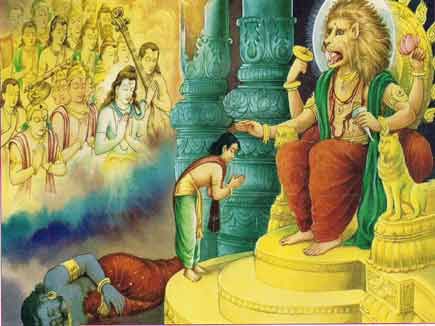
क्रूर राक्षस हिरण्यकश्यप को हराने और मारने के बाद, भगवान नरसिंहदेव प्रह्लाद महाराज को 3 महत्वपूर्ण निर्देश देते हैं।
लेकिन निर्देश देने से पहले उन्होंने जानना चाहा कि प्रह्लाद की क्या इच्छा है। इसलिए, भगवान ने प्रह्लाद से कोई वरदान मांगने को कहा। प्रह्लाद की कोई भौतिक इच्छा नहीं थी और वह भगवान से कोई भौतिक आशीर्वाद नहीं चाहता था।
भक्त प्रह्लाद अच्छी तरह जानते थे कि कोई भी भौतिक इच्छा भले ही पूरी हो जाए, वह भयानक पीड़ा का स्रोत है। इसलिए, उन्होंने भगवान से विनती की कि उन्हें कोई भौतिक आशीर्वाद न दें, बल्कि उन्हें उनके दिव्य चरणों में आश्रय दें, जो पूरे ब्रह्मांड का आश्रय है।
भगवान नरसिंहदेव यह जानकर बहुत प्रसन्न हुए कि उनका भक्त सभी भौतिक उद्देश्यों से मुक्त है और केवल शुद्ध भक्ति में लीन है।
भगवान परम उपकारी हैं, वे जानते थे कि प्रह्लाद के लिए सबसे अच्छा क्या है और पूरी दुनिया के लिए सबसे अच्छा क्या है।
तो, भगवान नरसिंहदेव ने प्रह्लाद को निम्नलिखित 3 निर्देश दिए और उसे अपने लाभ के लिए और पूरी दुनिया के लाभ के लिए इसका पालन करने के लिए कहा।
राजा बनो और ऐश्वर्य का आनंद लो
हालाँकि प्रह्लाद को इसमें कोई दिलचस्पी नहीं थी, लेकिन भगवान ने उसे राजा के रूप में सिंहासन पर बैठाया और उसे अपने पिता द्वारा जमा किए गए ऐश्वर्य का आनंद लेने का निर्देश दिया।
“भगवान ने कहा: मेरे प्रिय प्रह्लाद, आप जैसे भक्त कभी भी इस जीवन में या अगले जीवन में किसी भी प्रकार की भौतिक ऐश्वर्य की इच्छा नहीं रखते हैं। फिर भी, मैं आपको आदेश देता हूं कि आप इस भौतिक संसार में राक्षसों के ऐश्वर्य का आनंद लें, मनु के समय की अवधि के अंत तक उनके राजा के रूप में कार्य करें। ” श्रीमद्भागवतम 7.10.11
जब हिरण्यकशिपु प्रह्लाद को प्रताड़ित कर रहा था और निर्दयतापूर्वक उसे मारने की कोशिश कर रहा था तब कोई भी उसे बचाने नहीं आया।
वह सिर्फ 5 साल का था। ऐसा लगता है कि उसकी मां भी अपने बच्चे को बचाने नहीं आई। कम से कम भागवतम में यह उल्लेख नहीं है कि वह प्रह्लाद को बचाने की कोशिश कर रही थी। शायद वह अपने पति से डरती थी।
किसी भी शक्तिशाली देवता ने प्रह्लाद की रक्षा करने की कोशिश तक नहीं की।
प्रह्लाद ने कहीं आश्रय की तलाश नहीं की। वह न तो अपनी मां के पास गया और न ही देवताओं के पास। उसने केवल भगवान की शरण ली। और प्रभु ने उसे बचा लिया। भगवद गीता में भी भगवान यही वादा करते हैं।
“समस्त प्रकार के धर्मों का परित्याग करो और मेरी शरण में आओ । मैं समस्त पापों से तुम्हारा उद्धार कर दूँगा । डरो मत ।” भगवद गीता 18.66
भक्त सबसे भाग्यशाली
अब भगवान प्रह्लाद को सभी ऐश्वर्य प्रदान कर रहे हैं और उन्हें राजा बना रहे हैं। प्रह्लाद को भगवान नरसिंहदेव का पहला निर्देश यह है कि आप राजा बनें और आनंद लें।
भगवान के भक्त सबसे बुद्धिमान और सबसे भाग्यशाली होते हैं क्योंकि वे इस दुनिया में खुश रहते हैं और जीवन के अंत में आध्यात्मिक दुनिया में वापस चले जाते हैं।
ऐसा भी लगता है कि चूंकि हिरण्यकशिपु ने बड़ी तबाही मचाई थी और लोगों को नास्तिक बना दिया था, इसलिए भगवान एक भक्त उपदेशक चाहते थे जो लोगों को भक्ति के मार्ग पर ले जाए। इसलिए उन्होंने प्रह्लाद को राजा बनाया।
प्रह्लाद की तरह, हमें हमेशा सभी स्थितियों में भगवान की शरण लेनी चाहिए। भगवान वादा करते हैं कि वह अपने भक्तों की देखभाल करते हैं जैसे एक पिता अपने बेटे की देखभाल करता है।
“किन्तु जो लोग अनन्यभाव से मेरे दिव्यस्वरूप का ध्यान करते हुए निरन्तर मेरी पूजा करते हैं, उनकी जो आवश्यकताएँ होती हैं, उन्हें मैं पूरा करता हूँ और जो कुछ उनके पास है, उसकी रक्षा करता हूँ |” भगवद गीता 9.22
हमेशा मुझमें लीन रहो
भगवान नरसिंहदेव प्रह्लाद से कहते हैं, “इससे कोई फर्क नहीं पड़ता कि आप भौतिक दुनिया में हैं। आपको मेरे द्वारा दिए गए निर्देशों और संदेशों को हमेशा, लगातार सुनना चाहिए और हमेशा मेरे विचार में लीन रहना चाहिए, क्योंकि मैं हर किसी के दिल में मौजूद परमात्मा हूं। अत: फलदायी गतिविधियाँ का परित्याग कर मेरी उपासना करो।” श्रीमद्भागवतम 7.10.12
यद्यपि प्रभु ने उसे राजा बनाया लेकिन उसके तुरंत बाद वह निर्देश दे रहे हैं कि उसे कैसे कार्य करना चाहिए। भगवान प्रह्लाद से कहते हैं कि तुमको चिंता नहीं करनी चाहिए कि तुम भौतिक दुनिया में हो। इस दुनिया में भी अगर तुम हमेशा मेरी पूजा करते हो, मेरे नाम का जाप करते हो तो तुम हमेशा मेरे साथ हो।
परमात्मा के रूप में भगवान हमेशा हमारे दिल में हमारे साथ रहते हैं। लेकिन हम अपनी इन्द्रियतृप्ति में इतने व्यस्त हैं कि हम इसके बारे में शायद ही सोचते हैं। भगवान इतने दयालु हैं कि हमारे हृदय में परमात्मा के रूप में वे धैर्यपूर्वक प्रतीक्षा करते हैं और आशा करते हैं कि एक दिन आएगा जब हम उनपर ध्यान देंगे और उनके साथ संबंध विकसित करना शुरू करेंगे। अगर हम हमेशा परमात्मा से जुड़े रहेंगे, तो हम हमेशा खुश रहेंगे।
इसलिए, अपने सांसारिक कर्तव्यों में संलग्न रहते हुए, हमें निरंतर परमेश्वर का ध्यान करना चाहिए, जो हमारे हृदय में निवास करते हैं। अगर हम ऐसा करते हैं तो हम हमेशा परमेश्वर की शरण में रहेंगे।
प्रभु को सब कुछ अर्पित करो
साथ ही, हम इस संसार में जो भी कार्य करते हैं, वह परमेश्वर को अर्पण करना चाहिए।
भगवद गीता में भी भगवान कृष्ण अर्जुन से कहते हैं कि तुम जो कुछ भी करो, वह मुझे भेंट के रूप में करो।
“हे कुन्तीपुत्र! तुम जो कुछ करते हो, जो कुछ खाते हो, जो कुछ अर्पित करते हो या दान देते हो और जो भी तपस्या करते हो, उसे मुझे अर्पित करते हुए करो |” भगवद गीता 9.27
प्रह्लाद की तरह हमें भी ईमानदारी से अपनी जिम्मेदारियों का निर्वहन करना चाहिए और साथ ही साथ भगवान का ध्यान करना चाहिए।
अपने पवित्र और अधर्मी कर्मों को समाप्त करके आध्यात्मिक दुनिया में वापस आ जाओ
“भगवान नरसिंहदेव कहते हैं, “मेरे प्रिय प्रह्लाद, जब आप इस भौतिक दुनिया में हैं, तो आप खुशी महसूस करके पवित्र गतिविधि की सभी प्रतिक्रियाओं को समाप्त कर देंगे, और पवित्रता से कार्य करने से आप अधर्म को बेअसर कर देंगे। शक्तिशाली समय कारक के कारण, आप अपने शरीर को त्याग देंगे, लेकिन आपकी गतिविधियों की महिमा स्वर्गीय ग्रहों में गाई जाएगी, और सभी बंधनों से पूरी तरह मुक्त होकर, आप घर लौट आएंगे, वापस भगवान के पास।” श्रीमद्भागवतम 7.10.13
इस दुनिया में अगर हम कुछ बुरा करते हैं तो हमें भुगतना ही पड़ता है। हम में से ज्यादातर लोग इस बारे में जानते हैं। लेकिन अगर हम कुछ पवित्र कार्य करते हैं तो वह भी ज्यादा मदद नहीं करता है। क्यों? क्योंकि पुण्य का आनंद लेने के लिए हमें इस भौतिक संसार में जन्म लेना होगा। और हम जानते हैं कि यह संसार दुखों से भरा है।
अब, यदि कोई यह सोचता है कि वह केवल पवित्र कार्य करेगा और इस भौतिक संसार में सुख से रहेगा, तो यह करना भी आसान नहीं है। क्योंकि यह भौतिक संसार ऐसा बना है कि न चाहते हुए भी हम कुछ अनुचित कर ही जाते हैं। इस संबंध में हमारे शास्त्रों में कई कथाएं हैं।
उदाहरण के लिए, राजा दशरथ ने धर्मपरायण श्रवण कुमार को मारने के बारे में सोचा भी नहीं था, लेकिन गलती से उन्होंने उसे मार डाला। अब हमारे काम में भी, हमें नहीं पता होता है कि हमारी गतिविधि दूसरों को कोई नुकसान पहुंचा रही है या नहीं।
भगवान को हमेशा केंद्र में रखें
मान लीजिए कि कोई डॉक्टर है, वह मरीज का इलाज करने की पूरी कोशिश कर रहा है लेकिन अस्पताल के कर्मचारी मरीज को उचित दवा नहीं दे रहे हैं और मरीज की मौत हो जाती है। हालांकि डॉक्टर सीधे तौर पर जिम्मेदार नहीं है, लेकिन चूंकि वह उस अस्पताल से अपना वेतन ले रहा है, इसलिए कर्म का कुछ हिस्सा उसे भी मिलेगा। कभी-कभी ईर्ष्या से दूसरे लोग समाज में हमें बदनाम करने के लिए हमारे खिलाफ झूठे आरोप लगा देते हैं।
इसलिए कोई भी गतिविधि करते समय हमें सावधानी बरतनी चाहिए।
लेकिन जब तक हम पाप और पुण्य के चक्र में फंसे रहेंगे, तब तक हम इस दुनिया में बार-बार जन्म और मृत्यु के चक्र में बंधे रहेंगे।
हालांकि, अगर हम शास्त्रों के अनुसार काम करते हैं और भगवान को हमेशा केंद्र में रखते हैं तो हमें ज्यादा चिंता करने की जरूरत नहीं है। प्रभु यह सुनिश्चित करेंगे कि वह हमारे सभी पवित्र और अधर्मी कार्यों को समाप्त कर दें और हम आध्यात्मिक दुनिया में लौटने के योग्य हो जाएँ।
श्रील प्रभुपाद लिखते हैं, “यद्यपि कोई दुष्टतापूर्वक कार्य नहीं करना चाहता है, दुनिया ऐसी रची हुई है कि हमेशा खतरा होता है (पद: पदम् यद विपदम)। इस प्रकार भक्ति सेवा करते समय भी एक भक्त कई शत्रु पैदा करता है। प्रह्लाद महाराज को स्वयं इसका अनुभव था, क्योंकि उनके पिता भी उनके दुश्मन बन गए थे। एक भक्त को हमेशा भगवान के बारे में सोचने का प्रबंधन करना चाहिए ताकि दुख की प्रतिक्रियाएं उसे छू न सकें। यह पाप-पुण्य को कुशलता से प्रबंधित करने का तरीका है।”
प्रह्लाद की महिमा
यहाँ भगवान, प्रह्लाद से यह भी कहते हैं कि उनके असाधारण कार्यों के कारण उनकी महिमा हर जगह विशेष रूप से ऊपरी स्वर्गीय ग्रहों में गाई जाएगी। और यह सच है। भगवान नरसिंहदेव की यह लीला सतयुग में हुई थी और इस युग में भी हम प्रह्लाद महाराज की महिमा गा रहे हैं।
निष्कर्ष
ये तीन महत्वपूर्ण निर्देश भगवान नरसिंहदेव ने प्रह्लाद को दिए थे। भगवान चाहते थे कि प्रह्लाद आप और मेरे जैसे लोगों को इस भौतिक दुनिया में कैसे आचरण करें, यह सिखाने के लिए सांसारिक जिम्मेदारियां उठाएं। भगवान के शुद्ध भक्त बनने के लिए, हमें अपनी सांसारिक जिम्मेदारी नहीं छोड़नी है। हमें अपने कर्तव्यों को जिम्मेदारी से निभाना चाहिए।
और हमें हमेशा उस प्रभु की पूजा करनी चाहिए जो हमारे दिल में हमेशा हमारे साथ है। यदि हम ऐसा करते हैं, तो प्रह्लाद की तरह हमें भी भगवान नरसिंहदेव की कृपा प्राप्त होगी।
हमें प्रह्लाद महाराज के चरण कमलों में प्रार्थना करनी चाहिए और उनका आशीर्वाद लेना चाहिए ताकि हम भी उनके नक्शेकदम पर चल सकें और परमेश्वर को प्रसन्न कर सकें। भगवान नरसिंहदेव बहुत दयालु हैं, वे भक्तों को सभी बुरी आत्माओं से, सभी दुर्भाग्य से और सभी आपदाओं से बचाते हैं। भगवान नरसिंहदेव मार्ग से सभी बाधाओं को दूर करते हैं ताकि भक्त बिना किसी भय और चिंता के भक्ति कर सके।
भगवान नरसिंहदेव ने प्रह्लाद को ये तीन निर्देश दिए थे और अगर हम भी प्रह्लाद की तरह आचरण करेंगे तो हमारा जीवन भी सफल हो जाएगा।
Search
Recent Posts
-
Srimad Bhagavatam at ISKCON Newtown...
September 3, 2026
-
Srimad Bhagavatam at ISKCON Newtown...
September 1, 2026
-
Janmashtami: Celebrating Krishna’s Appearance Through...
August 17, 2026
-
Gopinatha Pattanayaka: 6 Lessons for...
August 16, 2026
-
What Does Krishna Say About...
August 11, 2026
3 instructions of Lord Narasimhadeva to Prahlada & the lessons we can learn from them
After defeating and killing the cruel demon, Hiranyakasipu, Lord Narasimhadeva gave 3 important instructions to Prahlada Maharaj.
But before instructing, he wanted to know the desire of Prahlada. So, the Supreme Lord asked his dear devotee for any benediction. Prahlada had no material desires and did not want any material benediction from the Supreme Lord. The great devotee knew well that any material desire even if it is fulfilled is the source of terrible suffering.
So, he begged the Lord to not give him any material benediction. But just give him shelter at his transcendental feet which is the shelter of the entire universe.
Lord Narasimhadeva was so happy to know that his devotee is free of all material motives and is only absorbed in unalloyed pure devotional service.
The Supreme Lord is the Supreme benefactor, he knew what is best for Prahlada and what is best for the whole world.
So, Lord Narasimhadeva gave following 3 instructions to little Prahlada and asked him to follow it for his own benefit and for the benefit of the whole world.
Be the King & Enjoy the opulence
Prahlada was least interested, but the Lord enthroned him as the king. And also instructed him to enjoy the opulence accumulated by his father.
“The Supreme Personality of Godhead said: My dear Prahlāda, a devotee like you never desires any kind of material opulences, either in this life or in the next. Nonetheless, I order you to enjoy the opulences of the demons in this material world, acting as their king until the end of the duration of time occupied by Manu.” Srimad Bhagavatam 7.10.11
When Hiranyakasipu was torturing Prahlada and was trying to mercilessly kill him then no one came to rescue him. He was just 5 years old. It seems even her mother did not come to save her child. At least it is not mentioned in Bhagavatam that she was trying to save Prahlada. Maybe she was afraid of her husband.
None of the powerful demigods even tried to protect Prahlada. Prahlada did not look for shelter anywhere. He neither approached his mother nor the demigods. He only took shelter of the Supreme Lord. And the lord saved him. In Bhagavad Gita too, the Lord promises the same.
“Abandon all varieties of religion and just surrender unto Me. I shall deliver you from all sinful reactions. Do not fear.” Bhagavad Gita 18.66
Devotees most fortunate
Now the Lord is offering all opulence to Prahlada and is making him the king. The devotees of the Supreme Lord are most intelligent and most fortunate because he remains happy in this world. And after this life returns back to the spiritual world.
It also seems that since Hiranyakasipu had created great havoc and had made people atheist, so the Lord wanted a powerful devotee preacher who ca lead the people on the path of devotion. So, he made Prahlada the king.
Like Prahlada, we should always take shelter of the Supreme Lord, in all situations and circumstances. Lord promises that he takes care of his devotees like a father who takes care of his son.
“But those who always worship Me with exclusive devotion, meditating on My transcendental form – to them I carry what they lack, and I preserve what they have.” Bhagavad Gita 9.22
Always think of me
Lord Narasimhadeva says to Prahlada, “It does not matter that you are in the material world. You should always, continuously, hear the instructions and messages given by Me and always be absorbed in thought of Me, for I am the Supersoul existing in the core of everyone’s heart. Therefore, give up fruitive activities and worship Me.” Srimad Bhagavatam 7.10.12
Although the Lord made him the king but immediately after that he is instructing that how he should act. The Lord says to Prahlada that you should not worry that you are in the material world. In this world too, if you are always worshipping me, chanting my names then you are always with me.
The Supreme Lord as Supersoul is always there with us in our heart. But we are so busy in our sense gratification that we hardly think about it. The Lord is so kind that in our heart as Supersoul, he patiently waits and hope that a day will come when we will notice him and start developing relationship with him. But if we always remain connected with our Supersoul, we will always be happy.
So, while engaged in our worldly duties, we should constantly meditate on the Supreme Lord, who resides in our heart. If we do so then we will always remain under the shelter of the Supreme Lord. Also, whatever activities we do in this world, it should be an offering to the Supreme Lord.
In Bhagavad Gita also Lord Krishna says to Arjuna:
“Whatever you do, whatever you eat, whatever you offer or give away, and whatever austerities you perform – do that, O son of Kuntī, as an offering to Me.” Bhagavad Gita 9.27
Like Prahlada we should sincerely execute our responsibilities and simultaneously meditate on the Lord.
Exhaust your pious & impious karma and come back to the spiritual world
Lord Narasimhadeva says, “My dear Prahlāda, while you are in this material world you will exhaust all the reactions of pious activity by feeling happiness, and by acting piously you will neutralize impious activity. Because of the powerful time factor, you will give up your body, but the glories of your activities will be sung in the upper planetary systems, and being fully freed from all bondage, you will return home, back to Godhead.” Srimad Bhagavatam 7.10.13
In this world if we do something bad then we have to suffer, most of us know about this. But if we do some pious activity then also it will not be of much help. Why? Because to enjoy punya we will have to take birth in this material world. And we know that this world is full of suffering.
Now, if someone thinks that he will only do pious activity and live happily in this material world, then that is also not easy to do. Because this material world is so designed that even if we do not want, we end up doing something improper.
There are so many stories in our scriptures regarding this. For example, king Dasharatha did not even think of killing pious, Sravan Kumar, but mistakenly he killed him. Now in our work also, we do not know if our activity is causing any harm to others.
Always keep Lord in the center
Suppose that someone is a doctor, he is trying his best to treat the patient but the hospital staff is not administering proper medicine to the patient and the patient dies. Although he is not directly responsible but since he is drawing his salary from that hospital so some portion of karma he will also get. Sometimes out of envy others may level false allegation against us to defame us in the society. So, while doing any activity we should be extra cautious.
But as long as we are caught up in the cycle of pap and punya, we will keep on transmigrating in the repeated cycle of birth and death.
However, if we try to do things as per the scriptures to the best of our capability and always keep Lord in the centre then we do not have to worry much. The Lord will make sure that he nullifies all our pious and impious activities. And then we will become qualified to return back to the spiritual world, to the kingdom of God.
Srila Prabhupada writes, “Although one does not want to act impiously, the world is so fashioned that there is always danger (padaṁ padaṁ yad vipadām). Thus even when performing devotional service a devotee has to create many enemies. Prahlāda Mahārāja himself had experience of this, for even his father became his enemy. A devotee should expertly manage to think always of the Supreme Lord so that the reactions of suffering cannot touch him. This is the expert management of pāpa-puṇya — pious and impious activities.”
Here the Supreme Lord, says to Prahlada that his glories will be sung everywhere especially in the upper planetary system because of his extraordinary deeds. And this is so true. This pastime of Lord Narasimhadeva took place in Satya Yuga and still we sing the glories of Prahlada Maharaj.
Conclusion
These were the three important instructions Lord Narasimhadeva gave to Prahlada. The Supreme lord wanted Prahlada to take up worldly responsibilities to teach people like you and me how to conduct ourselves in this material world. To become a pure devotee of the Lord, we do not have to give up our worldly responsibility. We should do our duties in a responsible way. And always worship the Lord who is always with us in our heart. Like Prahlada, we will also get the mercy of Lord Narasimhdeva.
We should pray at the lotus feet of Prahlada Maharaj and seek his blessings so that we can also follow his footsteps and please the Supreme Lord. Lord Narasimhadeva is very compassionate, he protects the devotees from all evil spirits, from all misfortunes and from all calamities. The Supreme Person removes all the obstacles from the path so that devotees can practice devotion without any fear and anxiety.
Lord Narasimhadeva gave these three instructions to Prahlada and if we also conduct ourselves like Prahlada then our life will become successful.
Search
Recent Posts
-
Srimad Bhagavatam at ISKCON Newtown...
September 3, 2026
-
Srimad Bhagavatam at ISKCON Newtown...
September 1, 2026
-
Janmashtami: Celebrating Krishna’s Appearance Through...
August 17, 2026
-
Gopinatha Pattanayaka: 6 Lessons for...
August 16, 2026
-
What Does Krishna Say About...
August 11, 2026
Bhagavad Gita Quiz 2

Wrong shortcode initialized
Attempt this quiz to test your knowledge of Bhagavad Gita. Questions are mostly from Chapter 6 of Bhagavad Gita. So, before answering the Quiz Question, please read the Chapter.
All the best! Hare Krishna!
Search
Recent Posts
-
Srimad Bhagavatam at ISKCON Newtown...
September 3, 2026
-
Srimad Bhagavatam at ISKCON Newtown...
September 1, 2026
-
Janmashtami: Celebrating Krishna’s Appearance Through...
August 17, 2026
-
Gopinatha Pattanayaka: 6 Lessons for...
August 16, 2026
-
What Does Krishna Say About...
August 11, 2026
Narada Muni’s search for greatest devotee of Lord Vishnu
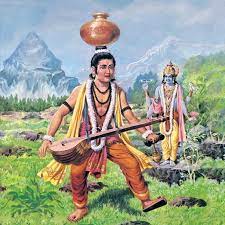
Once sage Narada got a question that who is the greatest devotee of Lord Vishnu. He thought, “Instead of finding myself let me ask Lord Vishnu.”
Also, in his mind he was thinking that “since I am always chanting the name Narayana on my vina, so my beloved Lord will surely tell that I am his greatest devotee.” But he wanted to hear this directly from the Lord. So, Narada went to Lord Vishnu and prayerfully asked, “My dear Lord, can you please tell me who is your greatest devotee?”
Lord Vishnu reveals the answer
Narada was desperately waiting for the answer. Lord Vishnu looked at Narada, smiled a little and said, “My dear son, a farmer residing on earth is my best devotee.”
The celestial sage could not believe what he heard, “How can this be possible? On my lips and in my heart, there is always the name of Narayana. What this fortunate farmer is doing that I am not doing? He could not resist himself and blurted out, “Dear Lord, can you please tell me what devotion he performs that you consider him the best?”
Lord Vishnu understood what is going on in Narada’s heart. So, he said, “Instead of me telling you about his devotional activities. Why don’t you go to his house and see for yourself what he is doing?”
Farmer’s devotion
Narada agreed with the Lord. He took the address and immediately flew with a lightning speed and reached the house of the farmer. He wanted to eagerly see the best devotee of Lord Vishnu in the entire creation. Instead of directly going and asking farmer about his activities, he thought because a devotee never likes to hear his glorification so let me hide myself and see his activities.
He saw that the farmer got up early in the morning. As he got up, he folded his palms and chanted the name Narayana. He then began his morning duties. Till afternoon he was busy in his household work and then he had gone to his farm. In the afternoon, just before taking lunch, he folded his palms and chanted the name Narayana and again he got busy with his work. And in the night just before sleeping, he again chanted the name Narayana.
Narada was perturbed, “The farmer took the name “Narayana” only three times but he takes the name Narayana every moment but the Supreme Lord considered farmer to be his greatest devotee.”
Lord Vishnu explains why farmer’s devotion is best
He immediately went to the abode of Lord Narayana. The Supreme Lord understood why Narada is here.
Before Narada could say anything, Lord said, “Dear Narada, I have a small work for you. Will you please do it?”
Narada said, “You do not have to ask me. Just order me.”
The Lord said, “Can you please bring me a pot of water which is filled up to brim?”
Narada said, “sure, my Lord.” As he was about to leave to fetch water, the Lord said, “But one important thing you have to remember. Make sure that not even a single drop falls down from the pot. If it happens, I will not accept the water.”
Narada nodded his head and left to bring the water. Finally, he brought the pot completely filled with water. Also he had made sure that not even a single drop falls down.
Lord Vishnu appreciated the effort of his dear devotee and thanked him. He then asked, “Now tell me, when you were bringing water for me and making sure that not even a drop falls down then how many times you chanted my name?”
Narada was speechless. He realized that he did not chant the name of “Narayana” even once while doing this service.
Lord continued, “The farmer was busy whole day but from his busy schedule he found time to take my name. Is it true or not?”
Narada who was feeling embarrassed nodded his head in affirmation.
Lord further said, “so now tell me who is my greatest devotee?”
The celestial sage got answer to his question that who is the greatest devotee of Lord Vishnu.
So, 3-minute bhakti is sufficient?
One of my friends told me this story when in college I was trying to convince him to practice Krishna consciousness. When I heard this story, I did not have any answer. Because the story looks so nice.
According to this story there is no need to always chant the name of God. We just need to focus on our work and 3 time in a day – morning, afternoon and evening – we should just chant the names of God.
As devotees we chant 16 rounds of Hare Krishna Mahamantra daily which takes around 2 hours. Then we do mangal arati, Narasimha arati, Tulasi Arati, chant Siksastakam prayers and read or hear Srimad Bhagavatam for an hour a day. So, we spend almost 5 hours in the morning in prayers and during the day too we are supposed to always be conscious of Krishna and if we have any extra time then we should utilize it in practicing and propagating Krishna Consciousness.
But if we follow the footsteps of the farmer then it means that in a day, we have to chant the name of Krishna just 3 times which will at max take 3 minutes. So, 3 minutes of chanting will make us too the greatest devotee of Krishna!
What is the truth of this story?
I asked this question to devotees. They heard it but did not have the answer. However, one senior devotee told me that story is very interesting, but can you please tell that this story is from which scriptures. Does it appear in any of the four Vedas or 18 puranas or in Ramayana and in any other literature written by Vaisnava acharyas.
I had no answer because I had forgotten to ask the reference from my friend. Later I read about this story at many places and by other persons too but no one has given me reference of this story.
So, now the question is if this story is not mentioned in any of the scriptures then can we not say that this story is false? Here the question to Lord Vishnu is who is his greatest devotee. This is not an ordinary question. Answer to this question is so important for our spiritual life. So, if such an important story is not mentioned in any of the scriptures and by any great Vaisnava acharyas, so it seems that this story is not authentic.
I do not claim that I know all the scriptures, so if you know the source of this story then please do let me know in the comment section.
Also, this story of farmer is not in line with the teachings of the scriptures and the sages.
Examples of great devotee of Lord from scriptures
In Bhagavad Gita, Krishna himself explicates the activities of his pure devotees.
Krishna says, “Always chanting My glories, endeavoring with great determination, bowing down before Me, these great souls perpetually worship Me with devotion.” Bhagavad Gita 9.14
Krishna is saying that his pure devotees always chant his glories.
Sri Chaitanya Mahaprabhu in Siksastakam Verse 3 says
“One should chant the holy name of the Lord in a humble state of mind, thinking oneself lower than the straw in the street; one should be more tolerant than a tree, devoid of all sense of false prestige, and should be ready to offer all respect to others. In such a state of mind one can chant the holy name of the Lord constantly.”
Again Sri Chaitanya Mahaprabhu is saying to constantly chant the holy name, the Hare Krishna Mahamantra.
In Ramayana we see that the monkey warriors while constructing the mammoth bridge, Ram Setu, were not just writing the name of Lord Rama on the stones but were constantly chanting the names of Lord Rama while doing their work.
Srimad Bhagavatam tells the story of Ambarish Maharaj who was an emperor and a great devotee of the Supreme Lord. As a ruler of the world, he was extremely busy but still he was constantly engaged in practicing devotion to God.
Great devotees of Lord work hard but also
So, from the examples given in the scriptures and by analysing the life of the pure devotees of Lord we can say that they were always engaged in chanting and singing the glories of the Lord. And they did their work very seriously too. It was not that they were lazy and gave up their duties but while doing their duty they always chanted the name of the Lord.
Once a person had a query that why Krishna is so much concerned about Arjuna. Krishna said that it is because Arjuna always keeps on calling his name. To prove that he took the person to Arjuna’s bedside. Although Arjuna was sleeping at that time but with each breath, he was calling the name of Krishna.
In Vrindavana also we see that Mother Yashoda and other gopis while churning the butter keeps in singing the songs which glorifies Lord Krishna.
And if we see the life of sage Narada, we find that still he constantly chants the name of Narayana on his vina. I think that if the farmer story was true then Narada would have stopped constantly chanting the names of Narayana.
Search
Recent Posts
-
Srimad Bhagavatam at ISKCON Newtown...
September 3, 2026
-
Srimad Bhagavatam at ISKCON Newtown...
September 1, 2026
-
Janmashtami: Celebrating Krishna’s Appearance Through...
August 17, 2026
-
Gopinatha Pattanayaka: 6 Lessons for...
August 16, 2026
-
What Does Krishna Say About...
August 11, 2026
परम पूज्य जयपताका स्वामी महाराज का 73वां व्यास पूजा उत्सव
12 अप्रैल 2022 को, इस्कॉन से जुड़े कृष्ण के भक्तों ने परम पूज्य जयपताका स्वामी महाराज की 73वीं व्यास पूजा मनाई। महाराज श्रील प्रभुपाद के एक वरिष्ठ शिष्य हैं और इस्कॉन के एक वरिष्ठ संन्यासी ।
दुनिया भर में शिष्य
दुनिया भर में उनके हजारों शिष्य हैं। मैं सटीक संख्या नहीं जानता, लेकिन पूरी दुनिया में उनके 50,000 से अधिक शिष्य हैं। कहा जाता है कि आज अगर आप दुनिया के किसी भी हिस्से में जाएं तो आपको इस्कॉन सेंटर मिल जाता है। इसी तरह, हम यह भी कह सकते हैं कि यदि हम दुनिया के किसी भी हिस्से में जाते हैं, तो हमें कोई ऐसा व्यक्ति मिलेगा जो परम पूज्य जयपताका स्वामी महाराज का शिष्य हो।
ऐसा नहीं है कि केवल उनके शिष्य ही उनसे प्रेरित हैं बल्कि इस्कॉन में हर भक्त महाराज से प्रेरित है। वे इस्कॉन के सभी भक्तों के मार्गदर्शक हैं।
परम पूज्य जयपताका स्वामी महाराज की व्यास पूजा 12 अप्रैल 2022 को मायापुर में मनाई गई जिसमें लगभग 20,000 भक्तों ने भाग लिया। इसके साथ ही हजारों लोगों ने इसे लाइव देखा और कई भक्तों ने अपने घरों और स्थानीय मंदिरों में व्यास पूजा भी की।
भौतिक नहीं बल्कि आध्यात्मिक
आज अगर हम महाराज को अपनी भौतिक दृष्टि से देखते हैं तो हम कह सकते हैं कि उनके पास शारीरिक चुनौतियां है। लेकिन अपनी भौतिक दृष्टि से भी, हम महाराज के असाधारण समर्पण की सराहना करने से खुद को नहीं रोक सकते। वह अभी भी बहुत सक्रिय और उत्साही हैं।
अगर हमें शास्त्रों का थोड़ा भी ज्ञान है तो हम आसानी से समझ सकते हैं कि महाराज कोई साधारण व्यक्तित्व नहीं हैं, बल्कि कृष्ण के शुद्ध भक्त हैं। वह देह से परे हैं। भगवद गीता में, भगवान कृष्ण कहते हैं कि हम शाश्वत आत्मा हैं और हमारा यह शरीर पांच स्थूल तत्वों और तीन सूक्ष्म तत्वों से बना है। शरीर तो बस एक बाहरी पोशाक है। आत्मा शाश्वत, आनंदमय और ज्ञान से परिपूर्ण है।
महाराज के जीवन से हम आसानी से समझ सकते हैं कि वे शरीर नहीं बल्कि शुद्ध आत्मा हैं। उनकी गतिविधियाँ भौतिक नहीं बल्कि पूरी तरह से आध्यात्मिक है। हम महाराज के जीवन से यह भी सीखते हैं कि हमारी कृष्ण भावनामृत यात्रा को कोई नहीं रोक सकता।
श्रील प्रभुपाद ने परम पूज्य जयपताका स्वामी महाराज को मायापुर जाने के लिए क्यों कहा?
श्रील प्रभुपाद ने कहा था कि परम पूज्य जयपताका स्वामी महाराज भगवान नित्यानंद के शाश्वत पार्षद हैं। भगवान नित्यानंद ने सब कुछ त्याग दिया था और हमेशा कृष्ण के नाम जप में लीन रहते थे। महाराज भी नित्यानंद प्रभु के नक्शेकदम पर चल रहे हैं। परम पूज्य जयपताका स्वामी महाराज को 1968 में श्रील प्रभुपाद से दीक्षा मिली।
अपने शुरुआती दिनों से ही महाराज हमेशा जप में लीन रहते थे। वे जोर-जोर से कृष्ण के नाम का जाप करते थे। न सिर्फ आश्रम में बल्कि सड़क पर भी। लोग परेशान होने लगे। जल्द ही लोगों ने शिकायत करना शुरू कर दिया। इस बारे में श्रील प्रभुपाद को पता चला। दिलचस्प बात यह है कि प्रभुपाद नाराज नहीं हुए। उन्होंने महाराज को धीरे से जप करने के लिए नहीं कहा। इसके बजाय प्रभुपाद ने कहा कि आप मायापुर जाओ। क्योंकि अगर आप मायापुर में हरे कृष्ण महामंत्र का जोर जोर से जाप करेंगे तो किसी को आपत्ति नहीं होगी क्योंकि मायापुर भगवान चैतन्य का स्थान है जो संकीर्तन आंदोलन के प्रणेता हैं।
महाराज मायापुर चले गए और बाकी इतिहास है। जब वे मायापुर आए तो मायापुर भौतिक रूप से अच्छी तरह विकसित नहीं था। वहाँ रहना एक कठिन कार्य था। अब जब हम मायापुर जाते हैं तो हमें बहुत सारी सुविधाएं मिलती हैं – अच्छा परिवहन, अच्छा आवास, स्वादिष्ट प्रसाद, सब कुछ उपलब्ध है। तो, आज सिर्फ भक्त ही नहीं बल्कि वे लोग भी जो इस्कॉन से जुड़े नहीं हैं, मायापुर जाना पसंद करते हैं।
मायापुर के विकास का श्रेय महाराज को जाता है। श्रील प्रभुपाद ने उन्हें पवित्र धाम को इस तरह सुशोभित करने की जिम्मेदारी दी ताकि दुनिया भर से लोग मायापुर आने के लिए प्रेरित महसूस करें। और यही हम आज देख रहे हैं।
विजय पताका
उनका जन्म और पालन-पोषण अमेरिका में हुआ था। उनके पास सभी भौतिक सुविधाएं थीं। लेकिन जब उन्हें श्रील प्रभुपाद ने आदेश दिया तो बिना किसी हिचकिचाहट के वे खुशी-खुशी मायापुर जाने के लिए तैयार हो गए। आज हम देखते हैं कि बहुत से भारतीयों की अमरीका जाने की बड़ी इच्छा रहती है। इसके लिए वे H1B वीजा पाने के लिए बेताब रहते हैं । जब उन्हें वीजा मिलता है तो उन्हें लगता है कि उन्हें जीवन का सबसे कीमती तोहफा मिल गया है। और जब वे इसे पाने में असफल होते हैं, तो वे अपने भाग्य को कोसते हैं और उन्हें लगता है कि उनकी दुनिया बिखर गई है। लेकिन महाराज अमेरिकी नागरिक होते हुए भी मायापुर आकर बहुत खुश हुए। भौतिक दृष्टि से मायापुर भारत का एक सुदूर गाँव था।
लेकिन मायापुर किसी अन्य गांव की तरह नहीं है। यह एक धाम है, एक आध्यात्मिक स्थान है। यह न केवल भगवान चैतन्य का जन्म स्थान है बल्कि यह संकीर्तन आंदोलन का जन्मस्थान भी है। श्रीवास आंगन में भगवान चैतन्य के नेतृत्व में भक्त दिन-रात हरे कृष्ण महामंत्र का गायन करने के लिए एकत्र होते थे।
इसलिए, मायापुर को एक महत्वपूर्ण तरीके से विकसित किया जाना था। मायापुर धाम को विकसित करने के लिए एक सक्षम, समर्पित, ईमानदार और सबसे महत्वपूर्ण एक शुद्ध भक्त की आवश्यकता थी। श्रील प्रभुपाद एक शुद्ध भक्त और दूरदर्शी हैं। वह जानते थे कि यह असाधारण कार्य एक असाधारण भक्त द्वारा पूरा किया जा सकता है। इसलिए, उन्होंने परम पूज्य जयपताका स्वामी महाराज को चुना। प्रभुपाद ने उनका नाम जयपताका रखा जिसका अर्थ है विजय पताका। प्रभुपाद जानते थे कि महाराज हमेशा अपने प्रयासों में सफल होंगे। प्रभुपाद की इच्छा को पूरा करने के लिए महाराज ने खुद को मायापुर के विकास और कृष्ण भावनामृत फैलाने की सेवा में लगा दिया।
महाराज का प्रेम और करुणा
महाराज के महान गुणों में से एक यह है कि वे बहुत दयालु हैं। सिर्फ भक्तों के प्रति ही नहीं बल्कि सभी लोगों के प्रति। उनका प्यार और देखभाल करने वाला स्वभाव सभी को प्रेरित करता है। हालांकि दुनिया भर में उनके हजारों भक्त हैं लेकिन फिर भी, वे अपने प्रत्येक भक्त के साथ बहुत ही व्यक्तिगत तरीके से व्यवहार करते हैं। अगर हम महाराज से मिलते हैं, तो ऐसा लगता है कि उनके पास हमारे लिए पूरा समय है। कृष्ण की अकारण दया के कारण मुझे भी महाराज की व्यक्तिगत दया प्राप्त करने के कुछ अवसर मिले हैं।
वे न केवल व्यक्तिगत रूप से भक्तों की अच्छी तरह से देखभाल करते हैं, बल्कि वे यह भी उम्मीद करते हैं कि सभी भक्त एक-दूसरे के साथ बहुत सम्मान से पेश आएं। जब महाराज आज व्यास पूजा की कक्षा दे रहे थे तब एक भक्त ने पूछा कि महाराज को कौन सी एक चीज नापसंद है? तब महाराज ने कहा कि वे वैष्णव अपाध को नापसंद करते हैं।
तो, यदि हम महाराज को प्रसन्न करना चाहते हैं तो हमें किसी भी भक्त के साथ कभी भी बुरा व्यवहार नहीं करना चाहिए, चाहे स्थिति और परिस्थितियाँ कैसी भी हो।
परम पूज्य जयपताका स्वामी महाराज की 73वीं व्यास पूजा पर, मैं उनके चरणकमलों में उनकी दया के लिए प्रार्थना करता हूं ताकि मैं ईमानदारी और उत्साह के साथ कृष्ण की भक्ति कर सकूं।
यह भी पढ़ें
Thousands participate in Jayapataka Swami Maharaj’s 71st Vyasapuja Celebration in Mayapur
Search
Recent Posts
-
Srimad Bhagavatam at ISKCON Newtown...
September 3, 2026
-
Srimad Bhagavatam at ISKCON Newtown...
September 1, 2026
-
Janmashtami: Celebrating Krishna’s Appearance Through...
August 17, 2026
-
Gopinatha Pattanayaka: 6 Lessons for...
August 16, 2026
-
What Does Krishna Say About...
August 11, 2026
73rd Vyasa Puja Celebration Of H.H Jayapataka Swami Maharaj
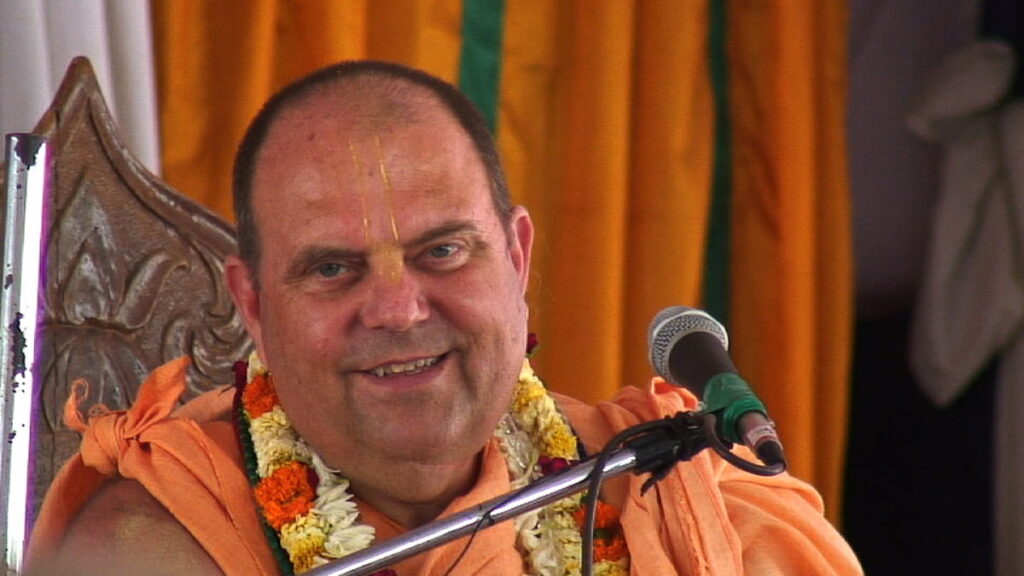
On 12th April 2022, devotees of Krishna associated with Iskcon celebrated the 73rd Vyasa Puja of HH Jayapataka Swami Maharaj. Maharaj is a senior disciple of Srila Prabhupada and one of the senior most sannyasi and Iskcon leader.
Disciples all over the world
He has thousands of disciples all over the world. I do not know the exact number, but he has more than 50, 000 disciples all over the world. It is said that today if you go to any part of the world, you can find a Iskcon center. Similarly, we can also say that if we go to any part of the world, we will find someone who is a disciple of HH Jayapataka Swami Maharaj.
It is not that only his disciples are inspired by him but every devotee in Iskcon feel tremendously inspired by Maharaj. He is one of the beacon lights of Iskcon.
H.H Jayapataka Swami Maharaj’s vyasa puja was celebrated in Mayapur on 12th April 2022 in which almost 20,000 devotees participated. Along with that thousands of people watched it live and many devotees also celebrated vyasa puja at their homes and in local temples.
Activities not material but spiritual
Today if we see Maharaj with our material vision then we may say that he has physical challenges. But even with our material vision, we cannot resist appreciating Maharaj’s extraordinary dedication despite physical issues. He is still very active and enthusiastic.
If we have even little knowledge of the scriptures then we can easily understand that Maharaj is not an ordinary personality but is a pure devotee of Krishna. He is beyond bodily consideration. In Bhagavad Gita, Lord Krishna says that we are eternal souls and this body of ours is made of five gross elements and three subtle elements. Body is just an outer dress. Soul is eternal, blissful and full of knowledge.
From Maharaj’s life we can easily understand that he is not body but a pure spirit soul. His activities are not material but completely spiritual. We also learn from Maharaj’s life that nothing can stop or should stop our Krishna Consciousness journey.
Why Srila Prabhupada asks HH Jayapataka Swami Maharaja to go to Mayapur?
Srila Prabhupada had famously said that HH Jayapataka Swami Maharaj is an eternal associate of Lord Nityananda. Lord Nityananda was completely detached and was always busy in chanting the names of Krishna and dancing for the pleasure of Krishna. Maharaj has similar traits. HH Jayapataka Swami Maharaj was initiated by Srila Prabhupada in 1968.
Since his initial days, Maharaj would always remain absorbed in chanting. And he would not chant the names of Krishna softly but he would chant loudly. Not just in the ashram, monastery, he chanted loudly but he would also chant loudly on the road. This would create disturbance. Soon people started complaining. Srila Prabhupada came to know about this. Interesting thing is that Prabhupada was not upset. He did not ask Maharaj to reduce the volume of his chanting. Instead Prabhupada said that you should go to Mayapur. Because if you chant and sing loudly for Krishna then no one will object in Mayapur because Mayapur is the place of Lord Chaitanya who is the pioneer of sankirtana movement.
Maharaj moved to Mayapur and rest is history. When he came to Mayapur then Mayapur was not well developed materially. Living there was a herculean task. Now when we go to Mayapur we get lots of facilities – good transportation, good accommodation, varieties of foodstuff, in fact everything is available. So, today, not just devotees but even people who are not associated with Iskcon like to go to Mayapur.
The credit for developing Mayapur goes to Maharaj. Srila Prabhupada gave him the responsibility to beautify the holy dham in such a way that people from all over the globe feel inspired to come to Mayapur. And this is what we are seeing today.
Always victorious
He was born and brought up in America. He had all the material facilities. But when he was ordered by Srila Prabhupada then without any hesitation he happily agreed to go to Mayapur Today we see that many Indians have great desire to go to USA. For this they are desperate for H1B visa. When they get it, they feel that they have got the most precious gift of life. And when they fail to get it, they curse their destiny and feel like their world has fallen apart. But Maharaj in spite of being an American citizen, he was so happy to come to Mayapur. From material consideration, Mayapur was a remote village in India.
But Mayapur is not like any other village. It’s a dham, a spiritual abode. It is also not just the birthplace of Lord Chaitanya but it is also the birthplace of sankirtana movement. At Srivas Angan devotees under the leadership of Lord Chaitanya would congregate day and night to sing the Hare Krishna Mahamantra and dance.
So, Mayapur had to be developed in a significant way. And to develop Mayapur dham an able, dedicated, sincere and most importantly a pure devotee was required. Srila Prabhupada was a pure devotee and a visionary. He knew that this extraordinary task can be accomplished by an extraordinary devotee. So, he selected HH Jayapataka Swami Maharaj. Prabhupada named him Jayapataka which means victory flag. Prabhupada knew that Maharaj will always be successful in his endeavors. To fulfill Prabhupada’s desire Maharaj immersed himself in the service of developing Mayapur and spreading Krishna Consciousness.
Maharaj’s love & compassion
One of the great qualities of Maharaj is that he is very much compassionate to not just the devotees but towards all the living entities. His loving and caring nature inspires all. Although he has thousands of devotees all over the world but still, he deals with each of the devotee in a very personal way. If we meet Maharaj, then it appears that he has all the time for us. Because of causeless mercy of Krishna, I have also got few opportunities to get Maharaj’s personal mercy.
He not just personally takes care of the devotees nicely, but he also expects that all devotees should deal with each other very respectfully. When Maharaj was giving vyasa puja class today then one devotee asked what is the one thing which Maharaj dislikes? Then Maharaja said he dislikes vaisnava apradh i.e. offense to Vaisnavas.
So, what I understand is that if we want to please Maharaja then we should never deal badly with any devotee whatever may be the situation and circumstances.
On the 73rd Vyasa Puja of H.H Jayapataka Swami Maharaja, I pray at his lotus feet for his mercy so that I can practice devotion to Krishna with sincerity, with enthusiasm and remain happily situated in Krishna Consciousness.
Also read
Thousands participate in Jayapataka Swami Maharaj’s 71st Vyasapuja Celebration in Mayapur
Search
Recent Posts
-
Srimad Bhagavatam at ISKCON Newtown...
September 3, 2026
-
Srimad Bhagavatam at ISKCON Newtown...
September 1, 2026
-
Janmashtami: Celebrating Krishna’s Appearance Through...
August 17, 2026
-
Gopinatha Pattanayaka: 6 Lessons for...
August 16, 2026
-
What Does Krishna Say About...
August 11, 2026
Unlimited power of Rama Naam
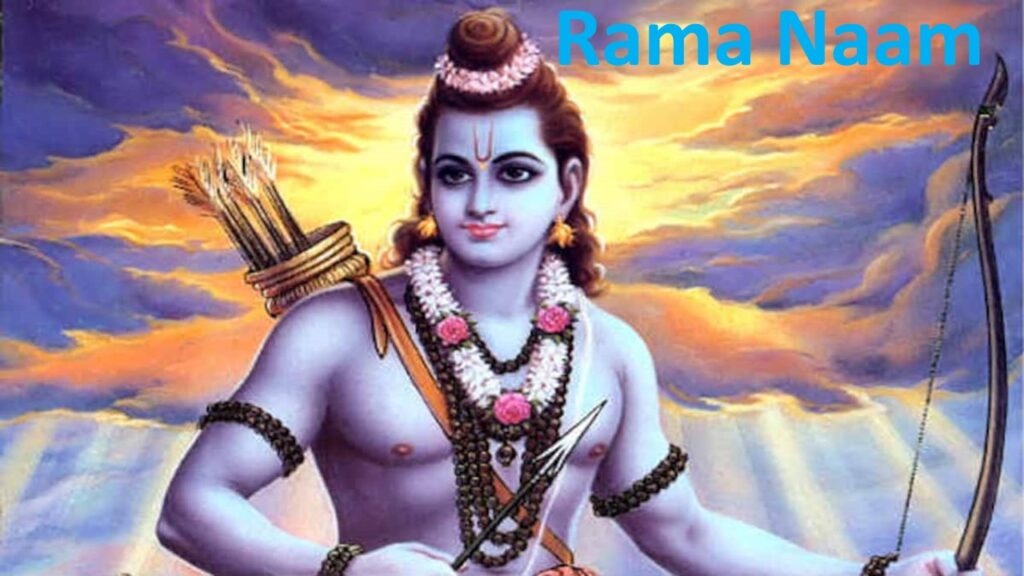
Dear Lord Rama,
Your name has unlimited power, just by absorbing ourselves in Rama Naam, we can attain eternal happiness in life. Today, is the auspicious day of Rama Navami. It is your day. It is the day you appeared in this world for people like me. I am not sure what to pray to you on this auspicious day.
If I contemplate on my life, I find that you have given me everything although I do not deserve anything. Your most important gift to me is your holy name which has unlimited potency. But unfortunately, I take your mercy for granted. In spite of knowing that just by chanting your names I will attain salvation I do not have much inclination to chant your names.
Raam Naam makes the stone float in the ocean
The fortunate monkey warriors who assisted you in rescuing mother Sita saw the extraordinary power of your name by their own eyes. They wrote your name, Rama, on the stones and the power of Rama Naam is such that the stones started floating on the gigantic ocean.
The stones defied the laws of nature, the laws of gravity. The destiny of the stones was to sink deep in the ocean but just because of your name it did not sink but sailed in the turbulent ocean full of gigantic waves.
You gave mercy to the dead stone. When will you give mercy to me? My intelligence is also like a stone – dead and dull deprived of all spiritual emotions.
Struggle in this world
I am struggling hard in the ocean of material existence. But I am so dull headed that instead of trying hard to come out of this precarious condition I am trying to find happiness here.
Expecting happiness in this material world is akin to expecting soothing experience in the middle of a forest fire. It is quite amazing and astonishing that in spite of knowing that this world is meant to give us suffering, everyone tries their best to explore all possibilities to enjoy this world.
Just like a jail is meant for punishment and reformation, similarly this material jail is meant to punish and reform us. But imagine a scenario wherein a criminal start thinking that the jail is his original home and makes plan to live a comfortable life in the jail! Will it be ever possible to live a happy life in the jail? Answer is obvious.
Similarly, no matter how best we try, we cannot become happy in this world. In this world, we are continuously attacked by three types of miseries – adi bhautik, adi daivik, adhyatmik. But we have become so accustomed to these sufferings that we consider it as a part of our life.
Just like an obstinate criminal who continues committing felony in spite of getting beatings from the police, we also try to engage our senses in worldly activities in spite of getting so much punishment by the laws of material world. This world is full of unlimited terrible species who at every moment try to harm us. This is why in Bhagavad Gita 8.15, Krishna says that this world is duḥkhālayam aśāśvatam. So, anyhow we should try our best to come out of this world.
Liberation even in this world
Coming out is not just physical but is also nonphysical. It means that instead of absorbing our consciousness in material activities, we should absorb our consciousness in spiritual activities. Instead of engaging our mind and senses in satisfying our material desires, we should engage our mind and senses in serving the Supreme Lord. Instead of having material emotions we should cultivate spiritual emotions. If we do so, then even in this world we will become liberated.
On our own, it is impossible to cross over the material ocean. So, scriptures again and again ask us to take shelter of Rama Naam i.e the shelter of your holy name. If we do so we will be immediately delivered from all the miserable conditions of life and become liberated. But in spite of knowing this we hardly take this instruction seriously.
Rama Naam helps to bridge the distance
Monkey warriors built the bridge of stones by engraving your name on it with love. That bridge which is famously called Ram Setu did not just connect Rameswaram to Lanka. But that bridge helped the fortunate monkey warriors to cross over the ocean of material existence and finally get shelter at your lotus feet. Ram Setu connected their heart with your heart which is full of love and compassion.
It was not that you did not have the power to construct the bridge on your own. You are the creator of the universe so is it so difficult for you to build a bridge on the ocean? But by this spiritual pastime you showed us the great importance and power of Rama Naam. You want to tell us that if we just chant your name with love then the distance which is currently between us can be bridged. Our heart will get connected with your heart and we can swiftly cross over the ocean of material existence.
Give me taste in Rama Naam
Standing at the shore, monkeys were in utter confusion. You gave them the intelligence to build the bridge. Drowned in the ocean of material existence I am too in utter helpless condition. Although I know that if I just absorb myself in your holy name, in Rama Naam, and live my life as per the guidelines of the scriptures then I will attain perfection. But due to lack of determination and unlimited impurities in my heart, I am not able to practice devotion to you sincerely.
On this auspicious day of Rama Navami, I beg at your lotus feet to be merciful on me as you were merciful to your monkey warriors. Please give me intelligence so that I can understand the unlimited power of Rama Naam. I beseech you to cleanse all the impurities from my heart and give me determination to sincere follow the scriptural injunctions.
And please give me taste so that I always enjoy chanting your beautiful name which appears in the Hare Krishna Mahamantra – Hare Krishna Hare Krishna Krishna Krishna Hare Hare/Hare Rama Hare Rama Rama Rama Hare Hare.
Your insignificant servant
Purushottam Nitai Das
Search
Recent Posts
-
Srimad Bhagavatam at ISKCON Newtown...
September 3, 2026
-
Srimad Bhagavatam at ISKCON Newtown...
September 1, 2026
-
Janmashtami: Celebrating Krishna’s Appearance Through...
August 17, 2026
-
Gopinatha Pattanayaka: 6 Lessons for...
August 16, 2026
-
What Does Krishna Say About...
August 11, 2026